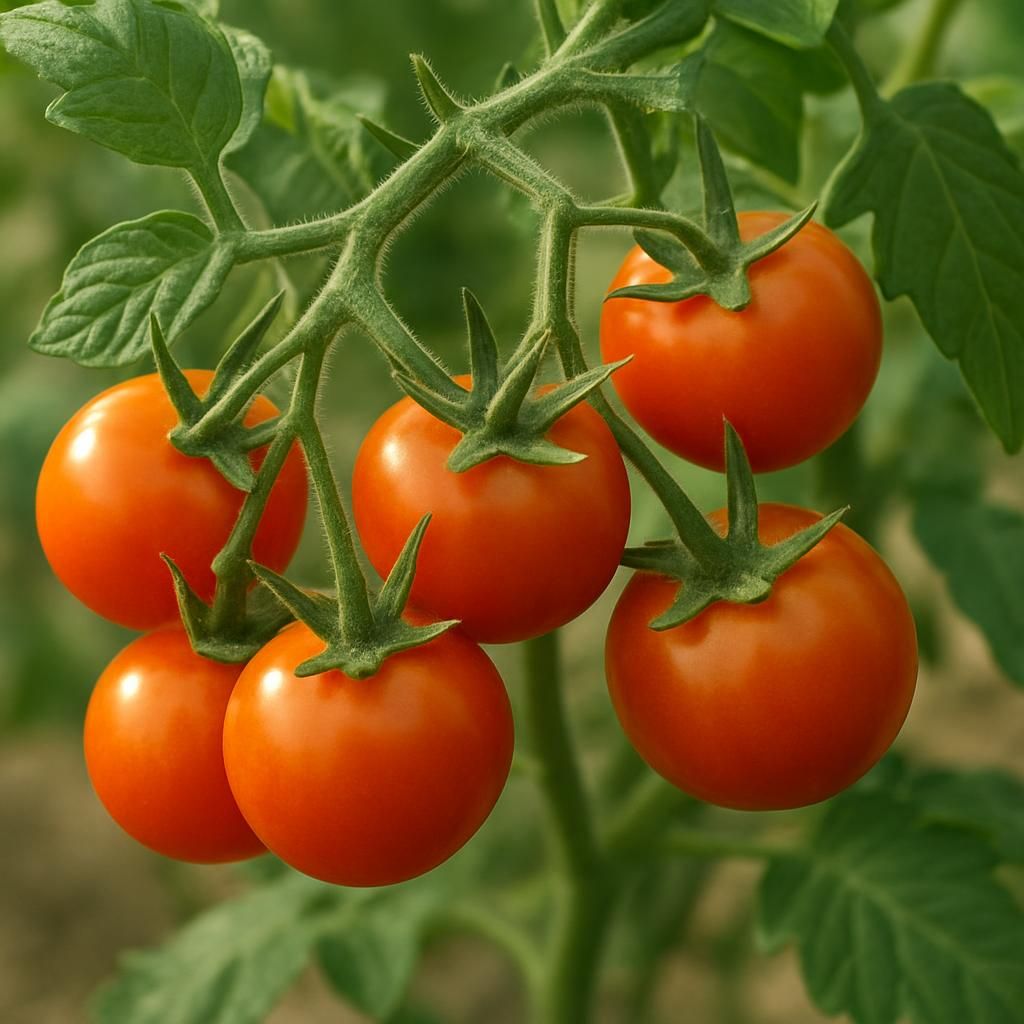
Introduction to Ildi Tomato
The Ildi Tomato is a determinate cherry-type cultivar that has gained recognition among commercial and home growers for its early ripening, prolific fruit set, and exceptional flavor profile. Bred for reliability in temperate and subtropical zones, it produces clusters of small, oval to slightly pear-shaped fruits that average 15–20 grams each. The variety matures in approximately 55–60 days from transplant, making it one of the earliest reliable producers in the cherry tomato category. Its compact growth habit and strong disease package make it particularly suitable for intensive production systems, raised beds, and large containers.
Professional growers appreciate the Ildi Tomato for its consistent yields of 4–6 kg per plant under optimal management. The fruits exhibit a bright orange-red color at full ripeness with a glossy skin that resists cracking. Flavor is notably sweet with balanced acidity, scoring high in sensory evaluations for fresh-market sales. Because the plants remain compact (typically 60–90 cm tall), they require minimal staking compared to indeterminate varieties, reducing labor costs in commercial settings.
Botanical Profile of Ildi Tomato
Ildi Tomato belongs to the Solanaceae family and carries the scientific name Solanum lycopersicum 'Ildi'. It is classified as a determinate cultivar, meaning the plant reaches a genetically predetermined height and sets fruit in concentrated clusters rather than continuously along an elongating vine. The foliage is dark green with slightly serrated leaflets typical of the species. Flowers are perfect and self-pollinating, appearing in simple inflorescences that develop into trusses of 8–12 fruits.
The root system is fibrous and relatively shallow, extending 30–45 cm deep under good soil conditions. This architecture makes the plant responsive to frequent but moderate irrigation and top-dressed fertility programs. The determinate growth pattern allows for single or double-stem training systems that maximize light interception while minimizing disease pressure from excessive foliage density.
Soil, pH, and Climate Requirements for Ildi Tomato
Successful cultivation of Ildi Tomato begins with precise management of soil physical and chemical properties. The variety performs best in well-drained sandy loam to loam soils with high organic matter content. Soil pH should be maintained between 6.2 and 6.8 to optimize nutrient availability, particularly calcium and magnesium, which are critical for fruit quality. Below is a structured summary of ideal growing conditions:
| Parameter | Ideal Range | Notes |
|---|---|---|
| Soil Type | Sandy loam to loam | Excellent drainage prevents root diseases |
| Soil pH | 6.2 – 6.8 | Avoid below 5.8 or above 7.2 |
| Organic Matter | 3 – 5 % | Incorporate compost or well-rotted manure |
| Day Temperature | 21 – 29 °C | Optimal photosynthesis and fruit set |
| Night Temperature | 15 – 20 °C | Prevents blossom drop |
| Frost Tolerance | None | Protect below 10 °C |
| Spacing (in-ground) | 45 – 60 cm between plants | Rows 90 – 120 cm apart |
| Container Volume | Minimum 20 L per plant | Use well-draining potting mix |
Climate adaptability is broad; Ildi Tomato tolerates moderate heat stress better than many cherry types but benefits from shade cloth when daytime temperatures exceed 32 °C. In cooler climates, black plastic mulch raises soil temperature and accelerates early growth.
Step-by-Step Planting & Propagation
Propagation of Ildi Tomato is achieved through seed or purchased transplants. Begin seed sowing 6–7 weeks before the last expected frost date in your region. Use sterile seed-starting mix and maintain soil temperature at 24–27 °C for rapid, uniform germination (typically 5–7 days). Transplant seedlings into 10 cm pots once the first true leaves appear, then harden off for 7–10 days prior to field placement.
Field planting should occur only after soil temperatures reach a minimum of 15 °C at 10 cm depth. Dig planting holes 15 cm deep and incorporate 50–75 g of balanced organic fertilizer (NPK 5-5-5) per hole. Set transplants so the lowest leaves sit just above soil level; deeper planting encourages adventitious root development. Water thoroughly immediately after transplanting and apply a light mulch layer to conserve moisture and suppress weeds.
Care & Maintenance regimes for Ildi Tomato
Consistent cultural practices are essential for maximizing yield and fruit quality. Irrigation should be applied via drip tape to maintain even soil moisture without waterlogging. The following table outlines recommended water, fertilizer, and pruning schedules for professional production:
| Growth Stage | Irrigation Frequency | Fertilizer Application | Pruning & Training |
|---|---|---|---|
| Transplant to 3 weeks | 2–3 times/week, 2–3 L/plant | Starter solution (high P) at transplant | Remove lower leaves touching soil |
| Flowering to fruit set | Daily drip, 3–4 L/plant | Side-dress NPK 8-4-12 every 3 weeks | Single-stem training, tie to stake |
| Fruit development | Daily drip, 4–5 L/plant | Calcium nitrate foliar every 10 days | Remove suckers below first truss |
| Harvest period | Monitor ET; reduce slightly | Potassium sulfate side-dress | Minimal pruning; maintain airflow |
Mulching with 5–7 cm of organic material reduces evaporation and maintains consistent root-zone temperature. Scout plants weekly for nutrient deficiencies; interveinal chlorosis on older leaves often indicates magnesium shortage, correctable with Epsom salt foliar sprays at 20 g/L.
Pests, Diseases & Organic Management
Ildi Tomato is moderately resistant to several common tomato pathogens but remains susceptible to Early blight, Septoria leaf spot, and Tomato spotted wilt virus. Primary insect pressures include Aphids, Spider mites, and Whiteflies. Implement an integrated pest management (IPM) approach beginning with cultural controls: proper spacing, drip irrigation, and removal of crop debris at season end.
Organic-approved interventions include neem oil emulsions (0.5 % v/v) for soft-bodied insects and Bacillus thuringiensis (Bt) sprays for lepidopteran larvae. For fungal diseases, apply copper hydroxide or Bacillus subtilis products preventively every 7–10 days during humid periods. Yellow sticky traps placed at canopy height help monitor and reduce whitefly populations. Rotate plantings with non-solanaceous crops on a minimum three-year cycle to break soil-borne disease cycles.
Harvesting, Curing & Optimal Storage
Harvest Ildi Tomato fruits when they reach full color and slight softness at the blossom end. Pick clusters in the early morning to minimize field heat and preserve shelf life. For fresh market sales, sort fruits by size and color; remove any with visible defects. Post-harvest curing is minimal because the fruits are consumed at full ripeness, but holding at 12–15 °C and 85–90 % relative humidity extends marketable life up to 10 days.
For seed saving, select the healthiest, earliest-ripening fruits from disease-free plants. Ferment seeds in their own juice for 2–3 days at 20–25 °C, then rinse and dry to 6–8 % moisture content. Store in airtight containers at 4–10 °C for up to five years with minimal viability loss.
Companion Planting for Ildi Tomato
Strategic companion planting enhances Ildi Tomato performance through pest deterrence, nutrient cycling, and microclimate moderation. Recommended pairings include Basil to repel Whiteflies and improve flavor perception, Marigold for nematode suppression, and Nasturtium as a trap crop for Aphids. Interplanting with Garlic or Onion provides additional aromatic protection against fungal pathogens.
Avoid planting near Potato or Eggplant to reduce shared disease pressure from Verticillium wilt and Colorado potato beetle. Deep-rooted companions such as Carrot can improve soil structure without competing for surface nutrients. Maintain at least 30 cm between tomato plants and aggressive herbs to prevent shading of lower fruit trusses.