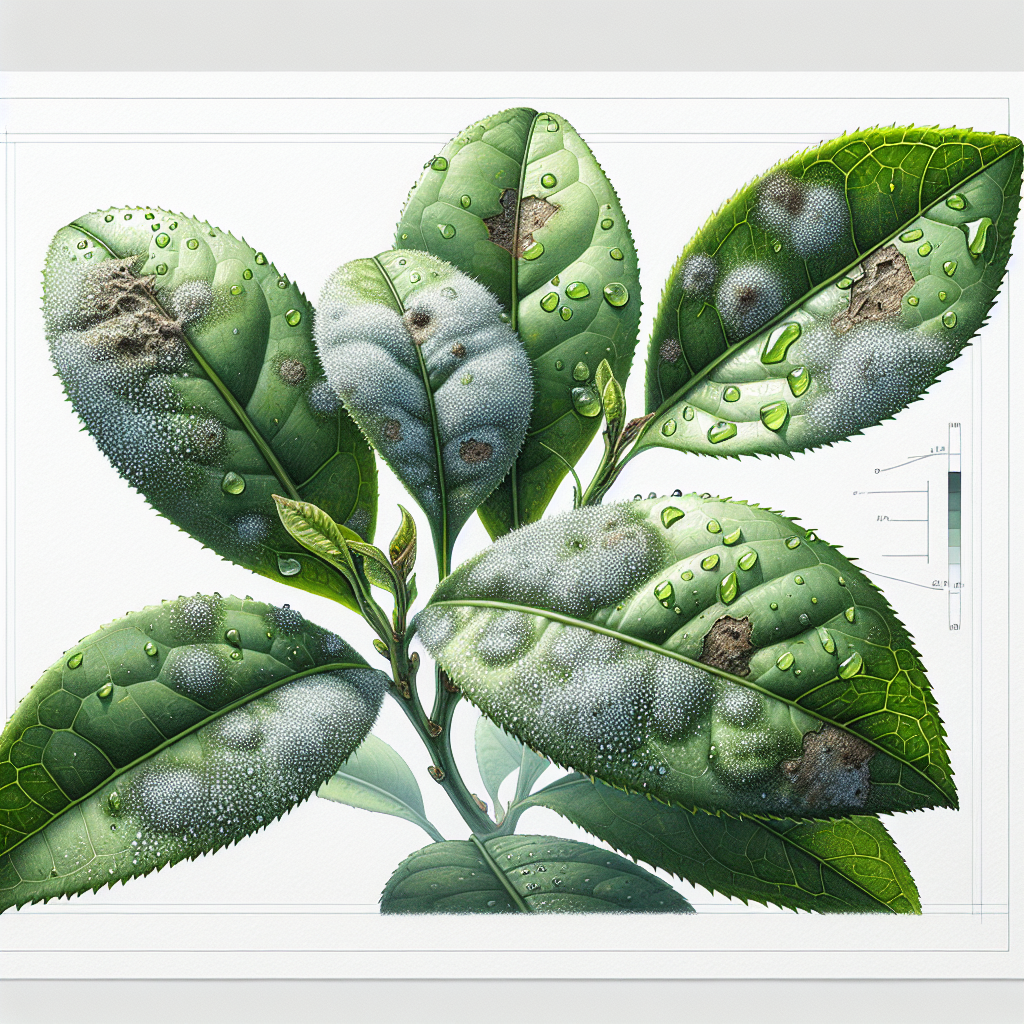
Introduction to gray blight
Gray blight, caused by fungi in the Pestalotiopsis genus (notably Pestalotiopsis funerea and Pestalotiopsis microspora), is a pervasive foliar disease that strikes tropical and subtropical crops worldwide. First identified on tea plantations in Asia, it has since spread to regions like Southeast Asia, Africa, Latin America, and parts of the southern United States, where high humidity fosters its rapid proliferation. This disease manifests as grayish-white lesions on leaves, often with dark fruiting bodies, leading to premature leaf drop, twig blight, and reduced photosynthesis. In severe cases, it causes branch dieback and fruit rot, slashing yields by up to 50% in unmanaged orchards.
As a professional botanist and agricultural expert, I've seen gray blight devastate Hass Avocado groves and tea bushes, turning lush canopies into skeletal remnants. The pathogen enters through wounds or natural openings, exploiting stressed plants under dense canopies or poor air circulation. Unlike bacterial blights, gray blight produces distinctive acervuli—black, spore-filled structures visible under magnification—that aid in diagnosis. Early detection is crucial, as spores disperse via wind, rain splash, and tools, making integrated management essential for sustainable farming. This guide provides definitive diagnostic criteria, lifecycle insights, and proven organic strategies to combat gray blight effectively, ensuring resilient crops and profitable harvests.
Identifying Symptoms & Damage
Recognizing gray blight early prevents escalation. Initial symptoms appear on older leaves as small, circular to irregular spots (1-5 mm) with light gray centers and dark brown to black margins. As lesions expand (up to 2 cm), they develop a velvety gray coating of fungal mycelium, often with concentric rings. Under a 10x hand lens, black acervuli (0.1-0.3 mm) emerge, oozing pinkish spore masses in wet conditions—hallmark signs distinguishing it from Alternaria or Cercospora leaf spots.
Affected leaves yellow, curl, and drop prematurely, exposing inner branches to sunburn. Twigs show sunken, necrotic cankers with grayish bark cracking, leading to dieback. On fruits like avocados or mangoes, brown, sunken rots with gray spore layers render produce unmarketable. Severe infections cause defoliation, weakening trees and predisposing them to Phytophthora root rot or powdery mildew. Yield losses average 20-40% in tea, higher in young Fuerte Avocado trees.
Diagnosis tip: Incubate suspect leaves in a moist chamber (95% RH, 25°C) for 48 hours; gray sporulation confirms Pestalotiopsis. Lab culture on potato dextrose agar yields olive-gray colonies with 5-celled conidia (3 septa, hyaline middle cells, dark ends). Differentiate from Botrytis by acervuli absence and from anthracnose by conidial morphology. Regular scouting during rainy seasons catches outbreaks before 10% canopy infection.
Lifecycle and Progression of gray blight
Pestalotiopsis completes multiple cycles yearly in humid tropics. Primary inoculum overwinters in fallen leaves, blighted twigs, and soil as stromata or conidia. Rain splash or overhead irrigation activates conidia, which germinate in 4-6 hours at 20-30°C and >90% RH, penetrating stomata or wounds within 24 hours. Lesions form in 3-7 days, producing secondary conidia in acervuli for 2-4 weeks.
The pathogen's polycyclic nature enables 5-10 cycles per season. Optimal conditions (25-28°C, free water 8-12 hours) accelerate sporulation, with conidia viable 3-6 months. Wind (>5 km dispersal) and insects like ants vector spores. Progression: spotting (week 1), coalescence (week 2), necrosis/defoliation (week 3+). In tea, it peaks post-flush; in avocados, during flowering/fruit set. Dormant phases in dry spells allow resurgence with monsoons. Understanding this informs timely interventions, breaking the cycle at 5% severity threshold.
Environmental Triggers & Risk Factors
Gray blight explodes in warm (22-30°C), humid (>85% RH) environments with prolonged leaf wetness (>12 hours). Overhead irrigation, dense planting (reducing airflow), and poor drainage heighten risk. Susceptible varieties like young tea clones or thin-leaved mango cultivars suffer most. Nutrient imbalances—excess nitrogen promoting lush growth or potassium deficiency weakening tissues—exacerbate spread. Wounds from thrips, pruning, or machinery serve entry points.
High rainfall (>2000 mm/year), coastal fog, and shaded understories mimic ideal microclimates. Soil pH >7 or compacted soils stress roots, indirectly favoring disease. Climate change intensifies outbreaks via erratic rains. Risk assessment: Score farms on humidity hours, canopy density, and sanitation; scores >15/20 warrant preemptive action. Mitigate by site selection in breezy, well-drained slopes.
Organic Control & Treatment Plans
Organic management integrates cultural, biological, and botanical tactics for 70-90% control. Pruning: Remove 20-30% infected parts post-harvest, burn debris (reduces inoculum 80%). Improve airflow with 1-2 m spacing. Sanitation: Rake/mulch fallen leaves weekly; solarize soil (50°C, 4 weeks) kills overwintering stages.
Biofungicides: Apply Trichoderma harzianum (10^9 CFU/ml) or Bacillus subtilis (e.g., Serenade) every 10-14 days during wet periods—alternates modes of action, suppresses 60-75%. Botanicals: Neem oil (0.5%) + garlic extract inhibits spore germination 85%; copper octanoate (OMRI-approved, 1-2 gal/acre) for curative sprays (4-hour REI). Nutrition: Foliar potassium silicate boosts cell walls; compost teas enhance microbiome.
Treatment Protocol:
- Scout weekly; act at 5% incidence.
- Prune + biofungicide at onset.
- 3 sprays (14-day intervals): Week 1 Trichoderma, Week 2 botanical, Week 3 copper.
- Monitor; reapply post-rain. Avoid resistance via rotation. For tea, companion marigold repels vectors. Success stories: Sri Lankan estates cut losses 65% organically. See Spring Pest Patrol: Organic AI Strategies to Shield Your Crops from Common Invaders for tech integration.
Preventing gray blight in the Future
Prevention beats cure: Build resilience via IPM. Select resistant cultivars (e.g., TRI-2025 tea, Hass hybrids). Plant windbreaks for airflow; install drip irrigation to minimize wetness. Mulch with 10 cm organic matter suppresses splash. Annual pre-monsoon pruning opens canopies 30%. Boost immunity with balanced NPK + micronutrients (Zn, Mn via soil drench).
Monitor with sticky traps for vectors like whiteflies; use apps for RH forecasts. Crop rotation (2-3 years) with non-hosts like corn depletes soil inoculum. Quarantine new stock; hot-water treat seeds (50°C, 20 min). Long-term: Breed for resistance, leveraging CRISPR for Pestalotiopsis tolerance. Farm audits every season refine protocols, targeting <2% incidence.
Crops Most Affected by gray blight
Tea (Camellia sinensis) tops the list, with 30-50% losses in Assam/Darjeeling. Avocados (avocado) suffer leaf/twig blight, especially in humid Perus/Colombias. Other victims: mango, guava, lychee, cocoa, and ornamentals like rhododendron. Minor hosts include citrus, papaya, and coffee under stress. Tropical perennials with dense canopies are prime targets; field crops like rice rarely affected. Global impact: $500M+ annual losses, underscoring vigilant management.