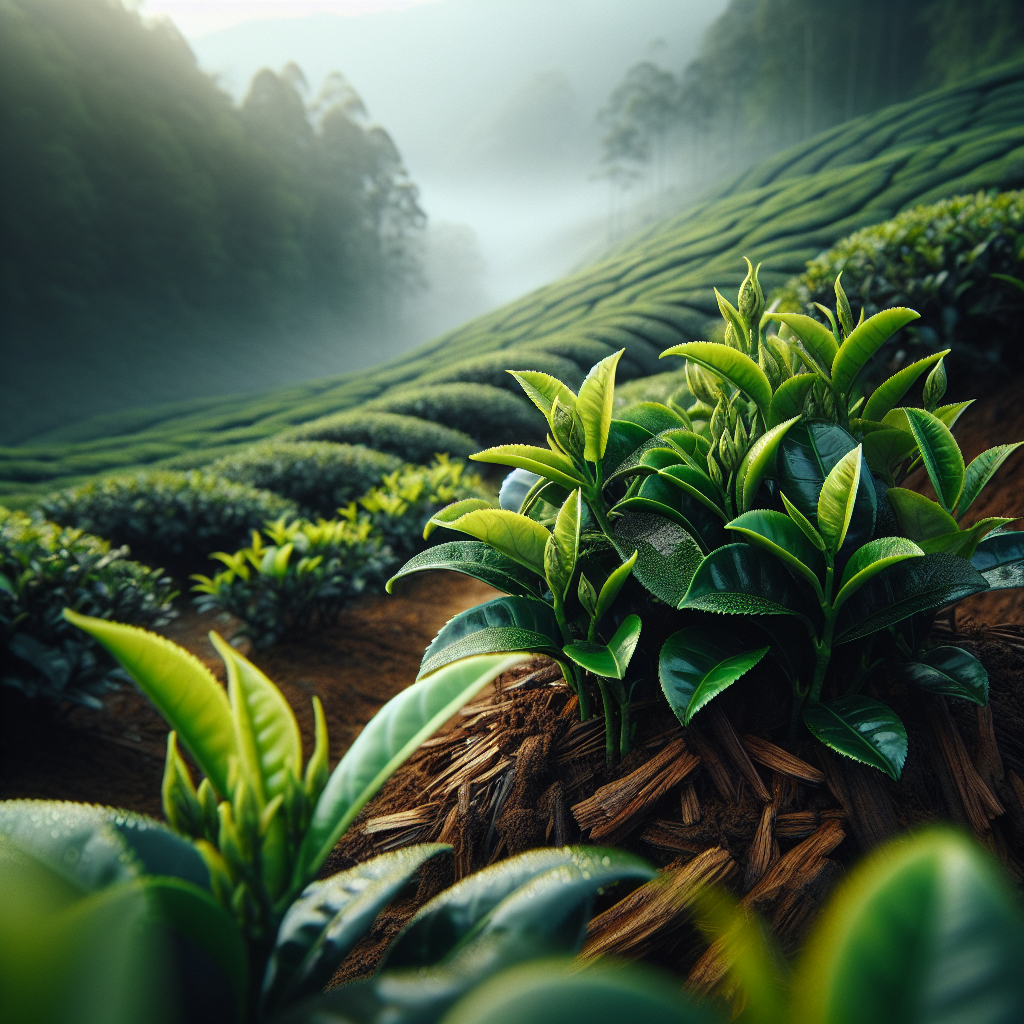
Introduction to Tea
Tea is one of the world’s most important perennial beverage crops, cultivated primarily from the young leaves and buds of Camellia sinensis. Although many people think of tea as a single product, the same plant can produce green, black, oolong, white, yellow, and dark teas depending on plucking standards and post-harvest processing. That makes field management especially important: the quality of the made tea begins in the garden, not the factory.
Tea originated in East and South Asia and has been cultivated for centuries across environments ranging from misty mountain slopes to humid tropical uplands. Modern commercial cultivation spans China, India, Sri Lanka, Kenya, Japan, Nepal, and many other regions. The best tea plantations typically combine high rainfall, acidic soils rich in organic matter, and mild temperatures without prolonged frost or heat stress.
For growers, tea is not a quick annual crop but a long-term plantation investment. A well-managed field may remain productive for decades, sometimes 30 to 50 years or longer, though yields and cup quality depend heavily on cultivar choice, pruning cycles, nutrition, drainage, and plucking discipline. Tea also responds strongly to altitude, shade, and seasonal flush patterns, so the same cultivar can produce very different flavor profiles in different terroirs.
Unlike crops grown for fruit or seed, tea is harvested repeatedly for vegetative growth. The aim is to maintain a broad, healthy plucking table that continuously produces soft shoots. This requires balancing vegetative vigor with manageable bush height, preventing hard wood buildup, and preserving leaf area sufficient to support root reserves. In practical terms, excellent tea growing is a combination of soil science, canopy management, moisture control, and precision harvest scheduling.
Tea can be grown on small farms, in diversified agroforestry systems, or in highly structured estates. It pairs well conceptually with other acid-loving perennial crops; for comparison of soil acidity management in another commercial species, see Blueberry. Growers interested in mixed-farm biodiversity strategies may also find useful ideas in this companion planting guide.
Botanical Profile of Tea
Camellia sinensis belongs to the family Theaceae. It is an evergreen woody shrub or small tree that, left unpruned, can exceed 5 to 10 meters in height, but in cultivation it is maintained as a low bush, often 0.6 to 1.2 meters tall for efficient plucking. The plant develops a strong taproot when established from seed, along with extensive lateral feeder roots concentrated in the upper soil profile, particularly where organic matter is abundant.
There are two broad traditional botanical forms of major agronomic importance. Camellia sinensis var. sinensis is generally associated with smaller leaves, greater cold tolerance, and suitability for higher elevations or cooler climates. It is widely linked to many Chinese and Japanese tea types. Camellia sinensis var. assamica has larger leaves, stronger vigor, and preference for warm, humid tropical to subtropical conditions; it underpins many Indian, Sri Lankan, and African tea systems, especially where black tea production dominates. In practice, many modern plantations use selected clonal materials or hybrids that combine vigor, quality, pest tolerance, and adaptation to local conditions.
Leaves are alternate, glossy, and serrated, with young expanding shoots often covered in fine pubescence depending on cultivar. The commercially harvested unit is the flush, usually composed of the apical bud plus one, two, or three youngest leaves. Finer plucking standards such as a bud and two leaves generally produce better quality but lower bulk yield than coarser plucking.
Tea flowers are white to cream, fragrant, and somewhat camellia-like, usually appearing in leaf axils. While flowering is botanically interesting, excessive reproductive growth can reduce vegetative productivity in some conditions. Seeds are round to angular and oily, but seed propagation is now less common in intensive commercial systems than clonal propagation by cuttings.
Tea is a C3 plant and performs best under diffuse sunlight, adequate humidity, and steady but not excessive vegetative growth. Its chemistry is highly sensitive to environment. Nitrogen nutrition, light intensity, water stress, plucking interval, and leaf maturity all influence levels of catechins, caffeine, amino acids such as theanine, and volatile aroma compounds. This is why a grower’s field practices directly affect liquor color, briskness, sweetness, astringency, and aroma complexity.
Soil, pH, and Climate Requirements for Tea
Tea is strongly acid-loving and performs best in soils with a pH of about 4.5 to 5.5, with an ideal working range near 4.8 to 5.3 for many production systems. Once soil pH rises much above 5.8 to 6.0, micronutrient availability and root performance often decline, while chlorosis, weak flushes, and poor nutrient uptake become more common. Tea should not be planted in alkaline soils unless significant and ongoing acidification measures are feasible, and even then results are often inconsistent.
The ideal soil is deep, friable, highly organic, and well drained, with at least 1 meter of penetrable profile and preferably more. Tea roots dislike stagnant water but also suffer in shallow, drought-prone ground. Red loams, sandy loams rich in humus, forest-derived acidic soils, and volcanic upland soils can all perform well if drainage is reliable. Heavy clays are risky unless planted on mounds, raised beds, or terraced slopes with engineered drainage. If water stands for more than 24 to 48 hours after rain, root stress, dieback, and fungal disease pressure increase sharply.
Organic matter is critical. Tea evolved in litter-rich forest margins and benefits from soils with strong crumb structure and steady biological activity. A target of at least 3 to 5% organic matter is desirable, with higher levels especially valuable in sandy or erosion-prone sites. Mulch, composted leaf litter, well-decomposed bark, and pruned shade-tree residues help buffer temperature, preserve moisture, and support mycorrhizal and microbial processes.
Climatically, tea prefers warm, humid conditions with annual rainfall generally between 1,200 and 2,500 mm, ideally distributed across much of the year. Commercially strong production often occurs where rainfall falls in frequent moderate events rather than a few intense storms. Extended drought slows flush growth, coarsens leaf texture, and reduces yield; however, constantly saturated conditions are equally damaging. Where rainfall is seasonal, supplemental irrigation is often necessary to keep the root zone evenly moist during active growth.
Optimal temperatures for active shoot growth are roughly 18 to 30°C. Growth slows markedly below about 13°C and can stop in cool seasons depending on cultivar and day length. Prolonged exposure above 35°C, especially when paired with low humidity and hot winds, causes leaf scorch, reduced turgor, increased banjhi shoots (dormant or non-flushing shoots), and reduced quality. Frost is a major hazard. Light, brief frost may only burn tender flushes, but harder freezes can kill young bushes or split stem tissues.
Tea often performs especially well at elevations from 600 to 2,000 meters, though successful production also occurs at lower elevations. Higher altitudes generally reduce growth rate but can improve aroma complexity and fine quality because shoots develop more slowly. Lower, warmer sites usually produce faster flush cycles and higher annual yield but may sacrifice delicacy unless carefully managed.
Wind protection matters more than many new growers realize. Constant wind strips humidity from tender shoots, increases transpiration, bruises leaves, and can stunt establishment. Shelterbelts, contour hedges, and nurse shade trees are especially valuable on exposed slopes.
Step-by-Step Planting & Propagation
Start by selecting a cultivar or clone suited to the intended tea style, altitude, disease pressure, and labor system. Growers targeting premium orthodox teas may prioritize quality traits such as fine aroma and dense pubescence, while large-scale CTC black tea systems often favor high-yielding vigorous clones with uniform flushes. Always source disease-free, true-to-type material from reputable nurseries or research stations.
For seed propagation, use fresh seed because viability declines rapidly in storage. Sow seeds in acidic, sterile nursery media such as a mix of forest loam, coarse sand, and decomposed organic matter. Place seeds horizontally or with the eye facing sideways, 2 to 4 cm deep, and maintain a warm environment around 20 to 25°C with high humidity. Germination may take several weeks. Seedlings develop genetic variability, which can be useful for breeding or hardy mixed plantings but undesirable where uniformity is essential.
For clonal propagation, semi-hardwood cuttings from healthy mother bushes are standard. Use 3 to 5 cm nodal cuttings with a single healthy leaf reduced in size to limit transpiration. Dip in a suitable rooting hormone if desired, then place in a humid propagation chamber or mist house with bright filtered light, clean acidic medium, and bottom warmth if available. Rooting may take 8 to 16 weeks depending on clone and conditions. Harden rooted cuttings gradually by reducing humidity and increasing light before field planting.
Prepare the site months in advance. Clear aggressive perennial weeds, map contour lines, and establish erosion control on slopes. Test soil pH, organic matter, phosphorus, potassium, calcium, magnesium, and micronutrients. Avoid liming unless laboratory interpretation specifically indicates a severe imbalance and the need can be corrected without pushing pH too high. Deep ripping may help compacted subsoil, but only if drainage pathways exist; ripping into a poorly drained layer can worsen waterlogging.
In high-rainfall hill areas, plant on contour terraces or stabilized contour rows to reduce runoff and topsoil loss. Incorporate abundant organic matter into planting rows or pits rather than relying on raw fertilizer alone. Typical planting pits may be about 30 cm wide and 30 cm deep, though dimensions should match rootball size and site constraints.
Spacing depends on production system. Intensive hedgerow systems may use approximately 1.0 to 1.5 meters between rows and 0.6 to 1.0 meters within rows. Wider spacing is common where mechanization, shade trees, or large-vigor clones are used. On steep slopes, layout must prioritize erosion control and worker access rather than theoretical plant density.
Plant at the onset of reliable rains or during a cool, moist season. Set each plant at the same depth it occupied in the nursery; burying the collar too deeply invites stem rot. Firm soil gently around the roots and water thoroughly to settle air pockets. Apply mulch immediately, keeping it a few centimeters away from the stem to prevent collar disease.
Young tea benefits from temporary shade during establishment, especially in hot lowland sites. Shade nets, fast-growing nurse plants, or scattered leguminous shade trees can reduce heat load and transplant shock. Keep weeds suppressed in a radius around each plant because tea seedlings compete poorly for water and nutrients during the first 12 to 18 months.
Formative pruning begins early. Once young plants are established and sufficiently vigorous, tip or prune them to encourage lateral branching and the eventual development of a broad plucking frame. Without this, bushes become leggy and inefficient.
Care & Maintenance regimes for Tea
Water management in tea should aim for consistently moist but aerated soil, especially in the top 20 to 40 cm where most feeder roots are active. In practical terms, the soil should feel cool and slightly moist when pressed by hand, not greasy, soupy, or powder-dry. During active flush periods, many tea gardens perform best when the root zone does not fall below roughly 50 to 60% of field capacity for long. Severe drying leads to hard leaves, reduced bud break, shorter internodes, and increased dormant shoots. Overwatering shows up as yellowing leaves, poor vigor despite wet soil, root browning, stem collar decline, and increased incidence of root diseases.
Where irrigation is needed, drip or micro-sprinkler systems are preferable to heavy flood irrigation. Apply moderate amounts deeply enough to wet the rooting zone, then allow oxygen to re-enter the soil before the next cycle. Frequent shallow watering encourages weak surface rooting and instability. Mulch can reduce irrigation demand substantially by lowering soil evaporation and suppressing weeds.
Nutrition should be built around repeated light feeding rather than infrequent heavy doses. Tea removes substantial nitrogen because the crop consists of young vegetative tissue. Nitrogen drives flush production, leaf size, chlorophyll content, and amino acid profile, but excessive nitrogen can produce overly soft growth, reduce certain quality attributes, and increase susceptibility to pests. Split applications during active growth are standard. Phosphorus is important for root development and early establishment but is often less heavily required once bushes are mature. Potassium supports shoot growth, water relations, stress tolerance, and quality. Sulfur is also useful in tea systems because it supports protein metabolism and can help maintain acidity in some fertilization programs.
Organic programs often rely on composted manures, seed meals, fish hydrolysate, leaf litter compost, vermicompost, and sulfate-based minerals where permitted. Because tea prefers acidic conditions, avoid routine use of alkaline amendments such as wood ash. Monitor for magnesium deficiency, which may appear as interveinal chlorosis on older leaves, and for iron or manganese issues if pH creeps upward.
Mulching is almost mandatory in high-quality tea management. Use pine needles, leaf litter, chopped prunings, bark, or other acidic organic residues. Maintain a mulch layer of roughly 5 to 10 cm, renewing as it decomposes. This buffers root temperature, reduces compaction from raindrop impact, and feeds soil biology.
Pruning is central to long-term productivity. The objectives are to maintain bush height, renew productive wood, remove dead or diseased material, and preserve a level plucking table. Young bushes undergo formative tipping and frame building. Mature tea then enters a cycle of skiffing, light prune, medium prune, or rejuvenation prune depending on region and bush condition. Skiffing removes only the top layer to tidy the plucking surface. Light and medium prunes cut deeper to stimulate new shoots. Rejuvenation pruning may cut very low to restore exhausted bushes but requires a recovery period and excellent aftercare.
Plucking intervals vary with temperature, rainfall, cultivar, and market target. In warm, humid periods, intervals may be as short as 5 to 7 days; in cooler conditions, 10 to 15 days or more may be necessary. If plucking is too frequent, bushes are weakened and labor costs rise; if too infrequent, shoots become coarse, fiber increases, and cup quality declines. The ideal standard for premium leaf is often a bud plus two leaves, harvested when still tender and before the third leaf hardens.
Shade management depends on climate. In hotter tropical areas, 25 to 40% filtered shade can improve leaf tenderness, moderate heat stress, and stabilize moisture. In cooler, cloudy, or high-altitude zones, excessive shade can reduce productivity and encourage fungal problems. Shade trees must be managed so they do not overcompete for water or create deep stagnant humidity.
Weed control should combine mulching, manual clearing, shallow hoeing, and cover management between rows. Avoid deep cultivation that damages feeder roots. Persistent weeds around the collar area can harbor pests, trap humidity, and compete intensely with young bushes.
Pests, Diseases & Organic Management
Tea faces a wide range of pest and disease pressures that vary strongly by region. Common insect pests include tea mosquito bug, aphids, thrips, mites such as red spider mite, loopers, leaf rollers, caterpillars, and scale insects. Their damage may appear as stippling, bronzing, curling, shot holes, bud blackening, reduced flush vigor, or visible feeding scars that lower made-tea quality.
red spider mite is especially favored by hot, dry, dusty conditions and often flares where shade is insufficient or bushes are drought stressed. Leaves develop rusty bronzing, fine webbing may be visible, and severe infestations reduce photosynthesis. Organic suppression relies on increasing humidity where feasible, reducing dust, conserving predatory mites, avoiding excess nitrogen, and applying approved horticultural oils or soaps with careful coverage.
tea mosquito bug and sap-sucking pests damage tender shoots, causing necrotic lesions and distorted growth. Prompt sanitation, balanced nutrition, and maintaining field hygiene around alternate host plants help reduce pressure. Sticky monitoring traps can assist in detection, though thresholds vary locally.
Major diseases include blister blight, anthracnose, gray blight, root rots, stem cankers, and algal leaf spot in humid environments. blister blight is particularly serious in cool, wet, misty tea districts; it attacks young leaves and can devastate quality if unmanaged. Symptoms begin as pale translucent spots that develop blister-like lesions on soft tissue. Because infection favors prolonged leaf wetness, pruning for airflow, careful shade regulation, selective plucking hygiene, and avoiding overhead irrigation late in the day are crucial preventive measures.
Root diseases are usually linked to drainage failures, compacted subsoil, or planting too deeply. Affected bushes may wilt even in moist soil, show poor flush recovery, and reveal dark, decayed roots if lifted. Correcting the site is more effective than repeated rescue treatments. Improve drainage channels, add organic matter that enhances structure without waterlogging, and remove severely affected plants with surrounding soil if a contagious pathogen is suspected.
Organic disease management in tea should emphasize prevention. Start with resistant or tolerant clones where available. Keep pruning tools clean. Remove dead wood and infected debris from the field. Maintain a balanced canopy that allows fast drying after rain. Apply composts that are fully matured, not raw and anaerobic. Where permitted and appropriate, copper- or sulfur-based products may offer protection against some foliar diseases, but they should be used judiciously to avoid phytotoxicity and soil accumulation.
Biodiversity helps. Mixed shade systems, flowering refuge plants outside the tea rows, and reduced broad-spectrum pesticide use support beneficial insects such as lady beetles, lacewings, hoverflies, and parasitoids. However, any companion or refuge species must be managed so they do not become weed hosts or humidity traps.
Harvesting, Curing & Optimal Storage
Tea harvesting is a craft as much as a farm operation. The best plucking standard for fine tea is usually the terminal bud with the next two youngest leaves, though some specialty teas use only a bud or bud plus one leaf, while lower-grade bulk teas may include more mature leaf. Tenderness matters: once leaves become leathery or fibrous, they lose the chemistry needed for elegant processing.
Harvest should be done in cool parts of the day when possible, after surface moisture has dried but before shoots wilt under strong heat. Wet leaf heats rapidly in baskets and is more prone to bruising and uneven fermentation. Pluckers should avoid crushing the shoots, tearing leaves, or mixing coarse mature leaf with fine leaf. Standardization is essential; inconsistent leaf makes consistent tea impossible.
Processing differs by tea type. Black tea generally involves withering, rolling or maceration, oxidation, drying, grading, and packing. Withering reduces moisture and makes leaves pliable. Rolling ruptures cells so enzymes and polyphenols interact. Oxidation develops coppery leaf color and the familiar brisk, malty, or fruity black tea profile. Drying then arrests oxidation and lowers moisture to a safe storage level, typically around 2 to 3% for finished tea.
Green tea is heated soon after harvest to inactivate oxidative enzymes, preserving greener color and fresher, more vegetal notes. This may be done by pan firing or steaming depending on tradition. Oolong processing involves partial oxidation, while white tea relies on minimal handling and careful withering/drying of fine young material.
For growers making artisanal tea, cleanliness is non-negotiable. Use food-safe surfaces, prevent contamination from smoke, fuel residues, and strong odors, and monitor leaf temperature during withering and drying. Overheating scorches aromas and produces harsh liquor; under-drying leaves tea vulnerable to mold and quality collapse.
Store finished tea in airtight, odor-free, moisture-proof containers away from light, oxygen, and heat. Tea is hygroscopic and will absorb ambient moisture and odors quickly. Ideal storage is cool and dry, often below 25°C, with relative humidity low enough to prevent moisture uptake. Black teas are comparatively stable if well dried and sealed, while green teas and delicate white teas lose freshness more rapidly and benefit from colder storage.
Fresh leaf waiting for processing should never be tightly packed in deep heaps. Keep it shaded, cool, and well ventilated. If leaf temperature rises in the pile, enzymatic damage begins before the intended processing stage, leading to dull liquor and uneven quality.
Companion Planting for Tea
Tea is usually grown as a managed monocrop or semi-monocrop, but intelligent companion planting can improve resilience, biodiversity, erosion control, and microclimate. The best companions are not aggressive root competitors and should support the tea system rather than simply occupy space.
Shade trees are the most important companions in many tea landscapes. Suitable species vary by region, but ideal trees are deep rooted, coppice-tolerant, and capable of producing filtered rather than dense shade. They should also contribute leaf litter and, in some systems, biological nitrogen fixation. Common choices in tropical tea areas include Albizia, Gliricidia, and other leguminous trees, though local suitability must be confirmed. The goal is moderated light, reduced wind stress, and a steadier canopy microclimate.
Between rows or on terrace risers, low-growing cover crops can reduce erosion and improve soil structure. Select species that tolerate acidic soils and can be cut back easily. Avoid vines or sprawling covers that climb into plucking tables. In young tea, temporary legumes may help build soil organic matter, but they must be controlled before they outcompete establishing bushes.
Insectary strips placed at field edges rather than directly in tea rows can support predators and parasitoids. Choose flowering plants that do not become alternate hosts for major tea pests. Native species are often the safest choice because they fit local ecological cycles.
Plants to avoid include shallow, highly competitive grasses near bush bases, rampant climbers, and species requiring neutral to alkaline soil amendments that would conflict with tea’s pH needs. Large thirsty trees with dense surface roots can also suppress tea growth by stealing moisture from the upper root zone.
On slopes, companion species are especially valuable for stabilizing soil. Vetiver on boundaries, non-invasive legumes on terrace edges, and pruned mulch-producing hedges can all contribute to reduced erosion if kept from shading or crowding the tea excessively. The best companion system is therefore a structured support ecology: shade overhead where needed, groundcover between rows, biodiversity on margins, and an open, well-managed zone immediately around each bush.