Introduction to Gravenstein Apple
An old European cultivar with a long reputation for superior flavor, this variety is believed to have originated in the 17th century, likely in or near Denmark or northern Germany, before becoming deeply associated with coastal California and other cool-summer apple districts. It became especially famous in Sonoma County, where maritime influence helped preserve the acidity and perfume that make it distinctive.
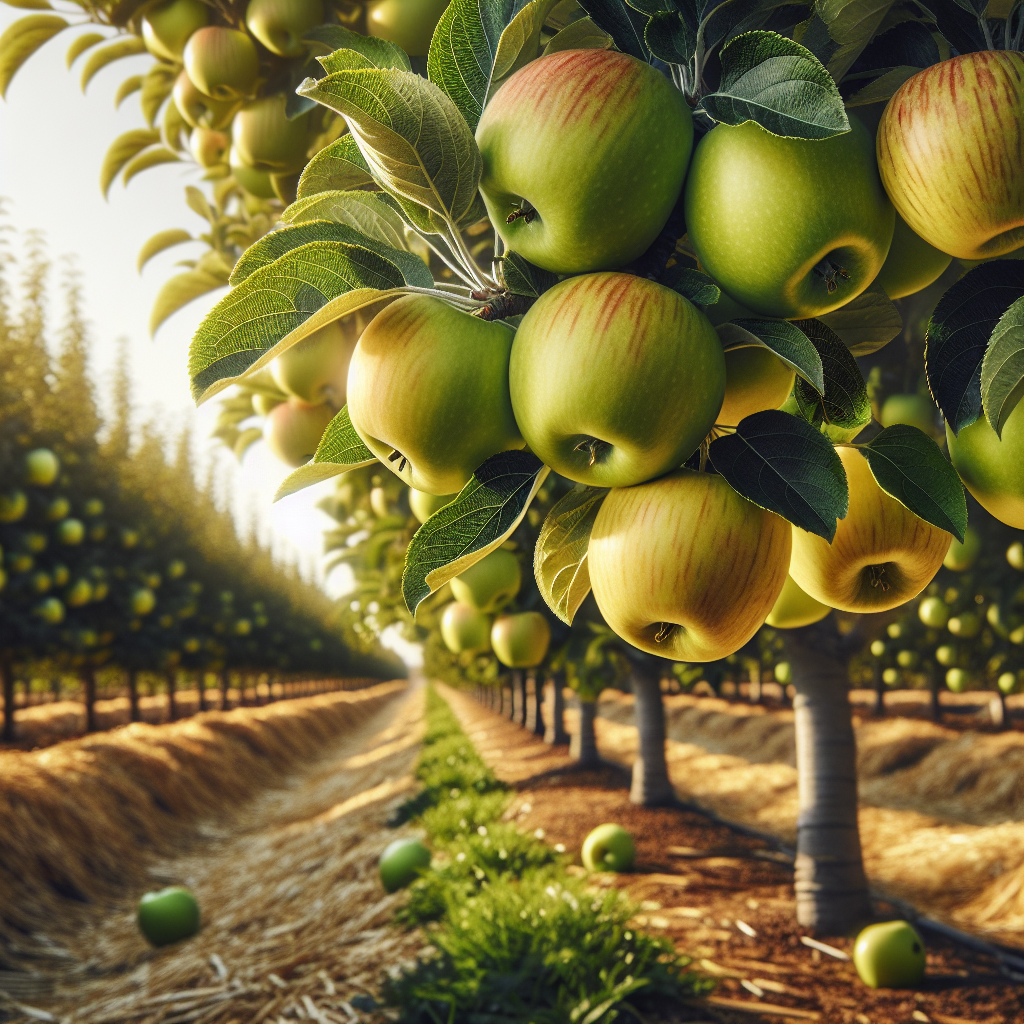
What sets this apple apart is not just nostalgia but eating quality. The fruit is usually medium to large, round to slightly flattened, with yellow-green skin striped or washed red to orange. Flesh is crisp when first ripe, then softens quickly, carrying a high-aroma, balanced sweet-acid profile that many growers consider one of the best for sauce, pies, juice, and early cider. Because it ripens relatively early, often in mid to late summer depending on region, it fills a valuable seasonal niche before many mainstream dessert apples are ready.
From a production standpoint, it is not the simplest orchard choice. Trees are vigorous, often strongly upright when young, and need disciplined structural training. Fruit can ripen unevenly over several pickings, the crop can be heavy in favorable years, and the apples generally do not store for months the way many modern commercial cultivars do. Still, for direct-market growers, homesteads, heritage orchardists, and quality-focused cider makers, its flavor can outweigh these drawbacks.
For general background on species-level orchard culture, see our Apple guide. For broader orchard soil-building ideas, the principles in soil health strategies are also useful.
Botanical Profile of Gravenstein Apple
This cultivar belongs to the rose family, Rosaceae, and the domesticated apple species Malus domestica. Like most apples, it is typically grown as a grafted tree rather than from seed, because seedlings do not come true to type. A seed from a Gravenstein fruit may produce a viable apple tree, but the resulting fruit will likely differ substantially in flavor, texture, size, disease resistance, and bearing habit.
Trees are generally vigorous and can become quite large on standard rootstocks, while dwarfing and semi-dwarfing rootstocks keep them more manageable. On seedling or full-vigor rootstock, mature height can exceed 20 feet, often 25 feet or more with broad spread. On semi-dwarf rootstock, expect roughly 12-18 feet depending on soil fertility and pruning. On dwarf rootstocks, 8-12 feet is common, though support is often necessary.
Bloom time is usually early to midseason, which matters in two important ways. First, blossoms may be more vulnerable to late frost in colder inland valleys. Second, the tree usually requires a compatible pollinizer with overlapping bloom because it is not reliably self-fertile. Good pollination is essential for full fruit set and more uniform fruit shape.
Leaves are oval, serrated, matte green, and borne alternately. Flowers are borne on spurs and short shoots, emerging pink in bud and opening white to pale pink. Fruit is often slightly irregular, sometimes ribbed, which is common in older cultivars. The skin may show distinct striping, and russeting can appear under certain environmental conditions.
A notable trait is that fruit maturity can be staggered. Rather than a single once-over harvest, orchardists often pick in two or three passes, selecting fruit at peak ground-color change and starch conversion. This ripening pattern is useful for extending market harvest, but it increases labor.
In terms of bearing habit, the tree fruits on spurs and on two-year wood. That means pruning must balance renewal with spur preservation; overly aggressive heading cuts can stimulate excess vegetative growth at the expense of fruiting wood.
Soil, pH, and Climate Requirements for Gravenstein Apple
This variety performs best in temperate climates with sufficient winter chill, moderate summer heat, and good air movement. A practical target is about 700-1,200 chill hours below 45°F (7°C), though exact performance varies by rootstock and site. It is especially well suited to regions with cool nights and mild days during fruit maturation, because these conditions help preserve acidity, color development, and aromatic compounds.
Ideal USDA hardiness zones are generally 4-9, but site selection matters more than zone alone. In warm winter districts with low chill, flowering can be delayed, erratic, or uneven, resulting in poor fruit set. In very hot inland climates, fruit may lose acidity quickly, sunburn more easily, and develop softer texture before full flavor complexity develops.
Soil should be deep, well-drained, and moderately fertile. A loam or sandy loam with high biological activity is ideal. Heavy clay is workable only if drainage is corrected, because apple roots are very intolerant of prolonged saturation. If water stands in a planting hole longer than 24 hours after heavy irrigation or rain, the site is marginal unless bermed or tiled.
The preferred pH range is 6.0-6.8, with 6.2-6.5 being especially comfortable for nutrient availability. At pH below about 5.8, calcium, magnesium, and phosphorus availability may become limiting, while manganese or aluminum issues can appear in strongly acidic soils. At pH above 7.2, iron, zinc, and manganese deficiencies are more common, often showing as interveinal chlorosis on newer leaves.
Before planting, test soil to at least 12 inches deep, and ideally to 24 inches where subsoil compaction is suspected. Organic matter around 3-5% is excellent for orchard establishment. If organic matter is below 2%, incorporate well-finished compost across the planting strip before establishment rather than stuffing raw organic matter into the hole. Concentrated amendments in the planting hole can create a bathtub effect or discourage roots from exploring native soil.
Moisture management is critical. Apple roots need oxygen as much as water. Aim to keep the active root zone evenly moist but never anaerobic. In practical terms, soil in the top 6-10 inches should feel cool and slightly damp, not sticky, sour-smelling, or waterlogged. When squeezed, loam should hold shape lightly and crumble with a tap. Symptoms of overwatering include pale leaves, weak shoot growth despite abundant water, leaf yellowing beginning from lower canopy, root decline, and fruit with bland flavor or increased cracking. Underwatering typically causes reduced terminal growth, small fruit, premature fruit drop, marginal leaf scorch, and poor return bloom the following year.
Protection from frost pockets is important because low areas collect cold air during bloom. A gentle slope with air drainage is better than a flat basin. Likewise, open windy hilltops can desiccate blossoms and interfere with pollinators, so moderate shelter is desirable.
Step-by-Step Planting & Propagation
Commercially and horticulturally, this apple is propagated by grafting scion wood of the cultivar onto a chosen rootstock. Rootstock determines tree size, anchorage, precocity, adaptation to soil type, and some disease tolerance. For backyard growers, buying a certified disease-free bare-root tree from a reputable nursery is vastly better than attempting to grow from seed.
Choose the right rootstock. For high-density plantings, dwarf stocks such as M.9-type classes are common but need permanent staking and careful irrigation. For backyard or semi-intensive systems, M.26, MM.106, or similar semi-dwarf rootstocks provide a compromise between manageability and resilience. In heavier or drought-prone soils, rootstock adaptation can matter as much as cultivar choice.
Select a pollinizer. Because fruit set improves with cross-pollination, plant another compatible apple nearby, ideally within 50 feet for home orchards or within the same block for farm orchards. Crabapples with matching bloom can also work. Avoid relying on isolated trees unless neighboring orchards are present.
Time planting correctly. Bare-root trees should be planted while dormant, usually late winter to early spring before budbreak. Container trees can be planted during the growing season, but establishment stress is lower in cool weather.
Prepare the site. Remove perennial weeds from at least a 3-4 foot circle or strip. Grasses are strong competitors for water and nitrogen, especially during the first three years. If subsoil is compacted, rip or broadfork the row before planting. Do not glaze the sides of the hole in wet clay.
Dig the hole properly. Make it two to three times the width of the root spread but no deeper than the root system. The graft union should sit 2-4 inches above finished soil level, especially on dwarfing rootstocks, to prevent scion rooting, which would negate size control.
Inspect and hydrate roots. Soak bare roots in clean water for 1-4 hours before planting, not overnight for extended periods. Prune broken root tips cleanly.
Plant and backfill. Spread roots naturally. Backfill with native soil, firming gently to eliminate large air pockets. Water thoroughly after planting to settle the soil.
Stake if needed. Dwarf trees generally require support from planting onward. Use a sturdy post and soft ties that do not girdle the trunk.
Mulch, but do not mound against the trunk. Apply 2-4 inches of wood chips or leaf mulch over the root zone, keeping a 4-6 inch gap around the trunk to reduce crown rot and rodent damage.
Head the tree at planting if nursery guidance supports it. Many feathered bare-root whips benefit from heading to encourage scaffold formation, but the exact cut depends on training system.
Propagation by bench grafting is feasible for experienced growers. Dormant scion wood is collected in winter, stored cold and slightly moist, then whip-and-tongue grafted or cleft grafted onto rootstock in late winter. The key is cambial alignment and sanitary technique.
Spacing depends on rootstock and system: dwarf trees may be 3-6 feet apart in-row, semi-dwarf 10-15 feet, and standard 20-30 feet. Rows usually need 10-18 feet between them depending on machinery and canopy form.
Care & Maintenance regimes for Gravenstein Apple
Training should begin immediately because this cultivar can be vigorous and structurally unruly if neglected. Central leader systems are common and effective, though open-center adaptations are used in some low-density orchards. During the first three years, prioritize wide branch angles, strong scaffold distribution, and a calm balance between growth and early fruiting. Limb spreaders or clothespins can help widen crotch angles and reduce breakage later under crop load.
Pruning is best split between dormant structural pruning and restrained summer pruning where vigor is excessive. Dormant pruning stimulates growth, so on overly vigorous trees, minimize heavy winter heading. Summer pruning after terminal growth slows can improve light penetration and help check excessive upright shoots. Remove dead, diseased, rubbing, and strongly vertical water sprouts. Preserve healthy fruiting spurs unless they are overcrowded.
Water needs vary with rootstock, soil texture, crop load, and weather, but newly planted trees usually need deep irrigation once or twice weekly in the absence of rain during the first growing season. The goal is to wet the root zone to roughly 12-18 inches deep, then allow the upper soil to begin drying slightly before the next irrigation. Mature trees in loam often need the equivalent of 1-2 inches of water per week during active growth, increasing during hot spells and fruit sizing. Drip irrigation is preferable to overhead watering because it reduces leaf wetness and disease pressure.
A practical monitoring method is to check moisture 6 inches deep near the drip line. If soil is dry and powdery there, irrigation is overdue. If it is slick, odoriferous, or leaves footprints of water film, reduce frequency. Fruit quality suffers when trees swing between drought and saturation.
Fertilization should be based on leaf and soil testing, not guesswork. Young nonbearing trees often need modest nitrogen to establish framework, but overapplication creates lush, disease-prone growth and delayed fruiting. A common target is 8-18 inches of new shoot growth annually on bearing trees; much more may indicate excess vigor, much less may suggest stress or nutrient limitation. Balanced orchard nutrition should include attention to calcium, potassium, boron, and zinc, all of which influence fruit quality, flowering, and storage performance.
If applying compost, use it as a surface mulch or lightly incorporated strip amendment, not piled against trunks. Excess soluble nitrogen late in the season can reduce cold hardiness and worsen soft fruit.
Thinning is especially important. Like many apples, this cultivar can set heavily, leading to small fruit, limb breakage, biennial bearing, and poor color. Thin when fruits are about marble size, ideally within 30-45 days after full bloom. Leave one fruit per cluster and space fruits roughly 6-8 inches apart along branches. Prioritize removing damaged, misshapen, or crowded fruits first.
Weed control in the tree row is one of the most underappreciated management steps. Keep at least a 3-foot weed-free strip around young trees. Living groundcovers can be maintained in alleyways but should not compete directly at the trunk line.
Fruit bagging, reflective mulches, and summer canopy management can improve finish in small plantings. Where sunburn is a problem, retain enough leaf cover on the southwest side of the canopy.
Pests, Diseases & Organic Management
This cultivar is valued for flavor, not for exceptional disease resistance, so preventive management matters. Sanitation, airflow, pruning, resistant rootstocks where relevant, and careful irrigation timing form the core of an organic approach.
Apple scab is one of the most important fungal diseases in humid springs. It causes olive to black lesions on leaves and fruit, leading to cracking and defoliation. Reduce pressure by pruning for airflow, removing infected leaf litter, encouraging rapid decomposition of fallen leaves, and using protective organic fungicides such as sulfur or lime sulfur where permitted and appropriate. Timing around green tip through petal fall is critical.
Powdery mildew shows as gray-white powdery growth on shoots, leaves, and blossoms, especially in dense canopies. Avoid excessive nitrogen, remove infected shoot tips during pruning, and maintain open canopies.
Fire blight, caused by Erwinia amylovora, is especially dangerous in warm, wet bloom periods. Symptoms include blackened blossom clusters, shepherd's-crook shoot tips, and cankers. Prune infected wood well below visible symptoms during dry weather, disinfecting tools between cuts. Avoid heavy nitrogen that pushes succulent growth.
Cedar apple rust may be a problem in regions where junipers are nearby. Remove alternate hosts if feasible and maintain a monitoring program.
Codling moth is the signature worm-in-the-apple pest. Use pheromone traps to monitor flight timing. Organic control options include mating disruption in larger blocks, granulosis virus, kaolin clay, and well-timed spinosad products where allowed. Remove dropped infested fruit promptly to break the life cycle.
Apple maggot can be severe in some regions. Sticky red sphere traps help monitor and suppress populations in home orchards.
Aphids, including Woolly apple aphid and Green apple aphid, distort growth and excrete honeydew. Encourage beneficial insects and avoid broad-spectrum sprays that disrupt natural enemies. Strong water sprays can suppress light infestations on young shoots.
Mites increase in hot, dusty conditions. Dust reduction, predator conservation, and horticultural oils can help keep populations under threshold.
Scale insects, Leafrollers, and Borers also warrant periodic scouting.
Organic management works best when it is integrated rather than reactive:
- prune for light and air
- sanitize mummified and fallen fruit
- remove prunings with visible disease from the orchard floor
- maintain balanced fertility
- monitor with traps and degree-day models where possible
- protect pollinators by avoiding bloom-time insecticide applications
Rodents and deer can be major non-insect threats. Use trunk guards against vole damage in winter, and fencing where deer browsing is likely.
Harvesting, Curing & Optimal Storage
This is an early apple and should be harvested by maturity indicators rather than calendar date alone. Depending on climate, harvest may begin from late July through September. Fruit often does not ripen uniformly, so expect multiple pickings.
Watch for a shift in ground color from intense green toward yellow-green, fuller varietal aroma, easier separation from the spur when lifted and twisted, and darkening seed color from pale to brown. Starch iodine testing is useful for precision harvest, especially for market growers. Because flavor develops rapidly, there is a narrow window between under-ripe sharpness and overripe softness.
Pick carefully by rolling the fruit upward rather than pulling straight down, which can tear spurs and reduce next year's crop. Handle gently; bruising shortens already limited storage life. Harvest into padded containers and move fruit out of sun quickly.
Unlike curing crops such as onions or winter squash, apples do not undergo a true curing phase, but field heat removal is important. Cool harvested fruit as soon as possible, ideally within hours. Pre-cooling to near 32-38°F (0-3°C) with high relative humidity, around 90-95%, helps preserve crispness and slows aroma loss. Do not store damaged or diseased fruit with clean fruit.
This variety is famous for short storage compared with later apples. Under ordinary refrigeration, quality is often best within 2-6 weeks. In room-temperature conditions, prime quality may last only several days to a couple of weeks depending on ripeness at harvest. Fruit softens quickly, which is one reason it is treasured for sauce and baking.
For processing, it excels in:
- sauce, because the flesh breaks down into fragrant puree
- pies and tarts, where acidity and aroma stand out
- juice and sweet-tart fresh cider
- drying, though slices are softer than some firmer late cultivars
Store only sound fruit, ideally in perforated food-grade bags or ventilated boxes. Keep it away from ethylene-sensitive produce. Regularly inspect stored apples and remove any that begin to soften excessively or rot.
Companion Planting for Gravenstein Apple
In orchard systems, companion planting should support pollination, pest balance, soil protection, and reduced competition near the trunk. The best companions are usually low-growing or strategically placed insectary plants rather than aggressive crops that compete heavily for moisture.
Yarrow is one of the strongest companions because its umbels attract parasitic wasps, hoverflies, and predatory insects that help suppress aphids and caterpillar pests. It is drought tolerant once established and can be maintained in alley margins or sunny orchard edges.
Thyme works well as a low aromatic groundcover in drier orchard zones. It supports pollinators when flowering and does not create the lush, tall competition that grasses often do. It is especially useful in small orchards where a low-maintenance understory is desired.
Clover is valuable as a living mulch in alleyways or between rows, where it helps stabilize soil, support pollinators, and contribute nitrogen biologically. Keep it away from the immediate trunk zone of young trees so it does not compete for shallow moisture.
Nasturtium can act as a trap or distraction plant for aphids in diversified home orchards and also brings pollinator activity. Place it outside the root flare area and monitor regularly so it does not become a pest reservoir.
Avoid planting large nutrient-hungry annual vegetables directly under the canopy, particularly where irrigation is limited. Also avoid dense, constantly wet understories that increase humidity around the tree and favor disease. The most successful orchard floor plan usually combines a mulch ring around the trunk, a weed-managed in-row strip, and flowering companion species in adjacent bands or alley edges rather than right at the base of the tree.