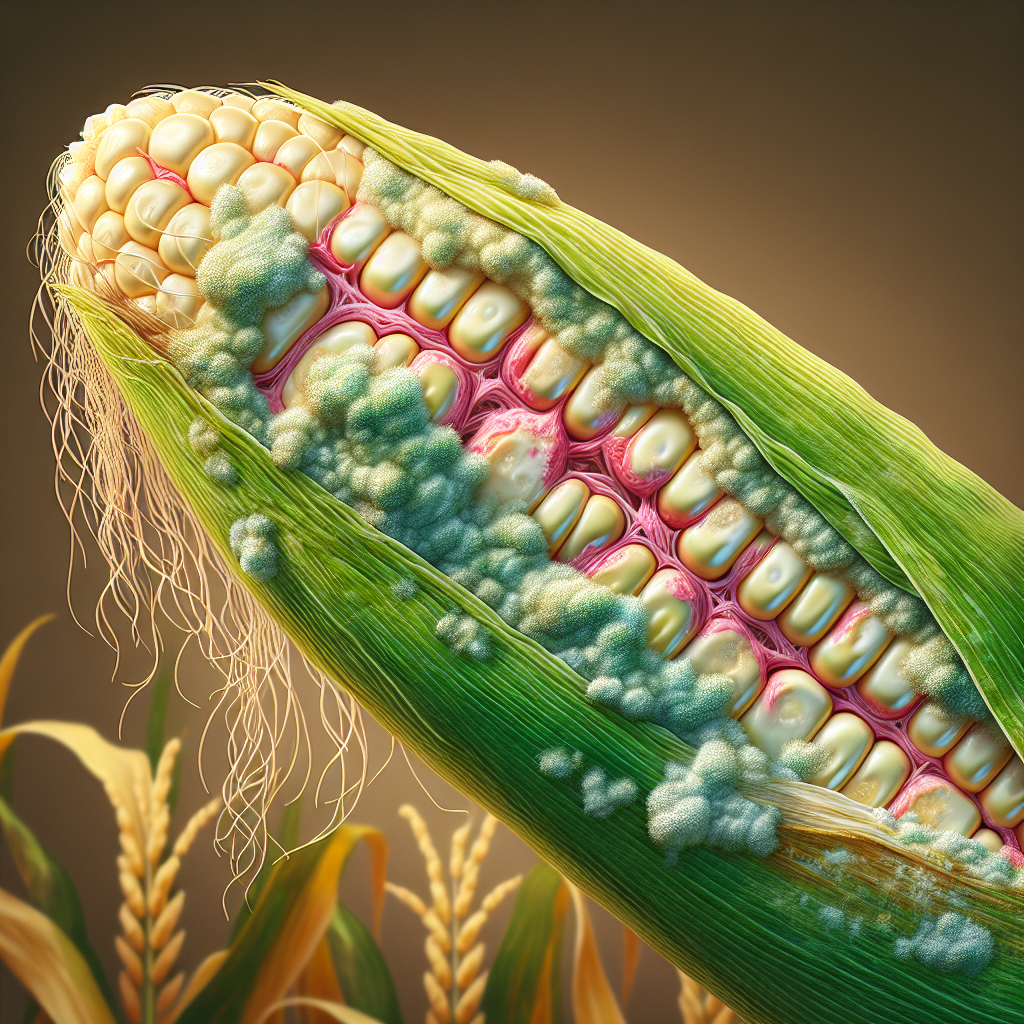
Introduction to Fungal ear rots
Fungal ear rots represent one of the most economically damaging disease complexes in corn production worldwide, particularly in temperate and tropical grain-growing regions. These diseases are caused by a consortium of fungal pathogens, including Fusarium verticillioides, Fusarium proliferatum, Gibberella zeae (the sexual stage of Fusarium graminearum), and occasionally Penicillium and Aspergillus species. Unlike single-pathogen diseases, fungal ear rots often involve multiple fungi interacting with environmental stresses, insect damage, and plant stress factors to infect developing ears.
The primary concern with fungal ear rots extends beyond yield loss—estimated at 5-20% annually in susceptible fields—to the production of mycotoxins like fumonisins, deoxynivalenol (DON or vomitoxin), and zearalenone. These toxins pose serious health risks to humans and livestock, rendering contaminated grain unsuitable for food, feed, or industrial use. In severe outbreaks, losses can exceed 50% of the crop, making proactive management essential for sustainable corn farming. Early detection and integrated strategies are critical, as infections often occur silently during the vulnerable silking to dough stages. This guide provides professional-grade diagnostic criteria, lifecycle insights, and proven organic and cultural controls to safeguard your harvest. For more on corn pest interactions that exacerbate ear rots, see our detailed entry on Corn Earworm.
Identifying Symptoms & Damage
Accurate diagnosis of fungal ear rots requires careful field scouting during the late reproductive stages (R3-R5) and at harvest. Symptoms vary by pathogen but share common hallmarks:
Fusarium ear rot (most common): Pinkish-white to salmon-colored fungal growth between kernels, often starting at the ear tip. Affected kernels appear streaked or bleached, with a cottony mycelium under husks. Mycelium may produce a sweet, musty odor.
Gibberella ear rot: Reddish-pink to reddish-brown mold concentrated at the ear tip, progressing downward. Kernels show water-soaked lesions that dry to a bleached appearance. This rot is notorious for DON production.
Penicillium ear rot: Blue-green mold on kernels and shanks, often following insect injury. Kernels may shrivel and become lightweight.
Aspergillus ear rot: Olive-green to yellow-green mold, typically scattered across the ear. Associated with aflatoxin contamination in hot, drought-stressed fields.
Damage assessment involves pulling back husks on 20-50 ears per field hotspot. Thresholds for action: >10% ear surface with visible mold or >2% mycotoxin-positive kernels. Yield impacts include 1-2% loss per 1% infected kernels, plus 100% rejection for high-mycotoxin grain. Differentiate from common rust (foliar pustules) or northern corn leaf blight (leaf lesions) by focusing on ear-specific symptoms. Use blacklight for rapid mycotoxin screening—fumonisin fluoresces apple-green.
Lifecycle and Progression of Fungal ear rots
Fungal ear rots follow a predictable polycyclic lifecycle tied to corn phenology:
Primary Inoculum: Pathogens overwinter as chlamydospores, sclerotia, or mycelium in crop residue, soil, or infected seed. Fusarium survives 2-3 years in corn stalks; Gibberella sclerotia persist up to 5 years.
Spore Dispersal: Rain splash, wind, and insects disseminate macroconidia and ascospores during silking (R1). Silk channels serve as entry points.
Infection: Optimal at 25-30°C (77-86°F) with high humidity (>90% RH). Fungi colonize silks, then kernels during blister (R2) to dough (R4) stages. Insect wounds from European Corn Borer or fall armyworm accelerate penetration.
Progression: Rot expands under husks, producing mycotoxins by milk stage (R3). Kernel moisture >22% favors rapid spread.
Secondary Spread: Conidia from rotted ears infect adjacent plants via wind/rain. Post-harvest, storage fungi like Aspergillus proliferate at 15-20% moisture.
Full cycle: 30-45 days from infection to harvest-visible symptoms. Disease gradients form from field edges inward, following residue patterns.
Environmental Triggers & Risk Factors
Fungal ear rots explode under specific conditions:
Weather: Warm nights (20-25°C), frequent rainfall during silking, and high humidity. Drought stress followed by rain is particularly dangerous, as split husks expose ears.
Agronomic: Continuous corn, high plant density (>35,000 plants/acre), delayed planting, and excessive nitrogen. No-till fields with surface residue amplify inoculum.
Hybrid Susceptibility: Tight-husked hybrids trap moisture; those with poor husk coverage or early senescence are vulnerable.
Insect Synergy: Damage from corn rootworm, sap beetles, or birds creates entry wounds. Read our blog post on Spring Pest Patrol: Organic AI Strategies to Shield Your Crops from Common Invaders for integrated IPM.
Risk index: Score fields (0-10) on residue (3 pts), hybrid (2 pts), weather (3 pts), insects (2 pts). >6 = high risk; scout weekly.
Organic Control & Treatment Plans
Organic management emphasizes prevention over cure:
Crop Rotation: 2-3 years out of corn, including soybeans or wheat to reduce inoculum.
Residue Management: Tillage buries 70-90% of overwintering fungi. In no-till, plant cover crops like clover to suppress splash dispersal.
Hybrid Selection: Choose resistant hybrids (e.g., those rated 'good' for Fusarium ear rot by seed companies). Avoid tight-husked varieties.
Silk Channeling: Apply organic kaolin clay (Surround WP) at 1-2% solution during silking to block spore entry. Bacillus subtilis or Trichoderma biopesticides (e.g., RootShield) at V10-R1.
Nutrient Balance: Maintain K:Zn ratios; zinc deficiency increases susceptibility. Foliar micronutrients at V8.
Insect Control: Target ear pests with Bacillus thuringiensis (Bt) or neem oil. Hand-remove bird-damaged ears.
Harvest Timing: Harvest at 18-20% moisture; dry to 13-15% immediately. Avoid mechanical damage.
Treatment efficacy: Rotation + residue control reduces incidence 50-70%; full IPM stacks yield protection to 85%.
Preventing Fungal ear rots in the Future
Long-term prevention builds resilient systems:
Scouting Protocol: Weekly from VT-R3; sample 5 locations/field, 10 ears/location.
Forecasting: Use models like Fusarium Risk Index (integrates weather/hybrid data).
Seed Treatments: Organic-approved Trichoderma virens or hydrogen peroxide soaks.
Field Mapping: GPS-tag hotspots; rotate intensively.
Storage Best Practices: Aerate bins, monitor moisture/temp. Clean equipment between fields.
Mycotoxin Testing: ELISA kits for high-risk fields; reject >4 ppm fumonisin.
Annual checklist: Assess previous season, select hybrids, plan rotation. Integrate with Ear Rots management for comprehensive protection.
Crops Most Affected by Fungal ear rots
While primarily a corn disease, fungal ear rots affect other ear/panicle crops:
Corn (Zea mays): 90% of cases; all types (sweet corn, dent, flint).
Sorghum: Grain mold complex similar to Fusarium rot.
Wheat/Small Grains: Head scab (F. graminearum) analogous to ear rot.
Minor reports in millet and teff panicles. Focus resources on corn; scout sorghum secondarily.