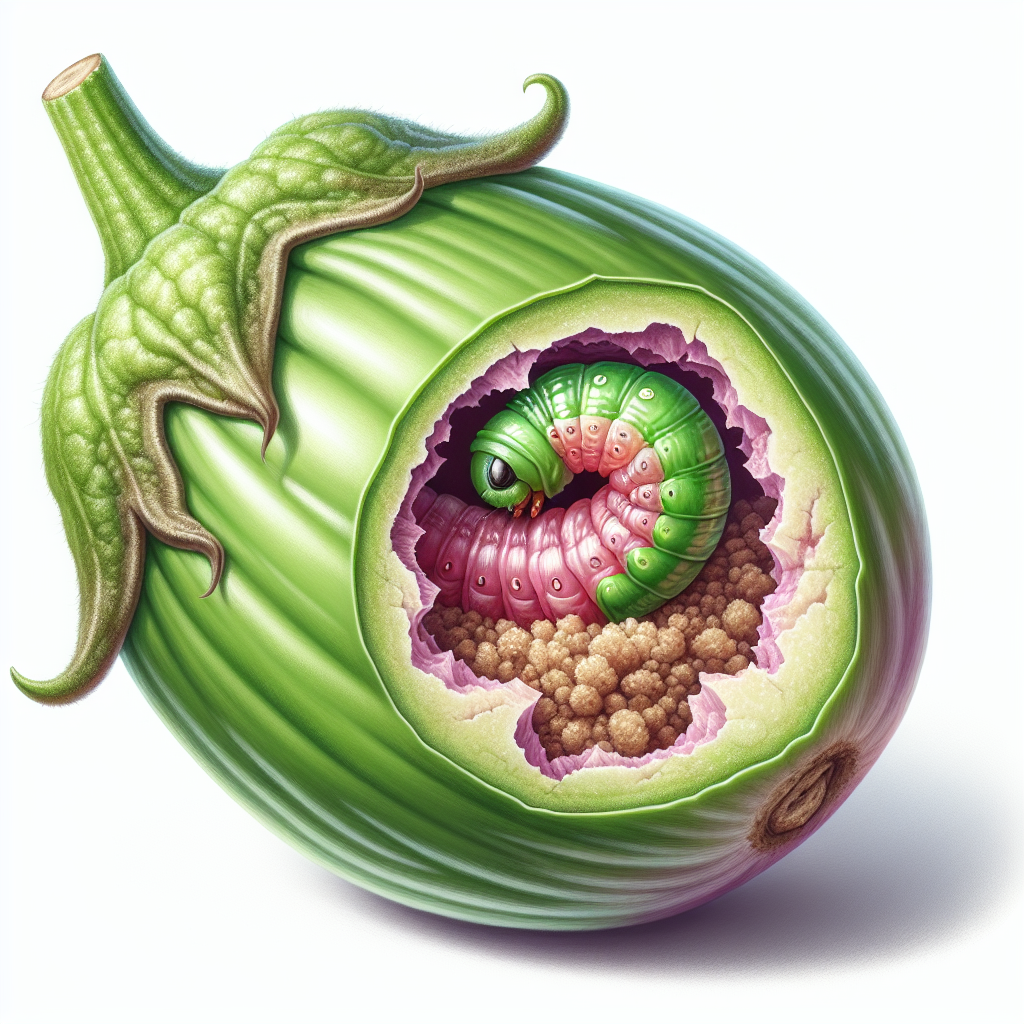
Introduction to Fruit and shoot borers
Fruit and shoot borers represent one of the most devastating pest complexes in tropical and subtropical agriculture, particularly targeting high-value fruiting crops. These pests, primarily larvae of moths from the family Crambidae and Noctuidae, bore into tender shoots, fruits, and stems, leading to wilting, deformation, and premature fruit drop. In severe infestations, yield losses can exceed 50-70% in crops like tomato, eggplant, and okra, making them a primary concern for small-scale farmers and commercial growers alike.
The most notorious species is Leucinodes orbonalis (eggplant shoot and fruit borer), but related pests like Earias vitella (spotted bollworm) and Conogethes punctiferalis (yellow peach moth) affect a wide range of hosts. Native to South and Southeast Asia, these borers have spread globally through trade, now posing threats in Africa, the Middle East, and parts of the Americas. Their cryptic feeding habits—hiding inside plant tissues—make them challenging to detect and control chemically, pushing growers toward integrated pest management (IPM) approaches. Understanding their biology is crucial for timely interventions, as a single larva can destroy multiple fruits over its lifecycle. For more on Spring Pest Patrol: Organic AI Strategies to Shield Your Crops from Common Invaders, check this resource.
This guide provides a comprehensive diagnostic framework, lifecycle details, organic management plans, and prevention strategies to help farmers reclaim their harvests from these insidious invaders.
Identifying Symptoms & Damage
Diagnosing fruit and shoot borer damage requires keen observation, as larvae remain hidden within plant tissues. Key symptoms include:
- Shoot Wilting and 'Dead Heart': Young shoots droop and turn brown, with a hollowed-out central cavity. This is often the first sign in seedlings and early vegetative stages, mimicking root-knot nematodes but distinguished by frass (insect excrement) at entry holes.
- Fruit Boring and Exit Holes: Small, round holes (1-2 mm) on fruits, often plugged with frass. Affected fruits show internal tunneling, leading to rotting, discoloration, and secondary infections from fruit rots. Severely bored fruits drop prematurely.
- Stem Girdling and Swelling: Larvae feed under the epidermis, causing stems to swell and split. This leads to partial or complete plant collapse, especially in young plants.
- Frass and Silk: Piles of greenish-black frass at bore holes, sometimes webbed with silk. Adult moths may be seen at dusk, laying eggs singly on leaves or fruits.
Damage severity peaks during flowering and fruiting, with larvae preferring tender tissues. Differentiate from caterpillars by the borers' internal feeding and lack of external defoliation. Scout weekly by splitting open 10-20 suspicious shoots/fruits per acre; if >5% show larvae, action is needed. Economic thresholds vary: 1 borer per 10 plants for tomatoes, 2-3 per plant for eggplant.
Lifecycle and Progression of Fruit and shoot borers
Fruit and shoot borers complete 6-10 generations per year in tropical regions, thriving in warm temperatures (25-35°C). The lifecycle spans 25-40 days:
- Egg Stage (2-3 days): Tiny (0.5 mm), flat, yellowish eggs laid singly on tender leaves, shoots, or fruits. Females lay 100-200 eggs over 5-7 days.
- Larval Stage (10-15 days): Six instars; neonate larvae mine leaves, then bore into shoots/fruits. Mature larvae (15-20 mm, pinkish-green with brown head) exit to pupate. This is the damaging stage, with one larva ruining 10-20 fruits.
- Pupal Stage (6-8 days): Silken cocoons in soil, leaf litter, or crop debris.
- Adult Moth (5-10 days): Small (20-30 mm wingspan), pale brown with white markings. Nocturnal, attracted to lights.
Overlapping generations mean multiple life stages coexist, complicating control. Pupae overwinter in soil, emerging with monsoon rains. Monitor with pheromone traps to time interventions. For insights on Fruit borers, see the wiki page.
Environmental Triggers & Risk Factors
Borers flourish in humid (70-90% RH), warm conditions, with peak activity during rainy seasons. Key triggers:
- Climate: Optimal at 28-32°C; drought stress weakens plants, increasing susceptibility.
- Crop Factors: Monocropping, excessive nitrogen (lush growth), and dense planting favor infestation. Susceptible varieties lack pubescence or tight fruit calyces.
- Weed Hosts: Alternate hosts like nightshade weeds harbor populations.
- Farm Practices: Late planting aligns with peak moth flights; poor sanitation leaves pupae.
Risk is highest in the first 60 days post-transplant. High Helicoverpa species pressure can exacerbate damage via secondary invasions.
Organic Control & Treatment Plans
Organic management emphasizes IPM: prevention, monitoring, and targeted controls. Avoid broad-spectrum sprays to preserve predators like Trichogramma wasps.
Monitoring
- Deploy 4-6 pheromone traps/ha (Leucinodes-specific lures). 5-10 moths/trap/week signals action.
Cultural Controls
- Crop Rotation: 2-3 years away from solanaceae/cucurbits.
- Sanitation: Destroy infested shoots/fruits; deep plow post-harvest to expose pupae.
- Timing: Plant early-maturing varieties; use mulches to deter oviposition.
Biological Controls
- Trichogramma chilonis: Release 50,000-100,000/ha weekly during egg-laying peaks (parasitizes 60-80% eggs).
- Bt (Bacillus thuringiensis): Spray Dipel or Agree (2-5 g/L) every 7-10 days on young foliage/fruits. Effective on larvae <10 mm.
- NPV Virus: Nuclear polyhedrosis virus sprays (250 LE/ha) for larval control.
- Predators: Encourage birds, spiders; plant marigold borders.
Mechanical/Physical
- Hand-pick and destroy larvae daily (small farms).
- Light traps at night; sticky yellow traps for adults.
Organic Botanicals
- Neem oil (5 ml/L + soap) or spinosad (0.5 ml/L) weekly; alternate to prevent resistance.
Treatment Plan: Scout → Trap counts >5 → Bt/neem spray → Trichogramma release → Re-scout. Expect 70-90% control with compliance.
Preventing Fruit and shoot borers in the Future
Long-term prevention builds resilient systems:
- Resistant Varieties: Plant borer-tolerant hybrids like Arka Samrat (eggplant) or Pusa Ruby (tomato).
- Intercropping: Mix with garlic or onion to repel moths.
- Barrier Methods: Row covers until flowering; reflective mulches.
- Soil Health: Balanced fertility reduces lush growth; cover crops suppress weeds.
- Trap Crops: Border plantings of okra attract borers away from main crop.
Annual IPM audits and Soil Health Mastery: 5 Proven Strategies for Small Farms to Build Fertile Ground Without Breaking the Bank integration ensure sustained protection.
Crops Most Affected by Fruit and shoot borers
Primary hosts are Solanaceae and Cucurbitaceae:
- Eggplant (most severe; up to 90% loss).
- Tomato (fruit and shoot boring).
- Okra (pod damage).
- Hot pepper (chili-pepper).
- Cucurbits: Cucumber, squash.
Secondary: mango, guava, cotton. Polyphagous species attack >50 crops, but peak on fruiting vegetables.