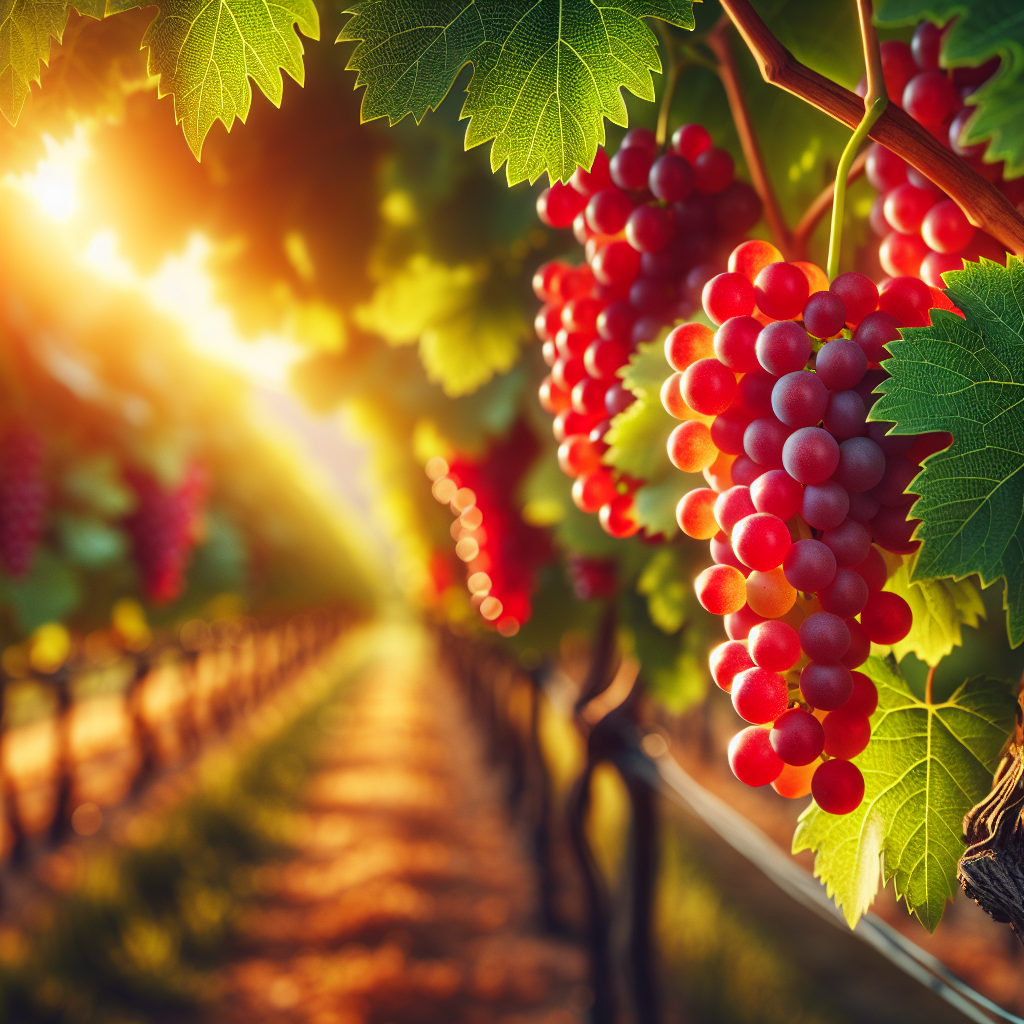
Introduction to Flame Seedless Grapes
Developed in California and released in the late 20th century, this cultivar became one of the most important red seedless table grapes in commercial production because it ripens early, colors well under favorable conditions, and produces large, attractive clusters suitable for fresh eating and shipping. It is grown primarily as a table grape rather than for wine, juice, or raisins, and its management differs from many backyard grape types because fruit presentation, berry uniformity, and crunch matter as much as total yield.
This variety is especially valued for its bright red to deep crimson skin, seedless berries, mild muscat-free flavor profile, and refreshing snap when harvested at the correct maturity. The vine is vigorous and productive, but that vigor must be managed carefully. Left unattended, it can overcrop, shade its clusters, delay color development, and produce berries with softer texture or uneven sweetness.
In warm viticultural regions, Flame Seedless often reaches harvest ahead of many other red seedless cultivars, which gives it strong economic value. For growers familiar with general Grapes, the main distinction here is that table-grape culture demands more detailed work on cluster exposure, shoot positioning, crop thinning, girdling in some systems, and uniform irrigation. For broader management thinking around vineyard floor ecology, see this soil health article.
Botanical Profile of Flame Seedless Grapes
This is a deciduous, woody perennial vine in the Vitaceae family. Like other Vitis vinifera cultivars, it climbs by tendrils and produces fruit on current-season shoots arising from one-year-old canes or spurs, depending on the pruning system used. Bud fruitfulness is generally good, and the vine can be trained on a range of trellis systems, though open canopies are especially important for red color development and disease reduction.
Key characteristics include:
- Species: Vitis vinifera
- Cultivar group: Seedless red table grape
- Growth habit: Vigorous climbing vine
- Fruit type: Berries borne in clusters
- Berry traits: Medium to large, round to slightly oval, red skin, firm flesh, seed traces usually soft and not objectionable
- Ripening season: Early to early-mid season depending on climate
- Primary use: Fresh market/table grape
The berries develop from perfect flowers, meaning separate pollinizers are not required. Flowering occurs on new shoots in spring. Clusters are typically conical and moderately compact; if crop load is too high or canopy density excessive, compact clusters may become more prone to rot, uneven berry sizing, and poor color. The vine's natural vigor means nitrogen management, pruning severity, and irrigation timing strongly influence fruit quality.
Physiologically, Flame Seedless responds strongly to source-sink balance. In practical terms, that means leaves must be sufficient to support berry enlargement and sugar accumulation, but not so dense that clusters remain heavily shaded. Red color formation depends on anthocyanin accumulation in the berry skin, which improves under good sunlight exposure, moderate crop load, and appropriate day-night temperature patterns.
Soil, pH, and Climate Requirements for Flame Seedless Grapes
This cultivar performs best in deep, well-drained soils with moderate fertility and low salinity. Ideal textures are sandy loam, loam, gravelly loam, or silt loam with excellent internal drainage. Heavy clay can be used only if drainage is corrected through berming, ripping, tiling, or organic matter improvement. Standing water or prolonged saturation is one of the fastest ways to weaken young vines and predispose roots to rot.
The preferred soil pH is about 6.0 to 7.5, with 6.5 to 7.0 often being the sweet spot for nutrient availability. It can tolerate slightly alkaline conditions better than some berry crops, but high pH soils above about 7.8 may induce iron chlorosis, especially on susceptible rootstocks. In those soils, growers often see interveinal yellowing on young leaves while veins remain green. If pH is very low, calcium and magnesium imbalances may appear and root growth can slow.
Good soil structure matters as much as chemistry. Aim for:
- At least 3 to 5 feet of penetrable rooting depth
- No hardpan within the top 24 to 30 inches
- Organic matter around 2% to 4% in mineral soils
- Infiltration rapid enough that irrigation water does not pond for more than a few hours
Climate needs are specific. Flame Seedless is best adapted to Mediterranean, semi-arid, and warm temperate grape-growing regions with hot summers, low rainfall during ripening, and ample sunshine. It needs a frost-free growing season long enough to flower, set, size, color, and sweeten berries fully. Excess humidity during ripening raises the risk of Powdery mildew, bunch rot, and berry splitting.
Ideal seasonal conditions include:
- Dormant winter with enough chill to synchronize budbreak, though extreme winter cold can injure wood
- Warm spring for even shoot growth and flowering
- Hot, sunny summer for sugar accumulation and color
- Dry weather near harvest for clean fruit finish
Temperature guidelines:
- Budbreak can begin when spring temperatures rise consistently above 10 to 12 C
- Active shoot growth is strong from roughly 20 to 32 C
- Berry ripening and sugar loading are excellent in warm days around 25 to 35 C
- Prolonged heat above 38 to 40 C can cause sunburn, shrivel, and stalled coloration if vines are water-stressed
- Winter injury risk increases as temperatures fall well below about -15 C, depending on vine acclimation and rootstock
This cultivar generally dislikes sites with frequent summer rain, late spring frost pockets, or poor air movement. Choose a full-sun location with at least 7 to 8 hours of direct sun daily, preferably more. Rows oriented north-south often improve even light interception.
Step-by-Step Planting & Propagation
Commercially and in serious home production, vines are usually established from dormant bare-root grafted plants or rooted cuttings sourced from certified disease-free nurseries. Grafted vines are preferred in many regions because rootstocks can improve tolerance to nematodes, calcareous soils, salinity, or phylloxera pressure.
- Select the site carefully. Choose ground with full sun, good air drainage, and no history of chronic waterlogging. Avoid low pockets where cold air settles.
- Test the soil before planting. Analyze pH, electrical conductivity, organic matter, and major nutrients. If possible, also test for nematodes.
- Prepare the ground deeply. Rip or loosen compacted layers to 18 to 30 inches. Incorporate well-finished compost only if soil is low in organic matter; do not create overly rich, lush conditions.
- Install the trellis before or at planting. End posts, line posts, and wire placement should match your training system. Bilateral cordon on a wire trellis is common, though some table grape systems use more elaborate overhead structures.
- Plant during dormancy. Late winter to early spring, after severe frost risk but before active growth, is ideal in most temperate zones.
- Set vines at the correct depth. Keep the graft union several inches above the soil line. For own-rooted plants, plant at nursery depth unless local practice differs.
- Space appropriately. Typical spacing is 6 to 8 feet between vines and 10 to 12 feet between rows for moderate systems, though vigor, rootstock, and machinery needs may change this.
- Water in thoroughly. After planting, irrigate enough to settle soil around roots and remove air pockets.
- Head back the vine. Reduce the top to one or two strong buds if necessary, so root establishment matches top growth.
- Train a single trunk. In year one, select the strongest shoot and tie it to a stake. Remove competing shoots.
Propagation by hardwood cuttings is possible where own-rooted vines are appropriate. Use pencil-thick, disease-free one-year wood with 3 to 4 nodes, taken during dormancy. Rooting is improved by bottom heat and well-drained propagation media. However, for serious production, certified nursery plants are safer because viruses, Trunk diseases, and hidden decline issues can be introduced through informal propagation.
First-year goal: establish roots and a straight, healthy trunk. Do not let young vines carry a crop. Remove flower clusters so carbohydrate reserves go into framework development.
Care & Maintenance regimes for Flame Seedless Grapes
Irrigation must be disciplined. Young vines need consistently moist but never saturated soil in the upper 12 to 18 inches. Mature vines should cycle between irrigation events so the root zone is recharged and then partially dries, encouraging deeper rooting and better oxygen supply.
As a practical target, soil should feel cool and slightly moist at 6 to 10 inches deep during active growth, not muddy or foul-smelling. Overwatered vines often show pale leaves, weak shoot tips, excessive lateral growth, delayed fruit maturity, and in severe cases leaf yellowing despite wet soil. Underwatered vines show tendril drying, dull leaves, reduced shoot elongation, berry shrivel, and poor berry sizing.
General irrigation strategy:
- At budbreak to bloom: maintain moderate, even moisture; water stress can reduce shoot growth and cluster development.
- Fruit set to berry sizing: this is one of the highest water-demand periods; inadequate moisture reduces berry size permanently.
- Veraison to harvest: reduce excess irrigation slightly to improve color, sweetness, and firmness, but do not induce severe stress.
- Post-harvest: continue enough irrigation for healthy leaf function so vines can store reserves before dormancy.
In drip systems, mature vines in hot climates may require frequent applications, while cooler climates need less. What matters most is wetting the active root zone and then allowing oxygen to return. Avoid shallow daily sprinkling.
Fertilization should follow leaf petiole analysis and soil testing rather than guesswork. Excess nitrogen is a common mistake with table grapes because it pushes shade, delays color, and softens fruit. In balanced vineyards, nitrogen is often applied in split doses from early spring through fruit set, then reduced. Phosphorus is needed mainly for root establishment and energy transfer; potassium becomes especially important for sugar translocation, berry quality, and vine water relations.
Typical nutrient symptoms:
- Nitrogen deficiency: pale older leaves, weak growth, small canopy
- Excess nitrogen: rank shoots, dense shade, delayed coloring, more mildew pressure
- Potassium deficiency: leaf edge scorching, weak ripening, poor sugar accumulation
- Magnesium deficiency: interveinal chlorosis on older leaves
- Iron deficiency: yellow young leaves with green veins, often in high-pH soils
Pruning is central to quality. During dormancy, remove most of the previous year's growth and retain a balanced number of fruiting units. Flame Seedless may be managed by spur or cane pruning depending on site and bud fruitfulness, but many growers use systems that simplify uniform cropping and open canopy structure. If the vine is overcropped, berry size and color suffer.
Canopy management tasks include:
- Shoot thinning early in spring to remove weak or crowded shoots
- Tucking or positioning shoots to keep rows airy
- Selective leaf removal around clusters after fruit set, especially on the morning-sun side, to improve airflow and color without causing sunburn
- Cluster thinning where vines set too heavily
- Berry thinning or cluster tipping in high-quality table grape systems to improve uniformity
In some commercial regions, plant growth regulators and trunk or cane girdling are used to improve berry size and earliness. These techniques require skill and timing; if misused, they can weaken vines or distort fruit quality, so they are not recommended casually for beginners.
Weed control is best achieved with a clean but biologically active vine row. Keep a weed-free strip around the trunk during establishment, especially the first 2 to 3 years. Mulch can help conserve moisture, but keep it several inches away from the trunk to avoid crown rot and rodent damage.
Pests, Diseases & Organic Management
The most important diseases in many regions are Powdery mildew, Downy mildew where humidity is high, Botrytis bunch rot, and various Trunk diseases. Powdery mildew is especially important on Vitis vinifera table grapes because it can affect leaves, stems, and berries, reducing both marketability and vine vigor.
Powdery mildew signs include gray-white fungal growth on young leaves or fruit, distorted tissues, poor berry finish, and skin cracking in severe infections. Management depends on prevention: open canopy, moderate nitrogen, good spray timing, and sanitation. Organic programs typically rely on sulfur, potassium bicarbonate, horticultural oils, and biological fungicides, rotated carefully to avoid phytotoxicity in hot weather.
Botrytis risk increases when clusters are too compact, canopies too dense, or rain and overhead irrigation occur near harvest. Berry thinning, cluster exposure, and avoiding late excessive nitrogen all reduce risk.
Common insect and mite pests include:
- Grape leafhoppers
- Spider mites
- Mealybugs
- Thrips in some regions
- Grape berry moth where present
- Birds and Wasps close to harvest
Leafhopper damage appears as stippling or pale speckling on leaves. Mites can produce bronzing, webbing, and reduced photosynthesis in hot dusty conditions. Mealybugs are especially problematic because they weaken vines, contaminate fruit, and can vector grapevine viruses.
Organic management principles:
- Monitor weekly from spring onward
- Use yellow sticky cards where appropriate for flying pests
- Preserve beneficial insects by avoiding broad-spectrum sprays
- Control ants that protect Mealybugs
- Reduce dust on vineyard roads because dusty vines favor mites
- Remove mummified fruit and diseased wood during dormancy
- Sanitize pruning tools when trunk disease is suspected
Bird pressure can be severe because the bright red berries are highly visible. Netting is the most reliable non-toxic solution. Reflective tape and sound deterrents help briefly but are rarely sufficient alone.
Root and trunk issues deserve attention. Poor drainage encourages root decline. Crown gall can occur where vines are wounded by cold or mechanical injury. Eutypa and other Trunk diseases enter through pruning wounds, so prune in dry weather when possible and protect large wounds in high-risk regions.
Harvesting, Curing & Optimal Storage
Harvest timing for this cultivar should be based on more than color alone. Red skin may appear before flavor and texture fully mature. Target a combination of full varietal color, firm crisp texture, adequate soluble solids, and balanced acidity. In commercial practice, soluble solids are commonly checked with a refractometer. Depending on market expectations and region, table grapes are often harvested once sweetness is comfortably in the mid- to upper-teens Brix or higher, with full flavor and texture.
Signs of proper harvest maturity:
- Berries are uniformly red with no strong green cast
- Flesh is firm and crisp, not rubbery
- Taste is sweet with low herbaceousness
- Stems remain green and fresh, not brittle brown
- Berries detach cleanly without shattering excessively
Harvest during the coolest part of the morning after surface moisture has dried. Wet fruit stores poorly and is more likely to rot. Use sharp scissors or grape knives to clip whole clusters, handling them only by the stem. Avoid compressing clusters in picking containers.
Unlike curing crops such as onions or sweet potatoes, grapes are not cured. Instead, they benefit from rapid postharvest cooling. Remove field heat as quickly as possible and keep fruit cold through storage and transport.
Best storage conditions:
- Temperature: 0 to 1 C
- Relative humidity: 90% to 95%
- Good airflow without excessive dehydration
At these conditions, high-quality bunches can store for several weeks, though home growers typically have less ideal equipment and should consume fruit sooner. Do not wash clusters before storage; wash just before use. Remove damaged or split berries promptly to limit spread of rot.
If selling fresh, sort out sunburned, cracked, diseased, or poorly colored clusters. Market value depends heavily on visual uniformity, stem freshness, berry firmness, and absence of bloom rub. The natural waxy bloom on berries is desirable and should be preserved.
Companion Planting for Flame Seedless Grapes
Companion planting in vineyards works best when it is treated as floor management, insectary planning, and root-zone competition control rather than random mixed cropping. The aim is to improve beneficial insect activity, suppress erosion, moderate dust, and support soil biology without creating excessive competition for water or shading the fruiting zone.
The most useful companions are shallow-rooted or managed understory species that can be mowed, edged, or confined between rows. Clover is particularly valuable as a living cover because it helps protect soil, supports pollinators and beneficial insects, and can contribute nitrogen biologically when managed correctly. Thyme works well in dry vineyard margins because it attracts beneficial insects and stays relatively low-growing. Yarrow is another strong insectary plant that brings in predatory Wasps and hoverflies. Garlic can be used in small-scale plantings near vine rows as a pest-confusing aromatic border, though it should not compete directly with young vines for water.
Useful companion strategy by zone:
- Between rows: clover or mixed low cover crops for erosion control and improved trafficability
- Vine row edges: thyme in dry climates where a low herb border is practical
- Biodiversity strips nearby: yarrow for predator support
- Small garden vineyards: garlic near but not at the trunk base
Avoid aggressive tall companions that block airflow, increase humidity around clusters, or compete strongly in the root zone. Also avoid planting thirsty annual vegetables directly beneath established vines in dry climates, since table grapes respond poorly when water competition peaks during berry sizing.
The best system is often a managed strip: mulch or clean cultivation under vines, beneficial cover crops between rows, and insectary plants at borders. This preserves fruit quality while still delivering ecological benefits.