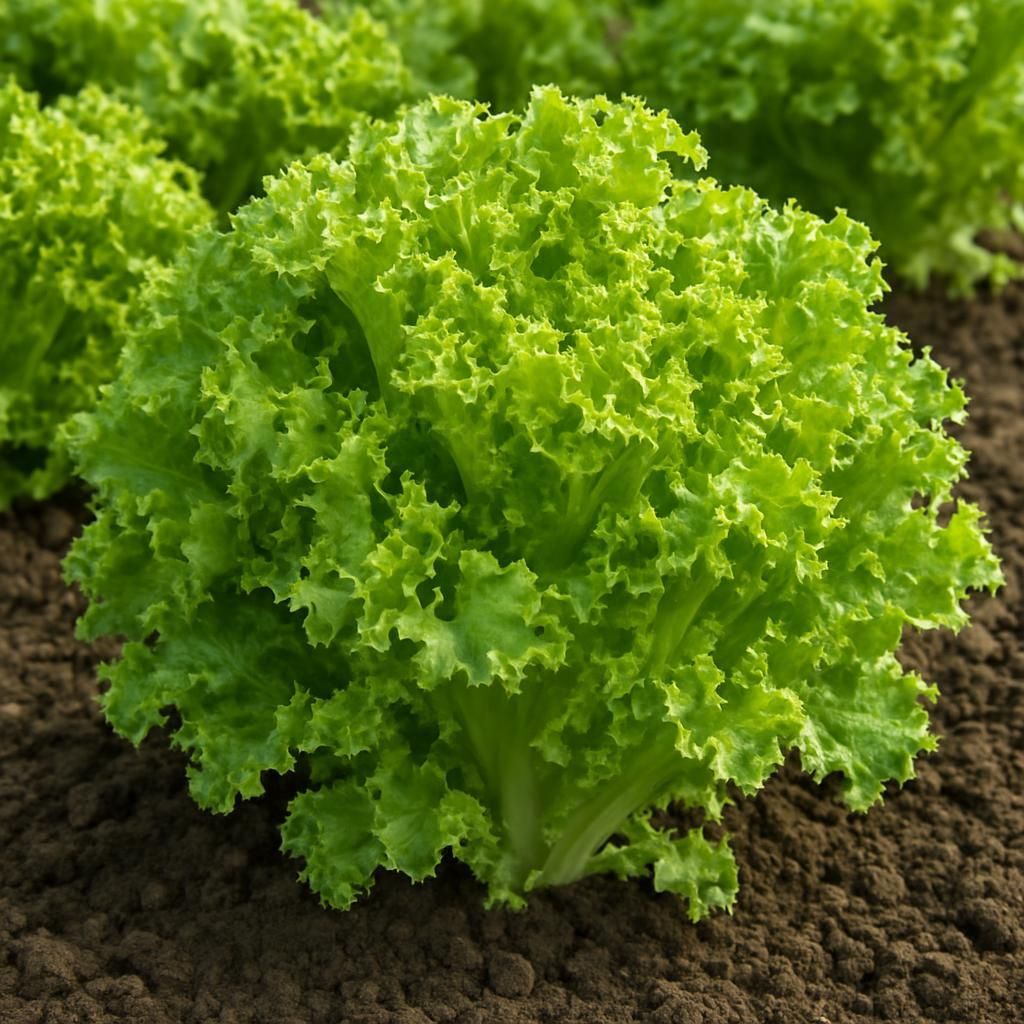
Introduction to endive
Endive (Cichorium endivia) is a cool-season leafy vegetable valued for its crisp texture and mildly bitter flavor. It belongs to the Asteraceae family and is closely related to chicory and lettuce. Commercial and home growers cultivate endive for fresh salads, braising mixes, and gourmet produce markets where its unique taste adds depth to culinary dishes.
The crop is divided into two main types: curly endive with frilly, deeply cut leaves and broad-leaved escarole with smoother, broader foliage. Both types thrive in temperate climates and are harvested when heads reach full size but before bolting occurs. Endive offers good nutritional value, providing vitamins A, K, and folate along with dietary fiber.
Successful production depends on precise timing, soil preparation, and consistent moisture management. Because the crop is sensitive to heat and drought stress, most growers target spring and fall windows when temperatures remain between 60–70 °F. With proper care, endive can deliver high-value returns in both small-scale and commercial operations.
Botanical Profile of endive
Endive is an annual or biennial herbaceous plant characterized by a basal rosette of leaves. The leaves vary from deeply lobed and fringed in curly varieties to broad and slightly undulating in escarole types. Flower stalks emerge in the second year under long-day conditions, producing blue, daisy-like blossoms typical of the chicory tribe.
The root system is shallow and fibrous, making the plant responsive to surface-applied nutrients and irrigation. Endive prefers full sun but tolerates light afternoon shade in warmer regions. Genetic variation among cultivars influences bitterness, leaf color, and bolting resistance, allowing growers to select varieties suited to specific climates and market preferences.
Soil, pH, and Climate Requirements for endive
Endive performs best in well-drained, fertile loam soils rich in organic matter. The ideal soil pH range is 6.0–7.0, although the crop tolerates slightly acidic conditions down to 5.8. Heavy clay soils should be amended with compost or raised beds to improve drainage and prevent root rot.
Temperature management is critical. Daytime temperatures of 60–70 °F promote steady growth, while nighttime lows above 45 °F reduce stress. Prolonged exposure above 80 °F accelerates bolting and increases bitterness. Endive requires consistent moisture equivalent to 1–1.5 inches of water per week, delivered through drip irrigation or overhead systems to maintain uniform soil moisture without waterlogging.
| Parameter | Ideal Range | Notes |
|---|---|---|
| Soil Type | Loam to sandy loam | Well-drained; avoid compaction |
| Soil pH | 6.0–7.0 | Tolerates 5.8–7.2 |
| Temperature (day) | 60–70 °F | Optimal growth window |
| Temperature (night) | 45–55 °F | Prevents bolting |
| Water Requirement | 1–1.5 in/week | Consistent moisture; drip preferred |
| Sun Exposure | Full sun to light shade | Afternoon shade beneficial in heat |
| Frost Tolerance | Light frost OK | Seedlings tolerate 28 °F; mature heads less |
Step-by-Step Planting & Propagation
Endive is typically direct-seeded or transplanted. For spring crops, sow seeds 2–4 weeks before the last frost date when soil temperatures reach 50 °F. Fall crops are sown 8–10 weeks before the first expected frost. Use pelleted seed for precision planting at ¼-inch depth and 12–18 inches between rows.
Transplanting 4–6-week-old seedlings at the 3–4 true-leaf stage allows earlier harvest and better spacing control. Space plants 8–12 inches apart in rows 18–24 inches wide. Maintain soil moisture at field capacity during germination to achieve uniform stands. Thin seedlings to final spacing once they develop true leaves to prevent crowding and disease.
Care & Maintenance regimes for endive
Consistent irrigation, balanced nutrition, and timely cultivation are essential. Mulching with straw or shredded leaves conserves moisture and suppresses weeds. Side-dress with nitrogen at 3–4 weeks after planting to sustain leafy growth. Monitor for nutrient deficiencies, particularly magnesium and boron, which manifest as interveinal chlorosis or tip burn.
| Task | Frequency | Rate / Method | Timing |
|---|---|---|---|
| Irrigation | 2–3× weekly | 0.5–0.75 in per application via drip | Maintain even soil moisture |
| Fertilizer (N-P-K) | At planting + side-dress | 40 lb N/acre at planting; 20 lb N/acre at 3–4 wks | Use calcium nitrate or fish emulsion |
| Pruning / Thinning | Once at 3–4 leaves | Thin to 8–12 in spacing | Prevent overcrowding |
| Cultivation / Weeding | Weekly | Shallow hoe or hand-pull | Early season only |
| Mulch Application | Once after thinning | 2–3 in straw or leaf mulch | Conserve moisture & cool soil |
Pests, Diseases & Organic Management
Common insect pests include aphids, slugs and snails, and flea beetles. Aphid colonies on leaf undersides can be controlled with insecticidal soap or neem oil. Slugs are managed with iron-phosphate baits and habitat reduction. Row covers during early growth stages exclude flea beetles and leaf-feeding caterpillars.
Diseases of concern are downy mildew, powdery mildew, and botrytis. Cultural practices such as wide spacing, morning irrigation, and resistant cultivars reduce disease pressure. Copper-based fungicides provide organic control when applied at first sign of infection. Crop rotation with non-hosts every two seasons breaks soil-borne disease cycles.
Harvesting, Curing & Optimal Storage
Endive is ready for harvest 45–70 days after seeding when heads reach 6–10 inches in diameter and leaves are crisp. Cut at the base with a sharp knife, leaving a small stub for potential regrowth in mild climates. Harvest in the cool morning hours to preserve turgor and minimize wilting.
Post-harvest, rinse heads gently in cold water, remove damaged outer leaves, and spin or air-dry. Store at 32–36 °F with 95–100 % relative humidity for up to two weeks. Vacuum cooling or hydrocooling extends shelf life. For longer storage, heads can be held in perforated plastic bags inside a high-humidity crisper drawer.
Companion Planting for endive
Endive benefits from strategic pairings that enhance growth and deter pests. onion and garlic planted nearby repel aphids and other sucking insects. radish and carrot occupy different root zones and improve soil structure without competing for nutrients. Aromatic herbs such as thyme and rosemary mask endive’s scent from pests while attracting beneficial insects.
Avoid planting endive near fennel or other strong competitors that may inhibit growth. Interplanting with nasturtium provides a trap crop for aphids and adds edible flowers to the harvest mix. Rotating endive with legumes such as peas or beans replenishes soil nitrogen for subsequent plantings.