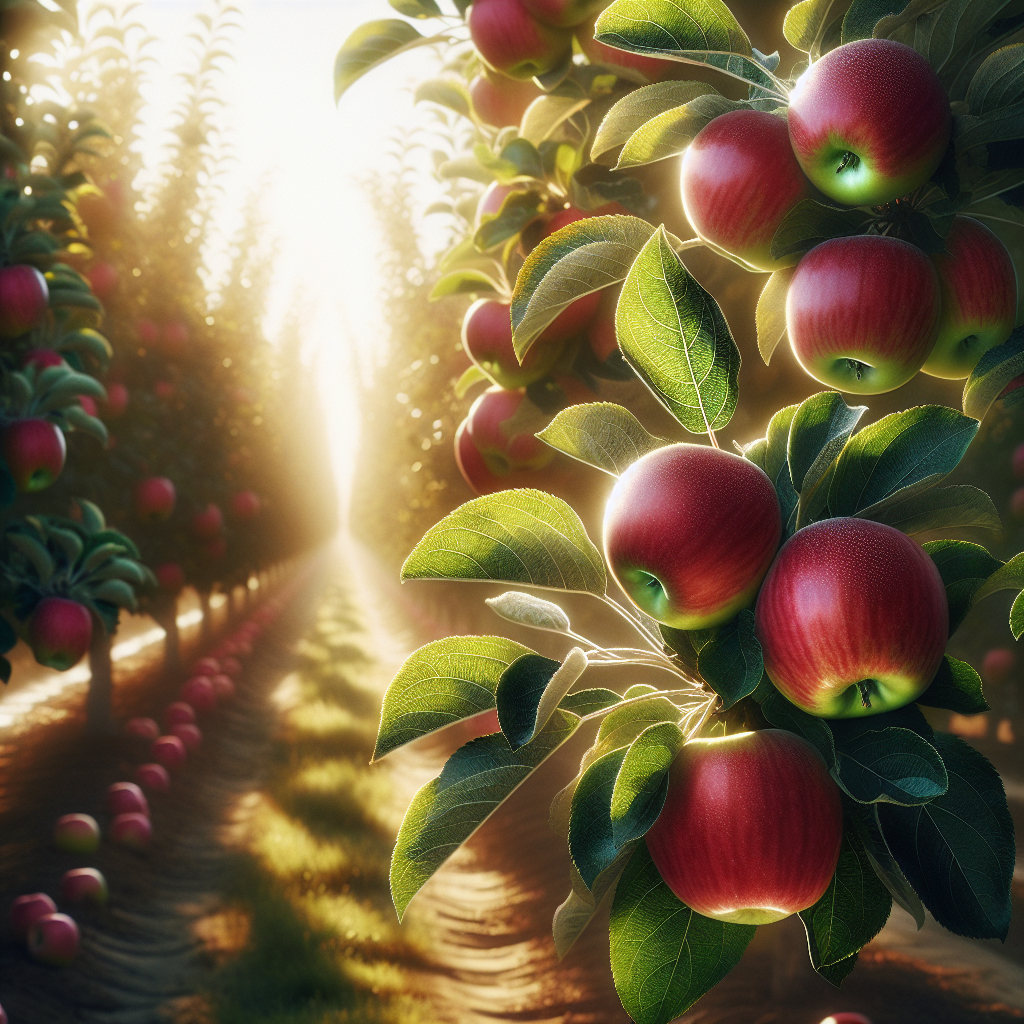
Introduction to Empire Apple
Developed in New York State in the mid-20th century, this cultivar was released as a cross between McIntosh and Red Delicious, combining the aromatic complexity and tenderness of McIntosh with firmer texture, deeper red coloration, and improved keeping quality. It became popular in commercial orchards and home plantings because it produces attractive medium-sized fruit with a juicy, crisp bite and a flavor profile that remains appealing both fresh and after short storage.
For growers, its value lies in dependable productivity, cold tolerance, and marketable appearance. The fruit is typically round to slightly conical, covered in a glossy deep red blush over a greenish-yellow background, and resists bruising better than many softer heritage apples. As with many modern orchard cultivars, performance depends heavily on rootstock choice, pollination planning, canopy training, and disciplined disease management rather than simply planting a tree and waiting for crops.
Empire is generally considered a spur-bearing to moderately compact-growing tree, making it adaptable to higher-density systems when grafted onto dwarfing or semi-dwarfing rootstocks. It is a good candidate for growers seeking a reliable fresh-eating apple in regions with cool nights, moderate summers, and a defined dormant season. For broader species-level background, see our Apple guide. It also benefits from orchard floor strategies discussed in soil health tips.
Botanical Profile of Empire Apple
This cultivar belongs to the Rosaceae family and the species Malus domestica. Like other domesticated apples, it is almost always propagated by grafting rather than seed because seedlings will not grow true to type. A seed from this variety may produce a vigorous apple tree, but the resulting fruit quality, size, color, ripening time, and disease resistance will be highly variable.
Tree vigor is moderate, though this varies strongly with rootstock. On dwarfing rootstocks such as M.9, the tree remains compact and early-bearing, often fruiting within 2 to 3 years after planting. On semi-dwarf rootstocks such as M.26 or MM.106, it becomes larger, with wider scaffold development and somewhat later bearing. Standard rootstocks are less common in modern Empire plantings because harvesting, pruning, and pest control become less efficient.
Leaves are simple, ovate, and serrated, emerging in spring after bloom. Flower buds form on spurs and older wood, producing white to pink-tinged blossoms that are highly attractive to pollinators. Bloom time is generally mid-season, which helps it align with many common pollinizer cultivars. The fruit itself matures in the later part of the apple season, often after McIntosh but before very late apples, depending on climate.
The flesh is cream-colored, fine-textured, and denser than McIntosh, with less tendency to become mealy immediately after harvest. Acidity is noticeable but not harsh, making the variety useful for fresh consumption, salads, and some baking. The skin is relatively thick compared with softer apples, which contributes to shipping and storage durability.
A notable nuance is its tendency toward heavy cropping if unmanaged. Without flower or fruit thinning, trees may set too many apples, leading to small fruit size, reduced color development, biennial bearing pressure, and limb strain. Professional growers often consider crop-load management essential rather than optional.
Soil, pH, and Climate Requirements for Empire Apple
This cultivar performs best in well-drained loam or sandy loam with good organic matter content and a soil pH of 6.0 to 6.8. It tolerates slightly more acidic conditions, down to about pH 5.8, but nutrient availability, especially calcium and magnesium balance, becomes more complicated outside the ideal range. Above pH 7.0, iron, manganese, and zinc deficiencies are more likely, particularly in calcareous soils.
Drainage is one of the most critical requirements. Apple roots need oxygen in the root zone; if the soil remains saturated for more than 24 to 48 hours, fine feeder roots begin to decline. In practical terms, avoid sites where water stands after rainfall, where subsoil compaction creates a perched water table, or where clay remains sticky and anaerobic in spring. In poorly drained sites, trees are more prone to root stress, crown disorders, weak growth, and secondary disease issues.
Ideal soil depth is at least 24 to 36 inches of penetrable profile. Hardpans should be broken before planting, and compaction corrected with deep ripping if the orchard is being established commercially. Organic matter in the 3 to 5% range supports moisture buffering, microbial activity, and nutrient retention without creating excessive nitrogen release.
Empire needs a temperate climate with adequate winter chill, generally 800 to 1,200 chill hours depending on local conditions, to ensure proper dormancy release and consistent bloom. It is more cold-hardy than many warm-climate apples and is well adapted to USDA zones roughly 4 through 8, though performance declines in low-chill subtropical climates. In very warm winter regions, bloom can be weak and irregular.
The best fruit quality develops where days are warm but not excessively hot and nights cool during ripening. Cool nights improve red color development and help preserve acidity. Extended summer heat above 32 to 35 C can reduce fruit finish, increase sunburn risk, and soften texture. Areas with spring frost pockets should be avoided because bloom and young fruit are vulnerable to freeze injury.
For moisture, aim for evenly moist but never waterlogged soil. In the active growing season, the root zone should usually remain around 60 to 80% of field capacity. A simple field test is to squeeze soil from 6 to 8 inches deep: it should hold together lightly, then crumble with a touch, not drip water or break apart as dust. Overwatered trees often show pale leaves, short internodes, reduced new shoot vigor despite wet soil, and in severe cases a sour smell in the root zone. Underwatered trees show dull foliage, mid-afternoon leaf droop, undersized fruit, and premature fruit drop.
Step-by-Step Planting & Propagation
Propagation should be done by purchasing or bench-grafting certified disease-free nursery stock. Choose one-year whips or feathered trees from reputable nurseries. Rootstock selection should match system and soil: M.9 for high-density supported orchards, M.26 for small freestanding or lightly supported plantings, and more vigorous semi-dwarf stocks for wider spacing and less intensive management.
Start with site preparation 6 to 12 months ahead if possible. Test soil for pH, phosphorus, potassium, calcium, magnesium, and organic matter. Correct pH before planting, because lime or sulfur moves slowly through orchard soil. Remove perennial weeds thoroughly, especially quackgrass, bindweed, bermudagrass, or other competitive root-forming weeds. Young apple trees lose vigor quickly when forced to compete in the first three years.
Plant during dormancy, usually late winter to early spring as soon as soil is workable, or in autumn in milder climates where winter soil freezing is not severe. Bare-root trees should be planted while fully dormant and before bud break. Keep roots moist and shaded until planting; even 15 to 20 minutes of drying wind can damage fine roots.
Dig a hole wide enough to spread roots naturally, usually 2 to 3 times the root spread, but no deeper than the existing root system. Do not over-amend the planting hole with rich compost only in the hole, as this can discourage roots from moving into native soil. Instead, backfill mostly with native soil. Position the graft union 2 to 4 inches above finished soil grade to prevent scion rooting, especially on dwarfing stocks.
Water immediately after planting to settle soil around roots. Apply 2 to 4 inches of mulch in a ring, keeping it 3 to 4 inches away from the trunk to prevent crown rot and rodent habitat. Install tree guards in areas with vole, rabbit, or sunscald risk. Dwarf trees should be staked or attached to a trellis at planting.
Spacing depends on rootstock and training system. High-density M.9 plantings may be spaced 3 to 5 feet within row and 10 to 14 feet between rows. Semi-dwarf trees often need 10 to 15 feet within row and 14 to 18 feet between rows. Good spacing is not just about tree size; it determines light interception, spray penetration, and disease pressure.
Pollination must be planned. This cultivar is not reliably self-fertile and requires cross-pollination from another compatible apple flowering at the same time. Suitable pollinizers may include mid-season apples such as McIntosh, Gala, or other compatible cultivars. Place pollinizer trees within 50 to 100 feet of one another, and support bee activity during bloom.
Care & Maintenance regimes for Empire Apple
Young trees need consistent structural training. The central leader system is often preferred because it develops strong scaffold tiers, uniform light distribution, and manageable crop loads. In year one, head the leader if needed to encourage scaffold formation, or select well-placed feathers. Remove narrow crotch angles because these split under fruit load later.
Prune annually during dormancy. Focus on removing dead, diseased, and crossing wood; thinning crowded spur systems; and preserving branch angles of about 60 degrees for strength and fruiting balance. Empire can become over-spurred and dense if neglected, reducing air movement and color development. Summer pruning may be useful in vigorous plantings to improve light penetration and reduce excessive upright shoots.
Water management is critical from bloom through harvest. Mature trees usually require the equivalent of 1 to 1.5 inches of water per week from rainfall plus irrigation, though sandy soils may need smaller, more frequent applications. During cell division and early fruit sizing, moisture stress can permanently reduce final fruit size. Drip irrigation is preferred because it keeps foliage dry and lowers disease pressure.
Do not irrigate by calendar alone. Check soil moisture at 6, 12, and 18 inches. The upper layer may look dry while deeper roots remain adequately moist. Conversely, frequent shallow irrigation encourages shallow rooting and weak drought resilience. In heavy soils, irrigate less often but more carefully to avoid saturation.
Nutrient management should be based on soil and leaf analysis. Young non-bearing trees benefit from modest nitrogen to encourage canopy establishment, but excess nitrogen causes rank shoot growth, delayed bearing, softer fruit, and greater Fire Blight susceptibility. Bearing trees often need only moderate nitrogen, commonly split between early spring and post-fruit set if analysis justifies it. Potassium supports fruit size and color, while calcium is especially important for firmness, storage quality, and reducing bitter pit risk.
A practical program includes annual composted organic matter or well-managed mulch, cautious spring nitrogen, and foliar calcium sprays in orchards with low calcium availability or large crop loads. Avoid late-summer nitrogen, which can stimulate tender growth vulnerable to winter injury.
Fruit thinning is indispensable. Thin by hand or chemically after natural fruit drop so that fruit are spaced roughly 4 to 6 inches apart along branches, with one apple per cluster. This improves size, red coloration, soluble solids, and return bloom the following year. If clusters are left intact, fruit remain small and shaded, and limbs may break.
Weed control should maintain a vegetation-free strip under the canopy, especially for young trees. Grass competition reduces trunk growth and delays bearing. In organic systems, use mulch, shallow cultivation, flame weeding with caution, or repeated hoeing. Keep mulch from contacting the trunk.
Pests, Diseases & Organic Management
This cultivar has moderate susceptibility to several common apple diseases, so integrated prevention is more effective than rescue treatment. The most important disease in humid climates is Apple Scab, which causes olive-brown lesions on leaves and fruit, leading to premature defoliation and unmarketable apples. Sanitation matters: shred fallen leaves, encourage decomposition with compost teas or nitrogen where appropriate, and prune for rapid drying after rain.
Cedar Apple Rust may also occur where junipers are nearby. Look for bright orange leaf lesions and fruit spotting. Removing nearby alternate hosts is not always practical, but reducing local inoculum helps. Fire Blight is a serious bacterial threat, particularly during warm, wet bloom periods or after hail. Avoid overfertilizing with nitrogen, prune out blighted shoots 8 to 12 inches below visible symptoms during dry weather, and disinfect tools between cuts if actively removing strikes.
Powdery Mildew can reduce shoot quality in dry but humid canopies, while Sooty Blotch and Flyspeck blemish fruit in wet summers. All are reduced by better light, pruning, and timely organic protectant sprays such as sulfur or lime sulfur where legal and appropriate, though sulfur can cause russeting or phytotoxicity under hot conditions. Copper products may help early in the season, but overuse can injure foliage and accumulate in soil.
Major insect pests include Codling Moth, Apple Maggot, Plum Curculio, Aphids, Leafrollers, Mites, and Scale. Codling Moth larvae tunnel into fruit, leaving frass at entry points. Apple Maggot causes internal browning trails. Plum Curculio creates crescent-shaped egg-laying scars on young fruit. Effective organic management relies on monitoring rather than guesswork.
Use pheromone traps for Codling Moth and sticky red sphere traps for Apple Maggot. Bagging individual fruit works in small orchards but is labor-intensive. Kaolin clay can deter Plum Curculio and other pests when applied as a protective film before and after petal fall, with reapplication after heavy rain. Horticultural oils during dormancy help suppress overwintering Scale and mite eggs. Beneficial insects are supported by insectary plantings, especially Yarrow, Thyme, and Clover, which provide nectar, habitat, and soil benefits when managed so they do not compete heavily with young trees.
For organic orchards, the key sequence is dormant oil, bloom protection that preserves pollinators, post-petal-fall pest monitoring, sanitation, and canopy ventilation. Never spray insecticides during open bloom when bees are active. Remove dropped wormy fruit promptly to interrupt pest life cycles.
Harvesting, Curing & Optimal Storage
This is typically harvested in early to mid-autumn depending on region, often when background color shifts from green to yellow-green and the red overcolor becomes solid and glossy. Fruit should separate from the spur with an upward roll rather than a hard pull. Seed color turning dark brown can help, but it is not the only indicator.
For best eating and storage quality, harvest in two to three picks if the crop is uneven. Apples on the outer canopy often color earlier than those in shaded interior positions. Taste, starch conversion tests, firmness measurements, and soluble solids readings are used commercially. Home growers can judge ripeness by flavor improvement, easier separation, and flesh that is crisp rather than starchy.
Handle fruit gently. Even though this cultivar stores relatively well, stem punctures, compression bruises, and drops shorten storage life dramatically. Use shallow picking bags or padded bins, and avoid harvesting when fruit is wet if long storage is intended.
Unlike onions or sweet potatoes, apples are not cured in the traditional sense, but they do benefit from rapid postharvest cooling. Move fruit to 0 to 2 C as soon as possible after harvest with relative humidity around 90 to 95%. Lower humidity causes shriveling; poor ventilation encourages condensation and decay. In ordinary refrigeration, fruit may keep for 2 to 4 months, while controlled atmosphere storage can extend life much longer.
Sort out damaged, insect-stung, cracked, or diseased fruit before storage. One decaying apple can spread rot organisms to sound fruit nearby. Store only clean, dry, intact apples. Empire typically retains texture better than McIntosh during storage, but prolonged storage can reduce aromatic complexity if temperatures fluctuate.
Companion Planting for Empire Apple
The most useful companions in an orchard system are those that improve pollinator activity, attract natural enemies, protect soil, and reduce mower dependence without aggressively competing with tree roots. Low-growing, manageable species are usually better than tall, rank companions that shade trunks or harbor rodents.
Clover is one of the best orchard understory companions because it fixes nitrogen, feeds pollinators when timed carefully, and helps protect soil from erosion. It is especially useful in row middles rather than directly against the trunk. Thyme functions as a low aromatic groundcover in drier edges and attracts beneficial insects while remaining relatively noncompetitive once established. Yarrow is valued for drawing hoverflies, parasitic wasps, and predatory insects that assist with aphid control. Nasturtium can be used near orchard margins to attract pollinators and serve as a trap plant for some soft-bodied pests, though it is best kept out of dense trunk zones.
Companion plants should be managed, not merely added. Keep a clear mulch ring around the tree base, especially for trees under five years old. Mow or cut flowering companions before they set excessive seed if spread is a concern. In dry climates, monitor whether understory species reduce available moisture during fruit sizing. In wet climates, prevent lush vegetation from reducing airflow around lower scaffolds.
The best companion strategy for this cultivar is therefore a zoned approach: clean trunk area, mulched root protection zone, intentional flowering strip nearby, and mowed alleyways for access and sanitation. When done well, companion planting supports a more resilient orchard ecology without sacrificing fruit size or tree vigor.