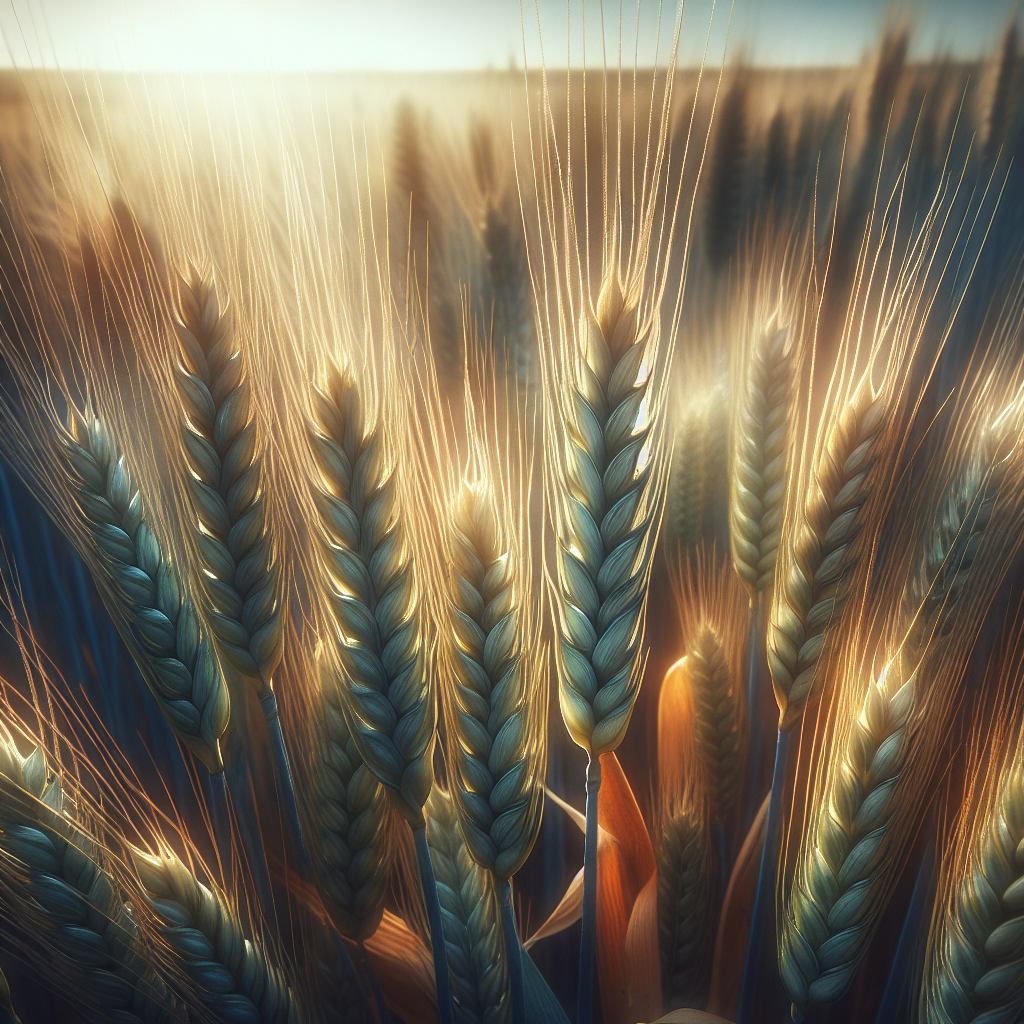
Introduction to Emmer Wheat
An ancient hulled wheat with deep roots in early agriculture, emmer remains important for growers seeking resilient grain, straw, and heritage food markets. Archaeobotanical evidence places it among the first cereals domesticated in the Fertile Crescent, and it later spread through North Africa, Europe, and parts of Asia as a staple grain before being displaced in many regions by free-threshing wheats.
What makes this crop distinct is its tough, adhering hull and its reputation for performing acceptably under relatively lean fertility and drier conditions. Compared with many modern wheats, emmer typically produces taller plants, deeper color in the grain and straw, and a richer, nuttier flavor after dehulling. It is often marketed as a heritage grain, but agronomically it is much more than a novelty crop: it can fit low-input rotations, mixed crop-livestock systems, and regenerative programs where resilience, straw production, and grain quality matter as much as peak yield.
Emmer can be grown as either a winter or spring type depending on cultivar and region. In Mediterranean and continental climates, winter sowing is common because it allows root establishment in cool weather and efficient use of winter and spring moisture. In colder regions with severe winterkill risk, spring-sown emmer may be more dependable. If you already grow Wheat, many field operations will feel familiar, but emmer generally matures with a more traditional growth habit and often requires extra attention at threshing, cleaning, and storage.
From a market perspective, the crop appeals to artisan bakers, whole-grain millers, specialty pasta makers, and livestock owners interested in a hardy cereal. Because the grain is hulled, post-harvest handling differs from common wheat, and growers should plan for either access to dehulling equipment or a buyer who accepts hulled grain.
Botanical Profile of Emmer Wheat
This cereal belongs to the species complex Triticum turgidum, the same broad group that includes durum and several other tetraploid wheats. Emmer is usually classified as Triticum turgidum subsp. dicoccum. It is a hulled wheat, meaning the glumes remain tightly attached to the kernels after threshing. That single trait has major implications for harvest, processing, disease behavior, and end use.
Key botanical features include:
- Growth habit: erect annual grass with tillering capacity that depends on sowing date, spacing, nitrogen, and moisture.
- Plant height: often 90-150 cm, though modern selections may be shorter. Taller straw can be useful in low-input systems but raises lodging risk under high fertility.
- Root system: fibrous, with relatively good soil exploration under moderate drought.
- Leaves: narrow, blue-green to gray-green, often with a waxy bloom that contributes to drought tolerance.
- Inflorescence: a dense, bearded or partly bearded spike, depending on the line.
- Grain: elongated kernels enclosed in tenacious hulls; kernel color ranges from amber to reddish or darker tones in some landraces.
As a tetraploid wheat, emmer has 28 chromosomes and generally differs from bread wheat in gluten quality and baking behavior. Dough is usually less elastic than modern bread wheat dough, making emmer particularly suited to flatbreads, porridge, cracked grain, pilaf-style use, and some artisanal leavened products when blended or handled carefully.
Agronomically, emmer usually tillers well under cool establishment conditions. It can compensate for thinner stands better than many growers expect, but excessive thinness will still reduce uniformity and encourage weeds. Winter types require vernalization, while spring types do not. Many heritage lines are photoperiod-sensitive, so local adaptation matters more than it does with highly bred commercial cereals.
Because the hull remains attached, emmer often shows some natural protection of the kernel in the field and during storage, but that should not be mistaken for immunity to disease or poor handling. Quality losses still occur if harvest is delayed into wet weather or if grain is stored above safe moisture.
Soil, pH, and Climate Requirements for Emmer Wheat
This crop is known for tolerating soils and conditions that would be suboptimal for more input-demanding cereals, but tolerance is not the same as preference. Emmer performs best in well-structured, moderately fertile soils with good drainage and moderate water-holding capacity.
Ideal soil texture ranges from silt loam to clay loam and well-aggregated loams. It can also perform on lighter soils if moisture is conserved, though drought on sandy land during stem elongation and grain fill may sharply reduce kernel size. Heavy clays are workable if drainage is sound and compaction is minimized. The biggest soil limitation is prolonged saturation, especially from emergence through tillering. Waterlogged conditions reduce oxygen around the root zone, restrict nutrient uptake, weaken crowns, and increase the likelihood of root disease.
A target soil pH of 6.0-7.5 is generally optimal. Emmer can tolerate slightly more alkaline conditions than some crops, but micronutrient deficiencies, especially zinc or manganese, become more likely as pH rises above about 7.8. In acidic soils below pH 5.8, aluminum toxicity and reduced phosphorus availability can limit establishment and tillering. If soil tests show low pH, liming several months before sowing is preferable to in-season correction.
For fertility, moderate nitrogen usually gives the best balance of yield and standability. On fertile ground or after heavily manured crops, excessive nitrogen can push lush vegetative growth and increase lodging, particularly in taller landraces. A practical baseline for many rainfed systems is 40-90 kg N/ha total available nitrogen, adjusted downward after legumes and upward on poor soils. Phosphorus is especially important at establishment for root growth and tiller initiation. Potassium supports stem strength, drought resilience, and grain filling.
Climate preference is temperate to cool-temperate. Emmer is particularly well adapted to regions with cool establishment, moderate spring growth, and a relatively dry ripening period. Winter types generally do best where winters are cold enough for vernalization but not so severe that repeated freeze-thaw cycles without snow cover damage crowns. Spring types fit short-season or very cold areas.
Temperature benchmarks:
- Germination begins at roughly 4-5°C soil temperature, but more rapid and even emergence occurs at 10-15°C.
- Vegetative growth is strongest in cool conditions around 12-20°C.
- Heat above 30°C during anthesis and early grain fill can reduce grain set and test weight.
- A dry, mild finish near maturity improves grain quality and reduces disease pressure.
Rainfall needs are lower than for many modern cereals, especially when sowing aligns with seasonal moisture. Roughly 350-650 mm seasonal moisture can produce a satisfactory crop, but timing matters more than total accumulation. Water demand peaks from stem elongation to heading and through milk stage. Drought at these stages cuts yield more severely than drought during late maturity.
Good field selection is crucial. Avoid low-lying frost pockets if sowing early, compacted headlands, and poorly drained bottoms. Fields following clean legumes, fallow, or low-residue broadleaf crops are often ideal. More on building these systems can be found in soil health strategies.
Step-by-Step Planting & Propagation
This crop is propagated by seed. Because emmer is a hulled wheat, planting material may be either spikelets in hull or dehulled seed depending on supplier and equipment. Always confirm what you are buying, since seeding rates differ.
Select the right type for your region. Choose a winter emmer for areas with reliable winter survival and a spring emmer for colder climates or very short rotational windows. Local trial data matters because flowering time and lodging risk vary greatly among landraces and selections.
Test seed quality before planting. Aim for at least 85% germination and high physical purity. If planting farm-saved seed, clean thoroughly and screen out broken kernels, weed seed, and lightweight material. Seed-borne diseases can become chronic in heritage grain systems, so untreated seed should come only from healthy, well-managed fields.
Prepare a firm, even seedbed. Emmer establishes best when seed has close contact with moist soil. In conventional tillage, create a fine but not powdery seedbed. In reduced tillage or direct seeding, residue should be spread evenly to prevent hair-pinning and uneven depth control.
Plant at the correct time. For winter emmer, sow 2-4 weeks before the average first hard frost, allowing enough time for emergence and 2-4 leaves before winter dormancy. For spring emmer, sow as early as the soil can be worked and temperatures are suitable. Early sowing generally improves tillering and weed suppression.
Set seeding depth precisely. Place seed 2.5-5 cm deep. In heavier or colder soils, stay closer to 2.5-3 cm. In dry seedbeds or lighter soils, 4-5 cm may be necessary to reach moisture. Deeper planting than 5 cm can delay emergence and weaken stands.
Use an appropriate seeding rate. A general target is 250-400 viable seeds per square meter, adjusted for sowing date, seed size, and expected tillering. Late sowing requires the upper end of the range. If planting hulled spikelets, rates by weight may be substantially higher than free-threshing wheat because hull mass contributes to bulk weight.
Maintain row spacing according to weed pressure and equipment. Narrow rows of 15-20 cm usually improve canopy closure and suppress weeds. Wider rows can work in low-pressure systems or where inter-row management is planned, but they rarely maximize grain yield.
Roll after planting if needed. In stony or fluffy soils, rolling improves seed-soil contact and can make later harvesting easier. Avoid rolling sticky clays that may crust.
Monitor emergence within 7-21 days. Delayed emergence often signals cold soil, crusting, deep placement, or excess moisture. A uniform stand is more important than a very dense one.
Unlike many horticultural crops, emmer is not transplanted or vegetatively propagated. Field success depends on seed vigor, correct sowing window, and early-season competition control.
Care & Maintenance regimes for Emmer Wheat
Once established, this crop is relatively undemanding, but professional management still separates a mediocre stand from a premium one. The maintenance program should focus on moisture, fertility, weed pressure, stand density, and lodging prevention.
Water management is most important at four stages: establishment, tillering, stem elongation, and grain fill. In rainfed production, preserving stored soil moisture through residue retention, timely sowing, and reduced compaction is often more important than any rescue irrigation. If irrigating, maintain soil moisture at roughly 60-80% of field capacity through active vegetative growth. Below that range, lower leaves may lose turgor by midday, tillering can stall, and stem elongation becomes uneven. Above that range for prolonged periods, especially in heavier soils, roots become oxygen-stressed and leaves may appear pale, soft, and overly lush.
Signs of under-watering include slow tiller formation, bluish-gray foliage, rolled leaves during warm afternoons, and shortened stems. Signs of overwatering include persistent wet soil below 5-8 cm depth, yellowing lower leaves despite adequate fertility, shallow rooting, algal crust on bare soil, and increased lodging after rapid growth. If irrigation is available, apply fewer but deeper events rather than frequent shallow watering. Critical moisture should be protected from boot stage through milk stage.
Nitrogen should be split where practical. Apply a modest base amount at sowing or before planting, then top-dress at tillering or early stem elongation based on stand vigor and rainfall outlook. Overfeeding late nitrogen can increase protein somewhat, but in emmer it often also increases lodging and delays maturity. In low-input systems, preceding the crop with Clover or another legume cover crop can reduce synthetic nitrogen needs and improve soil structure.
Weed control is essential, particularly early. Emmer competes reasonably well once tillered, but it is slower than people assume during emergence. The first 30-45 days set the tone for the season. Use stale seedbeds where possible, rotate with broadleaf crops to break weed cycles, and avoid planting into fields loaded with wild oats, ryegrass, or brome. Mechanical harrowing may be possible at very early stages in suitable systems, but timing must be exact to avoid stand damage.
Lodging management depends on cultivar, fertility, and weather. Taller lines should not be pushed with high nitrogen, especially where spring storms are common. Dense stands, shaded lower stems, and excess irrigation all weaken straw strength. Potassium sufficiency and balanced fertility improve stem integrity.
Nutrient deficiency symptoms resemble those of other cereals. Nitrogen deficiency shows as pale older leaves and stunted tillers. Phosphorus deficiency may appear as stunting and darkened foliage early in cool soils. Potassium deficiency can show marginal scorching and weak stems. Sulfur deficiency causes uniform paling in younger leaves and can be mistaken for nitrogen shortage.
Walk fields weekly from emergence to heading. Count tillers, inspect lower leaves and crowns, note patches that lag behind, and compare healthy areas to weak ones. Uniformity is one of the strongest predictors of efficient grain fill and easy harvest.
Pests, Diseases & Organic Management
Emmer is often described as robust, but it is still vulnerable to many cereal pests and diseases, especially in humid climates or continuous grain rotations. Organic and low-input management work best when based on prevention rather than rescue treatment.
Common insect pests include aphids, cereal leaf beetle, wireworms, armyworms, and sawflies in some regions. aphids are important not only for sap feeding but also for virus transmission. Scout the undersides of leaves and stems from tillering onward, especially in mild autumns and warm springs. Beneficial insects, field margins with flowering species, and avoiding excessive nitrogen all help reduce aphid flare-ups.
Bird damage can be significant in small plots, especially near maturity. Rodents may also feed on developing heads in weedy margins.
Major diseases include:
- Rusts: stripe rust, leaf rust, and stem rust depending on region and weather.
- powdery mildew in dense, humid canopies.
- Septoria and other leaf blotches where rainfall and overhead irrigation are frequent.
- Fusarium head blight in wet flowering periods.
- common bunt and loose smut from infected seed.
- Root and crown rots in poorly drained or compacted ground.
Organic management starts with rotation. Do not follow cereal after cereal if disease pressure is known. A 2-4 year break from wheat-type hosts sharply reduces many problems. Clean seed is non-negotiable. For seed-borne diseases, use certified seed or approved organic seed sanitation methods where permitted locally.
Canopy management matters. Avoid excessive nitrogen and very dense stands, both of which increase humidity within the crop and favor foliar disease. Choose the most open, breezy field available if your climate is humid. Irrigate early in the day if overhead systems are unavoidable, though furrow or drip is rarely used in broadacre cereals.
Residue management should fit your disease profile. Surface residue builds soil health but may also harbor pathogens, so longer rotations and biological decomposition become more important in reduced-till systems. In small acreages, rogue out infected patches before heading if practical.
For pests, encourage predators with nearby habitat strips and diversified rotations. Border strips of Yarrow can support beneficial insects, though broadacre effect is usually modest compared with rotation and timing. If pressure reaches economic thresholds, approved biologicals such as Bacillus thuringiensis for certain caterpillars or entomopathogenic fungi may help, but application timing is critical.
The best organic strategy is integrated: resistant or adapted seed, clean planting stock, balanced fertility, lower humidity in canopy, and long rotations that break both weed and disease cycles.
Harvesting, Curing & Optimal Storage
Harvest timing has a direct effect on grain quality, dehulling efficiency, and storage safety. Emmer is typically ready when the heads and upper stems have turned fully golden-brown, kernels are hard, and grain moisture has dropped to around 12-14% for combining, though some growers begin slightly higher and dry afterward.
Because it is a hulled wheat, threshing behavior differs from common wheat. The objective is usually to separate heads and spikelets cleanly without overly cracking kernels. Cylinder or rotor settings often need to be gentler than operators first expect. Too aggressive a setting can create broken grain and excess fines; too gentle can leave unthreshed heads. Test small batches and adjust concave clearance and speed accordingly.
Harvest too early and you risk shriveled grain, green material in the sample, and difficult drying. Harvest too late and you invite shattering, lodging, sprouting, and weather staining. In wet regions, prioritize harvest once physiological maturity has passed and straw is dry enough for machinery.
After combining, clean the grain promptly to remove chaff, weed seed, and light material. If moisture exceeds safe storage levels, dry immediately with ambient or low-heat air. For hulled grain intended for storage before dehulling, target 12% moisture or less for medium-term storage and closer to 10-11% for long-term storage in warm climates.
Curing in the grain sense is really controlled drying and stabilization. Spread small lots thinly with strong airflow, or use bins with aeration. Do not heap warm grain in enclosed spaces. Grain that feels cool in the morning but warms internally by afternoon is often respiring too actively and needs more aeration.
Storage best practices:
- Use clean, insect-free bins, totes, or food-grade containers.
- Keep storage temperatures ideally below 15°C for long holding.
- Monitor monthly for condensation, caking, off odors, and insect activity.
- Protect from rodents and wild birds.
- Store hulled and dehulled grain separately and clearly labeled.
Dehulled kernels have shorter storage life than hulled grain because the protective outer structures are removed and the grain is more vulnerable to insects and moisture shifts. If selling for food use, dehull close to market date when possible. Test weight, falling number, protein, and absence of fusarium toxins may all matter depending on buyer.
Straw can be valuable for bedding, mulch, thatch, or craft uses. Baling should wait until straw moisture is low enough to prevent heating, generally below about 15-18% depending on bale density and storage conditions.
Companion Planting for Emmer Wheat
In broadacre grain production, companion planting usually means intercropping, undersowing, or field-edge biodiversity rather than the close mixed plantings common in kitchen gardens. For emmer, the most useful companions are species that suppress weeds, support pollinators and beneficial insects, improve nitrogen cycling, or create a cleaner transition into the next crop.
One of the best options is Clover as an undersown living mulch in lower-rainfall or carefully managed systems. It can protect soil after grain harvest, contribute nitrogen to the following crop, reduce erosion, and improve aggregate stability. The key is to keep the clover from competing too hard during cereal establishment; sowing rate and timing must be conservative where moisture is limited.
Fava Bean (Broad Bean) can be used in strip or mixed intercrops in some traditional systems. Its upright growth, nitrogen fixation, and different rooting pattern can complement emmer, though maturity timing and harvest logistics are more complex than for monocrops. This approach is usually better suited to small farms and hand-scale or specialized harvest methods.
Peas are another useful rotational or intercrop partner where lodging risk is managed. In mixed grain-legume systems, peas can help diversify output and contribute some nitrogen effects for the following season, though direct harvest of the mixture requires planning.
Yarrow is especially useful on borders, beetle banks, and margins rather than in the grain stand itself. It attracts parasitic wasps, hoverflies, and other beneficial insects, helping create a more balanced field ecology.
As a rule, the best companion strategy for this crop is not crowding the cereal with too many neighbors. Keep the grain stand dominant, use legumes modestly, and place insectary species on borders and headlands rather than inside the harvest zone. In larger rotations, emmer also pairs well sequentially after legumes and before row crops such as Potato, since its fibrous roots and straw contribute structure while leaving opportunities for weed control in the next phase.