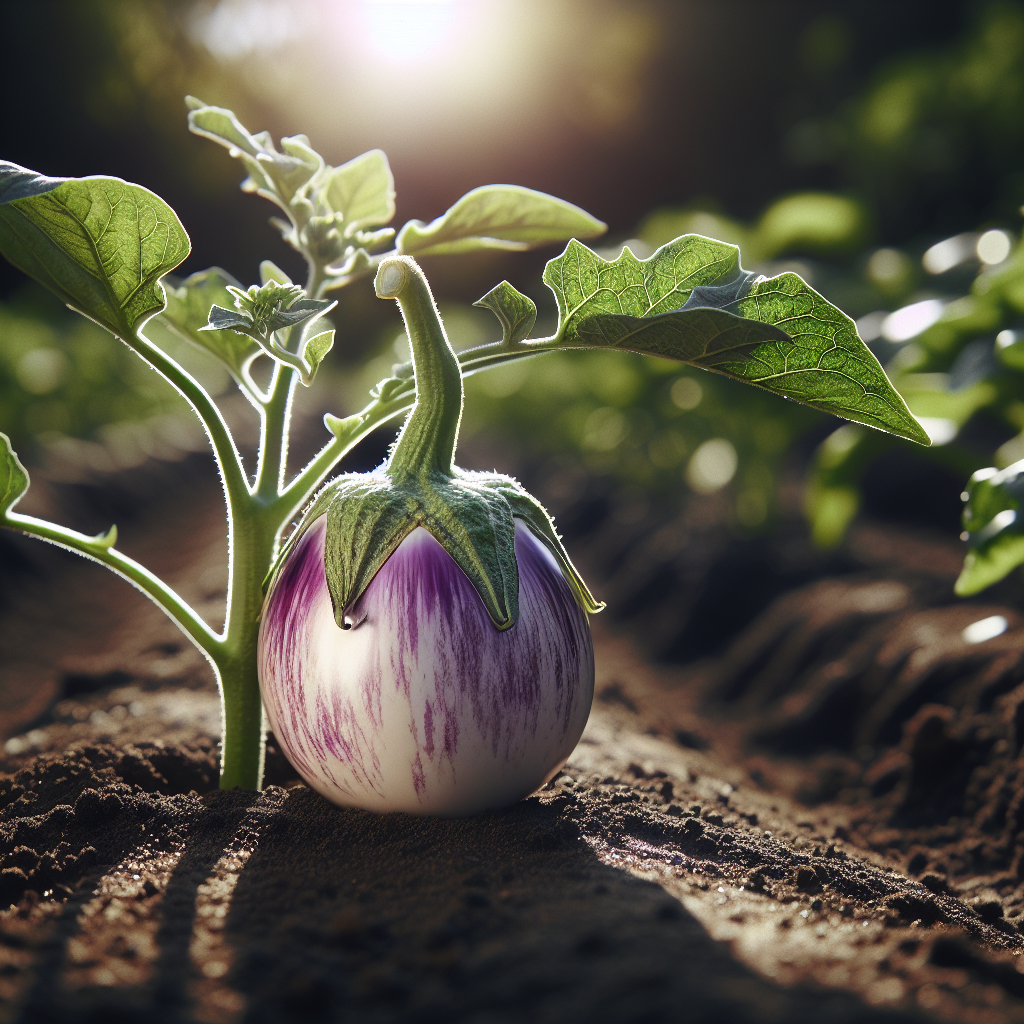
Introduction to Eggplant (Rosa Bianca)
An old Italian heirloom of high culinary reputation, this variety is grown primarily for flavor and texture rather than shipping durability. Fruits are typically globe to slightly flattened-globe shaped, softly ribbed, and beautifully streaked in pale violet, lavender, and white. The flesh is notably tender, dense without being spongy, and often described as sweet, rich, and nearly free of the sharp bitterness associated with some dark-fruited market eggplants.
Rosa Bianca performs best when treated as a premium warm-season crop. It is not the fastest or toughest eggplant in cool or erratic climates, but under steady heat and fertile soil it rewards growers with outstanding quality. Compared with more commercial forms, fruit skin is thinner and bruises more easily, so careful harvest timing and handling matter. This is a variety especially suited to fresh market growers, home gardeners focused on eating quality, and Mediterranean-style cooking.
In traditional southern European production, these heirloom eggplants were often cultivated in deeply amended soils with strong sun exposure and long frost-free periods. That background explains much of its behavior today: it wants heat at the root zone, ample potassium and calcium, regular moisture, and enough leaf area to shade fruits from sunscald while still allowing air movement.
Botanical Profile of Eggplant (Rosa Bianca)
This crop belongs to the Solanaceae, the same botanical family as peppers, potatoes, and Tomato. As a species, Solanum melongena is a tender perennial in frost-free climates, though it is almost always grown as an annual in temperate regions.
Rosa Bianca is a broad, moderately vigorous, bushy plant that commonly reaches 60-90 cm tall, sometimes more in rich soils and long seasons. Stems are sturdy but can become top-heavy once fruits develop, especially because this cultivar tends to set relatively large, weighty fruit with broad shoulders. Leaves are large, soft, gray-green to medium green, with the slight fuzziness common to eggplants. Flowers are violet to purple, star-shaped, and generally self-fertile, though insect activity and gentle air movement can improve pollination under protected culture.
Fruit characteristics are the defining hallmark. Mature marketable fruits are usually 10-15 cm across, though size varies with spacing, pruning, and fruit load. The exterior often shows creamy white ground color with diffuse lavender striping or blush, sometimes more heavily colored on the sunward side. Unlike elongated Asian eggplants, Rosa Bianca is harvested for fullness and sheen rather than length. Seeds remain relatively soft when harvested at the proper stage, which is one reason the eating quality is so highly regarded.
This cultivar is generally mid-season. Under warm conditions, transplant to first harvest often takes about 70-85 days, though cooler springs can delay it significantly. It is not as cold-tolerant as growers sometimes hope; even non-lethal cool nights can stall root activity, delay flowering, and increase the risk of blossom drop.
Soil, pH, and Climate Requirements for Eggplant (Rosa Bianca)
This variety thrives in deep, friable, well-drained loam rich in organic matter. The ideal soil profile is one that holds moisture evenly but never stays saturated. A root zone with about 4-6% organic matter is excellent for field production, while raised beds amended with mature compost often outperform flat ground in cooler regions because they warm faster and drain better.
Target a soil pH of 6.2-6.8. Rosa Bianca tolerates slightly acidic to near-neutral conditions, but problems become more common below pH 5.8, where calcium and magnesium availability may decline and overall nutrient uptake becomes less efficient. Above pH 7.2, iron, manganese, and phosphorus issues can begin to appear, especially in calcareous soils. If pH is low, use agricultural lime well ahead of planting. If pH is too high, sulfur-based acidification should be planned months in advance rather than attempted at transplant time.
Drainage is critical. Eggplant roots need oxygen-rich soil, and Rosa Bianca is especially prone to sulking in compacted, waterlogged ground. If you dig 20-25 cm down and find sticky, dense soil that smears easily when wet, improve structure before planting. Broadforking, compost incorporation, and permanent raised beds are all effective. Avoid fresh manure, which can push excessive vegetative growth and create nutrient imbalances.
Temperature is the central production factor. Optimal daytime growth occurs around 24-32°C, with nighttime temperatures ideally remaining above 18°C. Below about 15°C, growth slows sharply. Below 10-12°C, chilling stress may cause purpling, stalled development, and poor flower retention. Rosa Bianca is best suited to warm temperate, Mediterranean, subtropical, or long-summer continental climates. In short-season areas, black plastic mulch, low tunnels, or row cover during establishment can make a significant difference.
Full sun is non-negotiable for premium fruit. Aim for at least 8 hours of direct sun daily. In very hot inland climates above 38°C, some afternoon stress can occur, but healthy canopies usually protect the fruit if moisture is adequate.
A pre-plant nutrient target for productive beds is moderate nitrogen, high phosphorus availability for root establishment, and strong potassium for fruit quality. Overly nitrogen-rich soils produce lush leaves and delayed fruiting. Where soil testing is available, base amendments on the test rather than guesswork. For general preparation, incorporate finished compost plus a balanced organic fertilizer before planting, then supplement during flowering and early fruit set with a lower-nitrogen, higher-potassium feed. For broader bed-building principles, see soil health strategies.
Step-by-Step Planting & Propagation
Start from seed in most climates. Direct sowing is possible only in reliably warm soils, but transplanting is strongly preferred because Rosa Bianca needs a long season and resents early cold.
Sow seeds indoors 8-10 weeks before the intended outdoor transplant date. Use a sterile seed-starting mix and maintain soil temperatures between 26-30°C for fastest, most uniform germination. At these temperatures, seedlings often emerge in 7-12 days. At cooler temperatures, germination becomes erratic.
Provide high light immediately after emergence. Leggy seedlings are a common failure point and lead to weaker field plants. Keep lights close enough to prevent stretching, or use a bright greenhouse bench with warm root conditions.
Pot up when the first true leaves are established. Move seedlings into individual cells or pots large enough to support a strong root ball without becoming root-bound. Eggplants dislike root disturbance more than tomatoes do, so avoid stunting them in undersized trays.
Harden off gradually over 7-10 days, but do not expose plants to chilling temperatures during hardening. If nights are forecast below 13°C, keep them protected.
Transplant only when soil temperatures are consistently above 18°C and all frost danger has passed. Air temperatures may look acceptable while soil remains too cold; this mismatch often causes plants to stall for weeks.
Space plants 45-60 cm apart in rows 75-100 cm apart. In intensive raised beds, 45 cm spacing in offset double rows works well if fertility and irrigation are excellent. Wider spacing improves airflow and can reduce foliar disease pressure.
Plant at the same depth as in the pot. Unlike tomatoes, eggplants should not be deeply buried to the stem. Water in thoroughly to settle soil around roots.
Mulch after the soil has warmed. Black plastic increases heat accumulation and weed suppression. Organic mulches such as straw are excellent later in the season, but if applied too early in cool climates they can slow soil warming.
Propagation by cuttings is technically possible but uncommon and not usually worthwhile for field growers. Seed propagation remains the standard because true-to-type heirloom seed is widely available and plants establish more reliably from seed than from vegetative cuttings.
Care & Maintenance regimes for Eggplant (Rosa Bianca)
Consistent moisture is essential, especially from first flowering through repeated harvest. The goal is evenly moist soil in the main root zone, not alternating drought and saturation. In practical terms, the top 2-3 cm of soil may dry slightly between irrigations, but the zone from 5-15 cm deep should remain lightly moist. If that zone feels dusty or powdery, plants are too dry. If it feels sticky, smells sour, or stays shiny-wet for long periods, plants are too wet.
Rosa Bianca usually needs about 25-40 mm of water per week in moderate weather and more during hot fruiting periods, depending on soil type. Sandy soils require smaller, more frequent irrigation; loams can be watered more deeply and less often. Drip irrigation is ideal because it keeps foliage dry and delivers steady moisture. Moisture stress at fruit set leads to misshapen fruits, tougher skins, and more seediness. Severe fluctuations can also contribute to blossom-end issues linked to disrupted calcium movement.
Signs of underwatering include midday wilting that persists into evening, dull leaf color, flower drop, reduced fruit size, and fruits that become hard or overly seedy early. Signs of overwatering include yellowing lower leaves, slow growth despite adequate fertility, edema-like blistering, and roots that appear brown rather than creamy white.
Feed plants in phases. At transplanting, prioritize root establishment rather than heavy nitrogen. Once the plant reaches active vegetative growth, a moderate side-dress is useful. At first bloom and again after the first major fruit set, shift emphasis toward potassium and calcium support. Excess nitrogen after flowering causes tall, leafy plants with poor fruit load and softer tissue that attracts pests. Organic growers often succeed with compost, pelletized balanced fertilizer, and periodic liquid feeds from fish-hydrolysate/seaweed blends used sparingly.
Stake or cage plants early. Because fruits are large and rounded, branches can snap under load, especially after rain or irrigation flushes. A sturdy tomato cage, two-stake weave, or central stake with soft ties works well. Do not wait until plants are sprawling and fruiting heavily.
Pruning is optional but useful. Remove leaves that touch the soil and any obviously damaged or diseased foliage. In dense canopies, selective thinning of interior shoots can improve airflow and reduce humidity around flowers. Avoid over-pruning in hot climates, since fruits can sunscald if suddenly exposed.
Pollination is usually self-contained, but heat extremes can interfere. Daytime temperatures above about 35°C and warm nights above 24°C may reduce pollen viability and fruit set. During heat waves, maintaining even moisture and reducing plant stress is more productive than applying more fertilizer.
Weed control should be aggressive early and light later. Eggplant roots are not especially competitive during establishment. Keep a clean zone around transplants for the first 4-6 weeks. Shallow cultivation is safer than deep hoeing, which can damage feeder roots.
Pests, Diseases & Organic Management
Flea beetles are among the most damaging early pests. They chew numerous tiny holes in leaves, and severe feeding can stunt seedlings badly. Young Rosa Bianca transplants are especially vulnerable because slow early growth in cool weather compounds the damage. Use floating row cover immediately after transplanting where beetle pressure is high, remove it at flowering if pollinator access is needed, and maintain strong plant vigor so foliage outgrows injury.
Colorado potato beetles, Aphids, Whiteflies, and Spider mites can also appear. Hand-pick beetles and egg masses when infestations are light. Aphids and Whiteflies often respond to a combination of reflective mulch, strong water sprays, and insecticidal soap if applied carefully during cooler hours. Spider mites thrive in hot, dusty conditions, so reducing dust, preventing drought stress, and preserving beneficial predators matter greatly.
Fruit borers and Caterpillars may scar or penetrate fruit. Inspect flowers and young fruit twice weekly in high-pressure periods. Bacillus thuringiensis can help on Caterpillars when used early and correctly.
Common diseases include Verticillium wilt, Fusarium wilt, Early blight, Cercospora leaf spot, Bacterial spot, Damping-off in seedlings, and various Root rots in poorly drained soils. Disease prevention begins before planting: use crop rotation of at least 3 years away from other solanaceous crops, avoid planting after potatoes, peppers, or other eggplants, and start with disease-free seed and transplants.
Verticillium wilt often shows as one-sided yellowing, wilting in heat despite moist soil, and vascular discoloration in stems. There is no curative treatment once plants are infected. Remove affected plants, improve rotation, and avoid susceptible sites. Foliar fungal diseases are worsened by overhead irrigation and crowded spacing. Water at the base, mulch to reduce soil splash, and remove heavily infected leaves promptly.
Blossom-end rot can appear as leathery brown-black patches at the blossom end of fruits. This is not primarily caused by a lack of calcium in the soil, but by irregular water supply, root damage, salinity stress, or imbalanced fertility that prevents calcium from moving into developing tissues. Keep moisture even and avoid excessive ammonium-heavy feeding.
For organic management, think in layers: healthy soil, correct spacing, drip irrigation, rotation, sanitation, resistant site selection, row covers during vulnerable stages, and close scouting. Intervention is most effective when pests are caught early rather than after fruits are heavily infested.
Harvesting, Curing & Optimal Storage
Harvest Rosa Bianca before full physiological maturity. The ideal fruit is glossy, firm, heavy for its size, and fully colored, but not dull, bronze, or hard-seeded. Press the skin lightly with a thumb: at harvest stage, it should spring back slowly. If the skin remains indented and feels overly soft, the fruit is overripe. If it is very hard and seeds inside are prominent and brown, harvest was too late.
Most growers achieve best eating quality by picking fruits when they are medium-large rather than oversized. Waiting for maximum size often reduces texture quality and increases seed development. Use pruners or a sharp knife rather than twisting fruit off, because eggplant stems are tough and can tear branches.
Harvest every 3-5 days in peak season. Frequent picking stimulates additional flowering and prevents plants from diverting too much energy into overmature fruit. Handle fruits gently; Rosa Bianca bruises more readily than thick-skinned commercial types.
Eggplant is not truly cured the way onions or winter squash are cured. After harvest, simply move fruits out of direct sun, field-heat them down gradually in shade, and avoid stacking them deeply. Wash only if necessary for market presentation, and dry thoroughly before storage.
Store at 10-12°C with 90-95% relative humidity for best short-term holding. Temperatures that are too cold, especially below 7-8°C, can cause chilling injury, seen as pitting, browning, dull skin, and rapid decay after removal from storage. At proper conditions, storage life is usually 1-2 weeks, but flavor is best when used within several days of harvest. Do not store eggplants near ethylene-sensitive items only if mixed humidity/temperature needs create compromises; in most small-scale settings, the larger issue is chilling, not ethylene.
Companion Planting for Eggplant (Rosa Bianca)
Good companions either help repel pests, attract beneficial insects, or make efficient use of nearby space without creating heavy competition. Thai Basil is one of the best companions around eggplant because it can help confuse pest pressure, attract pollinators when flowering, and fits well in warm beds. Onion and Garlic are also useful nearby for their pungent presence and compact root systems, while Nasturtium can function as a trap and beneficial-insect plant in diversified gardens.
Keep companions far enough away that airflow is not reduced around the base of the eggplant. Dense interplanting that creates constant leaf wetness can increase disease pressure. In market gardens, companion planting is best done as border rows, alternating bed edges, or occasional inserts rather than overcrowding the production row itself.
Avoid placing eggplant immediately beside aggressive heavy feeders that cast deep shade or compete strongly for moisture. Also avoid repeated planting near other solanaceous crops when the objective is pest and disease reduction; botanical relatives tend to share the same problems. The most successful companion systems for Rosa Bianca preserve warmth, light, and airflow first, then add beneficial diversity second.