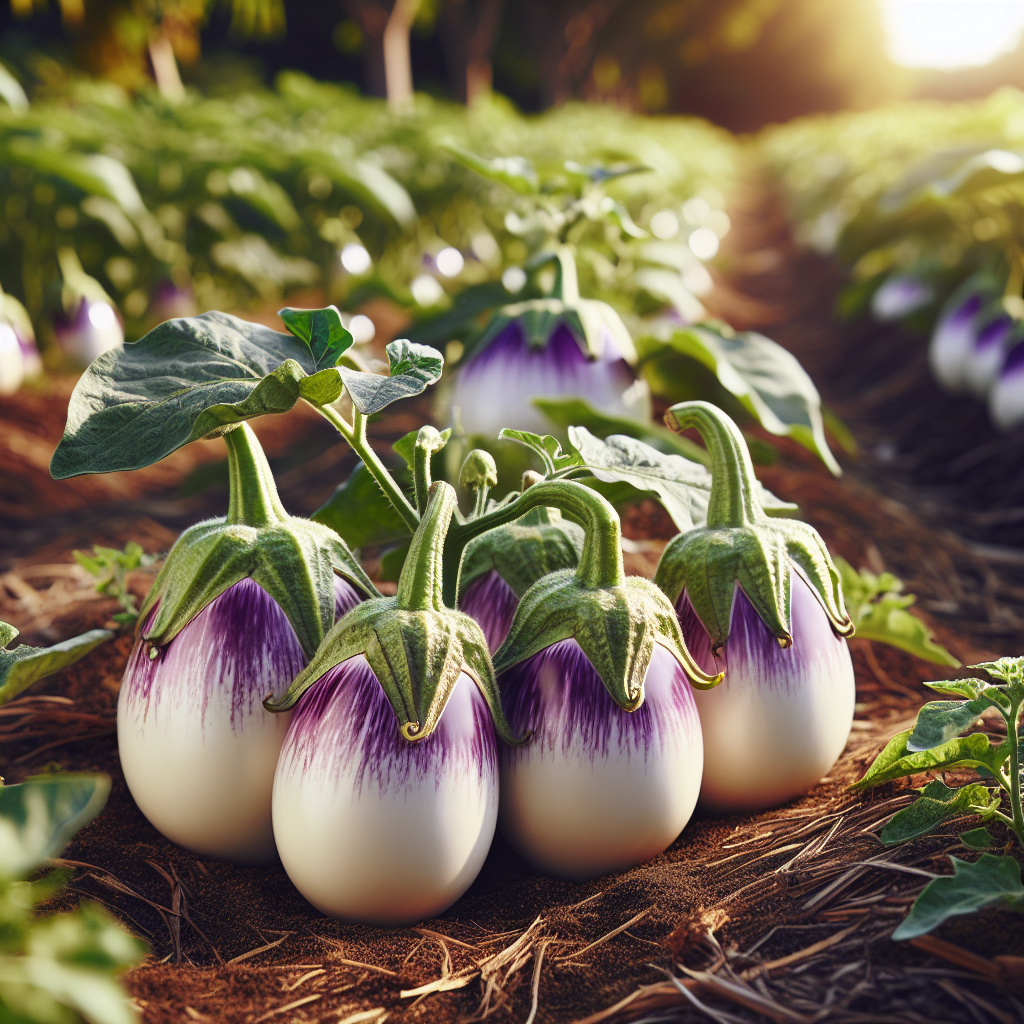
Introduction to Eggplant (Listada de Gandia)
Originating from the Valencia region of Spain, this heirloom aubergine is one of the most visually distinctive and culinary-refined eggplants in circulation. The fruits are typically oval to slightly teardrop-shaped, with a glossy white background and irregular violet to mauve striping. That ornamental appearance translates well to farmers' markets and specialty produce sales, but the real value of this cultivar is its eating quality: the flesh is fine-textured, creamy, and usually less bitter than many darker commercial types when harvested at the proper stage.
This variety belongs to the warm-season Solanaceae family and behaves similarly to other eggplants, though its lighter skin and premium texture make timing especially important. Listada de Gandia is generally harvested younger than large black globe types, often when fruits are 12-18 cm long and still glossy. If left too long, seeds harden, the flesh becomes spongier, and the elegant striped skin can lose some of its delicate appeal. Growers familiar with Tomato production will recognize similar heat needs, feeding demands, and disease pressures, though eggplant usually requires even more warmth to establish vigorously.
For home gardeners, market growers, and diversified farms, this cultivar offers a strong combination of beauty, flavor, and moderate productivity. It is especially suited to long, warm growing seasons, raised beds, plastic mulch systems, and protected culture such as low tunnels or unheated hoop houses in cooler regions.
Botanical Profile of Eggplant (Listada de Gandia)
This cultivar is a domesticated form of Solanum melongena, a tender perennial grown as an annual in most temperate climates. The plant forms a branching, upright to semi-spreading habit, usually reaching 60-90 cm tall in open ground and sometimes taller under protected cultivation with rich fertility. Stems may show light anthocyanin pigmentation, and leaves are broad, slightly lobed, gray-green to medium green, with a soft fuzz that can trap moisture and occasionally harbor small pests on the undersides.
Flowers are typically solitary or borne in small clusters, star-shaped, and lavender to violet with yellow anthers. Eggplant is largely self-pollinating, but fruit set improves with vibration, insect activity, and stable temperatures. Pollen viability declines in excessively hot or cold conditions, which explains why plants may bloom heavily but set poorly during temperature extremes.
Listada de Gandia is considered an early to midseason heirloom, often producing marketable fruit in roughly 70-90 days from transplant depending on temperature, fertility, and light intensity. Compared with large globe types, fruits are somewhat more delicate-skinned and can scuff more easily after harvest. The flesh is usually white, dense when young, and notably mild. Like all eggplants, fruits are botanically berries.
A key varietal nuance is that this heirloom is selected as much for tenderness and aesthetics as for brute yield. Commercial hybrids may outproduce it under stress, but Listada de Gandia often wins on flavor, skin tenderness, and visual appeal. That means cultural precision matters: uneven irrigation, nutrient stress, or delayed harvest can reduce its premium quality faster than in more industrial cultivars.
Soil, pH, and Climate Requirements for Eggplant (Listada de Gandia)
This crop thrives in deep, fertile, well-drained loam or sandy loam with high organic matter and strong biological activity. Ideal soil pH is 6.0-6.8, though it will tolerate about 5.8-7.2 if nutrient availability is well managed. Below pH 5.8, calcium and magnesium imbalances become more likely and root growth can slow. Above pH 7.2, micronutrients such as iron and manganese become less available, often leading to interveinal chlorosis on younger leaves.
For best performance, aim for soil rich in stable compost rather than raw manure. Fresh high-nitrogen amendments can push lush foliage at the expense of flowering and fruit set, while also increasing vulnerability to Aphids and soft growth diseases. Before planting, incorporate 2.5-5 cm of mature compost plus a balanced organic fertilizer. A target base fertility for productive beds is moderate to high potassium, moderate phosphorus, and steady but not excessive nitrogen.
Drainage is critical. Eggplant roots need oxygenated soil, and Listada de Gandia is especially disappointing in waterlogged ground. Saturated conditions for even 24-48 hours in warm weather can trigger root stress, reduce uptake, and predispose the plant to Phytophthora and Bacterial wilt issues. A good field test is to irrigate or observe after rain: water should infiltrate readily and the top 15-20 cm should be moist but never sticky and anaerobic for long.
In terms of moisture, the ideal root zone is evenly moist at roughly 60-80% of field capacity. Practically, that means soil at 7-10 cm depth should feel cool and cohesive in the hand, but not release free water when squeezed. If it forms a slick mud ball, it is too wet. If it feels dusty, crumbly, and warm by mid-morning, it is too dry. Repeated swings between drought and saturation lead to blossom drop, rough skin, misshapen fruit, and reduced tenderness.
Temperature matters more for eggplant than many gardeners realize. Seeds germinate best at 27-32°C. Vegetative growth is strongest with daytime temperatures around 24-30°C and nighttime temperatures above 16°C. Growth slows markedly below 15°C, and plants can be permanently checked by prolonged exposure to cold soils. Flowers may abort below about 13°C night temperatures or above about 35°C daytime temperatures, especially if accompanied by drought stress.
Choose a site with full sun, at least 8 hours daily. In marginal climates, prioritize heat accumulation: south-facing beds, black plastic mulch, low wind exposure, and reflective warmth from stone or masonry can improve early establishment. In very hot climates, however, brief afternoon relief can reduce sunscald and pollen stress.
For a broader foundation in building fertile beds, see soil health strategies.
Step-by-Step Planting & Propagation
Start from seed indoors 8-10 weeks before the last expected frost. Use a sterile, fine-textured seed-starting mix and sow seeds 0.5-1 cm deep. Maintain a constant germination temperature of 27-30°C using bottom heat if possible. Under these conditions, emergence usually occurs in 7-14 days; in cool media it may be erratic and much slower.
As soon as seedlings emerge, provide intense light for 14-16 hours daily to prevent legginess. Day temperatures of 22-26°C and nights of 18-20°C produce stocky transplants. Pot up once the first true leaves are well developed, ideally into 7.5-10 cm containers to prevent root binding. Seedlings should never be allowed to stall in undersized cells, because eggplant often responds to early root stress with delayed maturity later in the season.
Transplant only after all frost risk has passed, night temperatures are reliably above 13-15°C, and soil temperature at 10 cm depth is at least 18°C. Harden plants off for 7-10 days, gradually exposing them to outdoor sun and wind while avoiding chilling. If leaves purple slightly during hardening, that often indicates phosphorus uptake limitation from cool conditions.
Space plants 45-60 cm apart in rows 75-100 cm apart. In intensive raised beds, 45 cm spacing in offset double rows works well if fertility and air circulation are excellent. Plant deeply enough to cover the root ball but not so deep that the stem is buried excessively in cold soil. Water transplants in immediately with a dilute starter solution containing phosphorus, seaweed extract, or compost tea if that aligns with your system.
Mulch soon after planting. Black plastic is highly effective in cool or temperate regions because it accelerates soil warming, suppresses weeds, and keeps fruit cleaner. In hotter climates, organic mulch such as straw applied after soils warm can moderate moisture loss and reduce heat spikes around roots.
Direct sowing is possible only in very warm climates with long seasons, but it is usually inferior for this variety because early growth is slow and weeds can outcompete young plants. Professional growers nearly always transplant.
Staking is optional but recommended. A single sturdy stake or a Florida-weave adaptation helps support heavy fruiting branches and keeps the striped fruits off the soil, reducing scarring and disease splash. Tie stems loosely with soft material as they elongate.
Care & Maintenance regimes for Eggplant (Listada de Gandia)
This is a heavy-feeding, heat-loving crop that performs best with consistent growth and minimal stress interruptions. Irrigation should be deep and regular rather than frequent and shallow. Most field-grown plants need about 25-40 mm of water per week early in establishment, increasing to 40-50 mm during sustained fruiting in hot weather, adjusted for soil type and rainfall. Sandy soils require more frequent watering; loams can be irrigated less often but more deeply.
The key is uniform root-zone moisture. Overwatered plants often show drooping despite wet soil, yellowing lower leaves, edema-like blistering, and slow, pale growth. Roots in waterlogged beds may turn tan or brown instead of healthy white. Underwatered plants wilt in the afternoon and may recover at night initially, but repeated stress causes blossom drop, smaller fruits, and skin that loses luster. Fruits can also develop a tougher texture and slightly more bitterness under moisture stress.
Fertility management should be staged. At planting, use a balanced nutrient base. Once plants begin active flowering, side-dress with a nitrogen-potassium focused amendment, but avoid excessive nitrogen after the first fruit set. Too much nitrogen produces large, handsome plants with delayed cropping and soft tissue attractive to sucking pests. A practical approach is one modest side-dress at first bloom and another after the first major harvest flush, especially in long-season production.
Calcium availability matters for cell wall strength and fruit quality, but calcium disorders in eggplant are often caused more by erratic watering than by actual low soil calcium. Keep moisture even, avoid high salinity, and maintain pH in the optimal range.
Pruning is generally minimal. Remove any damaged lower leaves touching the soil, weak interior shoots that overly shade the center, and the first fruit if a transplant is very small and struggling; this helps redirect energy to vegetative establishment. In protected culture, some growers train to 2-4 main stems for easier harvest and airflow.
Weed control is important during the first 4-6 weeks after transplanting. Eggplant dislikes root disturbance, so shallow cultivation is preferable. Mulch dramatically reduces competition and preserves soil structure.
Pollination is usually sufficient outdoors, but under covers or during humid still weather, gently tapping flowering stems at midday can improve pollen release. Fruits set best when plants are actively growing and neither drought-stressed nor overfed with nitrogen.
Because fruits are pale-skinned, sunscald can appear as dull, tan, papery patches when leaf cover is suddenly lost from pruning, disease, or severe mite damage. Maintain a healthy canopy and avoid aggressive defoliation.
Pests, Diseases & Organic Management
Flea beetles are one of the most common early threats, especially on transplants. They produce many tiny shot holes in young leaves and can seriously weaken plants before establishment. Floating row cover used immediately after transplanting is highly effective if edges are sealed and plants are uncovered at flowering if pollinator access is needed. Kaolin clay and vigorous plant growth also help reduce damage.
Aphids cluster on tender growth and leaf undersides, causing curling, sticky honeydew, and Sooty mold. Strong water sprays, conservation of beneficial insects, and insecticidal soap are usually sufficient if infestations are caught early. Avoid excess soluble nitrogen, which often worsens outbreaks.
Spider mites become problematic in hot, dusty, dry conditions. Fine stippling, bronzing leaves, and webbing on the undersides are classic symptoms. Increase humidity around the canopy where appropriate, reduce dust, and use horticultural oils or biological controls if necessary. Severe mite damage can expose fruit to sunscald.
Colorado potato beetle and related leaf-feeding beetles may attack eggplant enthusiastically in some regions. Hand removal of adults, eggs, and larvae is workable on small plantings; larger systems may require rotation, exclusion, and targeted organic controls such as spinosad used carefully and according to label timing.
Fruit borers and Caterpillars may tunnel into fruit, especially in warmer climates. Sanitation, pheromone monitoring where available, exclusion netting, and Bacillus thuringiensis for small larvae can be effective.
Among diseases, Verticillium wilt causes yellowing, one-sided decline, vascular browning, and eventual collapse. It persists in soil, so rotation of at least 3-4 years away from solanaceous crops is important. Bacterial wilt causes rapid flaccid collapse in warm soils and is difficult to manage once present; clean transplants, sanitation, and avoidance of infested fields are essential.
Phytophthora blight thrives in saturated soils and can attack roots, crowns, and fruit. The best management is drainage, raised beds, mulching to reduce splash, and never overirrigating. Early blight and Cercospora leaf spot can also occur under humid conditions, causing spotting and defoliation. Space plants well, irrigate at the base, and remove infected debris after the season.
Organic disease prevention is strongly based on hygiene and environment rather than rescue treatments: disease-free seedlings, crop rotation, drip irrigation, mulches, airflow, balanced fertility, and prompt removal of diseased tissue. Do not compost heavily infected residues unless your compost system reliably reaches sanitizing temperatures.
Harvesting, Curing & Optimal Storage
Harvest fruits when they are fully colored, glossy, and firm, but before seeds become large and brown. For Listada de Gandia, premium harvest stage is usually slightly smaller and younger than many supermarket eggplants. A fruit should feel heavy for its size, have taut skin, and spring back lightly when pressed with a thumb. Dull skin is one of the clearest signs of advancing age. Overmature fruits often become puffy, less sweet, seedier, and less marketable.
Use pruners or a sharp knife rather than pulling, because stems are woody and can tear branches. Harvest with a short piece of stem and calyx attached. Wear gloves if needed; some plants bear prickly calyxes. Frequent picking every 3-5 days during peak production encourages continued flowering and fruit set.
Unlike curing crops such as onions or winter squash, eggplant is not truly cured after harvest. Instead, handle it gently and move it quickly out of direct sun. Pale striped fruits bruise and scuff easily, so field bins should be padded or filled shallowly.
The ideal storage range is about 10-12°C with 90-95% relative humidity for up to 1-2 weeks, though flavor is usually best when used within several days. Do not store below about 8-10°C for long periods, because chilling injury develops: pitting, browning of seeds and flesh, surface bronzing, and faster decay after removal from storage. Typical household refrigerators are often too cold for prolonged storage, so a cool pantry or a warmer produce drawer used briefly is preferable.
Keep eggplants away from ethylene-sensitive planning mistakes in mixed storage systems, and avoid sealing them in non-breathable plastic if condensation forms. Good air movement and high humidity without free moisture is the goal.
For seed saving, select the healthiest true-to-type plants and allow fruits to mature far beyond eating stage until skins dull and harden and seeds fully ripen. Because eggplant can cross with other Solanum melongena varieties, isolation is needed if varietal purity matters.
Companion Planting for Eggplant (Listada de Gandia)
The most useful companions are those that improve pest balance, soil occupancy, and harvest access without competing heavily for light and nutrients. Thai Basil is an excellent aromatic neighbor that can help attract pollinators and beneficial insects while fitting neatly between or near eggplant rows. Onion and Garlic are also practical companions because their upright habit does not heavily shade eggplant, and they can help diversify the pest environment in mixed beds.
Low-growing Clover can be used as a managed living mulch in wider systems if water and fertility are adequate, though it must be kept from crowding young transplants. In drier climates or on low-fertility soils, a living mulch may compete too strongly and should be mowed or replaced with organic surface mulch.
Avoid placing eggplant right next to sprawling cucurbits that overrun the canopy, or next to tall dense crops that shade it during the morning. Also avoid repeated planting near other solanaceous crops when disease pressure is high, since shared pathogens and pests can build quickly.
A practical companion layout is eggplant as the central crop, with basil near plant bases, alliums on bed edges, and flowering insectary strips nearby rather than directly in-row. This preserves airflow, improves access for scouting and harvest, and supports a more resilient planting design.