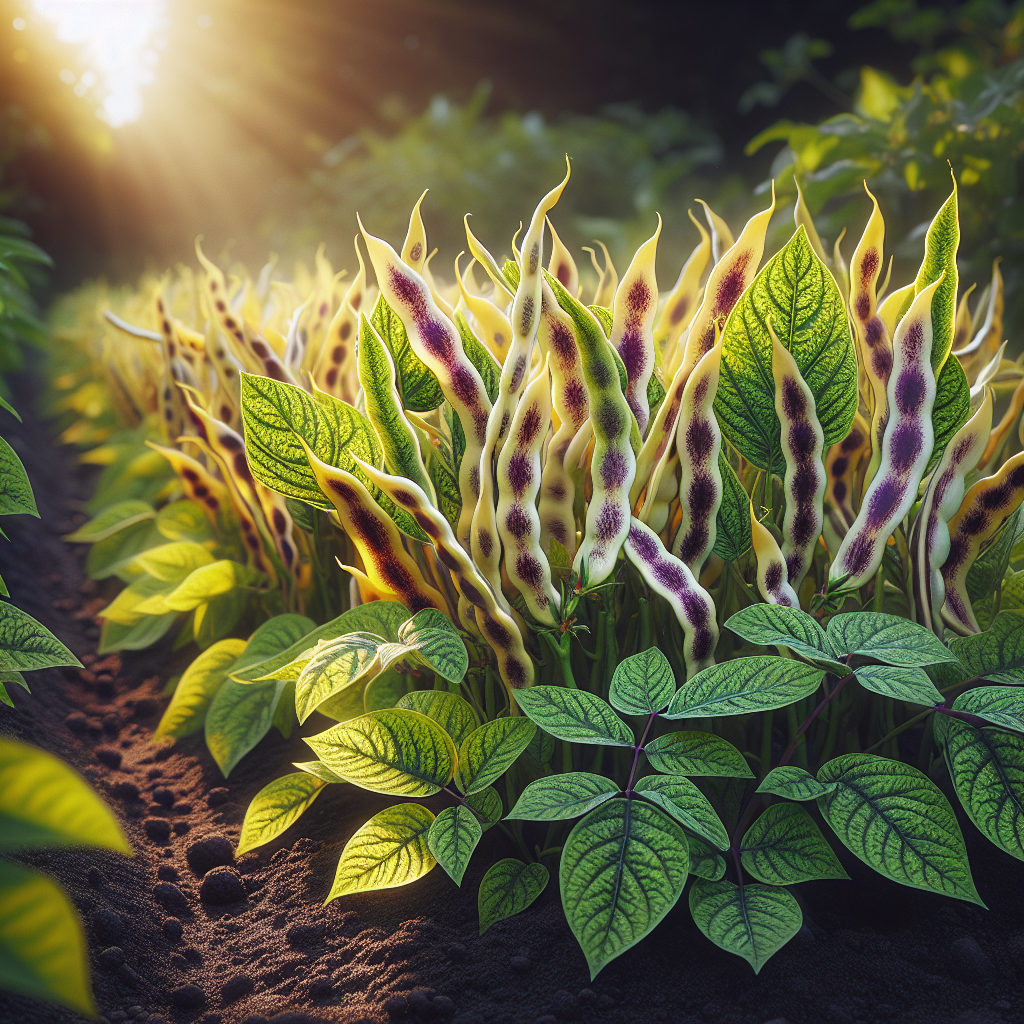
Introduction to Dragon Tongue Bean
An old Dutch heirloom with exceptional table quality, this bean is best known for its cream-yellow pods brushed and striped with purple, a pattern that makes it one of the most recognizable snap beans in the garden. It is usually grown as a bush-type wax bean, though it differs from standard yellow wax beans by producing broader, flatter pods with a notably rich, nutty, almost buttery flavor.
For market gardeners and home growers alike, its biggest strength is versatility. The pods can be harvested young as a tender snap bean, allowed to mature slightly for a meatier Romano-like use, or taken fully mature for fresh shelling beans. That flexibility stretches the harvest season and makes the crop useful in diversified beds. One nuance growers should know is that the purple streaking fades with cooking, so its visual appeal is greatest at harvest and in fresh presentation.
Dragon Tongue Bean is generally considered a reliable, productive cultivar for warm-season production, especially where summers are not brutally hot for prolonged periods. It is often compared with other bush beans and Romano types, but its broad pods and dual-purpose nature set it apart. If you are familiar with general bean production, many of the principles are similar to Blue Lake Bush Bean, but this cultivar is usually grown less for canning uniformity and more for flavor, freshness, and specialty-market appearance.
Historically, heirloom beans such as this one were selected not only for yield, but for kitchen performance and adaptability. Dragon Tongue remains popular because it germinates readily in warm soil, does not require staking, and fixes atmospheric nitrogen through symbiosis with Rhizobium bacteria, reducing its direct need for high nitrogen fertility. Like many heirloom bush beans, however, it rewards precise timing and careful moisture management more than heavy feeding.
Botanical Profile of Dragon Tongue Bean
This cultivar belongs to Phaseolus vulgaris, the common bean species, which includes snap beans, dry beans, shell beans, and many heirloom market classes. Dragon Tongue is typically classified as a bush wax bean or bush snap bean with shelling potential. Plants usually reach about 40-60 cm tall, forming compact, self-supporting mounds rather than vining poles.
Leaves are trifoliate, medium green, and slightly rough-textured. Flowers are small and typical of common bean blossoms, often pale lilac to white depending on strain and growing conditions. Pollination is largely self-contained before flowers fully open, so varietal purity is easier to maintain than in many insect-pollinated vegetables, though isolation is still useful if seed saving.
The pods are the defining botanical and market characteristic. They are flattened to slightly oval, often 12-18 cm long when harvested for snap use, pale yellow to buff in background color, and heavily mottled or streaked with purple anthocyanin pigmentation. Pod walls are comparatively fleshy. Seeds inside mature from pale immature forms to buff, tan, or brown-mottled dry beans depending on maturity stage.
Unlike some modern fine filet beans, Dragon Tongue is not bred for ultra-slender pods. Its strength lies in broad, succulent, stringless texture when picked at the correct stage. If left too long past the ideal snap stage, the pods thicken, the seed bulges become more pronounced, and tenderness declines. That is not a defect so much as a sign to shift intended use from fresh snap bean to shelling bean.
Physiologically, this bean is a frost-sensitive annual. Germination, nodulation, flowering, and pod set all perform best under warm but not extreme conditions. Prolonged temperatures above 32-35°C can reduce pollen viability and increase blossom drop, while cool soils below about 16°C slow emergence and invite seed rot.
Soil, pH, and Climate Requirements for Dragon Tongue Bean
This crop performs best in well-drained loam or sandy loam with moderate organic matter and a friable structure that allows rapid warming in spring. Heavy clay is not automatically unsuitable, but it must be improved with compost, cover-crop residue, or other organic matter to reduce crusting and waterlogging. Beans are among the warm-season crops most sensitive to poor aeration around the root zone. If water stands for even 24-48 hours after irrigation or rain, root stress and disease risk increase sharply.
An ideal soil pH is 6.2-7.0. It will tolerate slightly more acidic or slightly alkaline conditions, but the best nutrient availability and Rhizobium activity usually occur in the mildly acidic to neutral range. Below pH 5.8, nodulation and root development often weaken, and manganese or aluminum stress may reduce vigor. Above pH 7.5, iron and zinc availability can drop, leading to interveinal chlorosis on young leaves.
Before planting, aim for soil organic matter around 3-5% in garden soils or biologically active field ground with good aggregate stability. Avoid very fresh manure, especially poultry manure, because excess soluble nitrogen pushes leaf growth at the expense of pod production and can make plants more attractive to sap-feeding pests. If fertility is uncertain, a balanced pre-plant amendment at low to moderate rates is preferable to aggressive feeding.
Soil moisture should be even, not excessive. A useful target is to keep the top 10-15 cm of soil consistently moist during germination, then maintain moderate moisture through vegetative growth and especially flowering/pod fill. In practical terms, soil should feel cool and slightly damp when squeezed, holding together lightly but not releasing water. If the top 2-3 cm becomes powder-dry repeatedly, plants may stall and develop fibrous pods. If the soil stays sticky, sour-smelling, or smears easily, it is too wet.
Climate-wise, Dragon Tongue Bean prefers temperate to warm-temperate conditions with full sun, ideally 6-8 or more hours daily. Best production usually occurs where daytime temperatures run 21-29°C and nighttime temperatures remain above 12°C. It can still produce in warmer climates, but pod quality often drops during heat waves. In very hot areas, timing the crop for spring to early summer or late summer to early fall is more effective than midsummer sowing.
Wind exposure matters more than many growers expect. Although bush beans are low-growing, persistent hot winds can desiccate flowers, increase transpiration stress, and create uneven pod fill. Sites with good airflow but some protection from drying wind produce more consistent results. Raised beds can be useful where drainage is marginal. For broader fertility planning, see soil health strategies.
Step-by-Step Planting & Propagation
Propagation is almost always by direct seeding. Beans dislike root disturbance, and transplanting is generally inferior to sowing in place.
Wait for warm soil. Plant only after frost danger has passed and soil temperature is at least 16°C, with 18-24°C being better for quick, uniform emergence. Cold soil leads to patchy stands and seed decay.
Prepare a fine but not fluffy seedbed. The surface should be level and crumbly, with clods broken down enough to ensure seed-to-soil contact. Overworked powdery soil can crust after rain, so maintain structure.
Inoculate if needed. In ground where beans have not been grown recently, coat seed with an appropriate Phaseolus inoculant just before sowing. This can improve nodulation and reduce dependence on applied nitrogen.
Sow at the correct depth. Place seed 2.5-4 cm deep. Use the shallower end in heavier soils and the deeper end in lighter, faster-drying soils.
Space properly. Sow seeds 7-10 cm apart in rows 45-60 cm apart for field-style production. In intensive beds, two staggered rows per bed can work if airflow remains good. Dense sowing may increase humidity and disease pressure.
Water once thoroughly after planting. Wet the seed zone evenly but do not flood it. The goal is to hydrate the seed coat and surrounding soil. Repeated light sprinkling is inferior to a proper settling irrigation.
Thin only if absolutely necessary. Because beans germinate well in warm conditions, precision spacing is better than heavy sowing followed by thinning.
Succession sow every 2-3 weeks for extended harvest, stopping when projected flowering would land in extreme heat or before autumn frost.
Emergence typically occurs in 6-10 days in warm soil. During this period, the key risk is crusting or overwatering. If a heavy rain seals the surface, seedlings may struggle to break through. A light mulch applied only after emergence can help moderate soil moisture and reduce splash without keeping the seed zone too cool at planting time.
Care & Maintenance regimes for Dragon Tongue Bean
Once established, this cultivar is relatively straightforward, but quality depends on consistency.
Watering should be moderate and even, especially from first flowering through pod enlargement. As a benchmark, beans generally need about 25-38 mm of water per week from rain or irrigation, rising toward the upper end in sandy soils or during hot weather. Rather than following a rigid calendar, monitor soil moisture in the root zone. If the soil at 7-10 cm depth is barely moist and beginning to crumble completely, irrigate. If it remains wet and slick for days, with lower leaves yellowing and growth slowing, reduce water immediately.
Signs of underwatering include midday wilting that does not recover by evening, short pods, stringier texture, and blossom drop. Signs of overwatering include pale foliage, stunted growth, edema-like blistering, root browning, and greater disease incidence. The most critical period is bloom and pod set: moisture stress at this stage causes irreversible yield loss.
Use drip irrigation or soaker lines whenever possible. Overhead watering is acceptable early in the day, but repeated evening wetness increases foliar disease. Apply water deeply enough to moisten the upper root zone, then allow the top surface to dry slightly before the next irrigation. Constant shallow watering encourages weak surface roots.
Mulch lightly after seedlings are established and the soil has warmed. Straw, shredded leaves, or clean grass clippings applied 2-4 cm deep can reduce splash, buffer moisture fluctuations, and suppress weeds. Keep mulch from directly smothering stems.
Fertilization should be restrained. If soil is fertile and inoculation is effective, additional nitrogen may not be needed. Excess nitrogen causes lush vegetative growth and delayed flowering. If plants are pale and genuinely deficient, a modest side-dress of compost or a low-nitrogen balanced organic fertilizer can be applied when plants are 10-15 cm tall. Phosphorus and potassium are more important than heavy nitrogen for root function, flowering, and pod quality.
Weed control is important in the first 3-4 weeks, when young bean plants compete poorly. Cultivate shallowly, because roots are near the surface and are easily damaged. Once the canopy fills in, weed pressure usually drops.
Beans generally do not need support, but in rich soils or windy sites, a low string line or hilling a little soil around the base can prevent lodging. Avoid working the plants when foliage is wet, especially if bacterial diseases are present, because mechanical contact spreads infection.
Pests, Diseases & Organic Management
The most common insect pests include Aphids, Mexican bean beetles, Spider mites, Leafhoppers, Thrips, and occasionally Bean leaf beetles depending on region. Aphids cluster on tender growth and undersides of leaves, causing curling and sticky honeydew. Strong water sprays, conservation of beneficial insects, and insecticidal soap are often sufficient for moderate populations. Spider mites become serious in hot, dusty conditions; stippled leaves and fine webbing are early signs. Raising humidity around the crop canopy is not ideal for disease, so the better prevention strategy is reducing dust, avoiding drought stress, and removing heavily infested plants if outbreaks escalate.
Mexican bean beetle larvae skeletonize leaves and scar pods. Hand-picking egg masses and larvae works on small plantings, while row cover used early can exclude adults until flowering. Remove covers at bloom to permit normal pollination and airflow.
Disease pressure is typically highest under wet foliage, dense spacing, or repeated bean cropping in the same ground. Common problems include Bean rust, Anthracnose, Halo blight, Common bacterial blight, and root rots caused by Pythium, Rhizoctonia, or Fusarium.
Anthracnose often shows as dark, sunken lesions on pods, stems, and cotyledons, especially from infected seed or cool wet conditions. Bacterial blights produce water-soaked spots that become brown with yellow halos. Rust appears as rusty pustules on leaves, particularly later in the season. Root rots cause poor emergence, sudden wilt, and brown, decayed roots in saturated soils.
Organic management begins with prevention:
- Rotate out of beans and other legumes for at least 2-3 years if disease has been present.
- Use certified disease-free seed.
- Maintain wide enough spacing for air movement.
- Irrigate at the soil line.
- Avoid handling plants when wet.
- Remove and destroy heavily infected residues after harvest.
Copper-based products may help suppress some bacterial and fungal foliar diseases when applied preventively, but they are not a cure once infections are severe. Biofungicides based on Bacillus species may also reduce disease pressure when used early and consistently. The strongest control remains sanitation, rotation, and moisture management.
If seedlings disappear overnight, suspect birds, Cutworms, or Slugs rather than disease alone. Collars, slug traps, and early row cover can protect the stand during establishment.
Harvesting, Curing & Optimal Storage
Harvest timing determines eating quality more than any other factor. For premium snap-bean use, pick pods when they are fully elongated, still smooth enough that seed bulges are minimal, and the pod snaps crisply when bent. This usually occurs about 55-65 days from sowing, depending on temperature and moisture. At this stage, pods are tender, juicy, and nearly stringless.
Do not wait for all pods to reach maximum size. Frequent picking, every 2-4 days in active production, encourages continued flowering and prevents plants from shifting fully into seed maturation. Market-quality pods are generally 12-15 cm long, broad but not tough, and brightly patterned. If the pods become lumpy with obvious swollen seeds, use them as shell beans rather than fresh snaps.
For shelling use, allow pods to fill well while still retaining some suppleness. The seeds should be fully formed but not yet dry. Shell immediately after harvest for best texture.
For dry bean seed saving, let pods mature on the plant until they yellow, tan, and papery. In humid climates, pull whole plants when most pods are mature and finish drying under cover with good ventilation to avoid mold or weather staining. Once fully dry, thresh gently and clean seed.
Fresh snap pods store best at 7-10°C with high relative humidity, ideally 90-95%. Under those conditions they often keep 7-10 days. Below about 5°C, chilling injury may appear as pitting, dull color, or water-soaked areas. For household storage, a perforated bag in the crisper is usually sufficient, but avoid sealing pods in airtight plastic with free moisture.
Do not wash before storage unless necessary; surface moisture shortens shelf life. If washing is needed, dry completely before refrigeration.
Dry beans intended for storage should be cured until seed moisture is roughly 12-14% or low enough that seeds are hard and brittle under tooth pressure rather than dentable. Store in airtight containers in a cool, dark, dry place. For long-term seed viability, cooler temperatures and low humidity are essential.
Companion Planting for Dragon Tongue Bean
This bean works well in mixed vegetable systems because it stays compact and contributes biologically fixed nitrogen to the surrounding rhizosphere over time, especially after root residues decompose. The best companion choices are plants that benefit from moderate fertility, do not aggressively shade the beans, and do not share the exact same disease complex.
Good companions include Corn, Carrot, Radish, and Nasturtium. Corn can provide a partial windbreak in larger plantings, though bush beans should be placed where they still receive strong light. Carrots and radishes occupy a different root zone and make efficient use of space early in the season. Nasturtium is especially useful in diversified beds as a trap and pollinator-support plant while also softening pest pressure visually and ecologically.
Avoid placing beans immediately beside heavy alliums in dense plantings if growth seems suppressed, though garden-scale compatibility varies. More importantly, avoid repeated bean-after-bean succession in the same bed, because disease carryover is a greater threat than any minor companion mismatch.
A practical layout is alternating short blocks or strips rather than highly intermingled sowing. This preserves airflow, makes harvest easier, and limits disease spread. Companion planting should support the bean's need for sun, quick-drying foliage, and easy picking access rather than turning the bed into an overcrowded polyculture.