Introduction to shuck dieback complexes
Shuck dieback complexes represent one of the most challenging disease issues in nut orchard management, particularly for pecan growers. These are not single-pathogen diseases but intricate syndromes involving multiple fungal species that attack the shuck (the outer hull covering the pecan nut) during critical development stages. Primary culprits include Phytophthora cactorum, Botryosphaeria dothidea, Fusicoccum aesculi, and other opportunistic fungi that thrive under stress conditions. First documented in the southeastern United States in the mid-20th century, shuck dieback has since spread to major pecan-producing regions like Georgia, Texas, and Oklahoma, causing yield losses up to 50-70% in severe outbreaks.
The complexity arises from the interaction between pathogens, environmental factors, and host susceptibility. Unlike straightforward foliar diseases, shuck dieback progresses rapidly from initial lesions to full shuck necrosis, often coinciding with nut maturation. This timing is devastating as it renders harvestable nuts inedible or shriveled. Early detection is crucial, as once symptoms appear, control options dwindle. For organic producers, management focuses on prevention through cultural practices rather than curative sprays. Understanding the disease's multifactorial nature is key to implementing integrated strategies that minimize economic impact. Recent research highlights how climate variability intensifies outbreaks, making adaptive management essential for sustainable pecan production. hickory-shuckworm often exacerbates damage by creating entry points for these pathogens.
Identifying Symptoms & Damage
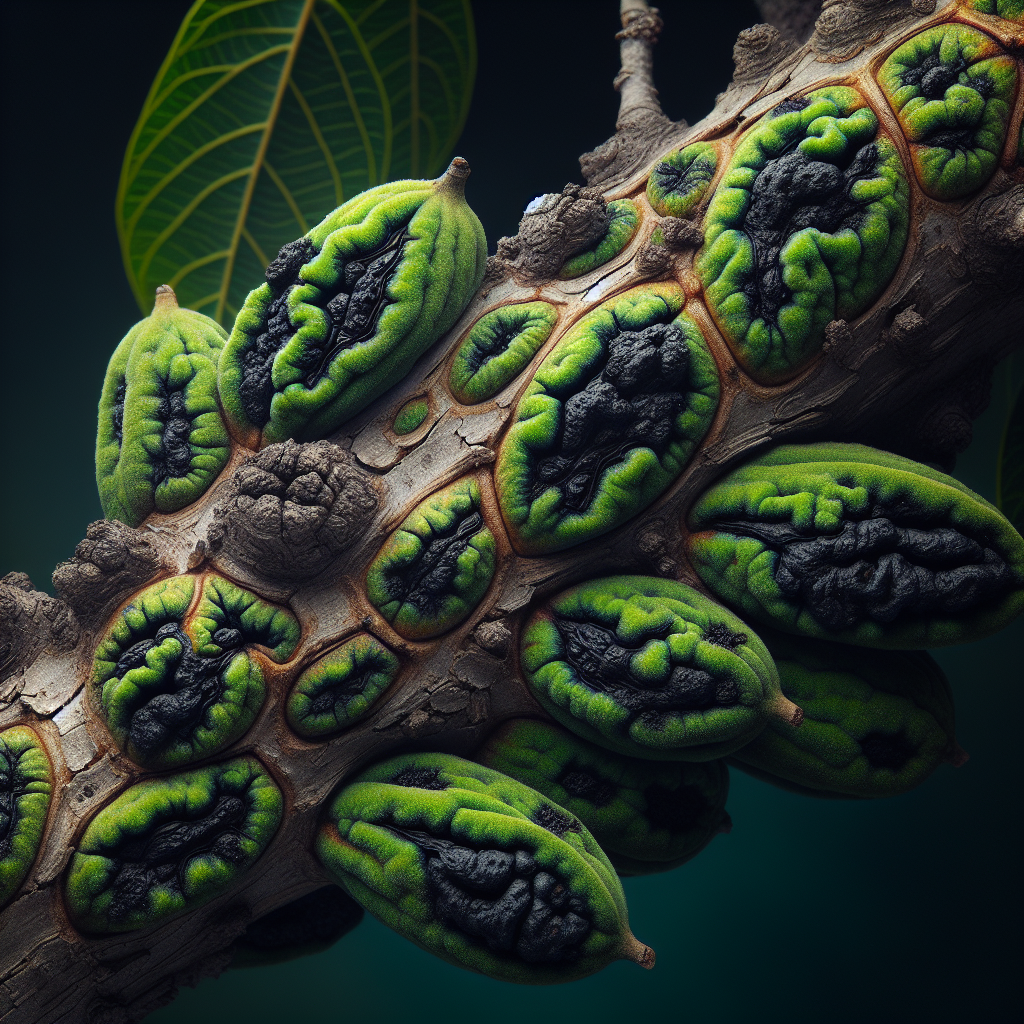
Recognizing shuck dieback complexes requires careful scouting during late summer to early fall, when shucks are green and filling. Initial symptoms appear as small, water-soaked lesions at the base or stylar end of the shuck, often near the suture line. These spots expand rapidly into sunken, necrotic areas with dark brown to black discoloration. Unlike anthracnose, which produces spore masses, shuck dieback lesions remain dry and leathery without profuse sporulation.
Advanced stages show complete shuck blackening, shriveling, and premature dehiscence, with nuts exposed but often kernel-deformed or unfilled. Secondary symptoms include gummy exudate from lesions and foul odors indicating mixed infections. Damage assessment involves counting affected shucks per cluster; thresholds above 20% warrant immediate action. Differentiate from hull rot by lesion location—shuck dieback favors the proximal end, while hull rot starts distally. Gumming and rapid tissue collapse distinguish it from pecan scab, which produces velvety spores.
Economic damage is profound: marketable yield drops as affected nuts blacken internally, reducing grade and price. In severe cases, entire limbs defoliate, weakening trees for future seasons. Use a hand lens to check for fungal mycelia or insect damage from black pecan aphids, which vector pathogens. Regular monitoring from shuck split (July-August) prevents surprises at harvest.
Lifecycle and Progression of shuck dieback complexes
Shuck dieback complexes follow a polycyclic lifecycle synchronized with pecan phenology. Overwintering structures—mycelium in bark cankers, oospores in soil for Phytophthora—germinate in spring rains. Primary inoculum spreads via splash from infected debris or irrigation. Infection peaks during sustained leaf wetness (>12 hours) at 75-85°F, coinciding with kernel fill.
Latent periods last 7-14 days, with symptoms emerging post-rain events. Secondary cycles amplify via conidia produced on necrotic tissue, disseminating by wind and rain. Progression accelerates under humidity >90%, with full shuck kill in 2-3 weeks. Unlike Phytophthora root rot, aerial phases dominate, though root stress predisposes trees. Harvest disrupts cycles, but dropped shucks serve as reservoirs. Multi-year infections lead to limb dieback, linking to broader shuck disorders. Pathogen consortia shift seasonally: Botryosphaeria dominates dry periods, Phytophthora wet ones.
Environmental Triggers & Risk Factors
Warm, wet conditions are the primary triggers, with optimal infection at 80°F and 12+ hours leaf wetness. Excessive nitrogen promotes succulent shucks, increasing susceptibility. Poor drainage, compacted soils, and over-irrigation create root rot complexes that stress trees, facilitating shuck entry. High humidity from dense canopies traps moisture, mimicking greenhouse conditions.
Risk factors include young orchards (<5 years), water-stressed trees, and mechanical injuries from termites or equipment. Zinc deficiency mimics symptoms but lacks necrosis. Late-season floods in floodplains spike incidence. Climate change extends wet periods, intensifying outbreaks. Scout after 1-inch rains; avoid overhead irrigation. Soil Health Mastery: 5 Proven Strategies for Small Farms to Build Fertile Ground Without Breaking the Bank offers drainage tips.
Organic Control & Treatment Plans
Organic management emphasizes sanitation and cultural controls over fungicides. Remove and destroy infected shucks promptly to break cycles—compost off-site at >140°F. Prune cankers 12 inches below symptoms in dormant season, painting cuts with organic latex paint. Apply copper-based fungicides (e.g., fixed copper at 2-3 lbs/acre) at 50% shuck split and 2-week intervals through fill stage; rotate with potassium bicarbonate for resistance management.
Neem oil or Bacillus subtilis suppress secondary pathogens. Boost tree vigor with compost teas rich in mycorrhizae, targeting Phytophthora. Release predatory mites against aphid vectors. For outbreaks, trunk-inject phosphorous acid (organic-approved formulations). Integrated plans: monitor with traps, irrigate deeply but infrequently, and mulch to retain moisture without wetness. Yields recover 30-50% in treated orchards.
Preventing shuck dieback complexes in the Future
Prevention hinges on site selection: well-drained soils, pH 6.0-6.5, resistant cultivars like 'Desirable' or 'Stuart'. Space trees 40x40 ft for airflow. Annual zinc and boron applications reduce susceptibility. Cover crops like clover improve soil structure. Scout weekly from split; use weather stations for wetness-based sprays. Rotate fungicides, avoid stress. Long-term: remove stumps harboring inoculum. Resilient orchards sustain <5% incidence.
Crops Most Affected by shuck dieback complexes
Pecan (Desirable Pecan, Stuart Pecan) is the primary host, with 80% of U.S. orchards impacted. Hickory and walnut show minor susceptibility. Native pecans resist better than improved varieties. Global spread limited to humid subtropics.