Introduction to Venturia effusa
Venturia effusa, previously classified under Fusicladium effusum, is the causal agent of pecan scab, one of the most economically important fungal diseases affecting pecan (Carya illinoinensis) production worldwide. The pathogen produces both asexual conidia and sexual ascospores, allowing it to survive between seasons on infected plant debris and initiate new infections each spring. Left unmanaged, it can cause complete crop loss in susceptible cultivars by disfiguring nuts and reducing photosynthetic capacity of leaves. The disease is most severe in humid growing regions where extended periods of leaf wetness coincide with the emergence of new foliage and nut development.
Identifying Symptoms & Damage
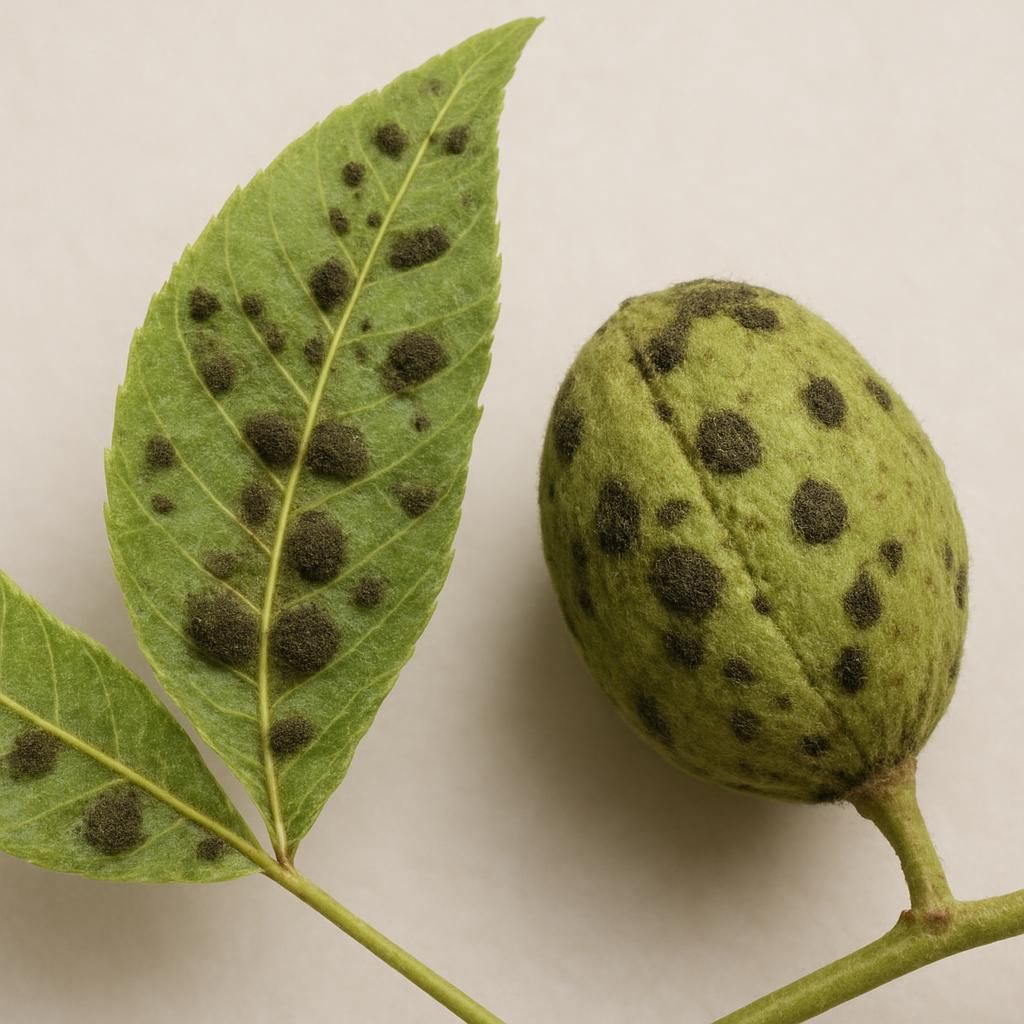
Early infections appear as small, circular olive-green spots on the undersides of young leaves and on the surfaces of expanding shucks. As lesions mature they darken to black, develop a velvety texture, and may coalesce into larger necrotic areas. Severe foliar infection leads to premature defoliation, reduced nut size, and poor kernel fill. On developing nuts the lesions become raised, corky, and cracked, often allowing secondary invaders to enter and cause further decay. In heavy infections, entire clusters may abort before harvest, resulting in significant economic losses.
Lifecycle and Progression of Venturia effusa (MUST INCLUDE A MARKDOWN TABLE OF LIFECYCLE STAGES)
The pathogen overwinters as pseudothecia embedded in fallen leaves and shucks. Primary infection occurs in spring when ascospores are released during rainfall events and infect newly expanding tissues. Secondary spread is driven by repeated cycles of conidial production and splash dispersal throughout the growing season.
| Lifecycle Stage | Description | Typical Timing | Key Conditions |
|---|---|---|---|
| Overwintering | Pseudothecia form in fallen leaves and shucks | Late fall to early spring | Cool, moist debris |
| Ascospore Release | Primary inoculum discharged during rain | Bud break to early shoot growth | 15–25 °C, prolonged wetness |
| Primary Infection | Ascospores germinate and penetrate young tissues | Spring flush | 6–12 h leaf wetness |
| Conidial Production | Asexual spores form on lesions | Throughout growing season | High humidity, moderate temperatures |
| Secondary Spread | Conidia splash-dispersed to new growth | Summer | Frequent rain or irrigation |
| Fruit Infection | Nuts become susceptible from pollination through shell hardening | Mid-spring to early summer | Extended wetness periods |
| Defoliation & Nut Drop | Severe infection causes premature leaf and nut loss | Late summer to harvest | Cumulative lesion load |
Environmental Triggers & Risk Factors
Infection risk increases dramatically when temperatures range between 15 °C and 28 °C accompanied by at least six hours of continuous leaf wetness. High relative humidity (>80 %) and frequent rainfall during shoot elongation and nut set create ideal conditions for epidemic development. Orchards with poor air circulation, dense canopies, or overhead irrigation systems experience prolonged leaf wetness and higher disease pressure. Susceptible cultivars such as Stuart Pecan and Desirable Pecan planted in low-lying areas are particularly vulnerable.
Organic Control & Treatment Plans (MUST INCLUDE A MARKDOWN TABLE OF TREATMENT OPTIONS AND FREQUENCIES)
Organic management integrates cultural sanitation, resistant cultivars, and approved biological or copper-based products. Begin with removal of fallen leaves and shucks in late winter to reduce overwintering inoculum. Prune to improve canopy airflow and sunlight penetration. Apply protective sprays at key phenological stages using approved materials.
| Treatment Option | Active Ingredient / Product | Application Frequency | Notes |
|---|---|---|---|
| Dormant Sanitation | Leaf and shuck removal | Once, late winter | Reduces primary inoculum |
| Copper Hydroxide | Fixed copper (e.g., 2–3 lb metallic copper/acre) | Every 7–14 days from bud break to shell hardening | Rotate with other materials; watch for phytotoxicity |
| Sulfur | Micronized or wettable sulfur | Every 7–10 days during high-risk periods | Avoid >30 °C; may cause leaf burn |
| Bacillus subtilis | Serenade or similar biofungicide | Every 7–14 days | Use in rotation with copper; best as preventive |
| Potassium Bicarbonate | 2–5 lb/100 gal water | Every 7–10 days | Contact fungicide; reapply after rain |
| Horticultural Oil | 1–2 % emulsion | Dormant and between cover sprays | Improves coverage and reduces overwintering spores |
Preventing Venturia effusa in the Future
Long-term prevention centers on cultivar selection, orchard design, and cultural practices. Plant scab-resistant cultivars such as Kanza or Lakota where available. Space trees adequately and orient rows to prevailing winds to promote rapid drying of foliage. Implement a strict sanitation program each winter and monitor weather forecasts to time protective sprays before infection periods. Regular scouting for early lesions allows timely intervention and prevents secondary spread. The Overlooked Art of Crop Rotation for Small Farm Resilience highlights how diverse planting sequences reduce disease carryover across seasons.
Crops Most Affected by Venturia effusa
While pecan is the primary host, the pathogen has been reported on other Carya species including hickory. No other major commercial crops are significantly impacted, making targeted management in pecan orchards the most effective strategy for control.