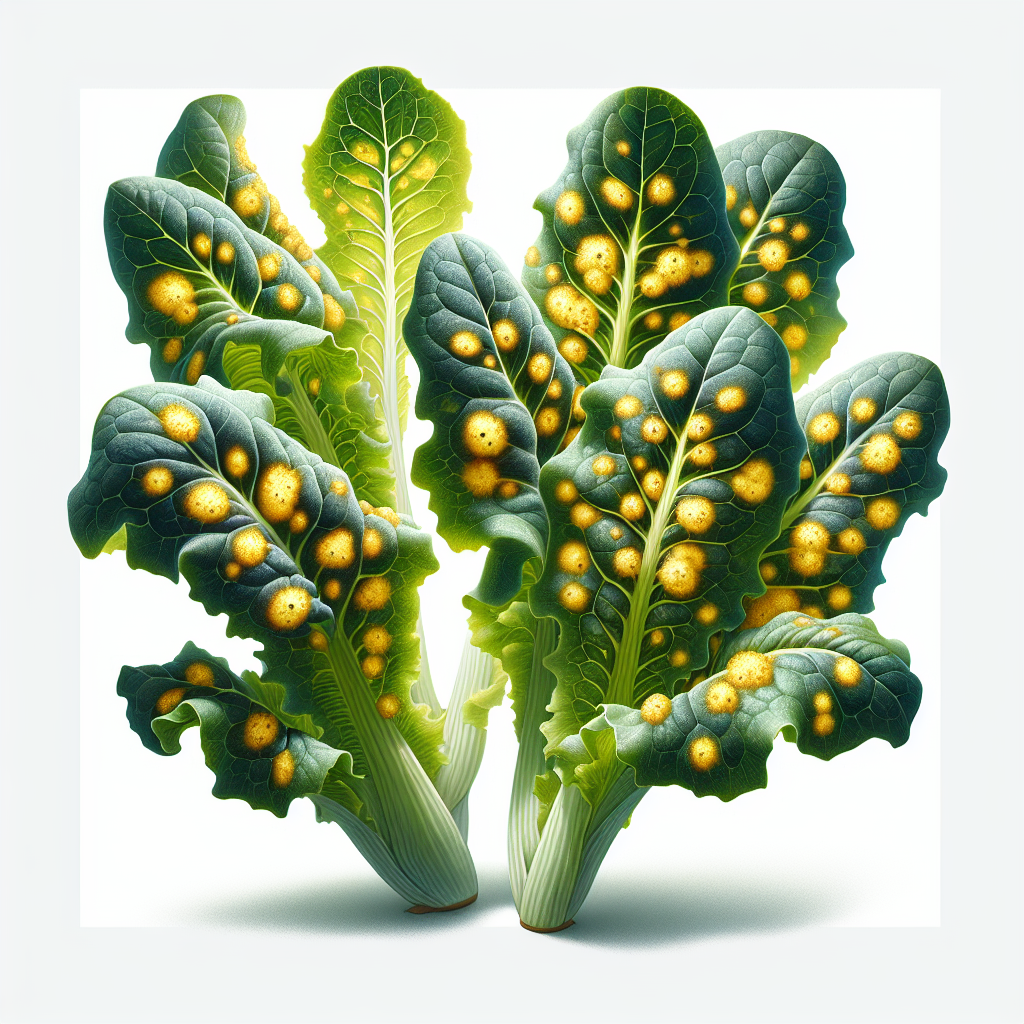
Introduction to downy spot
Downy spot, scientifically known as Bremia lactucae infection, represents one of the most pervasive foliar diseases in leafy greens production worldwide. This oomycete pathogen targets the lettuce crop family (Asteraceae), causing angular spots on leaves that evolve into downy growth under high humidity. First identified in the early 19th century, downy spot has become a major concern for commercial growers and small-scale farmers alike, especially in regions with mild temperatures and frequent leaf wetness.
The disease manifests as small, yellowish lesions on upper leaf surfaces, often with a purplish-gray fuzz underneath, which is the pathogen's sporangia. In severe cases, it can defoliate plants, rendering them unmarketable and slashing yields by up to 50-100% in untreated fields. Understanding downy spot is crucial for sustainable agriculture, as it spreads rapidly via wind-dispersed spores and splashing water, making prevention a cornerstone of integrated pest management (IPM). This guide provides professional-grade diagnostics, lifecycle insights, and organic strategies to safeguard your lettuce and related crops.
Economic impacts are staggering: in California alone, a leading lettuce producer, downy spot causes annual losses exceeding $10 million. Climate change exacerbates its prevalence by extending favorable weather windows. Early detection through scouting and prompt intervention can preserve crop health, ensuring high-quality harvests even in high-risk environments.
Identifying Symptoms & Damage
Accurate diagnosis of downy spot begins with recognizing its distinctive symptoms, which differentiate it from look-alikes like powdery mildew or bacterial leaf spots. Initial signs appear as small (1-3 mm), pale green to yellow angular spots on the upper leaf surface, confined by leaf veins, giving a mosaic-like pattern. As lesions expand to 5-10 mm, they turn necrotic with dark borders and chlorotic halos.
The hallmark feature is the downy sporulation on the lower leaf surface: a dense, purplish-gray to white fungal-like growth visible under humid conditions or with a hand lens. This sporangiopbore mat releases zoospores that infect nearby tissue. In advanced stages, spots coalesce, covering entire leaves, leading to blighting, wilting, and premature senescence. On heads like romaine or iceberg lettuce, inner leaves show fuzzy growth, ruining cosmetic appeal.
Damage extends beyond aesthetics. Photosynthetic disruption reduces plant vigor, stunting growth and heads by 20-40%. Secondary invaders like soft rots exploit weakened tissue, compounding losses. Yield impacts are most severe in baby leaf production, where even minor spotting rejects entire crates. Use a 10x hand lens to confirm sporulation; lab tests via ELISA or PCR provide definitive ID if symptoms overlap with downy mildew.
Scout weekly during cool, wet periods, focusing on lower canopy where humidity pools. Thresholds: 5% incidence triggers action in commercial fields. Differentiate from nutrient deficiencies (no sporulation) or cercospora leaf spot (darker, zonate lesions).
Lifecycle and Progression of downy spot
Bremia lactucae follows a polycyclic lifecycle optimized for cool, moist environments. Primary inoculum overwinters as oospores in infected debris or volunteer plants, resilient to -5°C for months. Spring germination produces sporangia under 4-24 hours of leaf wetness at 8-20°C (optimum 12-16°C).
Spores disperse via wind (up to 8 km) or rain splash, germinating within 2-6 hours to release biflagellate zoospores that encyst and penetrate stomata. The latent period is 3-5 days, with lesions sporulating 4-7 days post-infection under high RH (>90%). Each lesion produces 10,000-100,000 sporangia, enabling 10-15 cycles per season.
Progression accelerates in dense canopies: seedlings show systemic infection (vein banding), mature plants exhibit localized spots. Oospores form in senescing tissue, perpetuating the cycle. Unlike true fungi, Bremia requires free water for zoospore motility, explaining wet-night dependency. Disease gradients follow a logistic curve, plateauing at 80-100% severity without intervention.
Environmental Triggers & Risk Factors
Downy spot epidemics hinge on the 18/10°C (day/night) isotherm with >6 hours leaf wetness. High RH (85-100%) and poor ventilation in tunnels or dense plantings amplify spread. Soil moisture from overhead irrigation splashes inoculum upward, while low light (<500 µmol/m²/s) prolongs wetness.
Risk factors include susceptible varieties like Iceberg Lettuce, continuous cropping, and residue from prior seasons harboring oospores. Cool coastal climates (e.g., Salinas Valley) see peaks in fall/winter; inland areas in spring. Weed hosts like wild lettuce bridge gaps. Over-fertilization with nitrogen promotes succulent tissue, shortening latent periods by 1-2 days.
Monitor with weather stations tracking leaf wetness duration (LWD >8h risky). Disease forecasting models like UC IPM integrate temperature, RH, and spore traps for 7-day alerts. Crop age matters: 4-6 leaf stage is most vulnerable.
Organic Control & Treatment Plans
Organic management emphasizes IPM: cultural, biological, and OMRI-listed fungicides. Start with sanitation—remove debris post-harvest, till to bury oospores (reduces inoculum 70%). Rotate with non-hosts like onion for 2-3 years.
Resistant varieties (e.g., 'Rebecca', 'Nevada') suppress 50-80% severity; integrate with certified seed free of Bremia. Space plants 30 cm apart for airflow, use drip irrigation to minimize wetness. Apply row covers during spore peaks.
Biologicals: Trichoderma harzianum (RootShield) colonizes phyllosphere, outcompeting pathogen (40% control). Bacillus subtilis (Serenade) induces SAR, applied preventively every 7 days.
OMRI fungicides: Copper octanoate (Cueva, 1-2 gal/A) or potassium bicarbonate (MilStop, 2-5 lb/A) at 5-7 day intervals when LWD >6h. Alternate with phosphorous acid (Reliant, 2-4 qt/A) for translaminar protection. Timing: begin at 1% incidence, continue through harvest. Efficacy: 60-85% with 4-6 apps.
For active infections, rogue 10m buffers around foci, apply at dusk to maximize coverage. Track via apps for compliance. Spring Pest Patrol: Organic AI Strategies to Shield Your Crops from Common Invaders offers tech integration tips.
Preventing downy spot in the Future
Long-term prevention builds resilient systems. Select resistant cultivars yearly, updating via seed catalogs. Implement 3-year rotations: lettuce → broccoli → grains. Solarize soil pre-plant (6 weeks, 45-50°C kills oospores 90%).
Optimize microclimate: elevate beds 20 cm, mulch with straw to reduce splash. Ventilate greenhouses to <85% RH, use fans for turbulence. Scout grids (1/m²) with UV lights for sporangia detection.
Seed treatments: hot water (48°C, 20 min) or biofumigants. Monitor forecasts; delay planting if risk high. Cover crops like mustard biofumigate via glucosinolates. Educate crews on hygiene—no tools between fields.
Integrated monitoring: spore traps + weather data predict outbreaks 5-7 days ahead. Annual soil tests guide balanced nutrition, avoiding excess N. These strategies sustain yields >95% disease-free over seasons.
Crops Most Affected by downy spot
Downy spot primarily devastates lettuce (Lactuca sativa), including crisphead, romaine, butterhead, and leaf types. Endive (Cichorium endivia), chicory (C. intybus), and escarole suffer similarly. Wild relatives like prickly lettuce (L. serriola) serve as reservoirs.
Secondary hosts: spinach (Spinacia oleracea) shows minor susceptibility; rare reports on kale. Commercial impact greatest in hydroponic and field lettuce, with baby greens hit hardest due to density. In Asia, occurrences on chrysanthemum noted, but lettuce dominates losses globally.