Introduction to Delicata Squash
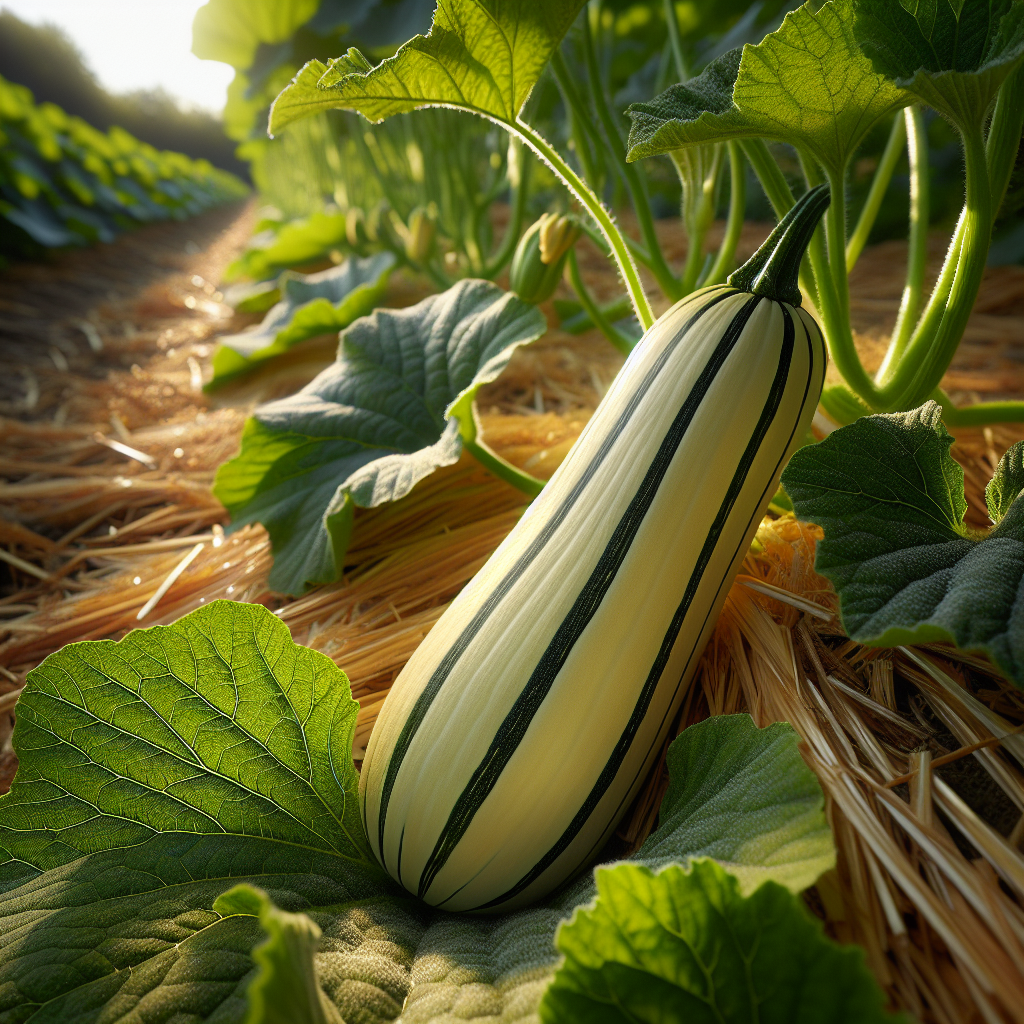
Often called sweet potato squash in older seed catalogs, this heirloom-type winter squash occupies a useful middle ground between summer squash speed and winter squash keeping quality. It produces elongated, cream-colored fruit with green longitudinal stripes and fine-textured orange flesh that becomes rich, sweet, and slightly nutty after cooking. The rind is notably tender when mature, which is one of its defining market advantages because it can be eaten without peeling.
Historically, delicata rose to prominence in North America in the late 19th and early 20th centuries, then declined when susceptibility to Powdery Mildew and the rise of longer-keeping squash types reduced its commercial appeal. Modern breeding restored interest through improved strains and hybrids with better disease resistance, more uniform fruit set, and dependable field performance. For growers, its appeal is clear: relatively short days to maturity, premium culinary value, and a distinctive appearance that sells well fresh, roasted, stuffed, or sliced into rings.
Although grouped with winter squash, it does not store as long as butternut or Hubbard types. That shorter storage life is compensated by earlier harvest, manageable fruit size, and high flavor quality. In production planning, it fits especially well in diversified vegetable farms, market gardens, and home plots where direct sales, succession planning, and quality-focused harvesting are priorities. For a broader species context, see Squash.
Botanical Profile of Delicata Squash
This crop belongs to Cucurbita pepo, the same species that includes zucchini, many pumpkins, and several summer squashes. That matters agronomically because crops within the same species can share diseases, pests, and cross-pollination tendencies. Seed savers should isolate flowering C. pepo types if varietal purity is important.
Plants are warm-season annual vines with coarse, palmately lobed leaves, hollow trailing stems, and tendrils that help anchor spreading growth. Depending on cultivar and fertility, vines usually spread 4 to 8 feet, though some semi-bush selections remain shorter. Roots are relatively shallow in the upper soil profile but can extend laterally in well-structured soils, making the crop responsive to both mulching and consistent irrigation.
The species is monoecious, meaning separate male and female flowers are borne on the same plant. Male blossoms appear first and in greater numbers, while female flowers can be identified by the miniature ovary, or tiny fruit, directly behind the petals. Pollination is insect-dependent, especially by bees active in the morning when flowers are open. Poor pollination leads to misshapen fruits, early fruit abortion, or fruit that enlarges slightly and then yellows and drops.
Typical delicata fruit are cylindrical to slightly tapered, usually 1 to 3 pounds, with cream or pale yellow skin and dark green stripes that may fade somewhat in storage. Flesh is dense, dry enough to roast well, and higher in culinary quality when plants are not overirrigated late in development. Improved cultivars may include better Powdery Mildew tolerance, darker striping, or more uniform fruit length.
Soil, pH, and Climate Requirements for Delicata Squash
This crop performs best in fertile, well-drained loam or sandy loam with high biological activity and good aggregate stability. The ideal soil pH is 6.0 to 6.8, with 6.2 to 6.5 often delivering the best nutrient availability for cucurbits. Below pH 5.8, calcium, magnesium, and phosphorus availability can become limiting, while strongly alkaline soils may tie up micronutrients such as manganese, zinc, and iron.
Drainage is non-negotiable. Delicata roots dislike prolonged saturation, particularly when soil temperatures are still cool. In poorly drained ground, seeds rot more readily, Damping-off pressure rises, and root function declines even before visible wilting appears. If water stands for more than 24 hours after rain, use raised beds or hills at least 6 to 8 inches high. A friable rooting zone to 10 to 12 inches deep is ideal.
Target organic matter around 3 to 6%. Excessively raw, high-carbon organic matter can temporarily immobilize nitrogen, while overmanured soils can drive lush vine growth at the expense of flowering and fruit set. Before planting, incorporate finished compost at a moderate rate, typically 1 to 2 inches over the bed surface, or apply balanced preplant fertility based on soil testing. A common field target is moderate nitrogen with generous potassium, since potassium supports fruit quality, water regulation, and disease resilience.
Temperature strongly influences performance. Seeds germinate best at 80 to 95°F (27 to 35°C), though they can sprout more slowly above 60°F (16°C). Vegetative growth is happiest between 70 and 85°F (21 to 29°C). Growth slows below 55°F (13°C), and frost will kill plants. Delicata is particularly valuable in cool temperate regions because many cultivars mature in roughly 80 to 110 days, shorter than many long-season winter squash.
Choose full sun: at least 8 hours daily, with excellent airflow. High humidity combined with dense foliage promotes Powdery Mildew. Regions with warm days, mild nights, and relatively dry late summers are especially favorable. In humid climates, wider spacing and resistant strains matter more than in arid climates.
Moisture should be consistent but never stagnant. During active growth, the top 2 inches of soil should be moist but not greasy or airless. A practical benchmark is that soil at root depth should feel cool and crumbly, not soupy; when squeezed, it should hold briefly then break apart with a light touch. Plants typically need 1 to 1.5 inches of water per week, increasing during flowering and fruit fill on sandy soils. Overwatering signs include persistent leaf droop in the morning despite wet soil, yellowing lower leaves, slowed growth, algae on the soil surface, and fruit with bland flavor or increased cracking. Underwatering signs include midday wilt that extends into evening, blossom drop, small fruit, and uneven rind coloration.
For growers improving field fertility and structure, this overview on soil health is useful background.
Step-by-Step Planting & Propagation
Start with fresh, high-vigor seed from a reputable source, especially if Powdery Mildew resistance is a breeding priority in your region. Direct seeding is usually best because cucurbits dislike root disturbance, but transplants can be worthwhile in short-season climates.
Prepare the bed 2 to 3 weeks ahead of planting. Remove perennial weeds, loosen soil deeply without creating compaction layers, and incorporate finished compost plus any preplant amendments guided by soil analysis. Beds should be fully warmed before sowing.
Wait for proper soil temperature. Sow only when soil at 2 inches depth is at least 65°F (18°C), preferably 70°F (21°C) or warmer. Cold soil delays germination and favors seed decay.
Use hills or spaced rows. In home gardens, plant 2 to 3 seeds per hill, spacing hills 4 to 6 feet apart. In rows, sow seeds 1 inch deep, with plants thinned to 24 to 36 inches apart and rows 6 to 8 feet apart. Semi-bush forms can be a little tighter.
Thin early. When seedlings have 1 to 2 true leaves, retain the strongest plant or two per hill. Cut unwanted seedlings at the soil line rather than pulling, to avoid disturbing roots.
For transplants, sow indoors 2 to 3 weeks before field setting. Use 3- to 4-inch biodegradable or deep-cell pots, one seed per pot. Maintain 75 to 85°F (24 to 29°C) for germination and full light immediately after emergence. Harden off for 5 to 7 days. Transplant only after frost danger has passed and roots have not yet circled densely.
Protect young plants. Floating row cover can accelerate early growth and exclude Cucumber Beetles, but remove it when female flowers appear unless managed pollination is available.
Mulch after establishment. Straw or leaf mulch helps stabilize soil moisture, reduce splash-borne disease spread, and suppress weeds. Keep mulch a few inches away from the stem crown to reduce rot risk.
Propagation is almost always by seed. Vegetative propagation is not practical in standard field systems. For seed saving, isolate from other Cucurbita pepo types by distance or controlled pollination, then allow fruits to reach full physiological maturity well beyond edible stage.
Care & Maintenance regimes for Delicata Squash
Once established, this crop benefits from disciplined rather than excessive care. The goal is steady growth, balanced nutrition, effective pollination, and minimal canopy stress.
Irrigation: Deliver deep, infrequent watering rather than daily light sprinkling. On loam, one thorough irrigation that wets the top 8 to 10 inches is preferable to shallow wetting that keeps roots near the surface. Drip irrigation is ideal because it keeps foliage dry and reduces mildew pressure. During flowering and fruit enlargement, avoid allowing soil moisture tension to swing sharply from wet to dry; those fluctuations can cause fruit abortion, poor fill, or inconsistent sweetness. As fruits approach full size and rind color develops, slightly reducing water frequency—without inducing severe wilting—can improve eating quality and reduce watery flesh.
Fertilization: Too much nitrogen is a common mistake. It creates oversized vines, delayed female flowering, and higher disease pressure. If plants are pale and growth is slow, a sidedress when runners begin to extend can help. Use composted poultry manure, a balanced organic granular fertilizer, or a moderate soluble feed low in excessive ammonium. Once fruit set is underway, avoid repeated high-nitrogen inputs and favor potassium and calcium sufficiency.
Weed control: Keep the bed clean for the first 4 to 6 weeks, when vines have not yet shaded the soil. Shallow hoeing is safer than deep cultivation because roots spread widely near the surface. After canopy closure, disturbance should be minimal.
Pollination management: Strong pollinator presence is directly tied to fruit set quality. If bee activity is poor, hand pollination in early morning can dramatically improve results. Transfer pollen from a freshly opened male flower to the stigma of a female flower. Misshapen fruits often trace back to incomplete pollination rather than nutrient deficiency.
Canopy management: Pruning is rarely necessary, but some growers gently reposition vines to keep walkways open and improve airflow. Avoid snapping vines once fruit set begins. In humid areas, orient rows with prevailing winds when possible.
Stress monitoring: Healthy plants hold a strong green color, produce steady new growth, and recover quickly from midday heat wilt by evening. If leaves remain flaccid overnight, investigate soil moisture, stem damage, root disease, or borer activity. If vines are rampant with few female flowers, reduce nitrogen and review sun exposure.
Fruit load and quality: Delicata generally sets manageable numbers of medium fruit. If plants over-set in rich soils, some fruits may remain undersized. Uniform moisture and even pollination produce the highest percentage of marketable fruit.
Pests, Diseases & Organic Management
The major insect threats are striped and Spotted Cucumber Beetles, Squash Bugs, Squash Vine Borers in affected regions, Aphids, and occasionally Spider Mites in hot, dry weather.
Cucumber Beetles feed on seedlings, scar leaves, and vector Bacterial Wilt. Protect young plants with row cover until bloom, use trap monitoring, and reduce weed hosts around the planting. Kaolin clay can deter feeding. Heavy seedling damage warrants immediate intervention because early losses reduce stand uniformity.
Squash Bugs cluster on leaf undersides and stems, causing stippling, wilting, and eventual vine decline. Scout for bronze egg masses and crush or remove them early. Clean field edges, remove plant debris after harvest, and use boards as traps where adults hide overnight.
Squash Vine Borers are less severe in some regions on C. pepo winter squash than on zucchini, but they can still devastate plantings. Watch for frass at stem bases and sudden vine collapse. Row cover before flowering, timely planting to avoid peak moth pressure, and burying vine nodes to encourage secondary rooting can reduce losses.
Aphids usually become problematic during periods of lush growth or stress imbalance. They also encourage sooty mold through honeydew. Strong water sprays, beneficial insect conservation, and avoiding excess nitrogen are effective first steps.
The most common diseases are Powdery Mildew, Downy Mildew, Bacterial Wilt, Anthracnose, and Damping-off in poorly managed starts.
Powdery Mildew is the defining disease issue for delicata. White fungal growth begins on older leaves, reducing photosynthesis and shortening fruit fill. Preventively, prioritize resistant cultivars, wide spacing, drip irrigation, morning sun exposure, and strong airflow. Organic suppression options include potassium bicarbonate, sulfur where legally and climatically appropriate, and biological fungicides, applied early rather than after severe infection.
Downy Mildew appears as angular yellow lesions and gray-purple sporulation on leaf undersides, often during humid weather. Because it can move rapidly, early identification matters. Keep canopies open and monitor regional alerts.
Bacterial Wilt causes irreversible collapse, usually after cucumber beetle feeding. Prevention depends mainly on beetle control.
Root and Crown Rots are encouraged by poorly drained soils, buried crowns, and overirrigation. A crown that remains constantly wet, especially under dense mulch, is at greater risk than one kept ventilated.
Organic management works best as an integrated system: rotate out of cucurbits for at least 3 years where disease pressure is serious, remove infected residues after harvest, avoid overhead irrigation late in the day, and maintain balanced fertility instead of forcing soft growth.
Harvesting, Curing & Optimal Storage
Harvest timing has a major effect on flavor and shelf life. Fruit should be fully colored, firm, and mature, with the rind resisting thumbnail puncture better than immature fruit, though still thinner than many winter squash. Vines often begin to decline naturally as fruits finish. Do not wait for a hard frost; chilling injury can reduce storage quality even if fruit look sound at first.
Use pruners or a sharp knife and leave 1 to 2 inches of stem attached. Never carry fruit by the stem alone, since stem breakage opens a direct route for rot organisms. Handle carefully; delicata bruises more easily than thick-rinded winter squash.
Curing improves skin condition and helps heal minor surface injuries. Cure for about 7 to 10 days at 80 to 85°F (27 to 29°C) with good ventilation if conditions allow. In cooler climates, even a week in a dry, shaded, airy space is better than immediate cold storage. Avoid direct sun during curing, which can overheat fruits and cause rind damage.
For storage, aim for 50 to 55°F (10 to 13°C) with 50 to 70% relative humidity and strong air circulation. Lower temperatures, especially below 50°F for extended periods, may cause chilling injury, pitting, off-flavors, and reduced storage life. Unlike butternut squash, delicata is best marketed or consumed within about 1 to 3 months, although some well-cured fruit may hold slightly longer.
Inspect stored fruit weekly. Remove any with soft spots, water-soaked lesions, mold, or stem-end breakdown. The best keepers are fully mature, unblemished fruit harvested dry and never exposed to frost.
Companion Planting for Delicata Squash
The most useful companions are those that support pollination, reduce pest pressure, or share space efficiently without competing heavily for light and root room.
Black Oil Sunflower can function as a pollinator beacon and wind moderator on the north or west side of the patch, provided it does not shade vines excessively. Its flowers draw bees and other beneficial insects into the area during the broader garden season.
Nasturtium is often planted near cucurbits to attract beneficial insects and serve as a distraction crop for some chewing pests. It also helps occupy nearby edge space without creating dense woody competition.
Radish works well as a quick intercrop before vines run, especially when used to mark rows and break surface crust in spring beds. It is harvested before the squash needs the full area.
Beans can complement the planting when placed so they do not tangle aggressively into the squash canopy. Bush forms are generally easier companions than pole forms in compact systems.
Avoid pairing with crops that demand the same space, airflow, and root zone at peak summer growth, such as sprawling cucumbers or dense late brassicas. Also avoid repeated cucurbit plantings in the same area, as this increases carryover of pest and disease problems rather than creating true companionship.