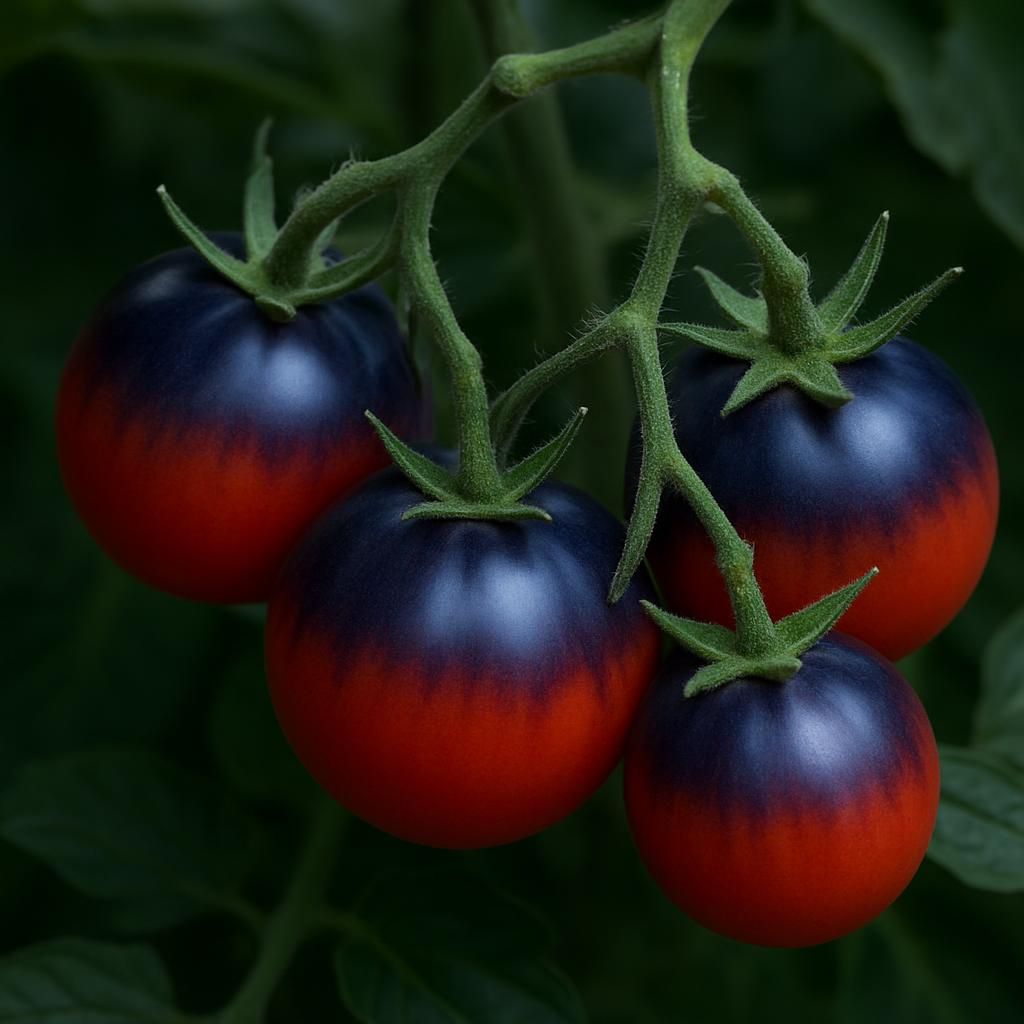
Introduction to Dancing with Smurfs Tomato
Dancing with Smurfs Tomato is a striking dwarf variety developed for home gardeners and small-scale growers seeking both ornamental appeal and outstanding flavor. Its compact growth habit makes it ideal for containers, raised beds, and limited spaces while still delivering impressive yields of 1–2 kg per plant. The variety is celebrated for its deep indigo-blue shoulders that develop through anthocyanin production when exposed to sunlight, creating a visually dramatic contrast against the red ripening fruit.
This tomato combines the best traits of modern breeding: early maturity, strong disease resistance, and exceptional taste. Fruits typically weigh 15–25 g each, offering a balanced sweet-tart profile with a firm yet juicy texture. Because of its dwarf stature, usually reaching only 40–60 cm in height, it requires minimal staking and is well-suited to windy or urban environments.
Growers appreciate its resilience to common tomato ailments and its ability to produce fruit even under suboptimal light conditions. Whether grown in pots on a balcony or in intensive small-farm systems, Dancing with Smurfs Tomato consistently ranks among the most productive and visually appealing dwarf cultivars available today.
Botanical Profile of Dancing with Smurfs Tomato
Dancing with Smurfs Tomato belongs to the Solanaceae family and exhibits a determinate growth habit with short internodes. The plant produces dark green, slightly rugose foliage that provides good cover for developing fruit clusters. Flowers are typical of the species—bright yellow and self-pollinating—though the variety shows excellent fruit set even in cooler temperatures.
The most distinctive feature is the anthocyanin pigmentation concentrated in the fruit shoulders. This natural compound not only creates the signature blue-purple coloration but also offers antioxidant benefits. The fruits transition from green to a rich indigo-blue before ripening to a deep red, signaling peak flavor development.
Root systems are fibrous and relatively shallow, making the variety responsive to consistent moisture and well-aerated media. Because of its compact architecture, it rarely requires extensive pruning, though selective leaf removal improves airflow and reduces disease pressure.
Soil, pH, and Climate Requirements for Dancing with Smurfs Tomato
Successful cultivation begins with understanding the precise environmental parameters this variety demands. The following table outlines ideal growing conditions.
| Parameter | Ideal Range | Notes |
|---|---|---|
| Soil Type | Loamy, well-draining, rich in organic matter | Avoid heavy clay; incorporate compost |
| Soil pH | 6.2 – 6.8 | Slightly acidic; test and amend annually |
| Temperature (Day) | 21–26 °C | Optimal fruit set occurs within this range |
| Temperature (Night) | 15–18 °C | Below 13 °C slows growth and pollination |
| Sunlight | 6–8 hours full sun | Blue coloration intensifies with more light |
| Spacing | 45–60 cm between plants | 60–75 cm between rows in ground beds |
| Container Size | Minimum 20 L (5 gal) | Use fabric pots for better root aeration |
Maintain soil temperature above 18 °C at planting to encourage rapid establishment. In regions with cooler springs, use black plastic mulch or raised beds to warm the root zone.
Step-by-Step Planting & Propagation
- Start seeds indoors 6–8 weeks before the last expected frost. Sow 5 mm deep in sterile seed-starting mix at 24–26 °C.
- Provide 14–16 hours of supplemental light daily; seedlings should be stocky with deep green leaves.
- Harden off plants for 7–10 days by gradually increasing outdoor exposure.
- Transplant when soil reaches 18 °C and all frost risk has passed. Plant slightly deeper than the original container to promote adventitious roots.
- Water thoroughly after transplanting and apply a 5 cm layer of organic mulch to conserve moisture and suppress weeds.
- For container culture, choose at least 20 L pots with drainage holes and fill with a high-quality potting mix amended with aged compost.
Direct seeding is possible in warm climates once soil temperature consistently exceeds 20 °C, but indoor starting remains the most reliable method for early production.
Care & Maintenance regimes for Dancing with Smurfs Tomato
Consistent care ensures maximum yield and fruit quality. The following table provides a clear schedule for water, fertilizer, and pruning activities.
| Growth Stage | Watering Frequency | Fertilizer Program | Pruning & Training |
|---|---|---|---|
| Transplant–Flowering | 2–3 times weekly; keep soil moist but not waterlogged | Balanced 10-10-10 or fish emulsion every 14 days | Remove lower leaves touching soil |
| Flowering–Fruit Set | Daily in containers; every 2–3 days in ground | Switch to high-potassium formula (e.g., 5-10-15) weekly | Minimal; pinch suckers only if overcrowding |
| Fruit Ripening | Reduce slightly to concentrate sugars | Resume balanced feed every 10–14 days; avoid excess N | Remove diseased foliage promptly |
| Post-Harvest | Maintain light moisture | Top-dress with compost; prepare beds for rotation | Cut plants at soil level; compost healthy material |
Monitor container plants closely; their limited root volume dries faster than in-ground beds. Use drip irrigation or self-watering systems for consistent moisture delivery.
Pests, Diseases & Organic Management
While Dancing with Smurfs Tomato shows good resistance to many common issues, proactive management remains essential. Aphids and whiteflies are the most frequent early-season visitors; release beneficial insects such as lady beetles or apply insecticidal soap at the first sign of infestation.
Fusarium wilt and early blight can occur under humid conditions. Rotate crops every 3–4 years, avoid overhead watering, and remove lower leaves to improve airflow. Copper-based fungicides provide organic control when applied preventively.
Spider mites may appear during hot, dry spells. Increase humidity around plants and spray undersides of leaves with water or neem oil. Regular scouting—ideally twice weekly—allows intervention before populations explode.
Harvesting, Curing & Optimal Storage
Harvest fruits when they reach full color and yield slightly to gentle pressure. For peak flavor, pick at the breaker stage (first blush of color) and allow ripening at room temperature away from direct sun.
Store ripe tomatoes at 13–18 °C with 85–90 % relative humidity for up to 7–10 days. Avoid refrigeration, which diminishes flavor and causes mealy texture. Green fruits can be ripened in a paper bag with a banana or placed on a windowsill in a single layer.
For long-term preservation, dehydrate slices at 57 °C or can whole tomatoes using a pressure canner. Both methods retain the variety’s vibrant color and nutritional value.
Companion Planting for Dancing with Smurfs Tomato
Strategic companions improve pollination, deter pests, and enhance soil health. Marigold planted at bed edges repels nematodes and attracts beneficial insects. Basil grown nearby improves flavor and repels thrips and whiteflies.
Garlic and onion interplanted in rows help mask tomato scent from pests. Trailing nasturtium serves as a sacrificial trap crop for aphids while providing edible flowers.
Avoid planting near fennel or walnut trees, which release allelopathic compounds that inhibit tomato growth. Rotate with legumes such as peas or beans in subsequent seasons to naturally replenish soil nitrogen.