Introduction to Damson Plum
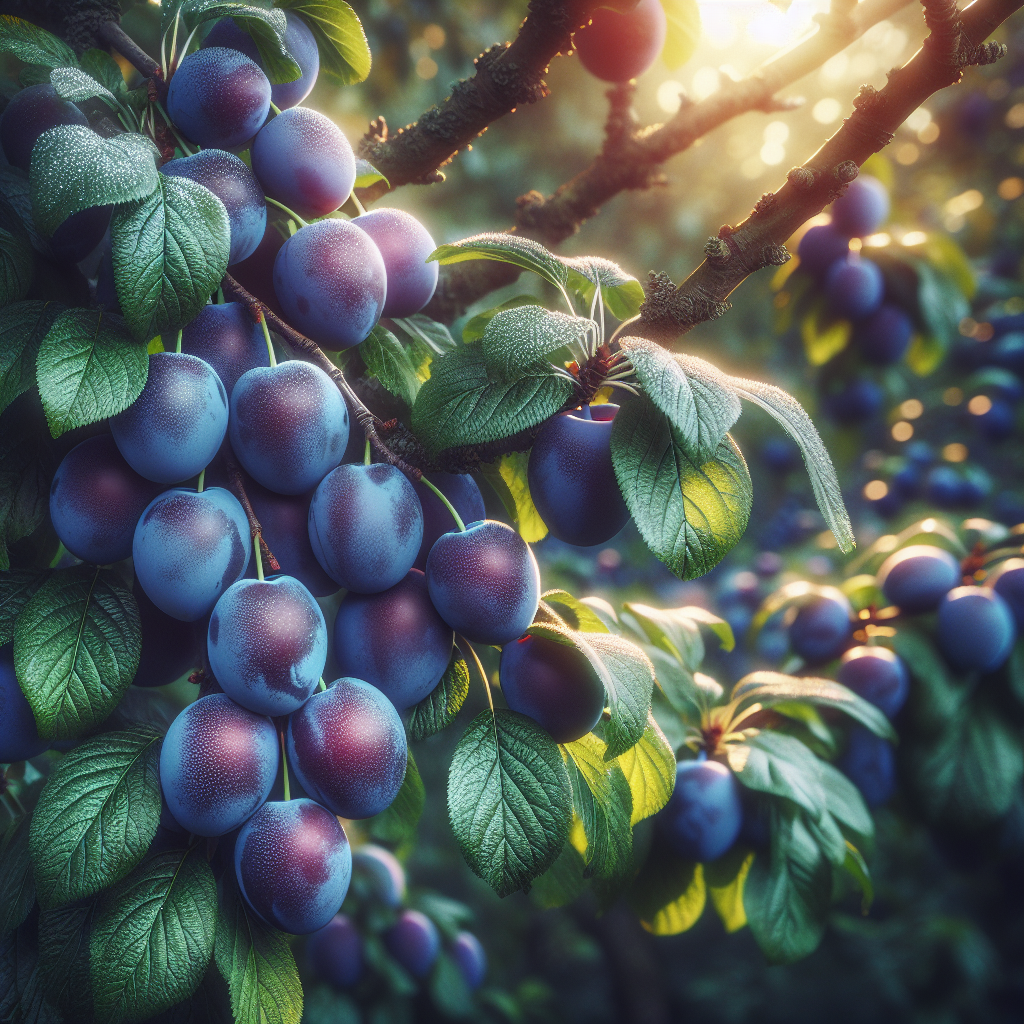
A traditional orchard fruit with deep roots in European horticulture, damson is valued less as a sweet fresh-eating plum and more as a processing plum of outstanding character. The fruit is typically small, oval to round, covered in a strong blue bloom, and borne on a vigorous, resilient tree that tolerates cooler, wetter conditions better than many Japanese plum types. Its flesh is firm, greenish-gold to amber, and notably astringent and tart until fully mature, which is exactly why it shines in jams, chutneys, gin infusions, fruit leather, and cooked desserts.
Historically, damsons were central to cottage orchards in Britain and parts of continental Europe because they cropped dependably, preserved well, and were less fussy than more delicate stone fruits. The name is often associated with the city of Damascus through old trade lore, though the exact historical path is complex. In practical horticulture, what matters is that damsons belong to the European plum group and are generally more forgiving of imperfect orchard conditions than many larger-fruited plums. If you already understand the basics of stone fruit management, many principles from general Plum culture apply, but damsons deserve their own strategy because fruit quality, pruning response, and cropping habits are distinctive.
Growers choose damsons for four main reasons: cold hardiness, culinary intensity, reliable fruit set, and low-input orchard suitability. They are especially useful in mixed farms, hedgerow orchards, and homestead plantings where resilience matters as much as flavor.
Botanical Profile of Damson Plum
Damson belongs to the species complex of European plums, generally classified as Prunus domestica subsp. insititia. It is closely related to bullaces and other small-fruited plum forms. Trees are typically medium-sized, often reaching 4-6 m tall on semi-vigorous rootstocks if left unpruned, though mature height depends heavily on rootstock and training system.
Key identifying features include:
- Deciduous habit with a rounded to somewhat upright crown.
- White, five-petaled blossoms opening in early to mid-spring, usually before or alongside leaf emergence.
- Leaves that are oval, finely serrated, dull to medium green, and generally smaller and thicker than many Japanese plum cultivars.
- Fruits that are usually blue-black or dark purple with a powdery epicuticular bloom.
- Flesh that clings relatively firmly to the stone in some strains and separates better in others.
Many damsons are partially self-fertile or self-fertile, though yields often improve with another European plum nearby. Flowering time is important: because bloom occurs in spring, late frost can still damage flowers, but damsons often escape total loss better than more precocious stone fruits due to their hardiness and flower density.
Cultivar variation matters. Traditional selections such as 'Merryweather', 'Shropshire Prune', and local seedling forms differ in fruit size, sugar-acid balance, ripening time, and cropping habit. 'Shropshire Prune' is especially known for high-quality preserve-making fruit, while 'Merryweather' tends to produce larger fruit and can be more attractive to small commercial growers. Seedling-grown damsons may vary considerably, which is why grafted named cultivars are preferable if uniformity matters.
Botanically, damsons fruit mainly on short spurs and older wood, unlike peaches that rely strongly on one-year wood. This has direct pruning implications: excessive annual heading can remove productive wood and stimulate unhelpful vegetative growth at the expense of fruiting.
Soil, pH, and Climate Requirements for Damson Plum
Damsons perform best in well-drained, moderately fertile loam, but one of their advantages is tolerance of heavier soils compared with apricot or peach. A deep clay loam with good structure, 3-5% organic matter, and reliable drainage can produce excellent crops. The critical limitation is not texture itself but waterlogging. If roots remain in oxygen-poor saturated soil for more than 48-72 hours during active growth, trees become predisposed to root stress, canker, gummosis, and poor nutrient uptake.
Target soil conditions:
- pH: 6.0-7.0 is ideal; 5.8-7.5 is usually acceptable.
- Organic matter: 3-6% for steady moisture retention and microbial activity.
- Drainage: water should infiltrate and move through the topsoil without standing around the root zone after heavy rain.
- Depth: at least 60 cm of workable soil, preferably more than 1 m for long-term anchorage and drought buffering.
If soil is too acidic below pH 5.8, calcium availability drops and overall nutrient balance suffers. Apply agricultural lime based on soil test recommendations several months before planting. If pH is above 7.5, especially on calcareous soils, iron chlorosis can appear as yellow young leaves with green veins. In such sites, choose tolerant rootstocks, improve soil organic matter, and avoid over-liming.
Climate-wise, damsons are fundamentally temperate trees and require winter chilling to break dormancy properly. Most cultivars need a moderate chill accumulation, usually satisfied in cool-temperate regions. They are well suited to USDA zones roughly 5-8, depending on rootstock and local conditions. They tolerate winter cold better than many Japanese plums, and mature dormant wood can withstand substantial frost. However, spring bloom remains vulnerable. A site with good cold-air drainage is essential: avoid frost pockets at the bottom of enclosed valleys.
Sunlight should be full and direct for at least 6-8 hours daily. Better light means higher sugar accumulation, improved color, firmer fruit, and lower disease pressure through faster canopy drying. In maritime or humid climates, open exposure with airflow is particularly important because damsons can otherwise suffer from brown rot and silver leaf.
Wind is a mixed factor. Moderate airflow reduces fungal disease, but exposed sites can damage blossom, reduce pollinator activity, and cause branch whip on young trees. Use shelterbelts at a distance that slows prevailing wind without casting shade or creating stagnant humidity around the canopy.
For broader fertility strategies in orchard soils, principles from soil health planning are especially useful when establishing long-lived fruit trees.
Step-by-Step Planting & Propagation
Start with grafted nursery stock unless you are intentionally breeding or conserving local genetics. Damsons grown from seed are often vigorous and viable, but fruit quality, size, and bearing habit are unpredictable, and seedlings can take longer to crop.
Choose one-year maiden whips or well-formed two-year feathered trees with:
- A healthy graft union.
- No bark cracks, cankers, or gum exudation.
- A fibrous, moist root system if bare-root.
- No circling roots if container-grown.
Best planting time is late autumn through early spring while dormant, provided the soil is workable and not frozen or waterlogged. Autumn planting is often superior in milder temperate climates because roots establish before spring growth begins. In colder regions with severe winter heaving, early spring planting may be safer.
Step-by-step planting:
- Test soil several weeks or months ahead for pH, phosphorus, potassium, calcium, and organic matter.
- Clear a 1-1.5 m diameter weed-free circle. Grass competition dramatically reduces establishment.
- Dig a hole only as deep as the root system but at least 2-3 times as wide. Deep holes encourage settling; roots should sit at original nursery depth.
- Loosen compacted sidewalls so roots can penetrate.
- Spread roots outward naturally. Do not bend large roots upward.
- Position the graft union 8-12 cm above final soil level to prevent scion rooting.
- Backfill with native soil rather than rich compost-heavy mixes, which can create a bathtub effect.
- Water in thoroughly with 10-20 liters to settle soil around roots.
- Mulch with 5-8 cm of wood chips or well-rotted organic mulch, keeping a 10 cm gap around the trunk to prevent collar rot.
- Stake if the site is windy or the rootstock is dwarfing. Tie loosely with a flexible tree tie.
Spacing depends on vigor and training:
- Bush tree on semi-vigorous rootstock: 3.5-4.5 m apart.
- Standard tree: 5-6 m apart.
- Fan or espalier against a wall: 2.5-4 m depending on framework.
Propagation is usually by grafting or budding onto compatible rootstocks such as St. Julien A for broad adaptability, moderate vigor, and good performance in many soils. Myrobalan rootstocks may be used in some systems for vigor and tolerance of heavier conditions. T-budding in summer and whip-and-tongue grafting in late winter are standard nursery techniques.
Hardwood cuttings are not the normal commercial method because rooting success and uniformity are inconsistent. Suckers from own-root types may be propagated, but this is uncommon for named orchard cultivars.
Care & Maintenance regimes for Damson Plum
Young trees need disciplined establishment care for the first 3 years. The biggest early mistake is allowing weed and grass competition near the trunk. Keep the root zone clear because turf can remove much of the available nitrogen and moisture from the top 20-30 cm of soil where feeder roots are active.
Water management should be deliberate. Newly planted trees need consistent moisture, especially through the first growing season. A good target is moist but aerated soil, not saturation. As a rule, water deeply when the top 5-8 cm of soil begins to dry, rather than sprinkling lightly every day. In practical terms, a young tree may need 15-25 liters once or twice weekly in dry weather, depending on soil texture. Sandy soils require smaller, more frequent irrigation; clay loams need less frequent but deeper soaking.
Signs the tree needs water:
- New shoot growth becomes short and weak during active season.
- Leaves lose gloss, droop in afternoon, or show marginal scorch.
- Developing fruit remains undersized.
Signs of overwatering:
- Leaves become pale, soft, and sometimes yellow from root oxygen stress.
- New growth is lush but weak.
- Soil smells sour or remains sticky several days after irrigation.
- Gumming at the base or increased susceptibility to canker.
For bearing trees, moisture is most critical from bloom through fruit swelling. Severe drought at this stage reduces fruit size, encourages premature drop, and can intensify biennial tendencies. However, excessive irrigation close to harvest can dilute flavor and sometimes contribute to fruit splitting.
Fertilization should be based on soil and leaf analysis where possible. In general, damsons do not need aggressive feeding. Too much nitrogen causes rampant vegetative growth, shading, delayed fruit maturity, and increased disease pressure. As a baseline for non-bearing young trees, a modest spring application of composted manure or balanced organic fertilizer can support establishment. For mature trees, annual applications should focus on replacing what is removed by crop load, not forcing maximum leafy growth.
General nutrient cues:
- Nitrogen deficiency: pale leaves, reduced shoot extension, small canopy.
- Excess nitrogen: long whippy shoots, poor color, soft growth, delayed hardening before winter.
- Potassium deficiency: weak fruit quality, marginal leaf scorch on older leaves, poor sugar concentration.
- Calcium imbalance: more common on unsuitable soils; can affect overall vigor and storage quality.
Pruning is best done in summer for established trees in wetter climates because pruning stone fruits in winter increases the risk of silver leaf infection. Train young trees into an open-centered bush or a light-modified leader form. The goal is a canopy that admits light and air while preserving fruiting spurs.
Pruning priorities:
- Remove dead, diseased, crossing, and inward-growing branches.
- Thin congested spur systems only when canopy shading reduces fruit quality.
- Avoid over-pruning; damsons can respond with excessive watershoot production.
- Shorten overly vigorous upright shoots in summer to rebalance canopy energy.
Fruit thinning is not always as necessary as with large dessert plums, but in heavy set years it improves size and reduces limb breakage. Thin when fruitlets are marble-sized, leaving enough spacing that fruits do not press tightly against each other at maturity. This also helps reduce brown rot spread.
Pests, Diseases & Organic Management
Damsons are robust, but no plum is trouble-free. A preventive orchard hygiene program is far more effective than reacting after infestation peaks.
Common pests include plum moth, aphids, scale insects, sawfly, and birds. In some regions, codling moth may also opportunistically affect fruit. plum moth larvae tunnel into ripening fruit, causing internal feeding, frass near entry points, and premature drop. Monitoring with pheromone traps helps identify peak flight. Sanitation is crucial: remove dropped fruit weekly during the season to break the life cycle.
aphids cluster on young shoots and leaf undersides, causing curling and sticky honeydew. Light infestations are often tolerated, but severe pressure distorts growth and encourages sooty mold. Encourage beneficial insects by maintaining flowering strips and using companion plants such as Yarrow near but not directly under the trunk flare. Strong water sprays, insecticidal soaps, and pruning out heavily infested shoot tips can help in small orchards.
brown rot is one of the most important fruit diseases. It infects blossoms, twigs, and ripening fruit, especially in warm humid periods. Symptoms include blossom blight, shriveled mummified fruit, tan-gray spore pustules on fruit, and cankers on fruiting wood. Control measures:
- Maintain an open canopy.
- Remove mummified fruit from tree and ground.
- Thin fruit for airflow.
- Avoid overhead irrigation near ripening.
- Promptly remove infected fruit.
silver leaf is a serious fungal disease entering through pruning wounds, especially when cuts are made under damp conditions. Leaves develop a silvery sheen, and branches may die back. The wood often shows brown staining. Prune only in dry weather, preferably in summer, and remove infected branches well below visible symptoms.
bacterial canker can affect stressed trees, especially where winters are cold and wet or trunks are damaged. Symptoms include sunken bark lesions, dieback, and amber gum exudation. Prevention depends on vigor management, avoiding waterlogging, preventing trunk injury, and not overfeeding nitrogen late in the season.
plum pox virus, where present, is a major quarantine concern. It can cause rings, mottling, fruit deformity, and poor quality. Source certified clean planting stock and follow local phytosanitary guidance.
Organic management works best as an integrated system:
- Sanitation: remove fallen fruit, dead wood, and disease reservoirs.
- Habitat support: flowering margins for natural enemies.
- Mulch and soil balance: avoid stress that invites canker and aphids.
- Monitoring: inspect weekly from bud break to harvest.
- Physical exclusion: netting against birds if needed before color break.
Harvesting, Curing & Optimal Storage
Damsons are generally harvested from late summer into early autumn, depending on cultivar and climate. Unlike dessert plums, they are often best picked when fully colored and slightly softened but still firm enough to handle. Fruit for jam or preserving can be allowed to hang a little longer for better sugar concentration, provided birds and brown rot are controlled.
Indicators of harvest readiness:
- Full blue-purple to blue-black skin color with strong bloom.
- Fruit detaches with a gentle twist rather than tearing.
- Flesh gives slightly under thumb pressure.
- Taste shifts from sharply sour to richly tart with some sweetness.
Do not rely on skin color alone, since damsons can color before they are truly mature. Sample fruit from multiple parts of the tree. Fruit on the sunniest outer canopy usually ripens first.
Harvest in dry conditions whenever possible. Wet-picked fruit stores poorly and bruises more easily. Use shallow picking containers no more than 10-15 cm deep to prevent crushing. Handle gently because pressure bruising may not show immediately but accelerates breakdown.
The term curing is not used for damsons in the same way it is for onions or sweet potatoes, but a short post-harvest conditioning period at cool room temperature for a day can help uniform batches intended for immediate processing. For fresh storage, move fruit promptly to cool conditions.
Storage guidelines:
- Short-term fresh use: 0-2°C with high humidity around 90-95%.
- Expected storage life: typically 2-4 weeks depending on maturity and disease pressure.
- For household use: refrigerate in ventilated containers and avoid sealing condensation around fruit.
Remove any damaged or cracked fruit before storage because rot spreads quickly. For longer preservation, damsons freeze exceptionally well, especially halved and destoned. They are also ideal for jam, jelly, fruit cheese, dehydrating, and infusion in alcohol. High acidity and pectin content make them one of the finest preserving plums.
Companion Planting for Damson Plum
Companion planting around damsons should support pollination, pest suppression, and soil management without creating root competition right against the trunk. The most useful companions are low-growing insectary or soil-improving plants placed at the dripline and beyond, not piled into the tree’s collar zone.
Yarrow is one of the best companions because its umbel flowers attract hoverflies, parasitic wasps, and predatory insects that help regulate aphids and other small pests. Thyme works well as a low aromatic groundcover in dry outer zones of the root area, helping suppress weeds while attracting pollinators when in bloom. Clover can be used in orchard alleys or the outer ring beyond the immediate trunk circle as a living mulch and nitrogen-contributing cover, though it should be managed so it does not compete heavily with young trees. Garlic is often included near orchard edges or guild plantings for its reputed deterrent value and space efficiency, though it should not replace core sanitation and monitoring practices.
Best practice is to maintain a trunk-free mulch circle of at least 60-100 cm radius on young trees, then establish companions outside that area. Avoid dense perennial planting that traps humidity beneath the canopy, especially in regions with brown rot pressure. The goal is a biologically active orchard floor with good airflow, easy inspection, and minimal rodent shelter.