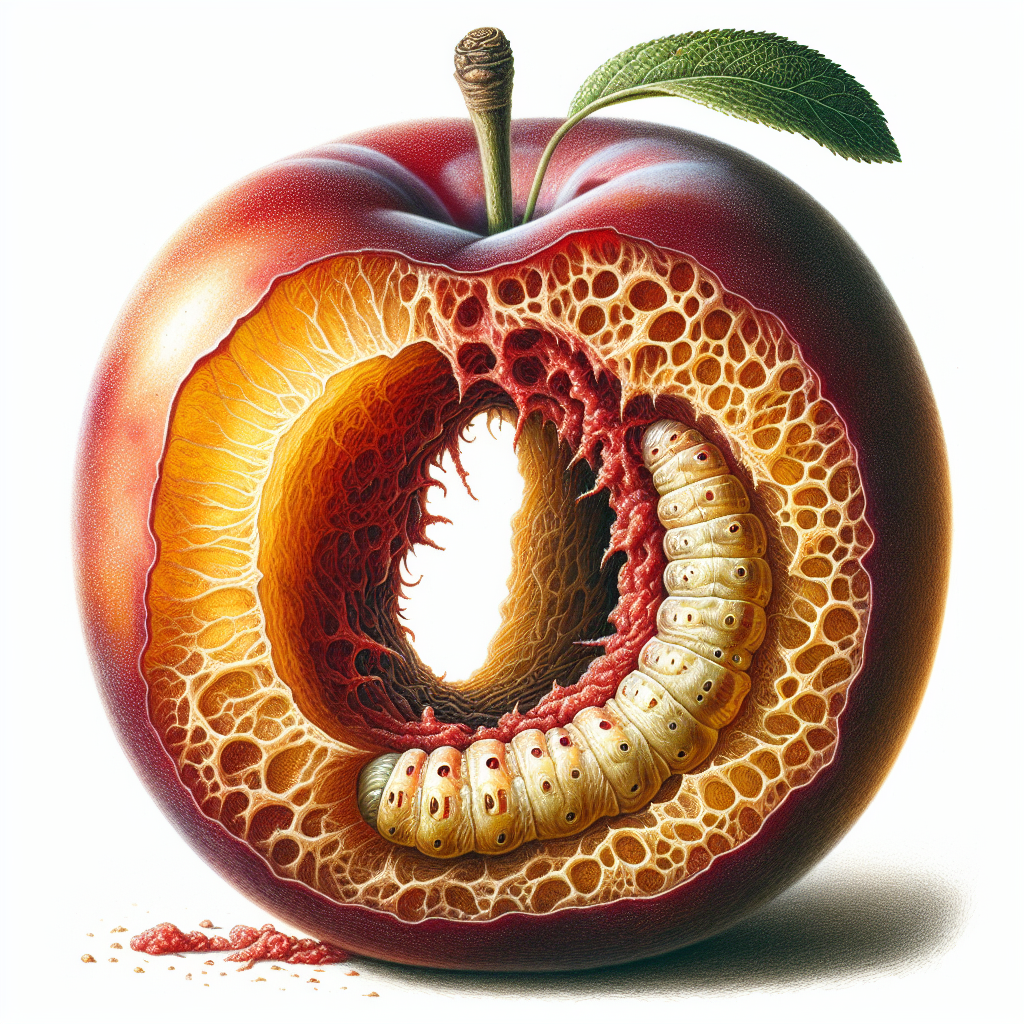
Introduction to plum moth
The plum moth, scientifically known as Cydia funebrana (also referred to as the plum fruit moth), is one of the most notorious pests in stone fruit orchards worldwide. Native to Europe and parts of Asia, it has spread to North America and other regions, posing a significant threat to commercial and home plum growers. Adult moths are small, grayish-brown insects with a wingspan of about 15-20 mm, but the real damage comes from their creamy-white larvae, which tunnel into developing fruits, leaving behind frass (insect waste) and rot.
Plum moth infestations can devastate yields, with larvae feeding on the fruit flesh and seeds, often causing premature fruit drop or making fruits unsuitable for sale or consumption. In severe cases, losses can exceed 50-80% of the crop. This pest is particularly problematic in temperate climates where plum trees thrive, overlapping perfectly with the moth's lifecycle. Early identification and proactive management are crucial, as chemical controls are often ineffective once larvae are inside the fruit. For more on affected crops like Plum (crop), see our detailed profiles.
Understanding plum moth biology allows growers to implement targeted organic strategies, reducing reliance on synthetic pesticides while maintaining high-quality harvests. This guide draws from entomological research and field-tested agricultural practices to equip you with professional-grade tools for diagnosis, control, and prevention.
Identifying Symptoms & Damage
Spotting plum moth damage early is key to minimizing losses. The most telltale sign is the presence of entry holes in fruits, typically 1-2 mm in diameter, often surrounded by reddish-brown frass that resembles sawdust. Inside the fruit, you'll find a pinkish or reddish larva (up to 12 mm long) tunneling through the flesh toward the stone, creating brown, decaying tunnels filled with more frass.
Affected fruits may appear healthy externally at first but soon show discoloration, splitting, or gumming. Premature drop is common, especially in early infestations. On the tree, look for silken webbing around infested fruits or clusters, and in advanced cases, a sour rot odor from fermenting fruit tissue. Differentiate from similar pests like codling moth by the frass color and fruit location—plum moth targets stone fruits specifically.
Diagnostic tips:
- Shake test: Gently shake branches over white paper; larvae or frass may fall out.
- Fruit dissection: Cut open suspect fruits lengthwise to reveal larvae or tunnels.
- Pheromone traps: Monitor adult moth flights to confirm presence (see prevention section).
Damage severity increases with larval development; fruits under 15 mm diameter are most vulnerable. Regular scouting every 7-10 days during bloom to harvest is essential. For companion issues like caterpillars, check our pest wiki.
Lifecycle and Progression of plum moth
Plum moth completes 2-3 generations per year in temperate regions, with lifecycle duration of 4-6 weeks per generation depending on temperature. Adults emerge in late spring (May-June in the Northern Hemisphere), coinciding with plum petal fall. Females lay 50-100 eggs singly on leaves or young fruits.
Eggs hatch in 5-10 days into tiny larvae that bore directly into fruits. Larval stage lasts 3-4 weeks, with five instars; mature larvae (12-15 mm) exit to pupate in soil, leaf litter, or under bark. Pupae overwinter, emerging as adults the following spring. Optimal development occurs at 20-25°C (68-77°F); below 10°C (50°F), diapause halts progression.
Key stages:
- Eggs: Tiny, flat, white scales (0.7 mm).
- Larvae: Cream to pink, brown head; active feeders.
- Pupae: 8-10 mm, reddish-brown cocoons.
- Adults: Mottled gray, fringed wings; nocturnal fliers.
Peak flights: First generation (June-July), second (August), partial third (September). Use degree-day models (base 10°C) to predict flights: adults at 150-200 DD. This timing informs control windows. In warmer climates like those growing peach, additional generations may occur.
Environmental Triggers & Risk Factors
Plum moth thrives in mild, humid summers with temperatures averaging 15-25°C. High humidity (>70%) during egg-laying boosts survival, as does proximity to overwintering sites like weedy orchard floors or nearby wild Prunus species. Poor orchard sanitation—fallen fruits, debris—harbors pupae, triggering outbreaks.
Risk factors include:
- Monoculture orchards: Lack of diversity invites pests.
- Late-maturing varieties: Extended exposure windows.
- Mild winters: Reduced pupal mortality.
- Adjacent crops: Infestations from cherry or apple orchards.
- Climate shifts: Warmer springs advance flights, per recent studies.
Weed management and airflow reduce humidity microclimates. Monitor Spring Pest Patrol: Organic AI Strategies to Shield Your Crops from Common Invaders for predictive tools. Soil types with good drainage limit overwintering success.
Organic Control & Treatment Plans
Organic management emphasizes integrated pest management (IPM): monitoring, cultural, biological, and targeted physical controls. Avoid broad-spectrum sprays to preserve beneficials like Trichogramma wasps.
1. Monitoring: Deploy delta traps with plum moth pheromones (e.g., (Z)-8-dodecenyl acetate) from petal fall. Threshold: 5-10 moths/trap/week triggers action.
2. Cultural Controls:
- Remove and destroy infested fruits weekly.
- Thin clusters to improve spray penetration.
- Tillage in fall buries pupae.
3. Biological Controls:
- Release Trichogramma brassicae (egg parasitoids): 50,000/ha/week for 4 weeks.
- Bacillus thuringiensis (Bt) var. kurstaki sprays at egg hatch (twilight applications).
- Encourage birds with nest boxes.
4. Organic Sprays:
- Neem oil (azadirachtin) or spinosad at 80% egg hatch.
- Timing: 0-160 DD post-biofix.
Treatment Plan:
- Week 1-2 (Flight): Traps + mating disruption (pheromone dispensers).
- Week 3-4 (Egg/Larva): Bt + sanitation.
- Ongoing: Scout + biologicals.
Efficacy: 70-90% reduction with IPM. Rotate tactics to prevent resistance.
Preventing plum moth in the Future
Prevention is cheaper than cure. Plant resistant varieties like 'Victoria' or 'Marjorie's Seedling'. Use reflective mulches early season to deter egg-laying. Mating disruption with hand-applied dispensers (e.g., 400/ha) suppresses populations long-term.
Sanitation: Deep plow post-harvest; burn or solarize debris. Kaolin clay barriers on trunks deter adults. Intercrop with repellents like garlic or nasturtium. Netting over small trees provides 100% protection.
Long-term: Scout neighbors; buffer zones. Track with degree-days for precision. See Soil Health Mastery: 5 Proven Strategies for Small Farms to Build Fertile Ground Without Breaking the Bank for resilient orchards.
Crops Most Affected by plum moth
Primarily attacks Prunus species:
- Plums (all varieties, e.g., Santa Rosa Plum, Damson Plum).
- Damsons, greengages.
- Also peach, cherry, pear, apricots.
Minor hosts: wild blackthorn. Economic impact highest on European plums; yields drop 30-100%. Protect Plum (crop) first.