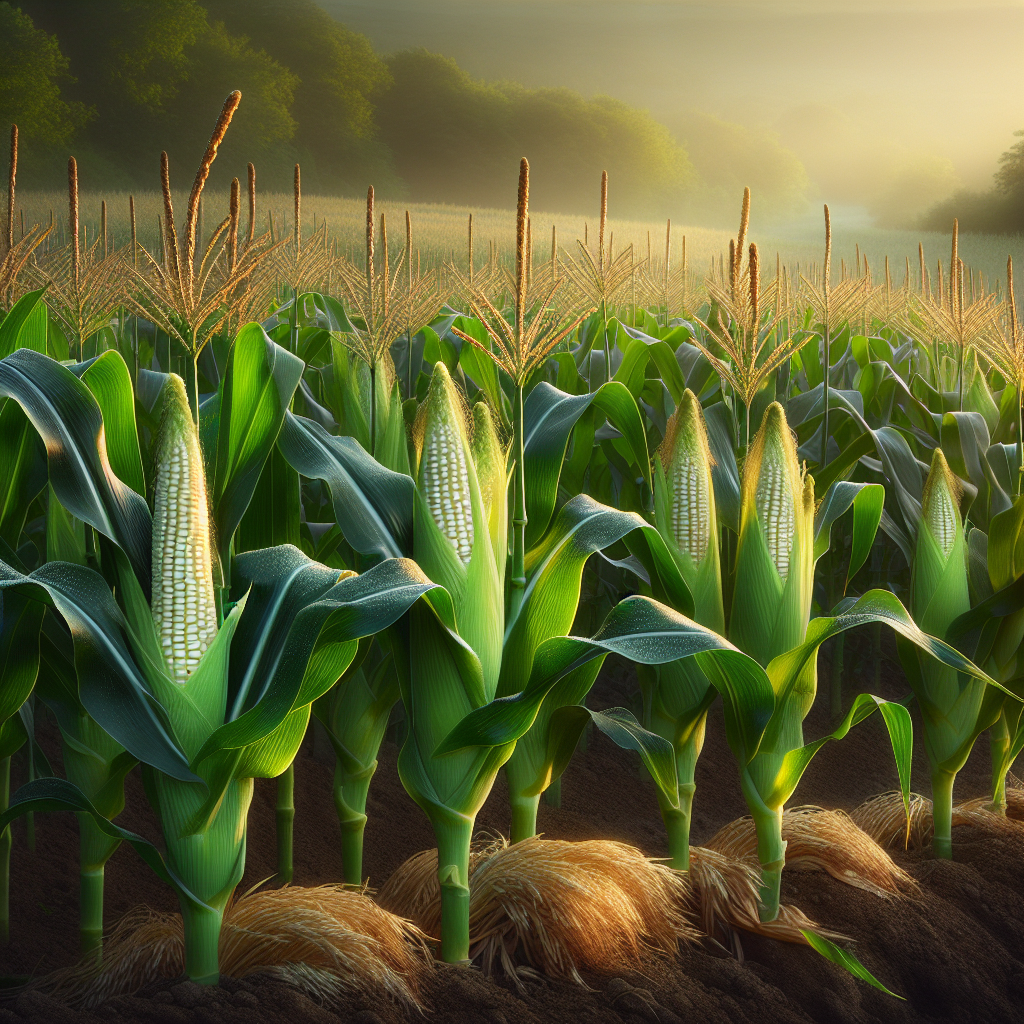
Introduction to Country Gentleman Sweet Corn
An heirloom dating to the late 19th century, this variety is one of the most recognizable old sweet corns ever introduced in North America. It is often associated with the shoepeg type because its kernels are packed in irregular, non-straight rows rather than neat, uniform ranks. That trait is not a defect; it is one of the signatures that makes the ears visually distinctive and gives them a dense, well-filled appearance.
Country Gentleman is typically grown for fresh eating, home canning, freezing, and roadside-market sales where flavor matters more than shipping durability. Compared with many modern sugary-enhanced or supersweet cultivars, it has a more traditional sweet corn profile: mild, creamy, fragrant, and best when harvested and eaten very close together in time. Sugar conversion to starch happens relatively quickly after picking, so the variety rewards growers who understand timing.
Plants are usually vigorous, tall, and productive when given warm conditions, fertile soil, and adequate moisture during tasseling and ear fill. Because it is open-pollinated, growers can save seed if isolation is managed properly. For general sweet corn background and species-level context, see our Corn guide. Historically, this cultivar was favored in kitchen gardens because it combines strong eating quality with the ability to perform well in classic summer field conditions, especially where the season is long enough for a later maturing corn.
Botanical Profile of Country Gentleman Sweet Corn
This crop belongs to the grass family, Poaceae, and is a monoecious annual, meaning the plant bears separate male and female flowers on the same individual. The tassel at the top of the plant produces pollen, while the ears emerge from leaf axils lower on the stalk. Each silk on an ear is attached to a potential kernel, so successful pollination requires pollen to land on and fertilize each silk individually.
Country Gentleman is an old open-pollinated sweet corn in the sweet corn group characterized by wrinkled dried seed, a reflection of high sugar and lower starch content in comparison with field corn types. Plants commonly reach about 6 to 8 feet tall, sometimes more in highly fertile soils. Ears are generally 7 to 8 inches long, with white kernels arranged in crowded, irregular patterns. The ear tip is often well filled if pollination conditions are favorable.
This is usually considered a late or mid-late sweet corn relative to many modern fresh-market hybrids, often maturing in roughly 90 to 100 days from sowing depending on heat accumulation, fertility, and moisture. Its tall frame means it can lodge in exposed locations if pushed with excessive nitrogen or grown in overly wet, shallow-rooted conditions. Root development is fibrous and extensive but concentrated in the topsoil, which is why even brief drought during reproductive stages can noticeably reduce ear quality.
Because it is open-pollinated, genetic drift can occur if seed is saved carelessly or if cross-pollination occurs with other maize types. Isolation from dent, flint, popcorn, or other sweet corn varieties is important if maintaining varietal purity is the goal. Isolation by distance, flowering time, or controlled pollination are the standard strategies.
Soil, pH, and Climate Requirements for Country Gentleman Sweet Corn
This variety performs best in full sun, high organic matter soil, and warm conditions with consistent moisture. Sweet corn is not a crop for marginal ground if premium flavor and ear fill are the objective. The ideal soil is a well-drained loam or sandy loam with strong water-holding capacity but no long-term saturation. Heavy clay can work if deeply amended and well structured, but poorly aerated soils often stunt roots, delay maturity, and increase nitrogen loss.
Target a soil pH of 6.0 to 6.8, with 6.2 to 6.5 being particularly dependable for nutrient availability. Below pH 5.8, phosphorus availability often drops and early growth can become slow and purplish. Above about 7.2, micronutrient issues such as zinc deficiency may appear, especially in high-phosphorus soils. A pre-plant soil test is strongly recommended because sweet corn is a substantial feeder and should not be fertilized blindly.
Soil temperature is critical. Direct sow only when the top 2 inches of soil are at least 60°F (16°C), though emergence is faster and more uniform at 65 to 75°F (18 to 24°C). Cold soils increase the risk of seed rot, weak germination, and erratic stands. In warm temperate regions, sow after the last frost once the soil has stabilized. In cooler climates, choose the warmest, sunniest block available and avoid low pockets where cold air settles.
The best daytime temperature range for steady growth is about 70 to 86°F (21 to 30°C). Growth slows below 60°F (16°C), and reproductive stress increases when temperatures exceed 95°F (35°C), especially if accompanied by low humidity and dry wind. Hot, desiccating conditions during silking can reduce pollination success by drying silks prematurely or shedding pollen too quickly.
Moisture management is equally important. Country Gentleman generally needs the equivalent of 1 to 1.5 inches of water per week through vegetative growth and closer to 1.5 to 2 inches during tasseling, silking, and kernel fill, depending on soil type and evapotranspiration. The key is even moisture, not cycles of drought and flooding. Ideal root-zone moisture is comparable to a wrung-out sponge: moist 4 to 8 inches deep, never sticky and anaerobic. Signs of under-watering include rolled leaves by mid-morning, short stalks, poor tassel development, sparse ear fill, and tough kernels. Signs of overwatering include pale foliage, slow growth, sour-smelling soil, persistent wilting despite wet ground, and increased lodging.
Step-by-Step Planting & Propagation
Propagation is by seed, and direct sowing is strongly preferred because corn dislikes root disturbance. Start with fresh seed from a reputable source because sweet corn seed generally has lower vigor and shorter storage life than many field corn types.
- Prepare the bed 2 to 3 weeks before sowing. Remove perennial weeds, incorporate finished compost, and correct pH or nutrient deficiencies based on a soil test.
- Form a broad planting block rather than a single long row. Corn is wind-pollinated, so block planting dramatically improves kernel set. A minimum practical arrangement is 4 short rows, but larger blocks are better.
- Sow seed 1 to 1.5 inches deep in average spring soil. In lighter sandy soils or drying conditions, 1.5 to 2 inches is acceptable. Planting too shallow can reduce anchorage; too deep in cool soil can delay or weaken emergence.
- Space seeds 8 to 12 inches apart within rows, with rows 30 to 36 inches apart. For home gardens, 10 to 12 inches between plants balances ear size and airflow. Tighter spacing may reduce ear size if fertility and irrigation are not increased.
- Water immediately after sowing to moisten the seed zone uniformly, but do not create crusting. Emergence usually occurs in 5 to 10 days in warm soil.
- Thin if needed once seedlings reach 3 to 4 inches tall. Keep the most vigorous plants and maintain even spacing to prevent competition.
- If extending the harvest, stagger sowings every 10 to 14 days only if your growing season is long enough. Because Country Gentleman is later maturing, avoid sowing so late that cool autumn weather hits during ear fill.
For seed saving, isolate from other corn varieties by at least 250 to 500 feet for casual purity, and much farther for stronger genetic integrity. Another method is temporal isolation: ensure flowering dates do not overlap by at least 2 weeks. Select seed only from healthy, typical plants with well-filled ears and strong stalks.
If soil structure needs improvement before planting, principles used in broader fertility building can help; see soil health tips.
Care & Maintenance regimes for Country Gentleman Sweet Corn
Fertility should be managed in stages. Sweet corn requires a strong nitrogen supply, but balanced nutrition matters. As a general field guide, aim for moderate to high organic fertility with supplemental nitrogen if soil reserves are limited. A practical program is to incorporate compost pre-plant, then side-dress nitrogen when plants are 12 to 18 inches tall and again just before tasseling if foliage is not deep green. Leaf color is a reliable indicator: healthy plants should be medium to deep green, not yellow-green.
Nitrogen deficiency often appears first on lower leaves as a pale V-shaped yellowing from the tip toward the midrib. Potassium deficiency may show as scorched leaf margins, especially on older leaves. Phosphorus shortage can produce stunting and purplish tones in cool soil. Zinc deficiency, more common in high pH ground, may show as broad pale striping on younger leaves.
Weed control is most important during the first 4 to 6 weeks. Corn grows slowly at first and competes poorly with aggressive annual weeds. Shallow cultivation is effective, but avoid damaging roots close to the row. Organic mulch can help once soil is warm, though it should not trap excess moisture against seedlings in cool climates.
Hilling soil around the base when plants are knee-high improves anchorage and supports brace root formation. This is especially helpful for this tall heirloom, which can be more vulnerable to wind than compact hybrids.
Irrigation should be deep and periodic rather than frequent and shallow. On loam soil, one thorough irrigation that wets the top 8 to 10 inches is better than daily surface wetting. During tasseling and silking, never allow the crop to experience moisture stress. Even 3 to 4 days of dryness at that stage can reduce marketable quality. Morning irrigation is preferable because it allows foliage to dry and reduces disease pressure.
Pollination management matters more than many growers realize. Because pollen shed from tassels and silk emergence must overlap, uneven growth caused by patchy fertility or watering can lead to ears with missing kernels. Large blocks, uniform stands, and stable moisture greatly improve pollination. In small plantings, gently shaking stalks during pollen shed in the late morning can help distribute pollen.
Pests, Diseases & Organic Management
The major insect pests include Corn Earworm, European Corn Borer, Fall Armyworm in warmer regions, Cutworms at emergence, and sap-feeders such as Aphids. Corn Earworm is often the most noticeable because larvae feed in ear tips. Early silking ears are especially attractive. Organic management focuses on timing and exclusion: apply mineral oil mixed with Bacillus thuringiensis var. kurstaki or spinosad to silk channels after pollination begins, depending on local regulations and label directions. Tight harvest timing also reduces damage.
Corn borers can weaken stalks and tunnel into stems and ears. Good sanitation is essential: destroy stalk residues after harvest rather than leaving them standing over winter. Fall Armyworm can shred young whorl leaves, leaving ragged holes and frass deep in the funnel. Inspect whorls regularly during warm weather.
Bird damage can be severe as ears near maturity. Raccoons are even more destructive in many gardens. Physical barriers, electric fencing for serious pressure, or timely harvest are often the only dependable controls.
Common diseases include Common Rust, Northern Corn Leaf Blight, Smut, Damping-off, and various Seedling Rots in cold wet soil. Sweet corn also suffers from stress-induced disorders such as poor kernel set and barren stalks when fertility or moisture is inadequate.
Organic disease management starts before sowing:
- Use warm soil for planting.
- Rotate away from corn and other grasses for at least 2 to 3 years where disease pressure is recurring.
- Avoid overhead irrigation late in the day.
- Maintain balanced fertility rather than overloading nitrogen.
- Remove heavily infected residues after harvest.
Smut produces swollen gray to black galls on ears, tassels, or stems. Remove and discard galls before they rupture if you want to reduce inoculum. Rust appears as cinnamon-brown pustules on leaves; severe infection reduces photosynthetic area and sugar production. Northern Corn Leaf Blight creates elongated gray-green lesions that can expand rapidly in humid weather. Spacing, airflow, and crop rotation are practical preventive tools.
Harvesting, Curing & Optimal Storage
Harvest timing is the difference between exceptional and mediocre sweet corn. Country Gentleman is best picked at the milk stage, when kernels are fully expanded but still tender and sweet. Begin checking about 18 to 24 days after silk emergence, though local heat conditions can shift this window.
Use several indicators together:
- Fresh silks have browned and dried back.
- Ear tips feel filled rather than pointed and empty.
- Kernels exude a milky juice when punctured, not clear liquid and not doughy paste.
- The ear feels firm and plump in the husk.
Pick in the cool of early morning when sugar levels and tenderness are highest. Twist ears downward sharply rather than pulling straight out, which can damage stalks. For fresh market, keep husks on to protect moisture and appearance.
Unlike storage corn, sweet corn is not cured in the traditional sense. Instead, it should be cooled immediately. Field heat removal is essential because sugars begin converting to starch soon after harvest. Move ears into shade at once, then refrigerate as quickly as possible, ideally close to 32 to 36°F (0 to 2°C) with high humidity. At these conditions, quality can remain acceptable for about 5 to 7 days, but flavor is best within 24 to 48 hours.
Do not wash ears before storage unless necessary, as excess surface moisture can promote decay. For home preservation, blanch and freeze soon after harvest. Because Country Gentleman has fine texture and classic sweet corn flavor, it is excellent for cream-style freezing or canning.
If saving seed, allow selected ears to mature fully on the stalk until husks dry and kernels harden. Harvest before prolonged autumn rains if possible, then dry further under cover with excellent airflow until kernels are too hard to dent with a fingernail.
Companion Planting for Country Gentleman Sweet Corn
The classic companion system is the Three Sisters approach, where corn provides support, beans contribute nitrogen through symbiosis, and squash shades the soil. Country Gentleman fits well in this pattern because of its height and strong summer growth, but spacing must be adjusted so vines do not overwhelm young corn before stalks are established.
Good companions include Kentucky Wonder Pole Bean, Sugar Pie Pumpkin, and Clover. Pole beans should be introduced only after corn is 8 to 12 inches tall so the vines do not outcompete seedlings. Pumpkins or other sprawling cucurbits help suppress weeds and conserve soil moisture, but they need enough room and fertility to avoid competing too aggressively. Clover works well as a low understory or off-row living mulch where moisture is adequate, improving soil cover and encouraging beneficial insect activity.
Avoid placing corn directly beside crops that will be shaded out, and avoid dense companionings that restrict airflow in humid climates. Heavy-feeding neighbors can reduce ear size unless fertility and irrigation are increased. The best companion strategy is functional rather than decorative: use legumes for soil support, ground covers for weed suppression, and flowering strips nearby for beneficial insects rather than crowding the corn block itself.
Also avoid planting different corn types too close if seed purity matters. Even nearby ornamental, popcorn, or field corn can cross with this heirloom and affect saved seed quality.