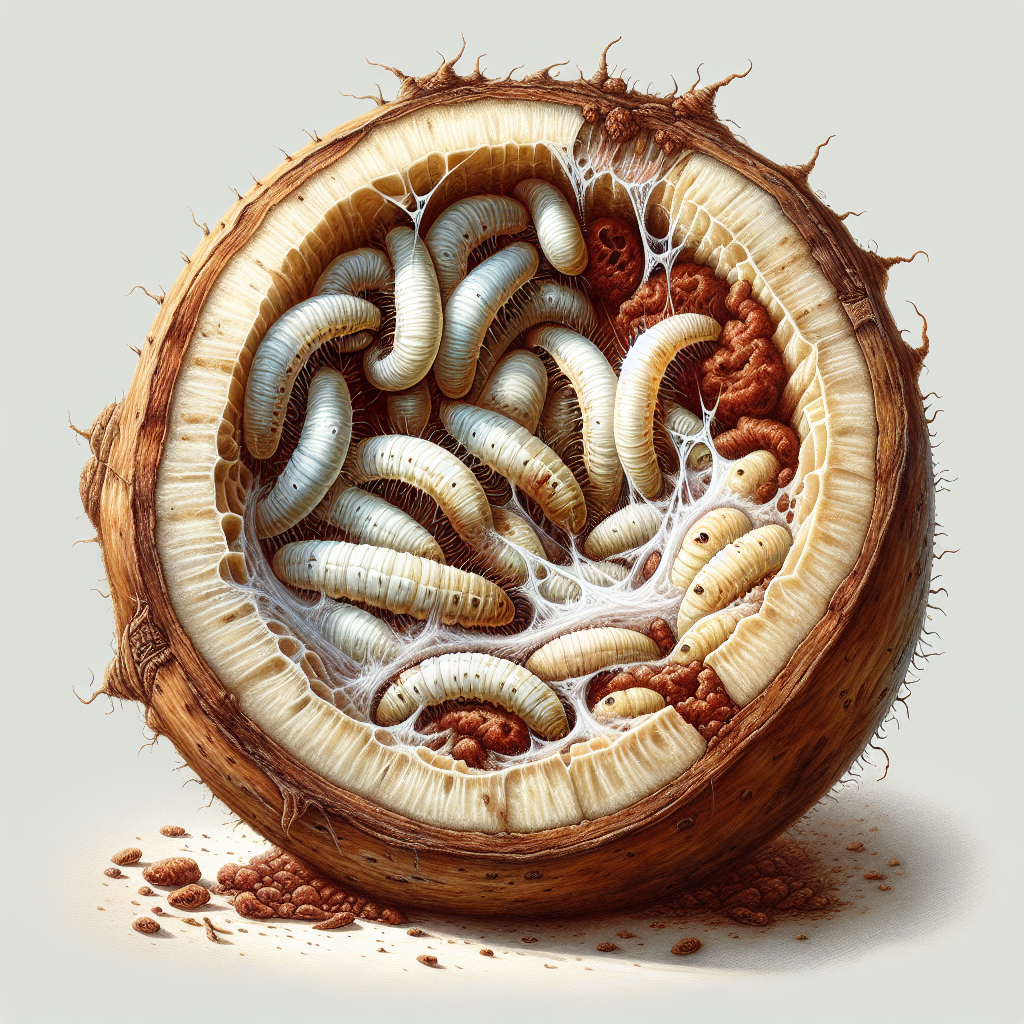
Introduction to Corm borers
Corm borers represent a significant threat to bulbous and tuberous crops worldwide, particularly in tropical and subtropical regions. These pests, primarily the larvae of small moths from the family Crambidae or Pyralidae (such as Conogethes punctiferalis or Opogona sacchari), target the underground corms—swollen underground stems that serve as storage organs for nutrients. By boring into these vital structures, corm borers disrupt water and nutrient uptake, leading to stunted growth, wilting, and eventual plant collapse. Farmers growing banana, taro, gladiolus, and other corm-producing plants often face yield losses of 30-70% in heavily infested fields without intervention.
Understanding corm borers is essential for agricultural sustainability. These pests thrive in warm, humid environments, making them a persistent challenge in regions like Southeast Asia, Africa, and parts of Latin America. Adult moths are inconspicuous, with wingspans of 20-30 mm, often featuring mottled brown or yellow patterns for camouflage. Females lay eggs on foliage or soil near host plants, and the ensuing larvae— creamy white to pinkish caterpillars up to 25 mm long—chew into corms, leaving behind silk-lined tunnels filled with frass (insect waste). This internal feeding makes detection difficult until damage is advanced. Economic impacts are severe; for instance, in banana plantations, corm borer infestations can reduce bunch weights by up to 50%, affecting global trade. Proactive scouting and integrated pest management (IPM) are key to minimizing losses. This guide provides diagnostic tools, lifecycle insights, and proven organic strategies to protect your crops effectively.
Identifying Symptoms & Damage
Accurate identification of corm borer damage is the first line of defense. Unlike surface-feeding pests, corm borers operate internally, so symptoms often appear systemic. Look for wilting or yellowing leaves starting from the outer edges, progressing inward as the plant starves. This is caused by larval tunneling that girdles vascular tissues, blocking translocation.
Entry and exit holes (1-3 mm diameter) on corm surfaces or lower pseudostems are hallmark signs, often surrounded by frass pellets—small, sawdust-like excreta. Saw open an affected corm to reveal silk-lined tunnels packed with live larvae, reddish-brown discoloration, and secondary rot from fungi like Fusarium or Fusarium. In advanced stages, corms soften, emit a foul odor, and collapse, leading to plant death.
Differentiate from similar issues: Root-knot nematodes cause galls without tunnels; corm rots lack frass and larvae. Above-ground, chewed leaf edges or webbing may indicate egg-laying sites. Use a knife to section corms during scouting—healthy ones are firm and white; infested are spongy with bore holes. Damage thresholds: 10-20% corm infestation warrants action. Regular inspections every 7-10 days during planting and early growth are recommended. For taro and banana, check daughter corms for tiny pink larvae. Photograph symptoms for records and consult local extension services if unsure.
Lifecycle and Progression of Corm borers
Comprehending the corm borer lifecycle enables precise timing of interventions. Adults are nocturnal moths emerging from pupae in soil or corms. Females lay 50-200 eggs singly or in clusters on leaves, pseudostems, or soil, preferring humid nights. Eggs hatch in 3-5 days into tiny larvae that mine leaves before descending to corms.
Larval stage (3-6 weeks) has 5-7 instars: early ones feed externally, later bore deeply, molting within tunnels. Fully grown larvae (20-30 mm) pupate in silk cocoons inside corms or soil for 7-14 days. Complete cycle: 45-90 days, with 3-6 generations per year in tropics. Overwinter as diapausing pupae in temperate zones.
Progression ties to crop phenology. In banana, peak activity aligns with ratoon cropping; in gladiolus, during corm multiplication. Monitor with pheromone traps (available for C. punctiferalis)—5-10 moths/trap/week signals risk. Lifecycle varies by species: Opogona prefers ornamentals, Conogethes staples like ginger. Disrupt at vulnerable stages: egg predation by birds, larval exposure via tillage, adult trapping.
Environmental Triggers & Risk Factors
Corm borers exploit specific conditions. High humidity (>80%) and temperatures (25-32°C) accelerate egg hatch and larval growth. Monsoon seasons see surges due to moist soil favoring oviposition. Poor drainage creates anaerobic pockets ideal for larval survival.
Risk factors include monocropping without rotation, which builds pest populations; volunteer plants harboring overwintering stages; and mechanical wounds from cultivation inviting boring. High nitrogen fertilizers promote succulent corms attractive to females. Weedy fields shield adults; irrigation timing affects soil moisture for pupation.
Climate change exacerbates risks with warmer nights extending generations. In banana belts, El Niño events spike infestations. Soil type matters—sandy loams retain less moisture, reducing survival vs. clay. Companion plants like marigold deter via repellents. Assess farm history: fields with prior outbreaks need vigilant monitoring.
Organic Control & Treatment Plans
Organic management emphasizes IPM: prevention first, then biological and cultural controls. Cultural: Rotate with non-hosts like legumes for 2-3 years. Plant certified, pest-free corms dipped in neem emulsion (5 ml/liter). Destroy infested plant debris post-harvest; deep plow (30 cm) exposes pupae to predators.
Biological: Release Trichogramma wasps (egg parasitoids) at 20,000/ha weekly during egg-lay peaks. Beneficial nematodes (Heterorhabditis bacteriophora) target soil larvae—apply 10^9 IJ/ha in evenings. Encourage birds with perches; ants prey on eggs.
Botanicals: Spray neem oil (Azadirachtin 0.03%) or spinosad (organic-approved) on foliage at dusk, 7-10 day intervals, 3 applications. For corms, hot water dip (48°C, 20 min) or solarization. Trap adults with light/pheromone traps.
Treatment plan:
- Scout weekly; threshold: 5% plants symptomatic.
- Remove/hand-kill infested plants.
- Apply nematodes + neem.
- Monitor 2 weeks; repeat if needed. Avoid broad-spectrum sprays to preserve predators. Success rates: 70-90% reduction. See Spring Pest Patrol for timing tips. For severe cases, integrate with clean planting material.
Preventing Corm borers in the Future
Long-term prevention builds resilient systems. Select resistant varieties like Cavendish banana subgroups. Time planting to avoid peak moth flights (use local data). Mulch with neem cake (2 kg/m²) suppresses soil stages.
Sanitation is paramount: rogue volunteers, clean tools. Intercrop with repellents like thai-basil or nasturtium. Solarize soil pre-planting (clear plastic, 6 weeks summer). Monitor with delta traps; destroy >2 moths/trap.
Boost biodiversity: hedgerows with flowering plants attract parasitoids. Track via farm logs; adjust annually. Quarantine new stock. In storage, dust corms with diatomaceous earth. Community efforts like synchronized planting disrupt cycles. Aim for <5% infestation annually.
Crops Most Affected by Corm borers
Corm borers target crops with swollen underground stems. Primary: Banana (all varieties, esp. suckers), taro (elephant-ear-taro), ginger (hawaiian-ginger), turmeric (madras-turmeric), gladiolus, crocus (saffron-crocus), canna, and elephant ear. Secondary: sweet-potato, yam, orchids.
Bananas suffer most economically; larvae attack mother corms, killing stools. Taro corms rot internally, slashing yields 40-60%. Ornamentals like gladiolus show stunted spikes. Avoid confusion with stem-borers on cereals. Global hotspots: India, Philippines, Pacific Islands.