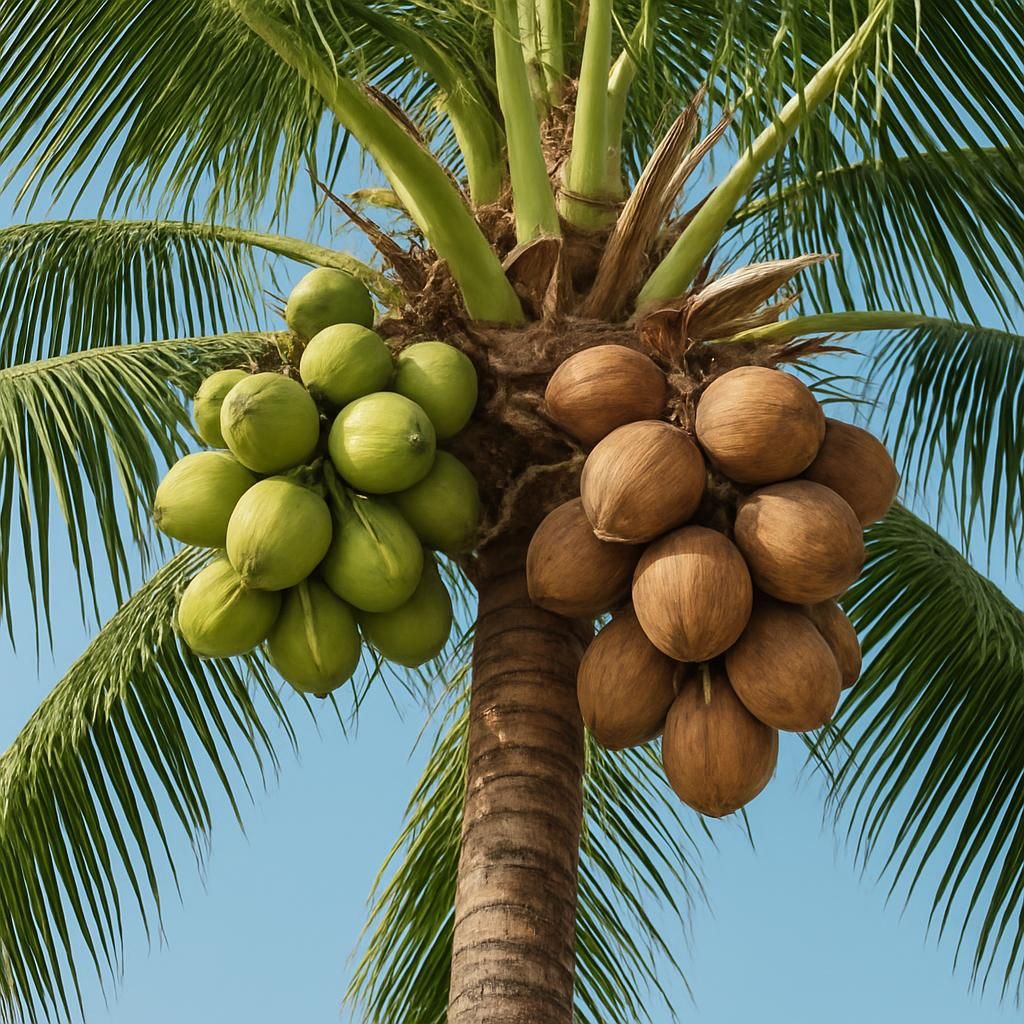
Introduction to Coconut (Kapa)
Coconut (Kapa) is one of the most economically important tropical crops, cultivated across coastal and island regions for its edible kernel, versatile oil, and durable husk fiber. Grown primarily for copra, fresh nuts, and value-added products, it supports livelihoods in more than 90 countries. Professional growers value the palm for its long productive life, drought tolerance once established, and multiple revenue streams from every part of the plant.
Botanical Profile of Coconut (Kapa)
Cocos nucifera belongs to the Arecaceae family. The tall, unbranched trunk reaches 20–30 m with a swollen base and prominent leaf scars. Pinnate fronds extend 4–6 m, bearing 200–250 leaflets. Inflorescences emerge from leaf axils with both male and female flowers; nuts mature in 11–12 months. Two main types exist: tall varieties that are cross-pollinated and long-lived, and dwarf varieties that are self-pollinating and begin bearing earlier.
Soil, pH, and Climate Requirements for Coconut (Kapa)
Coconut palms thrive in deep, well-drained sandy loam to clay loam soils with high organic matter. They prefer slightly acidic to neutral conditions and consistent warmth.
| Parameter | Ideal Range | Notes |
|---|---|---|
| Soil Type | Sandy loam to clay loam | Deep profile (>1 m) with good drainage |
| Soil pH | 5.5–8.0 | Optimal 6.0–7.0; tolerate mild salinity |
| Temperature | 21–32 °C (day) | Minimum 10 °C; sensitive to frost |
| Annual Rainfall | 1500–2500 mm | Even distribution; 100–150 mm/month |
| Relative Humidity | 70–90 % | Coastal breezes beneficial |
| Altitude | 0–600 m | Reduced yields above 800 m |
| Sunlight | Full sun (6+ hours) | Avoid heavy shade from competing trees |
Step-by-Step Planting & Propagation
- Select certified seed nuts from high-yielding mother palms of desired tall or dwarf type.
- Prepare nursery beds with well-drained soil enriched with compost; sow nuts horizontally 15–20 cm deep.
- Maintain nursery moisture at field capacity; seedlings are ready for transplanting at 6–9 months when they have 4–6 leaves.
- Dig planting pits 1 m × 1 m × 1 m; refill with topsoil mixed with 20–30 kg well-rotted manure and 500 g rock phosphate.
- Transplant seedlings at 7–8 m spacing in triangular pattern for tall types or 6 m for dwarfs; plant during early monsoon.
- Provide temporary shade and irrigation until establishment; mulch planting basin with coconut fronds or dried leaves.
Care & Maintenance regimes for Coconut (Kapa)
Regular irrigation, balanced fertilization, and timely pruning of dead fronds maintain palm health and maximize nut production.
| Operation | Frequency | Details |
|---|---|---|
| Irrigation | Weekly in dry season | 40–50 L water per palm; drip irrigation preferred |
| Fertilizer (NPK) | 3 applications/year | Year 1: 0.5 kg 14-14-14; mature: 1.5 kg N, 1 kg P₂O₅, 2 kg K₂O + 500 g MgSO₄ |
| Organic Manure | Once per year | 50 kg FYM or 20 kg vermicompost per palm at basin edge |
| Micronutrients | Foliar spray every 6 months | 1 % borax + 0.5 % ZnSO₄ + 0.5 % FeSO₄ |
| Pruning | Twice yearly | Remove dead and diseased fronds; retain 35–40 functional leaves |
| Weeding | Quarterly | Manual or glyphosate spot treatment; maintain 1.5 m weed-free basin |
Pests, Diseases & Organic Management
Major insect threats include the Rhinoceros beetle, Red palm weevil, and Black-headed caterpillar. Regular sanitation, pheromone traps, and release of predators such as Rhynchophorus beetles reduce populations. Scale insects and Mealybugs are managed with neem oil (3 %) and predatory beetles.
Key diseases are Bud rot caused by Phytophthora palmivora, Stem bleeding, and Leaf rot complexes. Improve drainage, apply copper-based fungicides at early stages, and remove infected tissues. Soil solarization and Trichoderma application suppress soil-borne pathogens.
Harvesting, Curing & Optimal Storage
Tall varieties begin bearing at 6–7 years; dwarfs at 3–4 years. Nuts are harvested every 45–60 days once they reach full maturity indicated by brown husk and sloshing sound of water. Use climbing or pole methods to minimize trunk damage. Cure nuts in shade for 4–6 weeks to reduce moisture to 6–8 % for copra. Store copra in well-ventilated godowns at <65 % RH; fresh nuts keep 2–3 months at 10–15 °C.
Companion Planting for Coconut (Kapa)
Intercropping with Banana, Pineapple, Cacao, and leguminous cover crops such as Pigeon pea improves land-use efficiency and soil fertility. Gliricidia hedgerows provide nitrogen fixation and wind protection. Avoid heavy feeders like Cassava that compete for potassium. Maintain 2 m spacing from palm trunks to prevent root damage.
For additional insights on building resilient tropical systems, read The Truth About Weather Patterns and Small Farm Resilience.