Introduction to Cocoa (Nacional)
Cocoa (Nacional) represents one of the world's most sought-after fine-flavor cacao varieties, historically cultivated in Ecuador's coastal lowlands. Its delicate floral aroma, low bitterness, and fruity undertones make it essential for premium single-origin chocolate. Growers targeting export markets or specialty chocolate makers must focus on precise agronomic practices to preserve the variety's unique sensory profile. Successful production requires attention to soil health, shade management, and post-harvest fermentation protocols that differ markedly from bulk cacao types such as Forastero Cacao.
Botanical Profile of Cocoa (Nacional)
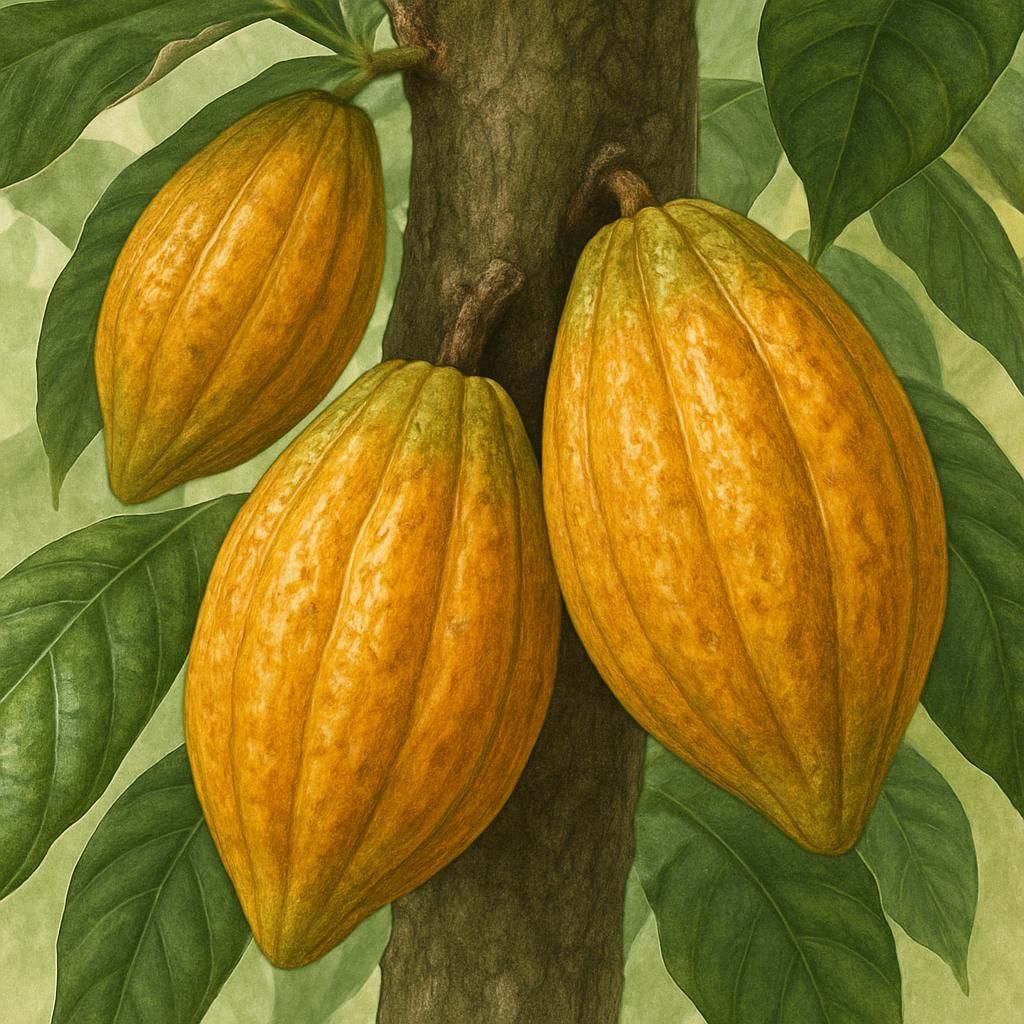
Theobroma cacao 'Nacional' belongs to the Malvaceae family and exhibits the typical cacao growth habit: an orthotropic main stem with plagiotropic branches forming distinct tiers. Mature trees reach 4–8 meters under cultivation with regular pruning. Leaves are alternate, elliptic, and glossy dark green. Flowers emerge directly from the trunk and older branches (cauliflory) and are small, pinkish-white, and pollinated primarily by midges. The resulting pods are elongated, yellow to orange when ripe, and contain 30–45 seeds surrounded by sweet white pulp. Nacional trees are noted for slower growth and lower yields than Trinitario or Forastero hybrids but compensate with exceptional bean quality.
Soil, pH, and Climate Requirements for Cocoa (Nacional)
Nacional cacao demands well-drained, fertile soils rich in organic matter. Heavy clay or waterlogged conditions quickly induce root diseases. The following table summarizes ideal growing parameters:
| Parameter | Ideal Range | Notes |
|---|---|---|
| Soil Type | Loamy to sandy loam with good structure | High organic matter (3–5%) preferred |
| Soil pH | 6.0–7.0 | Slightly acidic to neutral; avoid below 5.5 |
| Temperature | 22–30 °C daytime; 18–24 °C nighttime | Minimum 16 °C; frost intolerant |
| Annual Rainfall | 1,500–2,500 mm, evenly distributed | Supplemental irrigation needed in dry spells |
| Relative Humidity | 70–85% | Essential for flower set and pod development |
| Altitude | 0–600 m | Higher altitudes slow growth and reduce yield |
| Shade Requirement | 30–50% canopy cover | Use leguminous shade trees such as Gliricidia |
Step-by-Step Planting & Propagation
Propagation begins with selection of vigorous, disease-free pods from high-yielding mother trees. Remove seeds immediately after pod harvest and ferment briefly (24–48 h) to remove pulp before sowing. Sow seeds in well-drained nursery media at 2–3 cm depth; germination occurs in 7–14 days at 28 °C. Seedlings are ready for field transplant at 4–6 months when they reach 30–40 cm. Field spacing is 3 m × 3 m (1,111 trees/ha) under permanent shade. Prepare planting holes 60 cm × 60 cm × 60 cm, incorporate 10–15 kg compost plus 200 g rock phosphate. Plant at the onset of rains, mulch immediately, and provide temporary shade for the first 12–18 months. Grafting onto disease-resistant rootstocks is increasingly used to maintain pure Nacional genetics.
Care & Maintenance regimes for Cocoa (Nacional)
Consistent care ensures healthy canopy development and sustained pod production. The table below outlines seasonal schedules for water, fertilizer, and pruning:
| Season | Watering Schedule | Fertilizer Application | Pruning Regime |
|---|---|---|---|
| Establishment (Year 1) | 20–30 L/tree/week during dry periods | 100 g NPK 15-15-15 at months 3, 6, 9 | Formative pruning: remove basal suckers and lower branches |
| Vegetative Growth (Years 2–3) | Maintain 1,500 mm equivalent; irrigate if rainfall <40 mm/week | 200–300 g/tree split into 3 applications (NPK 12-12-17-2 Mg) | Structural pruning: maintain 3–4 tiers; tip branches at 1.5 m |
| Production Phase (Year 4+) | Reduce to 15–20 L/tree/week in dry season | 400–500 g/tree/year: 2/3 NPK 12-12-17-2 Mg + 1/3 organic compost; split March & September | Sanitation pruning twice yearly: remove dead wood, water shoots, and crossing branches |
Mulch with 10–15 cm of leaf litter or pruned material to conserve moisture and suppress weeds. Monitor leaf nutrient levels annually and adjust magnesium and boron applications as needed.
Pests, Diseases & Organic Management
Major constraints include Phytophthora palmivora, witches' broom, and black pod. Cultural practices such as regular sanitation pruning, improved drainage, and removal of infected pods reduce disease pressure. For organic control, apply copper-based sprays (1–2 kg/ha) at 21-day intervals during peak humidity combined with neem oil (0.5%) against mealybugs and scale insects. Introduce predatory ants (Azteca spp.) and parasitic wasps for biological suppression of mirids. Maintain diverse shade canopy to limit moniliophthora spread. Soil solarization and compost tea drenches help manage root rot complexes.
Harvesting, Curing & Optimal Storage
Pods reach physiological maturity 5–6 months after pollination; harvest when color changes from green to yellow-orange. Use sanitized machetes to cut pods at the peduncle, avoiding trunk damage. Ferment beans in wooden boxes (60–80 kg capacity) for 5–7 days with twice-daily turning to reach 45–50 °C internal temperature. Dry fermented beans on raised racks to 6–7% moisture over 7–10 days, protecting from rain and direct sun. Store in jute bags inside ventilated warehouses at 18–22 °C and <70% RH. Proper curing preserves Nacional's signature floral and nutty flavor notes valued by fine-chocolate makers.
Companion Planting for Cocoa (Nacional)
Strategic companions enhance biodiversity, provide shade, fix nitrogen, and repel pests. Recommended pairings include Gliricidia and Pigeon pea for nitrogen fixation and light shade, Banana for temporary windbreaks, and Coconut for permanent upper canopy. Interplant Black Pepper on support trees to increase revenue per hectare. Aromatic species such as Thai Basil and Marigold deter aphids and whiteflies. Avoid heavy feeders like Corn that compete for nutrients. Rotate leguminous cover crops such as Clover during replanting cycles to rebuild soil organic matter.