Introduction to moniliophthora
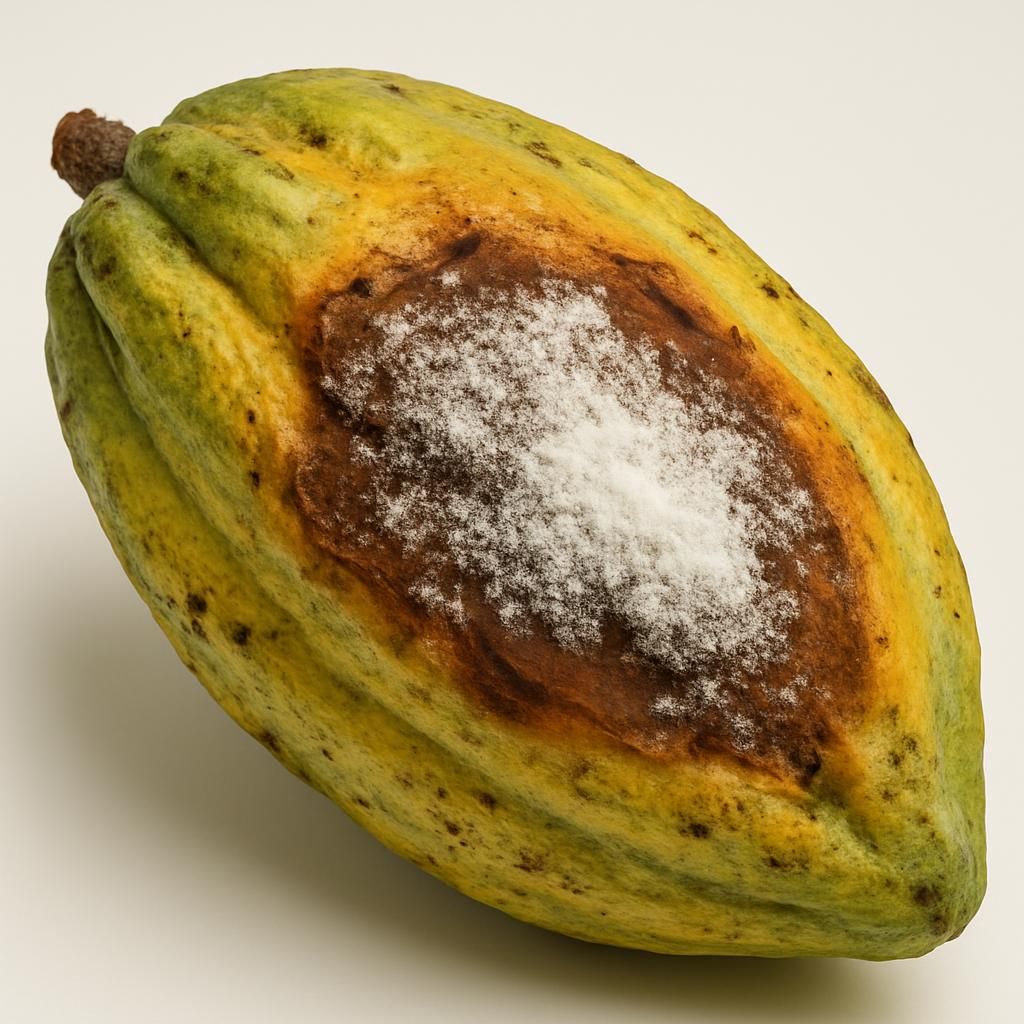
Moniliophthora, caused by the fungus Moniliophthora roreri, is one of the most destructive diseases of Cacao worldwide. Commonly known as frosty pod rot, it directly attacks developing pods, turning them into sources of inoculum that threaten entire plantations. The disease originated in South America and has spread to major cacao-growing regions, causing up to 80% crop loss in unmanaged fields. Effective diagnosis and management rely on early detection, sanitation, and consistent cultural practices rather than reliance on chemical sprays alone.
Identifying Symptoms & Damage
The earliest visible sign is the formation of small, water-soaked lesions on young pods that rapidly expand into firm, tan to chocolate-brown areas. Within days the lesions develop a characteristic white to cream-colored fungal mat resembling frost or talcum powder, giving the disease its common name. Infected pods become mummified, hard, and remain attached to the tree, serving as long-term reservoirs of spores. Internal damage includes complete destruction of beans, with the pod contents turning into a dry, powdery mass. On mature pods, symptoms may appear as sunken lesions with cracked surfaces, while young cherelles may abort entirely. Leaf symptoms are rare but can include minor chlorosis when the tree is severely stressed.
Lifecycle and Progression of moniliophthora
The pathogen completes its life cycle on living and dead pod tissue. Spores are produced in massive quantities on the surface of infected pods and are primarily dispersed by wind, rain splash, and human activity. Germination occurs rapidly in high humidity, penetrating pod tissue within hours. The fungus grows internally, colonizing the pod and killing developing beans before external symptoms become visible.
| Lifecycle Stage | Duration | Key Characteristics | Environmental Conditions |
|---|---|---|---|
| Spore Germination | 4–12 hours | Wind- and rain-dispersed spores land on pods and germinate | 25–30 °C, >90% RH |
| Penetration & Colonization | 3–7 days | Hyphae enter through stomata or wounds and spread through pod tissues | Warm, humid nights |
| Symptom Expression | 7–14 days | Water-soaked lesions turn brown and develop white fungal mat | Persistent high humidity |
| Spore Production | 14–21 days | Dense sporulation on pod surface creates new inoculum | 22–28 °C with dew |
| Pod Mummification | 21–60 days | Infected pods dry, harden, and remain attached as long-term sources | Dry season following wet periods |
Environmental Triggers & Risk Factors
High relative humidity above 85% for extended periods combined with temperatures between 22 °C and 30 °C strongly favor disease development. Frequent rainfall and poor air circulation within dense canopies increase spore dispersal and infection rates. Shaded, poorly pruned plantations with overlapping branches create microclimates ideal for the pathogen. Overcrowded plantings of Cacao and proximity to wild or abandoned trees heighten risk. Soil pH between 5.5 and 6.5 and excessive nitrogen fertilization that promotes lush vegetative growth can indirectly increase susceptibility.
| Factor | Optimal Range for Disease | Management Implication |
|---|---|---|
| Temperature | 22–30 °C | Avoid excessive shade that retains heat and moisture |
| Relative Humidity | >85% for >6 hours | Improve pruning and spacing for better airflow |
| Rainfall | >2000 mm annually | Time sanitation immediately after heavy rains |
| Canopy Density | High overlap | Regular pruning to open canopy |
| Soil pH | 5.5–6.5 | Maintain balanced nutrition to avoid stress |
Organic Control & Treatment Plans
Organic management emphasizes sanitation, biological agents, and cultural practices. Remove and destroy all infected pods weekly during the wet season. Apply copper-based fungicides or approved organic alternatives only as a last resort and always in combination with sanitation. Introduce antagonistic microorganisms such as Trichoderma species to compete with the pathogen on pod surfaces. Maintain strict weed control and avoid working in plantations when foliage is wet to limit spore spread.
| Treatment Option | Frequency | Application Method | Notes |
|---|---|---|---|
| Weekly Pod Sanitation | Every 7 days | Hand removal and burning or deep burial | Most critical practice; reduces inoculum by >70% |
| Trichoderma harzianum Spray | Every 14 days during wet season | 2–3 g/L water, thorough coverage of pods | Apply after sanitation; avoid mixing with copper |
| Copper Hydroxide (organic formulation) | Every 21 days | 2–3 kg/ha in 400 L water | Use only when disease pressure is extreme |
| Improved Pruning & Canopy Management | 2–3 times per year | Remove lower branches and crossing limbs | Enhances airflow and reduces humidity |
| Mulching & Weed Control | Continuous | Maintain 10 cm organic mulch layer | Suppresses weeds and stabilizes soil moisture |
Preventing moniliophthora in the Future
Long-term prevention centers on resistant varieties, rigorous sanitation, and integrated farm hygiene. Plant tolerant Cacao clones such as CCN-51 or SCA-6 where available and graft onto resistant rootstocks. Establish buffer zones between new plantings and infected areas. Train all workers on proper pod disposal and disinfect tools between trees. Implement a strict monitoring schedule using scouting every 10–14 days during peak humidity periods. Rotate with non-host crops where feasible and maintain diverse agroforestry systems that support beneficial microorganisms.
Crops Most Affected by moniliophthora
Moniliophthora primarily devastates Cacao production but has also been reported on related species within the Malvaceae family. Forastero Cacao, Criollo Cacao, and Trinitario Cacao are all highly susceptible. Limited infections have been observed on wild relatives and certain Theobroma species, though economic impact remains focused on commercial cacao orchards.
For more detailed guidance on managing related pod diseases, see the Wiki entry on Phytophthora palmivora. Additional practical insights on seasonal disease pressure can be found in the blog post Crop Diseases Under the Microscope: 9 Organic Fixes for Small Farm Resilience.