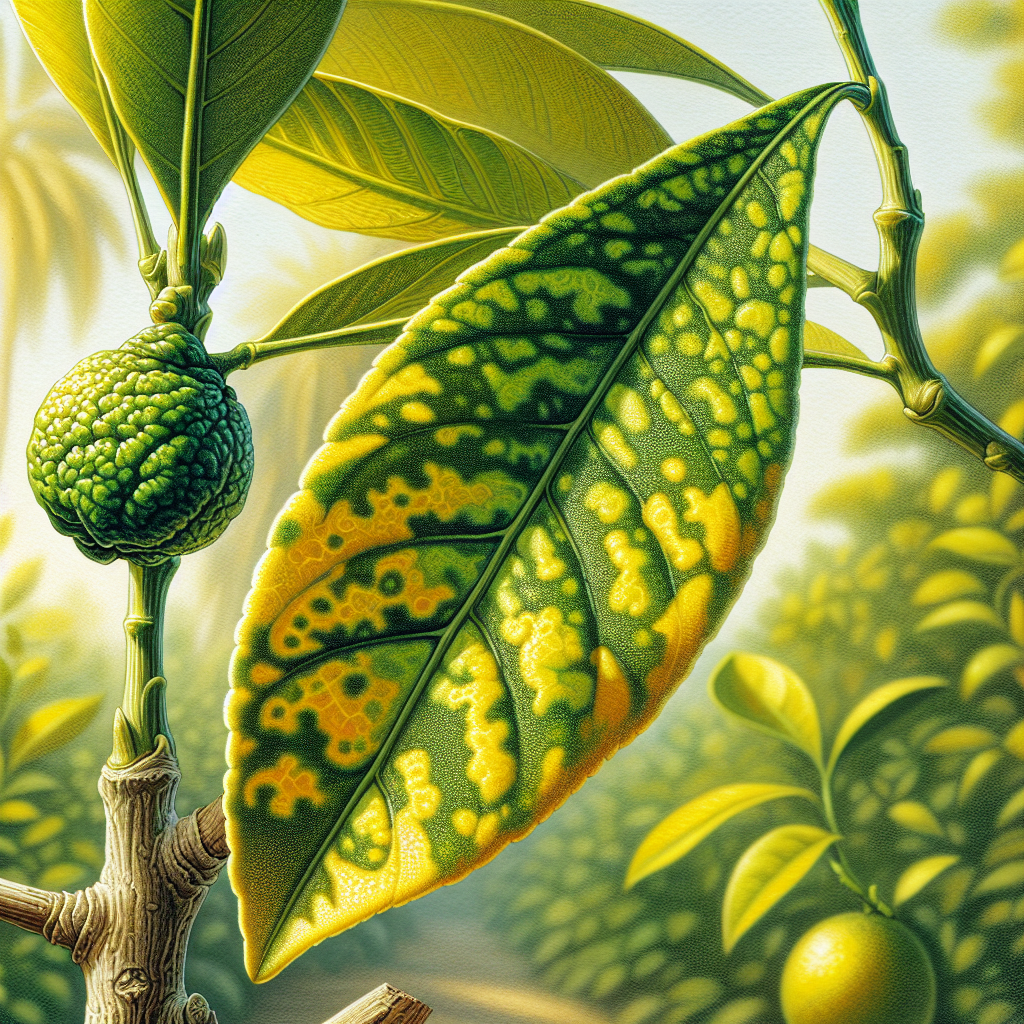
Introduction to Citrus greening disease
Citrus greening disease, scientifically known as Huanglongbing (HLB) or citrus greening, represents one of the most destructive threats to citrus production globally. First identified in China in the early 1900s, it has since spread to nearly every citrus-growing region, including the United States (Florida in 2005, California in 2012), Brazil, and Africa. Caused by the bacterium Candidatus Liberibacter asiaticus (CLas), Candidatus Liberibacter africanus, or Candidatus Liberibacter americanus, the disease is primarily vectored by the Asian citrus psyllid (Diaphorina citri) in Asia and the Americas, and the African citrus psyllid (Trioza erytreae) in Africa. These tiny insects feed on phloem tissue, transmitting the pathogen during feeding.
The economic impact is staggering: Florida's citrus industry has lost over 75% of its acreage since 2005, with billions in damages. Trees decline over 3-5 years, producing bitter, unusable fruit and eventually dying. No cure exists, making early detection and citrus psyllid control critical. This definitive guide equips growers, orchard managers, and home gardeners with professional diagnostic tools, organic management plans, and prevention strategies to combat citrus greening. Whether managing Navel Orange, Valencia Orange, Eureka Lemon, or Persian Lime groves, understanding HLB is essential for sustainable citrus farming. For small farms battling multiple threats, check out Spring Pest Patrol: Organic AI Strategies to Shield Your Crops from Common Invaders.
Identifying Symptoms & Damage
Accurate diagnosis is the first line of defense against citrus greening. Symptoms vary by tree age, variety, and environmental stress, often mimicking nutrient deficiencies or other diseases like citrus tristeza virus or phytophthora root rot. Key indicators include:
- Foliar Symptoms: Asymmetrical mottling of leaves, with blotchy yellowing or green islands on pale yellow backgrounds. Veins may remain green while interveinal areas yellow. New growth shows twisting, curling, and chlorosis. Severe cases lead to leaf drop and twig dieback.
- Fruit Symptoms: Small, lopsided, misshapen fruits with an enlarged, bitter rind section (aborted navel area). Fruits drop prematurely, often green and undersized. Internal quality suffers—sour, bitter taste with aborted seed development.
- Tree Decline: Stunted growth, sparse foliage, and root rot-like symptoms due to phloem plugging. Trees produce fewer, poorer-quality fruits over time, leading to defoliation and death within 5 years.
Diagnostic Confirmation:
- Visual scouting: Check new flushes for mottling and psyllids (tiny, winged insects with nymphs producing waxy tufts).
- PCR Testing: Lab analysis of leaf petioles or fruit peduncles detects CLas DNA—gold standard for confirmation.
- Differentiate from Lookalikes: Nutrient deficiencies (zinc/iron) cause uniform yellowing; citrus leafminer damage shows serpentine mines; scale insects cause sooty mold.
Damage escalates quickly: Infected trees yield 30-100% less marketable fruit. Early removal of symptomatic trees prevents spread. Regular scouting every 2-4 weeks is vital.
Lifecycle and Progression of Citrus greening disease
HLB progresses systemically once transmitted. The bacterium multiplies in the phloem, plugging vessels and disrupting nutrient transport. Timeline:
- Transmission: Psyllids acquire CLas by feeding on infected trees, incubating it for 1-4 weeks. They transmit during subsequent feeds on healthy trees, especially new flush.
- Early Infection (Months 1-6): Subtle symptoms on single branches—mottled leaves, slight stunting. Bacteria unevenly distributed.
- Systemic Spread (6-18 Months): Symptoms appear orchard-wide. Phloem blockage causes canopy thinning, fruit deformation.
- Advanced Decline (2-5 Years): Severe defoliation, root loss (up to 60%), dieback. Trees become non-productive.
Psyllid Lifecycle Synergy: Adults lay eggs on tender flush; nymphs feed and excrete honeydew, fostering sooty mold. Multiple generations per year (up to 20) amplify spread. Hot, humid conditions accelerate both psyllid and bacterial replication. Infected trees serve as reservoirs, making rogueing (removal) essential.
Environmental Triggers & Risk Factors
HLB thrives in subtropical/tropical climates (25-30°C, high humidity), but adapts to cooler regions with mild winters. Key triggers:
- Temperature: Optimal for CLas: 22-28°C; psyllids active above 18°C.
- Flush Cycles: New growth attracts psyllids—spring/summer flushes heighten risk.
- Orchard Factors: Dense planting, poor airflow, irrigation splash aid spread. Weeds host alternate psyllid hosts.
- Risk Factors: Proximity to infected groves (<1 mile), volunteer citrus seedlings, neglected backyard trees. Poor nutrition (low NPK) exacerbates symptoms, mimicking HLB.
High-risk areas: Florida, Brazil, China. In California, coastal zones slow spread due to cooler temps. Monitor weather forecasts for flush periods.
Organic Control & Treatment Plans
No cure exists, but integrated organic management suppresses psyllids and supports tree health. Focus on vector control:
1. Cultural Practices:
- Remove infected trees promptly (rogueing)—cut and destroy to eliminate reservoirs.
- Plant HLB-tolerant varieties like [sugar belle] or Australian finger limes.
- Maintain nutrition: Foliar micronutrients (Zn, Mn, Fe) every 21 days reduce symptoms.
2. Biological Controls:
- Release predatory insects: Ladybugs, lacewings, parasitic wasps (Tamarixia radiata) target psyllid nymphs.
- Plant trap crops/intercrops with marigold or thai basil to disrupt psyllid movement.
3. Organic Sprays (Rotate to prevent resistance):
- Neem oil (0.5-2%): Repels adults, disrupts nymph molting—apply at flush.
- Insecticidal soaps: Potassium salts smother soft-bodied psyllids.
- Spinosad (OMRI-listed): Targets nymphs—weekly during peaks.
- Horticultural oils: Dormant sprays smother overwintering psyllids.
Monitoring & IPM Plan:
- Yellow sticky traps: 1-2 per tree for psyllid counts (>0.2 adults/trap/week = treat).
- Scout weekly; threshold-based spraying.
- Reflective mulches deter psyllids in young groves.
Tree Rehabilitation: Therapeutic nutrition (folcisteine, micronutrients) sustains production 1-2 extra years. Heat therapy (tree-to-tree inoculation avoidance) experimental.
Success rates: Florida trials show 50-70% psyllid reduction with IPM, delaying decline.
Preventing Citrus greening disease in the Future
Prevention is paramount—once established, eradication impossible. Strategies:
- Quarantine & Certification: Source pathogen-free nursery stock; inspect for psyllids.
- Area-Wide Management: Coordinate with neighbors for synchronized psyllid sprays.
- Sanitation: Destroy volunteer citrus, cull infected trees immediately.
- Resistant Rootstocks: Flying Dragon trifoliate tolerant in trials.
- Border Sprays: Treat perimeters intensively.
- Technology: Drones for scouting; AI for symptom detection.
Long-term: Breed HLB-resistant cultivars. Homeowners: Remove backyard citrus if nearby outbreaks.
Crops Most Affected by Citrus greening disease
HLB targets Citrus spp. and close relatives:
- Highly Susceptible: Sweet oranges (Navel Orange, Valencia Orange), grapefruit, early mandarins.
- Moderately Susceptible: Lemons (Eureka Lemon), limes (Persian Lime), tangerines.
- Less Affected: Calamondin, kumquat, pummelos—tolerate but vector hosts.
- Resistant: Non-citrus like mango unaffected, but can host psyllids.
Global losses: 100M+ trees destroyed. Prioritize protection for commercial oranges, lemons.