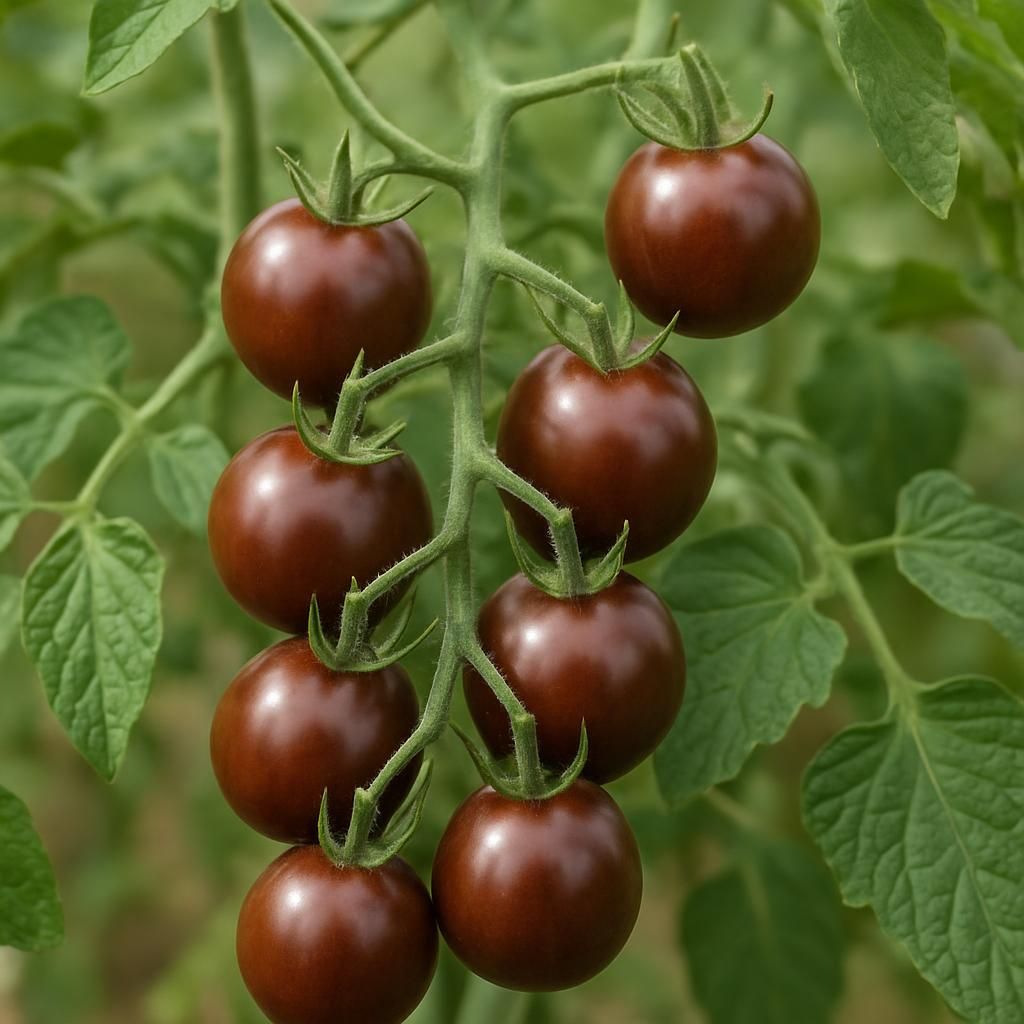
Introduction to Chocolate Cherry Tomato
Chocolate Cherry Tomato is an indeterminate heirloom cherry tomato variety renowned for its distinctive deep mahogany to chocolate-brown fruits and exceptional flavor profile. These bite-sized tomatoes typically measure 1–1.5 inches in diameter and deliver a sweet-tart balance with subtle smoky undertones that distinguish them from standard red cherry tomatoes. The plants are vigorous, producing long trusses of 8–12 fruits each throughout the growing season, making them a favorite among home gardeners and small-scale commercial growers seeking both visual appeal and culinary versatility. With proper support and consistent care, Chocolate Cherry Tomato plants can reach 6–8 feet in height and continue producing until frost.
Botanical Profile of Chocolate Cherry Tomato
Belonging to the Solanaceae family, Chocolate Cherry Tomato is a botanical variant of the common cherry tomato (Solanum lycopersicum var. cerasiforme). The plants exhibit classic indeterminate growth, producing new stems, flowers, and fruit continuously from the main stem rather than setting a single terminal cluster. Foliage is dark green with serrated leaflets, and the stems are slightly hairy with a tendency to sprawl if unsupported. Flowers are small, yellow, and self-pollinating, typically appearing in clusters of 8–15. Fruits develop from these flowers, starting green and ripening to a glossy chocolate-brown when fully mature. The skin is thin yet resilient, and the flesh is juicy with two seed locules per fruit. Because it is an open-pollinated heirloom, seeds saved from Chocolate Cherry Tomato plants will produce true-to-type offspring.
Soil, pH, and Climate Requirements for Chocolate Cherry Tomato
Chocolate Cherry Tomato thrives in well-drained, fertile loam soils rich in organic matter. The ideal pH range is 6.2–6.8, allowing optimal nutrient uptake while minimizing the risk of calcium deficiency disorders. The variety performs best in full sun with at least 8 hours of direct sunlight daily and prefers daytime temperatures between 70–85°F (21–29°C) and nighttime temperatures above 55°F (13°C). Consistent warmth is essential for fruit set and flavor development.
| Parameter | Ideal Range | Notes |
|---|---|---|
| Soil Type | Loamy, well-drained | Incorporate compost or aged manure |
| Soil pH | 6.2–6.8 | Test annually; adjust with lime or sulfur |
| Daytime Temperature | 70–85°F (21–29°C) | Protect from frost and extreme heat |
| Nighttime Temperature | 55–65°F (13–18°C) | Below 55°F reduces fruit set |
| Sunlight | 8+ hours direct | Morning sun preferred in hot climates |
| Spacing | 18–24 inches between plants | Rows 4–5 feet apart; use sturdy cages |
| USDA Zones | 4–11 (annual) | Start indoors 6–8 weeks before last frost |
Step-by-Step Planting & Propagation
Start seeds indoors 6–8 weeks before the last expected frost date. Sow seeds ¼ inch deep in sterile seed-starting mix and maintain soil temperature at 75–80°F (24–27°C) for rapid germination, which occurs in 5–10 days. Provide 14–16 hours of bright light daily using grow lights positioned 2–4 inches above seedlings. Harden off plants for 7–10 days before transplanting outdoors once soil has warmed to at least 60°F (15°C) and all danger of frost has passed. Transplant seedlings 18–24 inches apart in rows 4–5 feet apart, burying the stem up to the first set of true leaves to encourage strong root development. Install sturdy cages, stakes, or trellises at planting time to support the indeterminate vines. Water thoroughly after transplanting and apply a 2–3 inch layer of organic mulch to conserve moisture and suppress weeds.
Care & Maintenance regimes for Chocolate Cherry Tomato
Consistent watering, balanced nutrition, and regular pruning are essential for maximizing yield and fruit quality. Maintain even soil moisture to prevent blossom end rot and cracking. Side-dress with compost or a balanced organic fertilizer every 3–4 weeks during active growth. Prune suckers weekly to improve airflow and direct energy toward fruit production. Monitor for nutrient deficiencies and adjust feeding accordingly.
| Task | Frequency | Details |
|---|---|---|
| Watering | 1–2 inches per week | Deep watering 2–3 times weekly; avoid wetting foliage |
| Fertilizer | Every 3–4 weeks | Side-dress with compost tea or 5-5-5 organic fertilizer; reduce nitrogen after flowering |
| Pruning | Weekly | Remove suckers below first flower cluster; thin dense foliage for airflow |
| Mulching | At planting + mid-season | 2–3 inches organic mulch; replenish as needed |
| Support | Install at planting | Cages, stakes, or Florida weave; tie stems every 8–12 inches |
Pests, Diseases & Organic Management
Common pests include aphids, hornworms, flea beetles, and spider mites. Scout plants weekly and use insecticidal soap or neem oil for soft-bodied insects. Handpick hornworms and destroy egg masses. For diseases, watch for early blight, septoria leaf spot, and powdery mildew. Practice crop rotation, remove infected foliage promptly, and apply copper-based fungicides or baking soda sprays as preventive measures. Improve airflow through proper spacing and pruning. Use floating row covers early in the season to exclude pests while allowing pollination once flowers appear.
Harvesting, Curing & Optimal Storage
Harvest Chocolate Cherry Tomato fruits when they reach full mahogany-brown color and yield slightly to gentle pressure. Pick regularly to encourage continued production. For peak flavor, allow fruits to ripen fully on the vine. To extend the season, harvest mature green tomatoes before frost and ripen indoors in a paper bag with a banana. Store ripe tomatoes at room temperature away from direct sunlight for up to one week. For longer storage, freeze whole tomatoes on a tray then transfer to freezer bags, or dehydrate slices for later use in sauces and soups. Avoid refrigerating fresh tomatoes, as cold temperatures diminish flavor and texture.
Companion Planting for Chocolate Cherry Tomato
Pair Chocolate Cherry Tomato with aromatic herbs such as basil and thyme to deter pests and enhance flavor. Plant with marigold and nasturtium to repel nematodes and aphids. Good vegetable companions include carrot, radish, and lettuce, which benefit from the shade provided by tomato foliage. Avoid planting near fennel or walnut trees, as these can inhibit tomato growth. Rotate tomatoes with legumes such as beans or peas in subsequent seasons to improve soil nitrogen and break pest cycles.