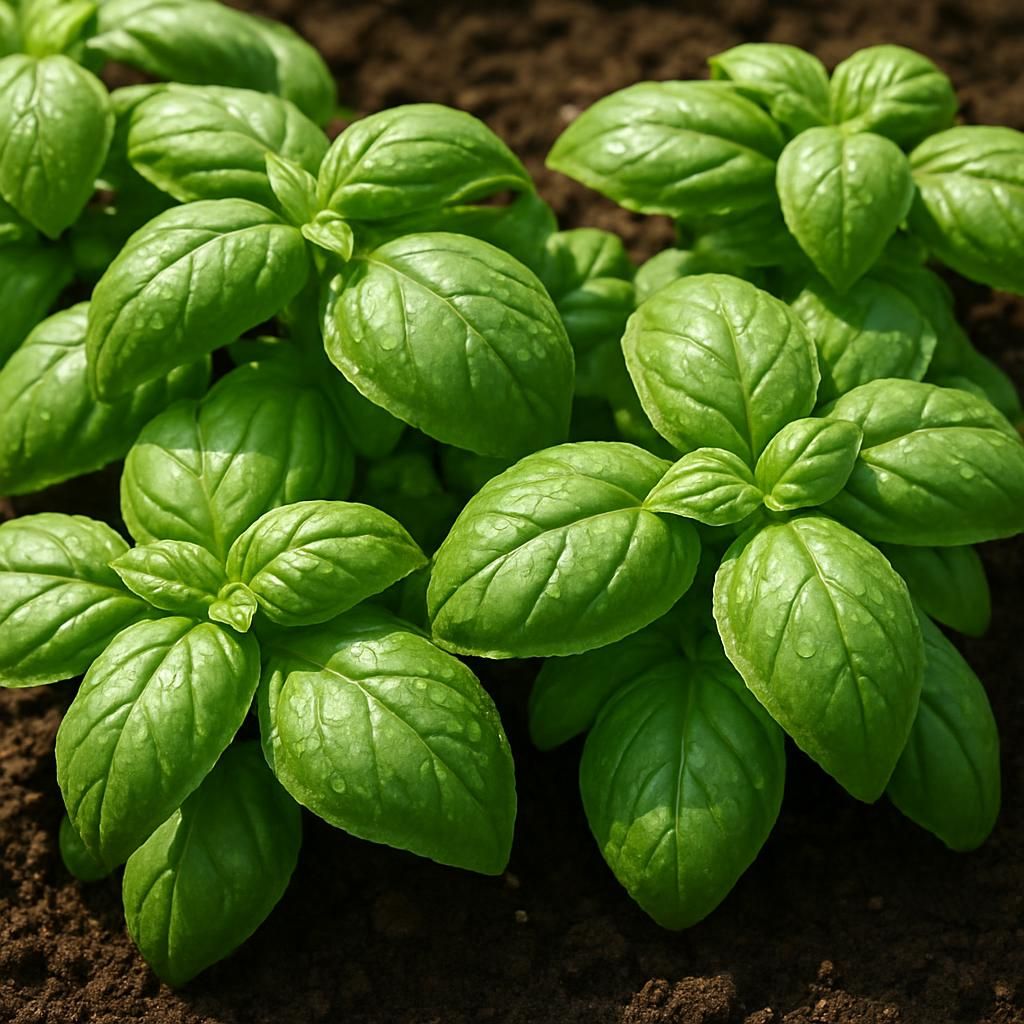
Introduction to basil
Basil (Ocimum basilicum) is one of the most widely cultivated culinary herbs worldwide, valued for its intense aroma, essential oil content, and culinary applications ranging from pesto to Thai curries. Commercial production spans greenhouse, field, and hydroponic systems, with demand driven by fresh-market sales, dried herb processors, and the essential-oil industry. Successful basil cultivation hinges on consistent warmth, well-drained fertile soil, and disciplined pruning to maintain vegetative vigor and delay flowering.
Botanical Profile of basil
Basil belongs to the Lamiaceae family and is native to tropical regions of central Africa and Southeast Asia. The species Ocimum basilicum produces square stems, opposite ovate leaves, and terminal racemes of small white to purple flowers. Cultivars vary dramatically in leaf size, color, and volatile-oil profiles; Genovese types dominate fresh pesto markets while Thai basil Thai Basil offers anise notes suited to Southeast Asian cuisine. The plant reaches 30–60 cm in height under optimal conditions and completes its life cycle within 60–90 days from sowing to seed set.
Soil, pH, and Climate Requirements for basil (MUST INCLUDE A MARKDOWN TABLE OF IDEAL CONDITIONS)
Basil demands warm soil temperatures and consistent moisture without waterlogging. It performs best in loamy to sandy-loam soils with high organic matter. The crop is frost-sensitive and requires full sun exposure of at least six hours daily.
| Parameter | Ideal Range | Notes |
|---|---|---|
| Soil Type | Loamy to sandy loam | High organic matter improves yields |
| Soil pH | 6.0–7.5 | Slightly acidic to neutral |
| Soil Temperature | 18–29 °C (65–85 °F) | Minimum 15 °C for germination |
| Air Temperature | 21–29 °C (70–85 °F) day | Night minimum 15 °C |
| Light | Full sun, 6–8 hours | Supplemental lighting in winter greenhouses |
| Spacing | 20–30 cm between plants | 30–45 cm between rows |
| Relative Humidity | 50–70 % | Lower humidity reduces fungal risk |
Step-by-Step Planting & Propagation
- Start seeds indoors 6–8 weeks before last frost or direct sow after soil reaches 18 °C.
- Sow seeds 3 mm deep in sterile seed-starting mix; maintain 21–24 °C until germination (5–10 days).
- Harden off seedlings for 7 days before transplanting.
- Transplant at the two-true-leaf stage into prepared beds, spacing 20–30 cm apart.
- Water immediately after transplanting and apply a light organic mulch to conserve moisture.
Care & Maintenance regimes for basil (MUST INCLUDE A MARKDOWN TABLE OF WATER, FERTILIZER, AND PRUNING SCHEDULES)
Consistent irrigation and balanced nutrition support rapid leaf production. Pruning every 7–14 days prevents flowering and maintains bushy growth.
| Task | Schedule | Details |
|---|---|---|
| Watering | Every 2–3 days or when top 2 cm dry | Deep watering; avoid overhead irrigation to reduce disease |
| Fertilizer | Every 2 weeks (vegetative) | Apply balanced organic fertilizer (NPK 5-5-5) at 1–2 kg/100 m² |
| Pruning | Every 7–14 days starting at 15 cm | Pinch above leaf nodes; remove flower buds promptly |
Pests, Diseases & Organic Management
Common pests include Aphids, Spider mites, and Thrips. Diseases such as Downy mildew, Fusarium wilt, and Botrytis can devastate crops under humid conditions. Implement integrated pest management: scout weekly, release beneficial insects, apply neem or insecticidal soap at first sign of infestation, and rotate crops to break disease cycles. Improve air circulation and avoid overhead watering to suppress fungal pathogens.
Harvesting, Curing & Optimal Storage
Harvest basil when plants reach 15–20 cm and before flowering. Cut stems just above a leaf node to stimulate regrowth. For fresh market, bunch and store at 4–7 °C with high humidity for up to 7 days. For drying, hang bundles in a warm, dark, well-ventilated area until leaves are crisp (3–7 days). Store dried leaves in airtight containers away from light; retain essential-oil quality for 6–12 months.
Companion Planting for basil
Basil pairs well with Tomato to repel pests and improve flavor. It also benefits from proximity to Pepper and Eggplant. Avoid planting near Fennel or Rue which can inhibit basil growth. Interplant with Marigold to deter nematodes and whiteflies while enhancing biodiversity.