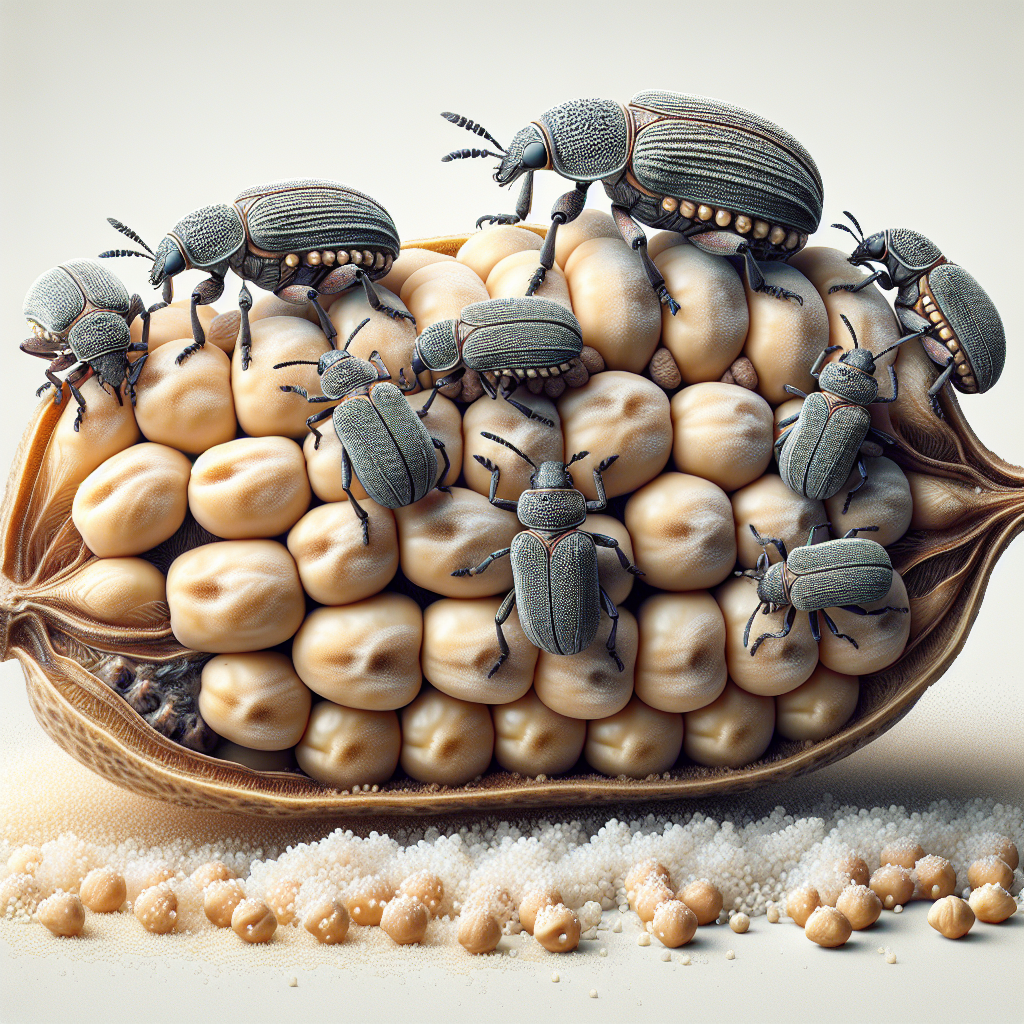
Introduction to bruchid-type storage pests
Bruchid-type storage pests, commonly known as bean weevils, cowpea weevils, or seed beetles, belong to the family Bruchidae and represent one of the most destructive groups of post-harvest insects in global agriculture. These pests primarily target legumes such as chickpeas, lentils, peas, and other pulses, as well as certain cereal grains like cowpeas and mung beans. Unlike pantry pests that feed on processed foods, bruchids are specialists in infesting whole dry seeds during storage, making them a nightmare for farmers, seed savers, and food processors in tropical and subtropical regions.
Adult bruchids are small (2-4 mm), reddish-brown to black beetles with pronounced humps on their thoraxes, giving them a distinctive 'bruchid' appearance. Females lay 50-150 eggs on the surface of seeds, and once hatched, the legless, white larvae bore into the seed, feeding on the cotyledon and endosperm. This internal feeding reduces seed weight by up to 50%, lowers germination rates to near zero, and leaves characteristic emergence holes (1-2 mm) in infested grains upon adult emergence. Economic losses from bruchids can exceed 30-100% in poorly managed storage, particularly in developing countries where smallholder farmers store grains for extended periods without hermetic protection.
These pests thrive in warm climates (25-35°C) and high humidity (>60% RH), with rapid population growth—complete lifecycle in 3-6 weeks under optimal conditions. Unlike weevils from the Curculionidae family, bruchids do not fly well but spread easily via infested seeds in trade, markets, and seed exchanges. Early detection and integrated management are critical to prevent infestations from escalating into total crop loss. For more on related storage threats, see the Bruchids (pest) wiki page.
Identifying Symptoms & Damage
Recognizing bruchid infestations early is essential for minimizing damage. Initial signs are subtle: look for tiny, pearly-white eggs (0.5 mm) glued to seed surfaces, often in crevices or hilum areas. Within 4-7 days, small entry holes appear as first-instar larvae penetrate, though these are hard to spot without magnification.
As larvae develop (2-4 weeks), seeds show no external changes but become hollowed out internally. Infested seeds rattle when shaken, lose weight, and may develop a musty odor from frass (insect waste). Adult emergence creates clean, round exit holes (1-2 mm diameter) with raised edges, often with a small 'plug' of seed material. Heavily infested lots have 10-50% of seeds with holes, powdery frass at the bottom of storage bags, and live adults crawling on surfaces.
Damage extends beyond weight loss: nutritional quality plummets (protein degradation by 20-40%), germination viability drops to <5%, and secondary fungal infections like Aspergillus flourish in damaged seeds, producing aflatoxins. Differentiate from other storage pests like Storage Beetles (pest) (which leave irregular holes) or rice weevils (visible snouts). Use a float test: infested seeds float in water due to internal voids. Magnify under 10x to confirm larvae or pupae inside split seeds.
Lifecycle and Progression of bruchid-type storage pests
Bruchids undergo complete metamorphosis: egg, larva, pupa, adult. Females oviposit 3-7 eggs per seed, preferring undamaged, mature ones. Eggs hatch in 4-8 days into mobile first-instar larvae that bore in immediately.
Larval stage (4 instars, 2-4 weeks) is destructive: larvae sculpt a feeding chamber, consuming 70-90% of seed contents before pre-pupal wandering. Pupation occurs inside the seed (3-7 days), followed by adult emergence through a self-made hole. Adults live 7-20 days, mating immediately; no feeding required post-emergence, but they may chew slight depressions on seeds for new oviposition.
Generations overlap rapidly: 4-12 per storage season. Diapause (dormancy) occurs in cool (<15°C) or dry conditions, allowing survival in seeds for 1-2 years. Progression: fresh harvest (low risk), 1-2 months storage (first eggs), 2-4 months (peak emergence), long-term (total loss). Monitor with pheromone traps or seed sampling every 2 weeks. Lifecycle accelerates at 30°C/70% RH (25 days total) vs. 20°C (60+ days).
Environmental Triggers & Risk Factors
Bruchids explode in warm (25-35°C), humid (>60% RH) storage lacking ventilation. Poor sanitation—spilled grains, unclean bins—provides breeding sites. Risk factors include: storing unthreshed pods/seeds, high-moisture grains (>12%), inadequate drying post-harvest, and mixing old/new lots.
Geographic hotspots: tropics/subtropics (Africa, Asia, Latin America), but temperate warehouses suffer via imports. Field infestations start late-season on maturing pods, carrying over to storage. Cross-infestation from soybeans or peanuts lots. Triggers: temperature spikes >28°C, monsoon humidity, overcrowding bags. Vulnerable storage: gunny sacks, open cribs vs. hermetic PICS bags or metal silos.
Organic Control & Treatment Plans
Organic management emphasizes prevention over cures, using IPM: sanitation, physical barriers, biologicals, and approved botanicals. Immediate Infestation Response:
- Isolate infested lots.
- Sun-dry seeds (50-60°C, 6-8 hours) to kill all stages (e.g., solarization in black plastic).
- Mechanical sieving/aspiration to remove adults/eggs.
- Heat treatment: 55°C for 1 hour in ovens.
Biological Controls: Introduce Bruchid parasitoids like Anisopteromalus calandrae (80% mortality). Neem leaf powder (5-10% w/w) or oil (1%) repels oviposition (90% reduction). Diatomaceous earth (DE, 1-2 g/kg) abrades larvae, causing 95% mortality.
Treatment Protocol:
- Week 1: Clean + DE application.
- Week 2: Monitor traps; add neem if eggs seen.
- Ongoing: Rotate stacks for airflow.
For deeper strategies, check Spring Pest Patrol: Organic AI Strategies to Shield Your Crops from Common Invaders. Avoid synthetics like phosphine (fumigant) for organic certification.
Preventing bruchid-type storage pests in the Future
Prevention is 90% of control. Harvest/Pre-Storage: Dry to <10% moisture, thresh cleanly, winnow debris. Use clean, raised platforms.
Storage Best Practices: Hermetic bags (PICS, AgroZ), metal drums with ash layer. Intercrop storage with repellents like thyme or black pepper. Temperature management: cool (<15°C) or hot (>40°C) storage.
Monitoring: Pheromone traps (20/trap/month), seed sampling (10% lots biweekly). Variety resistance: choose bruchid-tolerant cultivars like Blackeye cowpea. Rotate storage sites, fumigate empties with lime. Long-term: integrated farm hygiene reduces field carryover by 70%.
Crops Most Affected by bruchid-type storage pests
Bruchids devastate pulses: cowpea (Callosobruchus maculatus primary), mung bean (C. chinensis), chickpea (C. chinensis), pigeonpea, lentil, soybean, peanut. Cereals like chickpeas (up to 40% loss), lentils, peas. Lesser: adzuki, black gram. Global impact: 10-20% annual pulse losses. Protect high-value Kabuli Chickpeas and Desi Chickpeas first.