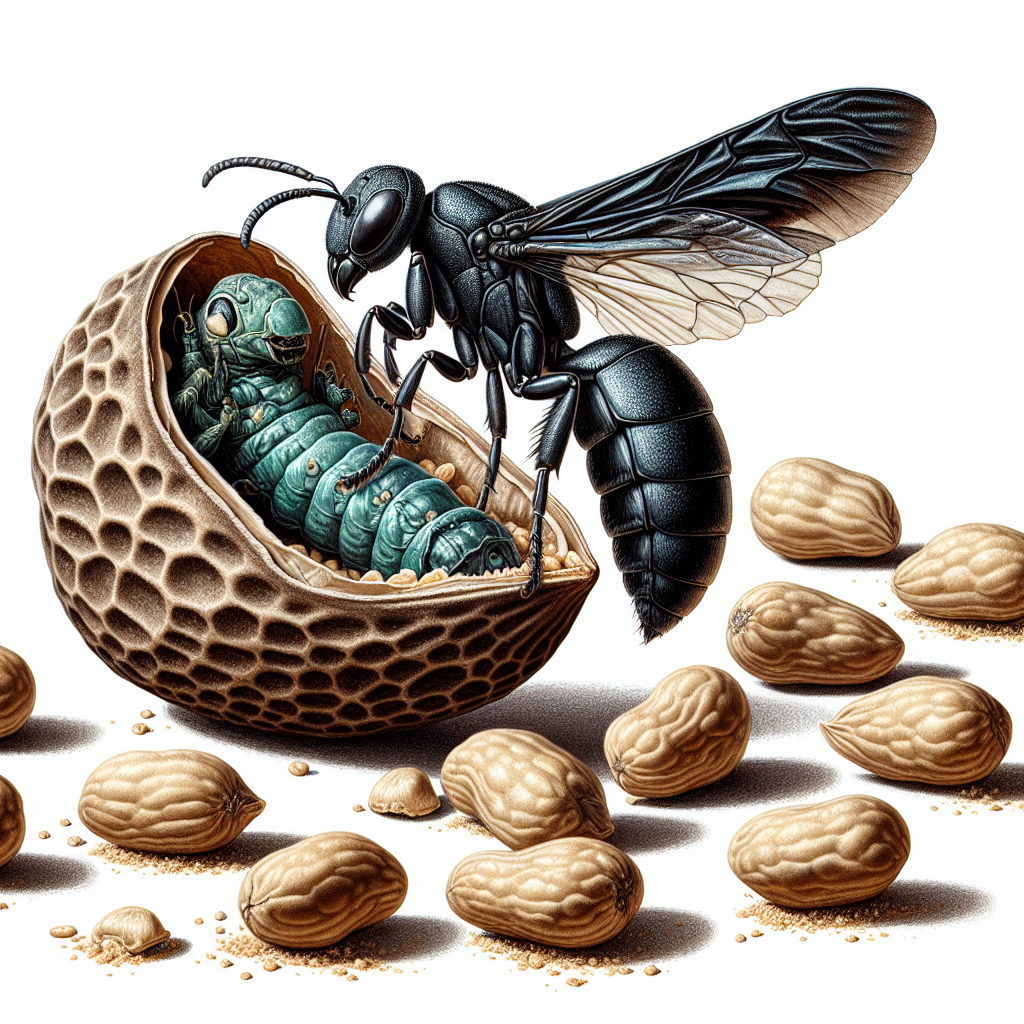
Introduction to Bruchid parasitoids
Bruchid parasitoids are a group of tiny, beneficial insects belonging primarily to the families Pteromalidae, Eulophidae, and Braconidae within the order Hymenoptera. Unlike their hosts, the destructive Bruchids, these parasitoids play a crucial role in integrated pest management (IPM) by attacking the larval stages of bruchid beetles. Common species include Dinarmus basalis (a pteromalid wasp), Anisopteromalus calandrae, and Lariophagus distinguendus, which are widely studied for their efficacy in controlling seed beetles in stored grains.
These parasitoids are solitary or gregarious endoparasitoids, meaning they develop inside the host larva, eventually killing it. They are particularly valuable in organic farming and small-scale agriculture where chemical insecticides are avoided. Native to tropical and subtropical regions, they have been introduced globally for biological control programs targeting pests like the cowpea weevil (Callosobruchus maculatus) and azuki bean weevil (Callosobruchus chinensis). Their use reduces post-harvest losses, which can exceed 20-30% in legume crops without intervention. For more on bruchid hosts, see our detailed guide on Spring Pest Patrol: Organic AI Strategies to Shield Your Crops from Common Invaders.
Understanding bruchid parasitoids is essential for farmers growing pulses and legumes. These wasps are host-specific, posing no threat to beneficial insects or humans, and thrive in warm, humid storage conditions mimicking their natural habitats. Successful deployment can cut bruchid populations by up to 90% within generations, promoting sustainable agriculture.
Identifying Symptoms & Damage
Bruchid parasitoids themselves cause no direct damage to crops; rather, their presence indicates successful control of bruchids. To diagnose their activity, look for indirect signs in infested seeds. Healthy bruchid-infested seeds show round emergence holes (2-3mm) from adult beetles, powdery frass, and shriveled, hollowed-out seeds. In contrast, parasitized seeds exhibit smaller, irregular 'parasitoid emergence holes' (0.5-1mm), often with a neat, star-shaped tear, and minimal frass.
Dissect affected seeds under magnification: parasitized larvae appear mummified (brown, shrunken), with tiny wasp pupae or adults inside. Adult parasitoids are 1-2mm long, metallic black or bronze, with elongated abdomens and reduced wings. Monitor storage bins for increased wasp activity—hundreds buzzing around seeds signal heavy parasitism.
Damage progression differs: untreated bruchid infestations lead to 100% seed loss in 3-6 months, while parasitoid presence halts this, preserving seed viability. Differentiate from other storage pests like Storage Beetles by host specificity—parasitoids target only bruchids. Early detection via seed sampling (10% of lot) prevents outbreaks. Symptoms peak in warm storage (25-35°C), with parasitoids reducing F1 bruchid generation by 70-95%.
Lifecycle and Progression of Bruchid parasitoids
The lifecycle of bruchid parasitoids is tightly synchronized with their bruchid hosts, typically spanning 14-30 days depending on temperature (optimal 28-32°C). Adult females (1-3mm) emerge from seeds, mate within hours, and seek host larvae via vibratory cues and kairomones. They drill through seed coats using ovipositors, laying 20-50 eggs per female inside late-instar bruchid larvae.
Eggs hatch in 1-2 days into mobile first-instar larvae that feed on host hemolymph, secreting venom to suppress immunity. Development proceeds through 3-5 instars (7-14 days), culminating in pupation within the mummified host. Adults eclose, chewing exit holes and repeating the cycle. Multiple parasitoids can develop per host in gregarious species like A. calandrae.
Progression varies: under 20°C, diapause occurs; above 35°C, mortality rises. One generation aligns with bruchid's 25-day cycle, yielding 10-20x progeny amplification. In storage, 1-5 parasitoids per 100 seeds can eradicate infestations in 2-3 months. Track via trap counts or seed incubation tests.
Environmental Triggers & Risk Factors
Bruchid parasitoids flourish in 25-35°C and 60-80% RH, mirroring bruchid preferences, making legume storage bins ideal. Triggers include host availability—infested seeds release attractants drawing females from afar. Poor sanitation (spilled grains) and high seed moisture (>12%) boost populations, as do minimal air circulation fostering humidity.
Risk factors for low efficacy: temperatures below 20°C slow development; pesticides like phosphine kill adults; extreme dryness (<40% RH) desiccates eggs. Overcrowded storage favors competition from hyperparasitoids. Introduce via 'inoculation' of 5-10% infested seeds with mummies. Crop residues harboring bruchids (Chickpeas) amplify natural spread. Monitor with pheromonal traps for peaks post-harvest.
Organic Control & Treatment Plans
Leverage bruchid parasitoids as cornerstone of organic IPM. Plan 1: Inoculative Release—Collect mummies from prior infestations (1 mummy/10 seeds), place in ventilated bins at 28°C. Expect 80% control in 60 days. Plan 2: Augmentative—Rear D. basalis on lab hosts, release 500-1000 adults/ton seeds weekly.
Combine with hermetic bags (PICS) enhancing survival by excluding oxygen. Solarization (sun-bagging seeds 5 days) synchronizes host vulnerability. Botanicals like neem oil (0.5%) repel bruchids without harming wasps. Monitor efficacy: <5% emergence after 90 days signals success. For broader strategies, check Bruchids. Avoid synthetics; use diatomaceous earth barriers.
Integrated Plan: Week 1: Clean storage, inoculate. Week 4: Scout, top-up releases. Month 3: Sieve mummies for next cycle. Yields 95% seed protection organically.
Preventing Bruchid parasitoids in the Future
Prevention focuses on harnessing, not eradicating, these allies. Maintain clean storage: sieve residues, use raised platforms. Time harvests to avoid peak bruchid flights (monsoon ends). Rotate varieties resistant like Lentils (ICPL 87119). Hermetic storage preserves parasitoid banks.
Annual inocula from culture collections ensure continuity. Educate on identification to avoid mis-spraying. Long-term: Plant trap crops near stores. Climate control (fans, desiccants) stabilizes conditions. Scout monthly; thresholds <2% infestation trigger boosts. This sustains populations, minimizing future bruchid risks.
Crops Most Affected by Bruchid parasitoids
Bruchid parasitoids target legumes via their bruchid hosts, protecting key crops. Primary: cowpea (75% losses prevented), mung bean, Kabuli Chickpeas, Desi Chickpeas, pigeon pea, Soybeans, black gram, adzuki bean, Peas, lentils, faba bean. Stored grains like maize occasionally host cowpea bruchids.
Global impact: Africa/Asia pulses (500M tons/year). Varieties: Black-eyed pea, green gram. Protect Peanuts from lesser bruchids. Efficacy highest in tropical small farms storing on-farm.