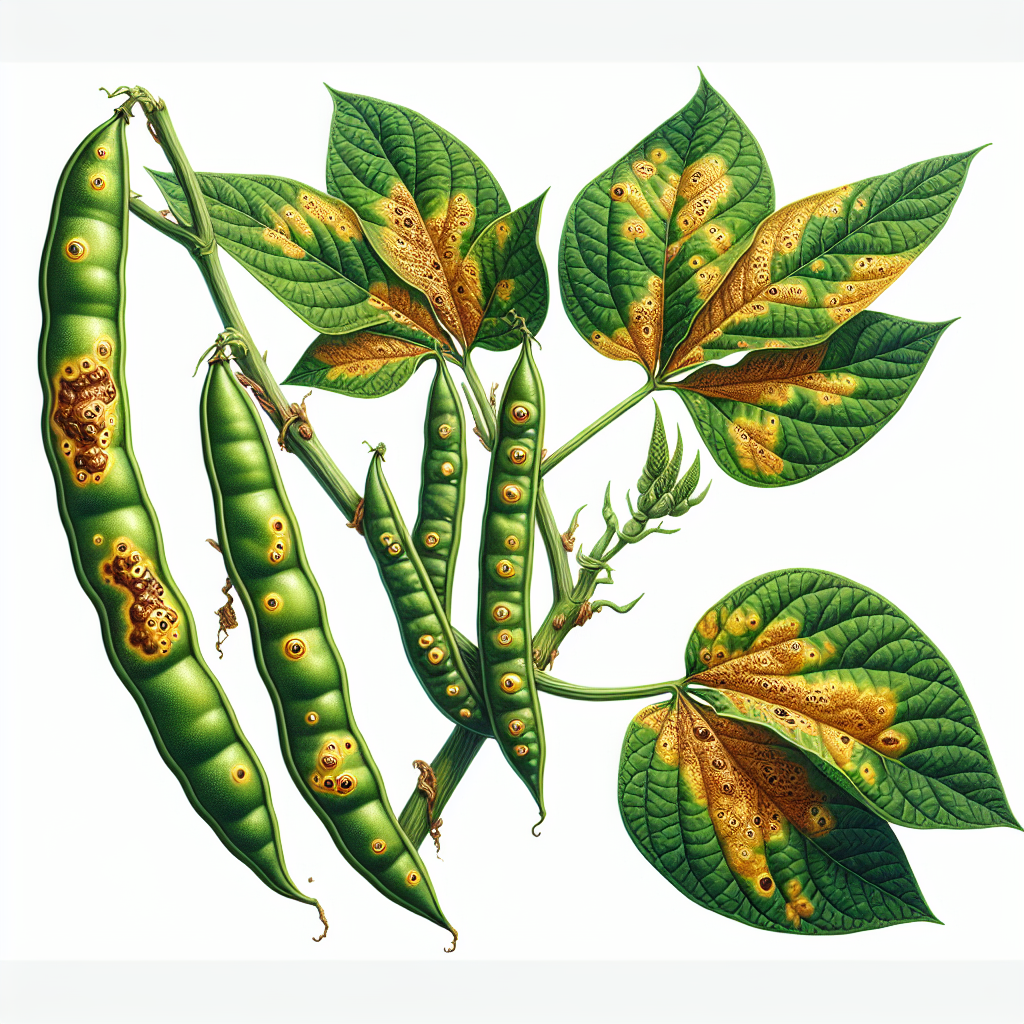
Introduction to Common blight
Common blight, caused by the bacterium Xanthomonas axonopodis pv. phaseoli (formerly Xanthomonas campestris pv. phaseoli), stands as one of the most destructive foliar diseases impacting legume crops worldwide, particularly common beans (Phaseolus vulgaris). First identified in the early 20th century, this pathogen poses a significant threat to small farms and commercial operations alike, potentially causing yield losses of 20-100% under favorable conditions. The disease manifests as angular, water-soaked spots on leaves that evolve into necrotic lesions, severely compromising photosynthesis and pod quality. Unlike fungal blights, common blight is purely bacterial, making it responsive to specific cultural and organic controls rather than broad-spectrum fungicides.
Farmers often confuse it with halo blight due to similar symptoms, but common blight lesions lack the pronounced yellow halo and produce a sticky exudate under humid conditions. Global incidence peaks in tropical and subtropical regions, with major outbreaks reported in the Americas, Africa, and Asia. Economic impacts are profound, as infected pods become unmarketable, riddled with dark lesions that reduce seed quality and viability. Early detection through vigilant scouting is crucial, as the bacterium can survive in crop debris, seeds, and even volunteer plants for years. This guide equips growers with professional-grade diagnostic tools, lifecycle insights, and proven organic management strategies to safeguard yields. For small farms battling misidentification issues, tools like those in Why Misidentifying Plants Costs Small Farms Thousands - And How AI Camera Diagnosis Fixes It Fast can accelerate accurate diagnosis.
Understanding common blight's biology is key to prevention. The pathogen enters through natural openings or wounds, multiplying rapidly in warm (25-30°C), moist environments. It produces extracellular polysaccharides that form the characteristic ooze, aiding dispersal. Seed transmission rates can exceed 50% in heavily infected lots, underscoring the need for certified pathogen-free seeds. Integrated management combining sanitation, rotation, and resistant cultivars has proven most effective, reducing incidence by up to 80% in field trials.
Identifying Symptoms & Damage
Accurate identification of common blight hinges on recognizing its distinct progression across plant tissues. Initial symptoms appear 4-7 days after infection as small, water-soaked spots on the underside of lower leaves, often near veins. These lesions are angular, 1-3 mm in diameter, and translucent when held to light, turning dark brown to black as they expand to 5-10 mm. A key diagnostic feature is the yellow halo surrounding lesions on susceptible varieties, though this fades as tissue necroses.
On pods, symptoms start as greasy, olive-green spots at the hilum (seed attachment point), expanding into sunken, necrotic areas with a leathery texture. Severely infected pods may split, exposing seeds coated in bacterial slime. Stems develop long, irregular streaks or cankers, especially near nodes, leading to wilting and dieback. In advanced stages, systemic infection causes defoliation, with 50-80% leaf loss, stunting plants and reducing pod set by 40-70%.
Damage assessment reveals profound impacts: photosynthetic area plummets, diverting energy from pod fill to survival. Yield losses correlate directly with disease severity—mild infections (<10% leaf area) cause 10-20% loss, while severe cases (>50%) exceed 75%. Seed quality suffers, with reduced germination (down 30-50%) and market rejection due to blemishes. Differentiate from Alternaria leaf spot by the angular shape and lack of concentric rings; lab confirmation via bacterial streaming from lesions in water confirms X. axonopodis.
Scout weekly during warm, rainy periods, focusing on lower canopy. Use a 10x hand lens to spot bacterial ooze. Threshold for action: 5-10% leaf area affected. Document with photos for tracking; integrate with digital tools for precision ag on small scales.
Lifecycle and Progression of Common blight
The lifecycle of Xanthomonas axonopodis pv. phaseoli is polycyclic, with multiple infection cycles per season driven by rain splash. Primary inoculum arises from contaminated seeds (up to 70% transmission) or infected debris, where bacteria survive 1-2 years in soil or plant refuse. Upon germination, seedborne bacteria colonize cotyledons, producing lesions within 5 days under optimal conditions (28°C, 90% RH).
Secondary spread occurs via wind-driven rain, overhead irrigation, or tools, with bacteria exuding from lesions in sticky masses for easy dispersal up to 10 meters. Incubation averages 4-10 days, accelerating in free water on leaves (minimum 6 hours leaf wetness). Peak activity aligns with flowering and pod fill, when dense canopies retain moisture.
Progression phases: latent (1-4 days), symptomatic (days 5-14, lesion expansion), sporulation (ooze production), and senescence (tissue death). Overwintering in debris releases inoculum next season; weeds like cowpeas (not listed, but similar legumes) serve as reservoirs. Two strains exist: fuscans (brown pigment) and non-fuscans, with fuscans more aggressive. Disease gradients form downwind of inoculum sources, emphasizing border sanitation.
Environmental Triggers & Risk Factors
Common blight epidemics require the triad: susceptible host, virulent pathogen, and conducive environment. Optimal temperatures (24-32°C) and leaf wetness (>8 hours daily) drive 90% of outbreaks. High humidity (>85%) and rainfall (>50 mm/week) splash bacteria upward, infecting upper canopy. Poor air circulation in dense plantings exacerbates this, with row spacing <50 cm doubling incidence.
Risk factors include overhead irrigation (increases splash by 5x), acidic soils (pH <6), high nitrogen fertility (lush growth retains moisture), and volunteer plants harboring inoculum. Contaminated seeds from endemic areas pose 80% primary risk. Crop rotation <2 years with non-legumes fails to reduce soil survival. Monocultures of susceptible pinto beans amplify spread. Early planting into cool, wet springs delays but intensifies later cycles.
Climate change extends seasons, boosting risk in temperate zones. Monitor forecasts; avoid working wet foliage.
Organic Control & Treatment Plans
Organic management emphasizes prevention but includes curative options. Cultural: Plant certified disease-free seeds; rogue volunteers. Use 3-year rotation with cabbage or corn. Space rows 60-75 cm for airflow; stake for drying. Avoid overhead water; drip irrigate.
Biological: Apply Bacillus subtilis or Pseudomonas fluorescens (OMRI-listed) at 7-day intervals pre-symptom onset. Trichoderma spp. suppress soil survival.
Organic Sprays: Copper hydroxide or oxychloride (e.g., Cueva, 0.5-1 gal/acre) every 5-7 days, up to 4 applications. Add humic acids for adhesion. Timing: first bloom through pod fill. Efficacy: 60-80% reduction.
Resistant Varieties: Choose 'Sierra, 'Pinto Gold,' or 'Black Magic'—50% less severe.
Sanitation: Remove debris post-harvest; till lightly. Disinfect tools with 10% bleach.
Integrated Plan: Scout weekly; spray at 5% threshold. Yields recover 30-50%.
Preventing Common blight in the Future
Long-term prevention builds resilient systems. Select resistant cultivars; test seeds via grow-out or PCR. Implement 3-4 year rotations excluding legumes. Optimize fertility: balanced NPK, avoid excess N. Enhance airflow: wide rows, pruning. Mulch suppresses splash.
Site selection: well-drained, sunny fields away from last year's legumes. Cover crops like clover build soil health without hosting. Monitor with sticky traps for vectors; use weather-based models (e.g., 12-hour wetness trigger). Post-harvest: hot compost debris (>60°C). For small farms, Soil Health Mastery: 5 Proven Strategies for Small Farms to Build Fertile Ground Without Breaking the Bank aids resilient soils. Annual planning reduces risk 70%.
Crops Most Affected by Common blight
Common blight primarily targets Phaseolus species: snap beans, dry beans (kidney bean, pinto bean, black beans), lima beans. Cowpeas, mung beans secondary. Tomatoes, peppers rarely affected. Global hotspots: bean belts in Mexico, Brazil, East Africa. Losses highest in dry beans (40% avg.).