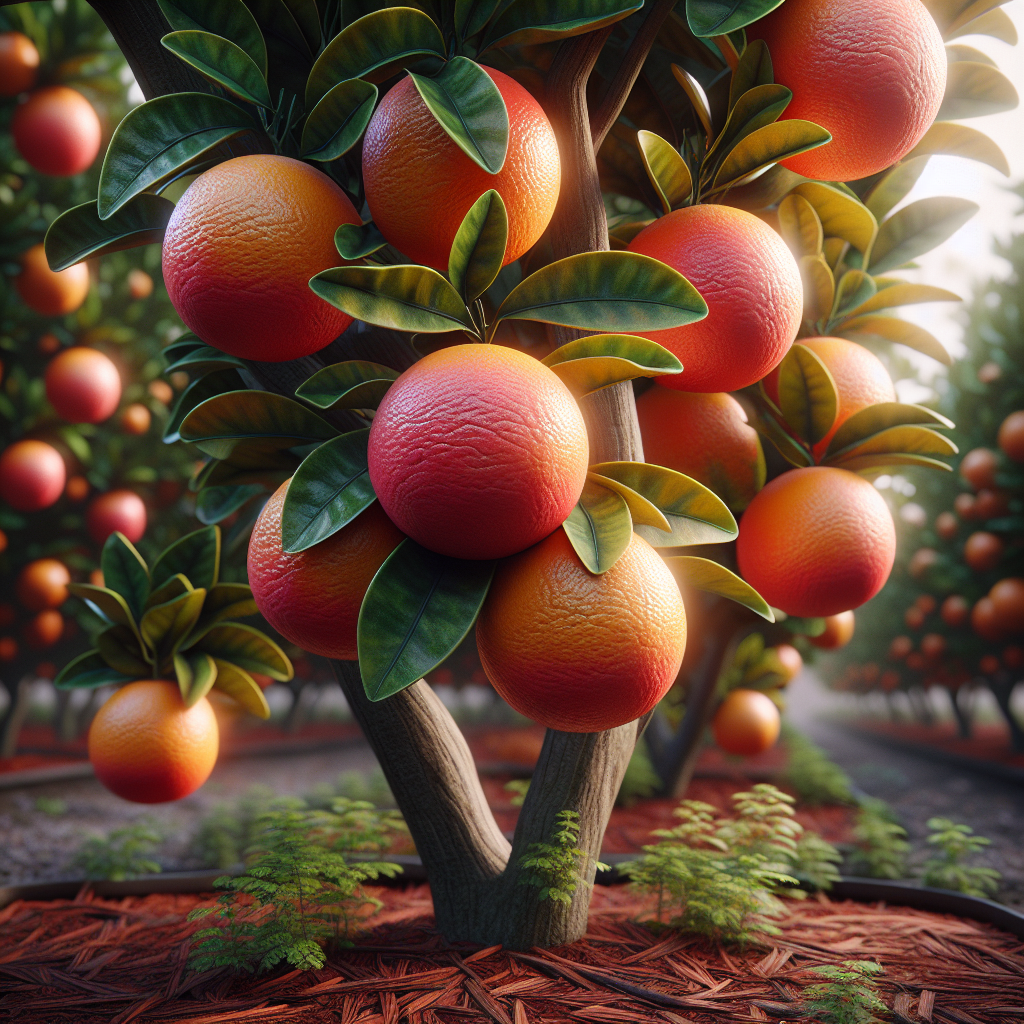
Introduction to Blood Orange (Sanguinelli)
A classic blood orange of Spanish origin, this cultivar is especially valued for its strong internal pigmentation, attractive rind blush, and refined flavor that combines sweet orange sugars with berry-like notes and a faint tart edge. It is generally considered a late-ripening blood orange, often maturing after many standard sweet oranges, which makes it useful for extending the citrus harvest window.
The red pigmentation comes from anthocyanins, the same class of compounds found in blueberries and red grapes, but in blood oranges these pigments develop most reliably when fruit matures under cool night temperatures and mild daytime warmth. That means growers in hot tropical lowlands may get excellent orange flavor yet poor blood coloration, while growers in Mediterranean and subtropical winter-cool regions usually see the best expression.
'Sanguinelli' is commonly grown as a grafted tree rather than from seed because seedlings do not reliably reproduce the exact fruit quality, vigor, or pigmentation of the parent. In commercial and serious home orchards, success depends less on simply keeping the tree alive and more on managing rootstock choice, irrigation balance, canopy light, crop load, and harvest timing so the fruit develops high sugar, dense juice, and full color without granulation or rind breakdown.
For growers new to citrus generally, it helps to understand the broader cultural needs of orange trees, but this cultivar deserves special attention because blood coloration and flavor are strongly influenced by winter conditions, nutrition, and ripening patience.
Botanical Profile of Blood Orange (Sanguinelli)
This cultivar belongs to the sweet orange group within Rutaceae, the citrus family. Like other sweet oranges, it is an evergreen broadleaf fruit tree with glossy, gland-dotted leaves, fragrant white blossoms, and a rounded canopy that becomes dense with age if not pruned for light penetration.
Key traits include:
- Species group: sweet orange hybrid complex, usually classified as Citrus × sinensis
- Cultivar: 'Sanguinelli'
- Growth habit: medium-sized evergreen tree, typically 3-5 m on dwarfing to semi-dwarf rootstocks and 5-7 m or more on vigorous rootstocks in-ground
- Thorniness: often lightly thorned when young; thorn production usually decreases as the tree matures
- Flowering season: spring in most climates, though light off-bloom flowering can occur under stress or irregular weather
- Pollination: largely self-fertile, so a single tree can set fruit without a pollinizer
- Fruit character: medium-sized round to slightly oval fruit, orange rind with red blush, flesh variably to strongly blood-red depending on climate
Compared with some other blood oranges, 'Sanguinelli' is often appreciated for dependable cropping, good juice quality, and strong pigmentation under suitable conditions. The flesh tends to be richly colored later in the season, and the rind may also show external red marbling or blush. Fruit generally holds on the tree reasonably well, but overholding can reduce acidity, soften texture, and invite rind disorders in wet or fluctuating weather.
Botanically, citrus roots are shallow and fibrous rather than deeply taprooted. Most feeder roots occupy the upper 30-60 cm of soil, with the highest density often in the top 20-30 cm where oxygen is available. This is why drainage, mulching, and careful irrigation matter so much. Saturated soil rapidly deprives roots of oxygen, encouraging Phytophthora and root decline.
Soil, pH, and Climate Requirements for Blood Orange (Sanguinelli)
This cultivar performs best in deep, well-drained loam or sandy loam with moderate water-holding capacity and excellent aeration. Ideal soils allow water to infiltrate quickly yet retain enough moisture that the root zone does not swing from saturation to drought in just a few days. Heavy clay can work only if planted on mounds or berms and managed with exceptional drainage. Where water stands for more than 24 hours after rain, citrus decline is likely.
Target soil conditions:
- Texture: sandy loam to loam preferred
- Effective depth: at least 90 cm, preferably more
- Drainage: rapid to moderate, never stagnant
- Organic matter: 2-5% is beneficial; excessive raw organic matter packed into planting holes can cause settling and root problems
- pH: ideal 6.0-7.0; acceptable roughly 5.8-7.5
At pH above about 7.5, iron, manganese, and zinc deficiencies become more common, especially on calcareous soils. Symptoms include interveinal chlorosis on young leaves, reduced vigor, small leaves, and poor fruit set. At pH below 5.5, aluminum toxicity and nutrient imbalance can occur, and calcium or magnesium may become limiting.
Climate is the defining factor for premium blood orange quality. 'Sanguinelli' prefers:
- Mild, frost-limited winters
- Warm to hot summers
- Cool nights during fruit maturation
- Low to moderate humidity if possible
- Full sun, at least 8 hours daily
Ideal temperature ranges are about 24-32°C by day during active growth, with winter maturation enhanced by nights around 4-10°C, provided hard freezes do not occur. Light cold stimulates anthocyanin production, but severe cold damages leaves, blossoms, and fruit. Young trees may be injured near -2°C; mature trees can sometimes tolerate brief dips slightly lower, but fruit and tender shoots remain vulnerable.
Heat above 38°C can cause leaf curl, fruit sunburn, blossom drop, and temporary growth pauses, especially when combined with hot wind. In arid climates, whitewashing exposed scaffolds and maintaining even soil moisture reduce stress.
Wind exposure matters. Persistent wind scars fruit, increases evapotranspiration, and can distort canopy structure. If your site is breezy, establish windbreaks at a distance that reduces turbulence without excessive shade. For broader fertility principles, see soil health strategies.
Step-by-Step Planting & Propagation
Use grafted nursery trees from reputable citrus suppliers. A healthy tree should have a straight trunk, a clearly visible graft union above the soil line, no circling roots so severe that the root ball is woody and pot-bound, and leaves free of canker lesions, scale buildup, or nutrient chlorosis.
Site preparation
Choose the warmest full-sun position available, ideally with good cold-air drainage. Avoid low pockets where frost settles. Test soil pH and drainage before planting. A practical drainage test is to dig a hole 45 cm deep, fill it with water, let it drain once, then refill. If water remains after 18-24 hours, drainage is too poor for standard in-ground citrus without berming or major remediation.
Planting steps
- Plant in spring after frost risk has passed, or in warm-winter climates in early autumn when root growth can continue before summer heat.
- Clear a vegetation-free circle 1-1.5 m wide to reduce competition from turf.
- Dig a hole only as deep as the root ball and 2-3 times as wide. Do not dig excessively deep.
- Remove the tree from the container and gently tease apart circling roots. If roots are densely spiraled, make 3-4 shallow vertical slices through the outer root mass.
- Set the tree so the top of the root ball sits 2-5 cm above surrounding soil grade. This slight elevation helps prevent crown rot.
- Keep the graft union well above soil and mulch level.
- Backfill with native soil rather than heavily amended soil, which can create a bathtub effect.
- Water thoroughly to settle soil and eliminate air pockets.
- Apply 5-8 cm of mulch over the root zone, keeping it at least 10-15 cm away from the trunk.
Spacing
- Dwarfing rootstock: 2.5-3.5 m between trees
- Semi-dwarf: 4-5 m
- Vigorous standard: 5-7 m
Propagation
Commercially, propagation is done by budding or grafting onto selected rootstocks. Rootstock influences disease tolerance, cold hardiness, tree size, salinity tolerance, and fruit quality. Sour orange, trifoliate hybrid, and citrange-type rootstocks have been used historically depending on region, though local disease pressures should guide selection.
Seed propagation is not recommended for true-to-type production. Seedlings are variable and slower to bear, often taking many more years to fruit than grafted trees.
Container planting
'Sanguinelli' can be grown in large containers, especially on dwarfing rootstock. Start with at least a 50-70 L container and eventually move to 95-150 L if long-term culture is intended. Use a sharply draining citrus mix containing bark fines, coarse sand or pumice, and a stable organic fraction. Container citrus dries faster, accumulates salts more readily, and needs more frequent feeding than in-ground trees.
Care & Maintenance regimes for Blood Orange (Sanguinelli)
Irrigation should aim for evenly moist but never waterlogged soil. For in-ground trees, the goal is to moisten the active root zone deeply, then allow the upper few centimeters to dry slightly before watering again. Young trees often need watering 1-3 times weekly depending on soil and weather; mature trees may need deep irrigation every 7-14 days in warm seasons, more often in sandy soil and less often in loam.
A practical moisture target is this: at 15-20 cm depth, soil should feel cool and lightly moist, holding shape when squeezed but not releasing water. If it is muddy, slimy, sour-smelling, or the tree shows yellowing leaves with little new growth, overwatering is likely. Overwatered citrus may also drop leaves that are still green, develop twig dieback, and show algae or fungal growth at the soil surface. Underwatered trees show leaf folding, dull gray-green foliage, smaller fruit, premature fruit drop, and dry soil that crumbles at root depth.
Critical irrigation periods include:
- Spring flush and flowering
- Early fruit set
- Summer fruit sizing
- Late maturation, where moderate consistency improves juice content and reduces splitting
Avoid severe drought followed by heavy irrigation, as that fluctuation can increase fruit split, coarse peel, and stress-induced drop.
Fertilization
Citrus is a relatively heavy feeder, especially for nitrogen, but balanced feeding matters more than simply applying more fertilizer. Use a citrus-specific fertilizer with nitrogen plus magnesium and micronutrients. Young trees may receive light monthly feedings during active growth, while mature trees are often fertilized 3-4 times per year depending on region.
General annual nitrogen guidance for in-ground trees:
- Year 1: roughly 0.1-0.2 kg actual N per tree per year split into 4-6 applications
- Year 2-3: 0.2-0.4 kg actual N per tree per year
- Mature bearing trees: often 0.5-1.0 kg actual N per tree per year depending on canopy size, yield, and soil fertility
Too much nitrogen causes rank vegetative growth, softer rind, delayed color, lower sugar concentration, and higher susceptibility to some pests. Too little leads to pale foliage, reduced canopy density, small fruit, and weak set.
Micronutrient sprays containing zinc, manganese, and boron can be valuable where deficiency is common. Iron chelates may be needed in alkaline soils. Leaf analysis is the professional standard for correcting nutrition precisely.
Pruning
Pruning needs are modest. Remove:
- Dead, diseased, or broken wood
- Suckers arising below the graft union
- Crossing or inward-growing shoots that block light
- Low branches that drag fruit onto soil
The best time is after harvest or in mild spring weather before strong flushes. Avoid heavy pruning because fruit is borne on the outer canopy and citrus does not respond well to aggressive cuts. Excessive opening can expose limbs to sunburn.
Mulching and weed control
Maintain mulch in a broad ring out toward the drip line. Wood chips, composted bark, or leaf mold work well. Mulch moderates root temperature, conserves moisture, and supports soil biology, but keep it off the trunk to prevent collar rot. Eliminate grass directly under the canopy because turf competes strongly for nitrogen and water.
Fruit thinning and crop load
Blood oranges usually do not require routine thinning, but if a young tree sets an excessive crop, removing some fruit improves branch structure and future vigor. On newly planted trees, remove most or all fruit in the first year so energy goes to root and canopy establishment.
Pests, Diseases & Organic Management
Key citrus pests include aphids, citrus leafminer, scale insects, mealybugs, mites, whiteflies, thrips, and ants that protect sap-feeding pests. In some regions, citrus psyllid is the most serious concern because it vectors huanglongbing, also called citrus greening, a devastating disease.
Common pests
aphids attack tender flush, curling leaves and producing honeydew. Strong water sprays, beneficial insects, and avoiding excess nitrogen help control them.
Leafminer creates serpentine trails in young leaves, especially on summer flushes. Damage is mostly cosmetic on mature trees but can weaken young trees. Protect only tender flush if pressure is high; neem or spinosad timed to new growth may help, but avoid spraying open blossoms.
Scale and mealybugs cluster on stems and leaf undersides, causing sticky honeydew and sooty mold. Organic control relies on horticultural oil applied thoroughly during mild temperatures, plus ant suppression.
Spider mites thrive in hot, dusty conditions, causing stippling and bronzing. Increase humidity around the canopy when practical, wash foliage, and use horticultural oils if needed.
Diseases
Phytophthora root rot and collar rot are the biggest preventable problems. Symptoms include poor vigor, sparse canopy, yellow leaves, gum exudation near the crown, and root decay. Prevention depends on drainage, proper planting height, and avoiding trunk wetness.
Citrus canker causes raised corky lesions on leaves and fruit in regions where it occurs. Sanitation, clean nursery stock, and local regulatory compliance are critical.
Alternaria and fungal rind disorders may appear in humid or wet climates. Improve airflow, avoid overhead irrigation late in the day, and remove diseased debris.
huanglongbing (HLB) causes misshapen bitter fruit, blotchy mottled leaves, decline, and eventual tree loss. If present in your area, source certified trees, monitor psyllids aggressively, and follow all quarantine rules.
Organic management strategy
Use an integrated approach:
- Start with certified disease-free nursery stock
- Keep the canopy open enough for light and airflow
- Control ants to allow predators to suppress scale and mealybugs
- Apply horticultural oil during non-bloom periods when pest thresholds justify treatment
- Encourage beneficial habitat with thyme, yarrow, and clover nearby but not crowding the trunk
- Remove fallen diseased fruit promptly
- Sanitize pruning tools between suspect trees
Organic success in citrus depends more on prevention and monitoring than rescue spraying.
Harvesting, Curing & Optimal Storage
Harvest timing is especially important because external color alone can be misleading. Fruit may show orange-red rind blush before internal sugar-acid balance and flesh pigmentation fully develop. Sample fruit before full harvest. A high-quality 'Sanguinelli' should feel heavy for size, have good juice content, a balanced sweet-tart flavor, and internal red coloration that deepens with proper late-season maturity.
Most growers harvest with clippers rather than pulling fruit, leaving a short stem button to avoid rind tearing. Harvest only dry fruit if possible; wet harvests increase handling injury and postharvest disease risk.
Signs of readiness include:
- Fruit reaches expected size for the site and crop load
- Rind develops mature color with blush or marbling
- Juice is abundant and not sharply acidic
- Flesh shows characteristic blood coloration when cut
- Fruit detaches cleanly when clipped and handled gently
Unlike bulbs or curing crops, citrus is not truly "cured" in the traditional sense, but fruit does benefit from careful postharvest handling. Keep harvested fruit shaded immediately. Field heat accelerates moisture loss and rind collapse.
For storage:
- Ideal short-term temperature: about 5-9°C
- Relative humidity: 85-90%
- Avoid freezing and avoid storing below safe citrus thresholds for extended periods if chilling injury is a risk
- Keep fruit ventilated, clean, and unwashed until near use if storing at home
At room temperature, fruit may keep 1-2 weeks depending on harvest condition. In cold storage, well-handled fruit can last several weeks, though flavor is usually best when consumed relatively fresh. Store away from ethylene-sensitive produce only if mixed storage is unavoidable; citrus is not the strongest ethylene producer, but good produce segregation is still best practice.
If processing for juice, harvest in the cool morning and process the same day for highest aroma retention. Blood orange pigments and fresh volatile compounds are best preserved when fruit is not overheated.
Companion Planting for Blood Orange (Sanguinelli)
Useful companions around citrus are low-growing, non-competitive plants that attract beneficial insects, cover bare soil, and improve the orchard floor without creating dense humidity directly at the trunk. The best companions are usually planted in rings or strips outside the immediate crown zone, leaving at least 30-45 cm of clear space around the trunk base.
Thyme is excellent as a drought-tolerant aromatic groundcover that attracts pollinators and beneficial insects while remaining relatively low and manageable. Yarrow supports predatory insects and improves biodiversity in orchard plantings. Clover can function as a living mulch and nitrogen-contributing cover, though it must be managed so it does not compete excessively for water in young orchards.
Nasturtium can also be useful as an insectary and trap plant in mixed gardens, though it is more suitable in irrigated home orchard systems than dry commercial blocks.
Avoid heavy-feeding annuals, dense vine crops, or tall shade-casting companions directly under the canopy. Companion species should support the tree, not create root competition, rodent shelter, or a persistently damp collar zone.
A practical pattern is to maintain a mulch ring around the tree, then establish companion bands beyond that ring where drip irrigation or microsprinklers can support both the citrus and the understory without wetting the trunk excessively.