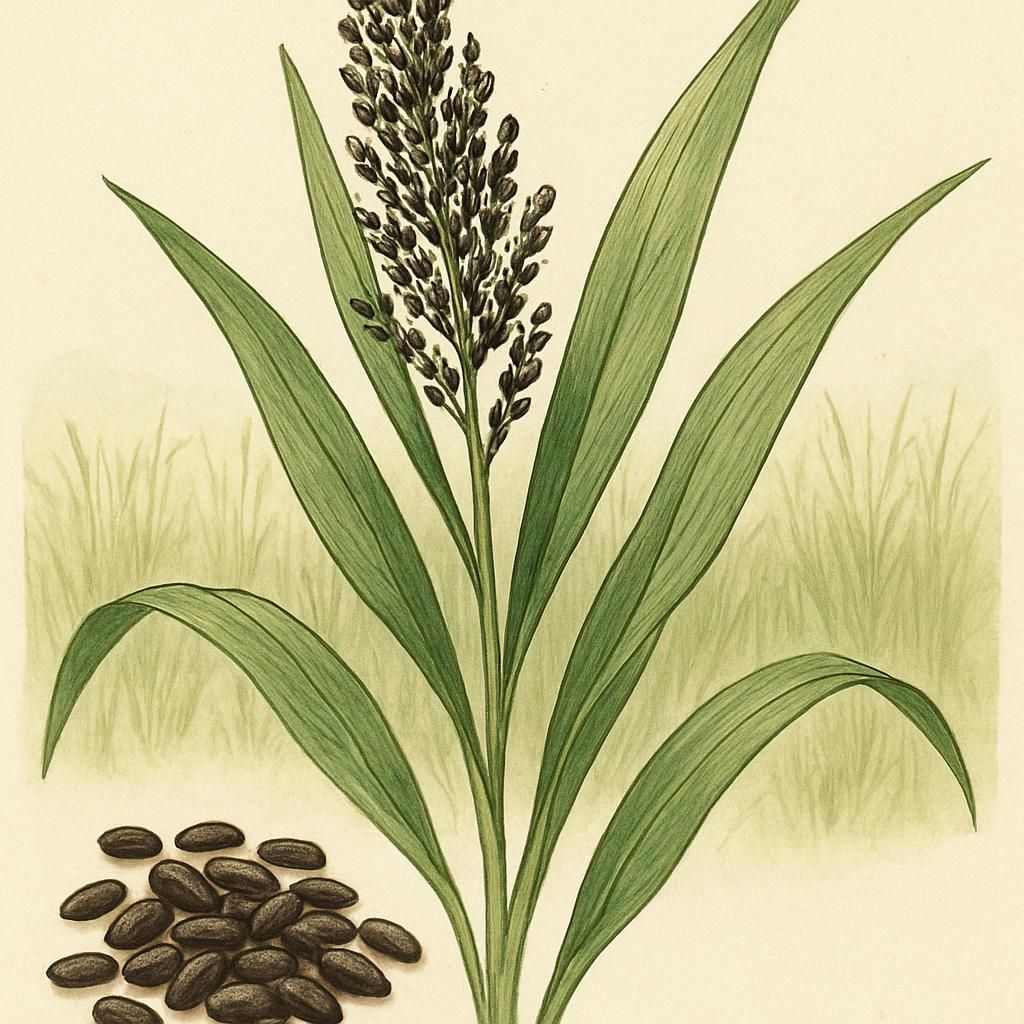
Introduction to Black Fonio
Black fonio is one of the oldest cultivated cereals in West Africa and remains especially important in marginal upland environments where rainfall is seasonal, soils are light, and farmers need a dependable grain that can mature quickly. It belongs to a group of tiny-grained millets traditionally grown in mixed subsistence systems, often on land considered too poor, too sandy, or too drought-prone for larger cereals. In many communities it is appreciated not just for survival value, but for taste, digestibility, and cultural significance in ceremonial foods.
Compared with the more widely known white fonio, black fonio is generally more restricted in distribution and often associated with higher elevations or particular ethnic farming traditions. It is usually grown as a rainfed annual, often without heavy fertilization, and it fits well into low-input systems because of its modest nutrient demand and relatively short growing cycle. For growers interested in climate-resilient grains, it occupies a similar adaptive niche to millet, though its seed is much smaller and its post-harvest handling is more exacting.
Its greatest strengths are earliness, tolerance of low fertility, and utility as a hunger-gap crop. Its greatest weaknesses are labor-intensive harvesting, easy shattering when overripe, and the challenge of threshing and cleaning the very small grains. Successful production depends less on intensive feeding and more on correct timing, firm but fine seedbed preparation, sharp weed control in the first month, and careful harvest management.
Botanical Profile of Black Fonio
This species, Digitaria iburua, is an annual grass in the Poaceae family. It is distinct from Digitaria exilis, the species commonly called white fonio. Plants are tufted and fine-stemmed, with a fibrous root system that is efficient in exploiting shallow soil moisture after early rains. Depending on moisture, fertility, and local landrace, plants typically reach about 30 to 100 cm in height, though in stressed fields they may remain shorter.
Leaves are narrow, linear, and grasslike, arising alternately along slender culms. Tillering can be strong when plant density is moderate and early moisture is adequate. The inflorescence is a digitate arrangement of narrow racemes, characteristic of the genus Digitaria, with multiple finger-like branches bearing very small spikelets. Seed color is typically darker than that of white fonio, which contributes to the common name, though exact hull and grain appearance varies by local type.
Black fonio is predominantly grown from seed and is usually direct-sown rather than transplanted. It is adapted to upland, non-flooded conditions and does not require standing water. Like other small cereals, its early vegetative stage is the most vulnerable period: seedlings are delicate, slow to dominate weeds at first, and easily lost to crusting, burial by heavy rain splash, or early competition. Once established, however, it can recover surprisingly well under intermittent dry spells.
Its life cycle is short, commonly around 90 to 130 days depending on ecotype and rainfall pattern. Some landraces are earlier, especially where farmers select for quick grain fill before the end of the rainy season. Flowering and grain ripening are influenced by day length, local temperature regime, and soil moisture during stem elongation. As with many traditional grains, field populations may not be genetically uniform; this is normal in farmer-saved seed systems and can actually improve resilience under variable weather.
Soil, pH, and Climate Requirements for Black Fonio
Black fonio performs best in well-drained, light to medium-textured soils such as sandy loams, loams, and gravelly upland soils. It is notably tolerant of relatively poor fertility, but that should not be confused with indifference to soil condition. Yield improves when the soil has enough structure for root penetration, a modest amount of organic matter, and no prolonged waterlogging. Heavy clay that seals over after rain is risky because the tiny seedlings struggle to emerge through crusted surfaces.
A practical target soil pH is 5.0 to 6.8. It will tolerate mildly acidic soils better than many demanding cereals, but strongly acidic conditions below about pH 4.8 can reduce nutrient availability and weaken establishment. In alkaline soils above pH 7.2, micronutrient lock-up may reduce vigor, especially where organic matter is low. If liming is needed, apply and incorporate it well before sowing rather than at planting.
Climate-wise, black fonio is best suited to tropical and subtropical rainfed regions with a defined wet season. Ideal temperatures for germination and growth are roughly 25 to 32°C. Germination slows in cool soil below about 20°C, and prolonged exposure to temperatures under 15°C can check growth substantially. It is not frost tolerant.
Rainfall needs are modest relative to larger cereals, but distribution matters more than total amount. A seasonal total of roughly 600 to 1000 mm is usually adequate when rains begin reliably at planting and continue through tillering and grain fill. It can produce some yield under lower rainfall if soils store moisture well and weeds are controlled, but prolonged drought during flowering sharply reduces seed set. Conversely, excessive rainfall and humid still air during maturity increase lodging, fungal pressure, and harvesting losses.
Soil moisture should stay evenly moist during establishment, not saturated. In practical field terms, the top 2 to 4 cm of soil should remain damp enough to hold together when pressed, but not sticky or anaerobic. If you squeeze a handful and water films on the surface, it is too wet. If the surface becomes powdery and pale within a day of sowing, emergence may be patchy. Once plants are established, black fonio tolerates moderate drying cycles, but repeated wilting before panicle emergence reduces tiller productivity.
Because it is usually rainfed, site choice matters. Slightly sloping uplands with good runoff control, minimal standing water, and low risk of flooding are ideal. Avoid depressions where intense rainfall accumulates. If you are improving a low-input grain system, principles from broader soil stewardship also apply; see soil health strategies for methods that improve moisture retention without making the root zone waterlogged.
Step-by-Step Planting & Propagation
Use clean, mature seed from a recent harvest. Because the grains are tiny, seed quality has an outsized effect on success. Seed lots contaminated with chaff, weed seeds, or immature grains cause uneven stands. If possible, screen seed before sowing and discard shriveled material. In traditional systems, seed is often dry-mixed with fine sand or sifted ash to improve distribution during broadcasting.
Prepare a fine, firm seedbed. This matters more for black fonio than for larger grains because seed should be placed very shallowly. Break large clods, level the field, and lightly firm the surface so seed does not sink too deeply after rain. On sloping ground, orient land preparation to reduce runoff and soil movement.
Sow at the onset of reliable rains, not after the heaviest storms have already saturated the field. The best planting window is when the soil profile has received enough moisture for germination and the forecast suggests follow-up rains within 5 to 7 days. Delayed sowing shortens the grain-filling period and exposes ripening heads to end-of-season moisture stress.
There are two common sowing methods:
- Broadcasting: Traditional and fast. Mix seed with dry sand at roughly 1:5 to 1:10 by volume for more even spread. Broadcast in two passes at right angles to reduce striping. After sowing, cover very lightly with a brush harrow or tree branch so seed sits about 0.5 to 1 cm deep.
- Drilling in rows: Better for weed control and stand management. Sow in rows 20 to 30 cm apart, with seed placed 0.5 to 1 cm deep. In drier zones, slightly wider rows can reduce competition for moisture.
Typical seeding rates vary by method and seed purity, but many growers use about 8 to 15 kg/ha in rows and 15 to 25 kg/ha when broadcasting. Very dense sowing can suppress weeds early, but it also raises lodging risk, reduces airflow, and may limit tillering. For most professional systems, a moderate stand is better than an excessively crowded one.
After sowing, avoid deep irrigation or forceful overhead watering if growing on a small scale. The seed is too light and can be displaced or buried. Instead, apply a gentle fine spray if supplemental moisture is needed. Emergence usually occurs in 4 to 10 days under warm conditions.
Propagation is by seed only; division or vegetative propagation is not used in commercial grain production. Seed priming is possible but must be handled carefully because the seed is minute. If priming is attempted, use a short soak and thorough shade-drying back to near-original moisture before sowing. Over-soaked seed clumps and is difficult to distribute evenly.
Care & Maintenance regimes for Black Fonio
The first 30 days determine most of the crop outcome. Seedlings are small and vulnerable, so weed control is the highest-priority maintenance task. Conduct the first weeding when seedlings are well rooted but before weeds exceed 5 to 8 cm tall, often around 2 to 3 weeks after emergence. A second weeding around 4 to 6 weeks after emergence is commonly needed. In row-planted fields, shallow hand hoeing or wheel-hoe cultivation is effective, but do not throw soil onto the plants. In broadcast fields, careful hand weeding is usually necessary.
Nutrient management should be conservative and balanced. Black fonio responds to fertility, but excessive nitrogen leads to lush, weak growth and lodging. On low-input fields, 2 to 5 tons/ha of well-decomposed compost incorporated before sowing is often enough to improve structure, moisture retention, and micronutrient supply. Where mineral fertilizers are used, a modest base dressing such as 20 to 40 kg/ha nitrogen, 15 to 30 kg/ha phosphorus, and 15 to 30 kg/ha potassium can be sufficient depending on soil test results. Apply most phosphorus and potassium pre-plant. Split nitrogen, giving part at planting and part at early tillering if rainfall is reliable.
Watch crop color and posture for nutrition clues. Healthy plants are upright with medium green leaves and steady tiller formation. Pale, uniformly yellow-green seedlings may indicate nitrogen shortage, especially on sandy soils after heavy rain. Purpling or stunting can suggest phosphorus limitation in cool or highly acidic soils. Dark lush leaves with soft stems indicate too much nitrogen.
Water management depends on scale. In rainfed fields, conserve moisture through early weed control and organic matter improvement rather than frequent irrigation. In small plots where irrigation is available, keep the root zone lightly but consistently moist through establishment. A useful target is to moisten the top 10 to 15 cm of soil and then allow the upper few centimeters to begin drying before watering again. Do not maintain permanent saturation. Signs of overwatering include yellowing lower leaves, a sour smell in the soil, poor tillering, stem softness, and algae or moss on the surface. Signs of underwatering include bluish-green leaf dullness, leaf rolling in midday that does not recover by evening, and shortened panicles.
Lodging prevention is essential near maturity. Avoid excessive fertility, especially late nitrogen. Exposed windy sites on fertile ground may benefit from slightly lower seeding rates and moderate spacing to encourage sturdier stems. If heavy storms are expected as heads fill, fields with uneven fertility often lodge in patches first; note these areas for future soil balancing.
Crop rotation improves performance. Do not grow black fonio repeatedly on the same land if grassy weeds or cereal diseases are building up. Rotating with legumes such as Cowpea can improve soil nitrogen and reduce pressure from some cereal-associated pests. A 2- to 3-year rotation with a broadleaf crop or legume is preferable where land allows.
Pests, Diseases & Organic Management
Black fonio is often considered relatively hardy, but it is not immune to pest and disease pressure. The biggest practical threats are usually weeds, birds, occasional seedling insects, and post-harvest losses rather than catastrophic in-season disease outbreaks.
At establishment, ants may move seed, and soil insects can clip emerging seedlings in some locations. Where termites are common, fields high in undecomposed residues may need closer observation. Good seedbed preparation, prompt sowing into moisture, and fast emergence are the best defenses. Patchy stands are more attractive to weeds and more vulnerable to secondary pest problems.
grasshoppers and leaf-feeding caterpillars may defoliate young plants, especially in dry margins or after uneven rains. Mild damage is usually tolerated, but heavy pressure during tillering can reduce yield. Organic management includes early scouting, encouraging field-edge biodiversity, hand collection in small plots, and neem-based sprays where locally permitted and effective. Avoid spraying during the hottest part of the day.
birds can become a major problem as seeds mature because the grain is tiny and exposed. Repeated bird feeding is especially severe in small isolated fields. Use synchronized planting across nearby fields where possible, reflective tape, moving scare devices, and active monitoring from dough stage through full ripeness. Netting works in small plots but is usually impractical on larger fields.
Fungal disease pressure is generally highest in humid, crowded, lodged crops. seedling damping-off can occur in poorly drained soils or where seed is buried too deeply. smuts, head molds, and leaf spots may occur locally, though incidence varies by ecotype and region. The best organic prevention is not curative spraying but cultural management: clean seed, shallow sowing, proper spacing, drainage, rotation, and timely harvest. Remove severely diseased patches after harvest rather than composting them if disease pressure was high.
If weeds are considered part of the pest complex, they are the number-one management priority. Because black fonio starts slowly, uncontrolled weeds in the first month can reduce yield more than insect feeding does. Never allow the crop to disappear under a flush of aggressive annual grasses.
Post-harvest pests are also important. grain moths and storage beetles can infest poorly dried grain or residues mixed with seed. Thorough drying and clean storage containers are essential.
Harvesting, Curing & Optimal Storage
Harvest timing is the most technical step in black fonio production. The crop matures quickly, and heads shatter easily if left too long. Harvest when most seed heads have turned mature in color, grains are hard when pressed between the teeth, and the upper stems are beginning to dry, but before widespread natural shedding begins. In uneven traditional stands, this often means choosing a compromise date rather than waiting for every panicle to fully finish.
A useful field cue is to sample multiple spots early in the morning when shattered grain is easier to detect on cloth or bare ground. If mature seed drops readily with gentle rubbing, the harvest window is open. Waiting another week under dry windy conditions can mean substantial loss.
Harvest is usually done by cutting panicles or cutting whole plants with a sickle, depending on labor and uniformity. Panicle cutting reduces the amount of straw handled, but whole-plant cutting may be easier in dense stands. Handle gently. Rough bundling, trampling, or transport over long distances in open carts can lead to serious shattering losses.
After cutting, dry the material on clean tarpaulins, mats, or raised platforms, never directly on bare soil if grain quality matters. Drying should continue until panicles are crisp and thresh easily. Protect from dew and unexpected rain. Turn gently rather than aggressively raking.
Threshing is delicate because the grain is extremely small. Traditional beating, trampling, or light flailing can be used, but over-threshing breaks material into fine chaff that complicates cleaning. Winnow in light, steady wind or with controlled airflow. Multiple passes of screening and winnowing are often needed. Dehulling and polishing, where practiced, require special care because excessive abrasion reduces recovery.
For safe storage, dry cleaned grain to about 11 to 12% moisture or lower. A practical test is that grains are hard, flow freely, and no longer feel cool or leathery in the hand; however, a moisture meter is preferable for commercial handling. If grain is sealed above safe moisture, condensation, mold, and insect outbreaks can develop rapidly.
Store in clean, dry, airtight or well-sealed containers protected from rodents and insects. Food-grade bins, sealed drums, or multilayer storage bags are effective. Keep storage areas cool, shaded, and off the floor. Inspect monthly for clumping, off-odors, live insects, or moisture migration. If any musty smell develops, re-dry immediately.
Straw and chaff can be used as mulch or livestock bedding if free from disease and weed seed. However, if the field had a major weed infestation, avoid spreading contaminated residues where future cereal crops will be sown.
Companion Planting for Black Fonio
In broadacre grain systems, companion planting is usually better understood as intercropping or rotation support rather than close-packed garden-style combinations. Black fonio pairs best with species that either improve soil fertility, reduce weed pressure, or occupy a different canopy and rooting niche.
Black Eyed Peas are among the best companions in traditional systems. They fix nitrogen, provide a secondary food crop, and help diversify field ecology. They should not be allowed to overrun young fonio, so spacing and sowing date matter; often the legume is planted slightly later or at a restrained density.
Peanuts are another strong option on lighter soils. Their lower growth habit complements fonio, and they can help keep ground covered once the cereal is established. Because both crops prefer good drainage, they are well matched in upland sandy loams.
Clover is useful more as a cover or rotational companion in cooler or irrigated systems than as a classic intercrop in hot tropical fields. Used in off-season windows, it can improve soil organic matter and support moisture management for the next grain cycle.
Sunflower can serve as a border companion rather than a direct intercrop. Border rows may distract some bird pressure, support beneficial insects, and create a visual windbreak, but they must be spaced so they do not shade the fonio excessively.
Avoid aggressive tall companions that capture light early, such as vigorous maize stands, unless the entire system is specifically designed for strip intercropping. Black fonio is too small in its early stages to compete well with dominant cereals. The best companion strategy is usually a legume-forward system with careful density control, clean weed management, and matched harvest timing.