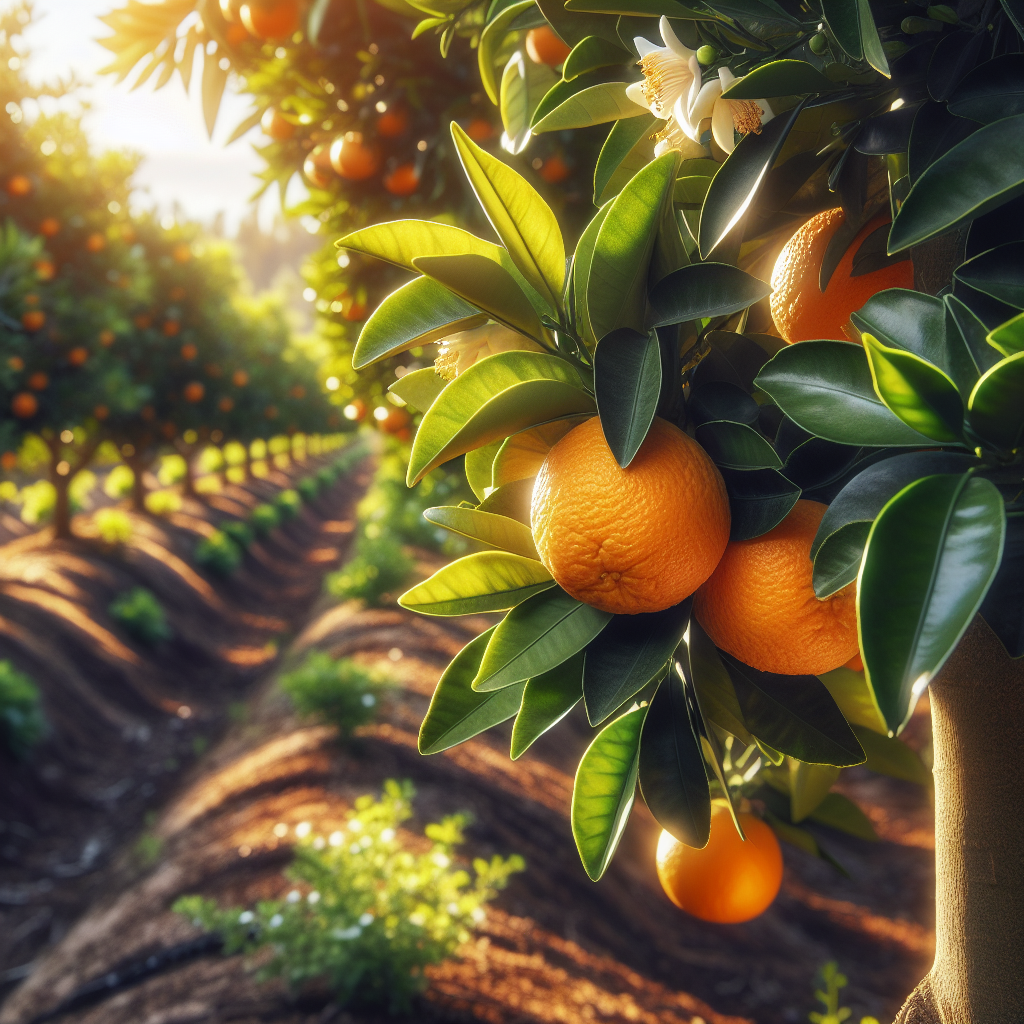
Introduction to Bitter Orange (Seville)
A classic Mediterranean and West Asian citrus, Seville orange has been cultivated for centuries for preserves, liqueurs, perfumery, and ornamental use. Unlike sweet dessert oranges, its fruit is sharply sour, noticeably bitter, rich in pectin, and highly aromatic, which is exactly why it became the standard fruit for traditional orange marmalade. The tree also has major agricultural significance beyond the fruit itself: sour orange has long been used as a citrus rootstock because of its vigor, adaptability, and broad soil tolerance.
Growers should think of this crop as a dual-purpose tree: it can function as a productive specialty fruit tree and as a resilient landscape citrus with excellent blossom fragrance. It is especially suitable where winters are mild, summers are warm to hot, and soils are reasonably well drained. Compared with many sweet oranges, it tolerates slightly cooler conditions and somewhat more alkaline soils, but it is still a true citrus and remains vulnerable to hard freezes, waterlogging, and serious citrus diseases. For a broader citrus comparison, see our Orange guide.
Fruit characteristics vary slightly by strain, but most Seville types bear medium fruit with thick, rough, orange rind, many seeds, high acidity, and intense bitterness from peel oils and albedo compounds. The flowers are highly fragrant and are also the source of neroli-type aromatic oils in some production systems. Historically, the species moved from Southeast Asia through the Islamic world into the Mediterranean basin, especially Spain, where Seville became closely associated with its commercial identity.
Botanical Profile of Bitter Orange (Seville)
This tree belongs to the Rutaceae family and is generally classified as Citrus × aurantium, reflecting its hybrid origin within cultivated citrus. It is an evergreen, broad-crowned, moderately thorny tree that commonly reaches 3 to 9 meters tall in managed systems, though older specimens can grow larger under favorable conditions. Growth habit is upright when young, becoming rounded and denser with age.
Leaves are glossy, deep green, and notably winged at the petiole, one of the visual clues distinguishing it from some sweet orange types. New flushes may show a lighter green or bronze tint. Flowers are white, waxy, five-petaled, and very fragrant, usually appearing in spring, though sporadic bloom may occur under mild climates and irregular moisture patterns.
Fruit set depends on bloom health, temperature stability during flowering, tree carbohydrate reserves, and nutrient balance. The fruit is usually globose to slightly flattened, with a thick peel, aromatic oil glands, and segmented flesh containing highly acidic juice. Internal quality is defined less by sugar accumulation than by aroma, acidity, bitterness, and pectin content. That makes harvest timing different from dessert citrus: growers often prioritize peel color, rind oil development, juice acidity, and processing purpose over sweetness.
Seville orange is often more vigorous and somewhat more stress-tolerant than some commercial sweet orange cultivars. It also has a reputation for better adaptation to calcareous or slightly heavier soils, though it still performs best in deep, aerated ground. Thorniness can be substantial on juvenile growth and suckers, so pruning and orchard access planning matter.
Soil, pH, and Climate Requirements for Bitter Orange (Seville)
This crop performs best in deep, fertile, well-drained loam or sandy loam with good internal drainage and moderate water-holding capacity. Ideal rooting depth is at least 1 to 1.5 meters where possible, because citrus root systems benefit from oxygenated subsoil and freedom from hardpan. If planting in heavier clay, drainage is more important than texture itself; raised beds, mounded rows, or berm planting may be necessary.
Preferred soil pH is about 6.0 to 7.5, though bitter orange is more tolerant of mildly alkaline conditions than many citrus. It can remain productive up to roughly pH 8.0 if micronutrients, especially iron, zinc, and manganese, are managed carefully. In high-pH or calcareous soils, watch for iron chlorosis: young leaves turn pale yellow while veins remain greener. If that appears, foliar micronutrient sprays or chelated iron drenches may be needed.
Drainage is non-negotiable. Bitter orange roots are intolerant of saturated conditions lasting more than a day or two, especially in cool weather. Standing water around the root zone can trigger root decline, Phytophthora infection, leaf yellowing, and weak flushes. A healthy soil moisture profile for mature trees is moist but airy: when squeezed, soil from the active root zone should hold together lightly then crumble, not ooze or remain slick.
Climate suitability is subtropical to warm temperate. Optimal growth occurs where average growing-season temperatures range from about 20 to 32°C. Trees tolerate summer heat well if soil moisture is maintained, but fruit sunburn can occur in extreme heat above 38°C, especially after heavy pruning exposes fruit. Young trees are more cold sensitive than established ones. Light frosts may scorch tender shoots and flowers, while temperatures below about -3 to -4°C can damage wood and fruit. Prolonged freezes are often lethal.
The tree needs full sun for best flowering, strong rind color, and dense canopy development. A minimum of 6 to 8 hours of direct sun is needed, but all-day exposure is preferable. Wind protection is beneficial because strong drying winds reduce pollinator activity, scar fruit, dehydrate young flushes, and may increase flower drop.
In humid climates, airflow becomes more important to suppress fungal disease. In arid climates, irrigation scheduling and mulch management matter more. A 5 to 8 cm organic mulch layer can moderate soil temperature and moisture, but keep mulch 15 to 20 cm away from the trunk to avoid collar rot.
If establishing a mixed orchard, avoid placing bitter orange in low frost pockets or in sites where cold air settles. South- or southeast-facing slopes are ideal in marginal climates. In very hot zones, a little afternoon protection from reflected heat can reduce rind burn.
Step-by-Step Planting & Propagation
Commercially and practically, grafted nursery trees are the best starting material. Seed-grown trees are vigorous and often true enough for rootstock or experimental use, but they take longer to bear, are less predictable, and may produce excessive thorny juvenile growth. Choose certified disease-free nursery stock with a straight trunk, healthy green leaves, no bark cracking, and a well-developed but not root-bound root system.
- Select the site. Choose full sun, free air movement, and no history of chronic waterlogging. Avoid old citrus sites with severe disease pressure unless the soil has been remediated.
- Test the soil. Check pH, salinity, drainage, and nutrient status. Electrical conductivity should be moderate to low; citrus is not highly salt tolerant, though bitter orange handles adversity somewhat better than some kinds.
- Prepare the planting area. Remove perennial weeds in at least a 1-meter radius. If drainage is marginal, build a mound 30 to 45 cm high and 1 to 1.5 meters wide.
- Plant at the correct depth. Dig a hole only as deep as the root ball and 2 to 3 times as wide. Set the tree so the root flare sits slightly above final soil grade. Never bury the graft union.
- Backfill simply. Use mostly native soil rather than a heavily amended pocket that can impede root expansion. Break up large clods but do not compact heavily.
- Water in thoroughly. Apply enough water to settle the soil around roots and remove large air pockets. A newly planted tree often needs 10 to 20 liters depending on root ball size and soil texture.
- Stake only if necessary. In windy locations, loosely tie the tree to a stake for the first season, but allow some trunk movement to encourage strength.
- Mulch and protect. Add mulch around the drip zone, leaving the trunk clear. Guard the trunk from rodents, sunscald, or mechanical injury.
Spacing depends on vigor, rootstock, pruning intensity, and irrigation system. Home or low-density orchard plantings often use 4.5 to 6 meters between trees. More intensive systems may plant closer, but crowding raises disease pressure and reduces light penetration over time.
Propagation by seed is possible. Extract fresh seed from ripe fruit, wash off pulp, and sow promptly because citrus seed viability drops with drying. Germinate in sterile, well-drained media kept warm at 24 to 29°C. Seedlings are useful for rootstock production but are not the preferred route for fruiting orchards.
Budding or grafting onto suitable rootstock is standard. T-budding in active growth periods with slipping bark is common. In regions where tristeza virus is a concern, rootstock selection becomes especially important, as traditional sour orange rootstock may be unsuitable despite its historical popularity.
Care & Maintenance regimes for Bitter Orange (Seville)
Water management should change with tree age, season, and soil type. Newly planted trees need frequent but moderate irrigation until roots expand beyond the planting hole. In sandy soils, this may mean watering 2 to 3 times weekly during warm weather; in loam, once or twice may suffice. The goal is to keep the upper 20 to 30 cm evenly moist but never saturated.
For established trees, irrigation should wet the active root zone to roughly 45 to 60 cm deep, then allow partial drying before the next cycle. In practical terms, soil 10 to 15 cm below the surface should feel cool and slightly moist, not muddy. Drought stress shows as dull foliage, leaf curl along the midrib, small fruit, and premature drop. Overwatering appears as generalized yellowing, soft flushes, leaf drop without crispness, sour-smelling soil, or algae growth near emitters.
Fertilization should be based on leaf analysis and soil tests, but bitter orange generally responds well to split applications of nitrogen during active growth. Young trees need modest, frequent feeding to build canopy without forcing excessively lush growth. Mature trees may receive 3 to 5 split feedings annually in frost-free climates or 2 to 3 main feedings in seasonal climates. Nitrogen is the primary driver of canopy vigor, but excessive nitrogen increases pest pressure, rind coarseness, and vegetative growth at the expense of balanced fruiting.
A complete citrus fertilizer should also supply potassium, magnesium, sulfur, and trace elements. Potassium supports fruit size and rind quality. Magnesium deficiency often shows as yellowing on older leaves with a green triangular area near the leaf base. Zinc and manganese deficiencies commonly appear on new growth in alkaline soils.
Pruning is relatively light compared with deciduous fruit trees. Remove dead, diseased, crossing, or weak inward-growing wood. Maintain a skirt high enough to improve airflow and facilitate harvest, but do not over-limb the canopy because citrus fruit benefits from leaf cover against sunburn. Remove rootstock suckers promptly, especially any thorny vigorous shoots emerging from below the graft union.
Training in the first 2 to 3 years should focus on developing 3 to 5 well-spaced scaffold branches. Avoid heavy heading cuts that trigger dense thorny regrowth. Mature trees usually need only sanitation pruning and occasional thinning to preserve light distribution.
Weed management is important because citrus roots occupy the upper soil profile and compete poorly with aggressive grasses. Keep a weed-free strip under the canopy, either with mulch, shallow cultivation, or careful manual removal. Avoid damaging surface roots.
Fruit thinning is rarely necessary, but in young trees carrying heavy early crops, reducing fruit load can help canopy establishment. In alternate-bearing tendencies, balanced nutrition, timely irrigation, and avoiding severe stress after harvest help stabilize production.
Container culture is possible in very mild or protected settings, but Seville orange is vigorous and thorny, so large containers and disciplined pruning are required. Use a sharply drained citrus mix and never allow standing water in saucers.
For general fertility planning and long-term ground preparation, soil-building principles similar to those discussed in soil health strategies can improve orchard resilience.
Pests, Diseases & Organic Management
Common pests include aphids, citrus leafminers, scale insects, mealybugs, mites, whiteflies, and fruit flies in suitable regions. aphids often attack tender spring flush and excrete honeydew, which encourages sooty mold. Leafminers create serpentine tunnels in new leaves; they are most damaging to young trees because repeated attack reduces photosynthetic area and weakens structure.
Scale and mealybugs can colonize stems and leaves, again leading to honeydew and sooty mold. mites are more frequent in hot, dusty conditions and cause stippling, bronzing, and reduced leaf function. fruit flies may oviposit in damaged or ripening fruit depending on local species.
Organic management starts with prevention. Maintain balanced fertility, avoid excess nitrogen, improve airflow, and conserve beneficial insects. Horticultural oil applied during low-heat periods can suppress scale, mites, and some aphid populations. Insecticidal soaps help on soft-bodied pests but require good coverage and may need repeat applications.
Good companion insectary plants can support predators and parasitoids. Understory strips with Thyme, Yarrow, and Clover may improve beneficial insect activity when managed so they do not compete excessively for water.
Major diseases include Phytophthora root rot and collar rot, greasy spot, melanose, citrus canker in affected regions, and tristeza-related decline depending on scion-rootstock combinations. The most important cultural defense is drainage. If bark near the crown becomes dark, gummy, or cracked, inspect immediately for collar rot. Remove excess mulch from the trunk, reduce irrigation frequency, and improve aeration.
sooty mold itself is usually secondary; control the honeydew-producing insects and the black coating will gradually weather away. Fungal leaf diseases are more common in dense, humid canopies. Prune lightly for airflow and avoid overhead irrigation late in the day.
Citrus tristeza virus is a major strategic concern in some areas. Historically, sour orange rootstock was widely used, but it is vulnerable in tristeza-affected regions. Use certified nursery trees and follow local extension guidance on permitted rootstocks and disease regulations.
Sanitation matters: remove fallen diseased fruit, disinfect pruning tools between suspect trees, and avoid moving infected propagation wood. Organic copper products may have a place in disease suppression programs where legally permitted, especially around bacterial or fungal pressure, but timing and phytotoxicity risk must be managed carefully.
Harvesting, Curing & Optimal Storage
Seville oranges are usually harvested from late winter into spring, depending on climate. Fruit often colors well before peak processing quality, so harvest should be based on intended use. For marmalade, many growers prefer fully colored fruit with developed aroma and high pectin, but before serious rind dehydration. For juice blending or culinary acid use, slightly earlier harvest may be acceptable if acidity is desired.
Harvest fruit by clipping with short stems rather than pulling, which can tear the peel or spur tissue. Wear gloves and long sleeves because branches may be thorny. Avoid harvesting when fruit is wet if disease spread is a concern.
Signs of readiness include deep orange rind color, firm but not hard texture, strong peel aroma when scratched, and full fruit size. Because sugar is not the principal maturity marker, tasting a sample for acidity-bitter balance and checking rind condition are useful.
There is no true curing process like that used for onions or sweet potatoes, but harvested fruit benefits from careful field handling and temporary conditioning. Keep fruit shaded immediately after harvest. If fruit is destined for storage, sort out any with punctures, soft spots, or rind breakdown.
Optimal short-term storage is around 7 to 10°C with relative humidity near 85 to 90%. Colder temperatures can risk chilling injury over time, while warmer storage accelerates moisture loss and rind aging. Under good conditions, sound fruit may store 2 to 6 weeks, though aroma quality is best when processed relatively soon after harvest.
For peel use, fruit should be processed while rind oils are fresh and the peel remains taut. For home or small-farm processing, bitter orange can be transformed into marmalade, candied peel, syrups, fermented condiments, and liqueur infusions. Blossoms may also be used, where legal and appropriate, for aromatic distillation or culinary applications.
Companion Planting for Bitter Orange (Seville)
The best companions around a bitter orange tree are not heavy feeders or thirsty annuals but low-growing plants that improve insect diversity, suppress weeds, protect soil, and avoid intense root competition. A well-managed understory can improve orchard ecology, especially in young plantings where canopy shade is still light.
Clover is one of the best living groundcovers for orchard alleys or outer drip lines because it protects soil, moderates erosion, and contributes biologically active root exudates. In drier climates, keep it outside the immediate trunk zone so it does not compete with a young tree for water.
Thyme works well in warm, sunny orchard margins and close-in dry zones where irrigation is not excessive. Its flowers attract pollinators and beneficial insects, while its low habit reduces weed pressure.
Yarrow is useful near orchard borders for attracting predatory insects and parasitoids. It is especially valuable in diversified systems aiming to reduce pest outbreaks naturally.
Nasturtium can be planted seasonally in milder climates as a trap crop and beneficial attractant, but keep it monitored so it does not become tangled into irrigation lines or create excessive humidity directly against the trunk.
Avoid planting high-water vegetables directly under the canopy, especially in the first years after establishment, because shallow feeder roots of citrus are easily disrupted by repeated cultivation. Also avoid dense grass right up to the trunk, as it competes strongly for nitrogen and moisture.
The most successful companion planting pattern is usually zoned: a trunk-clear area, then mulch, then a sparse ring of beneficial herbs or living cover farther out toward the drip line. This gives the tree root priority while still supporting orchard biodiversity.