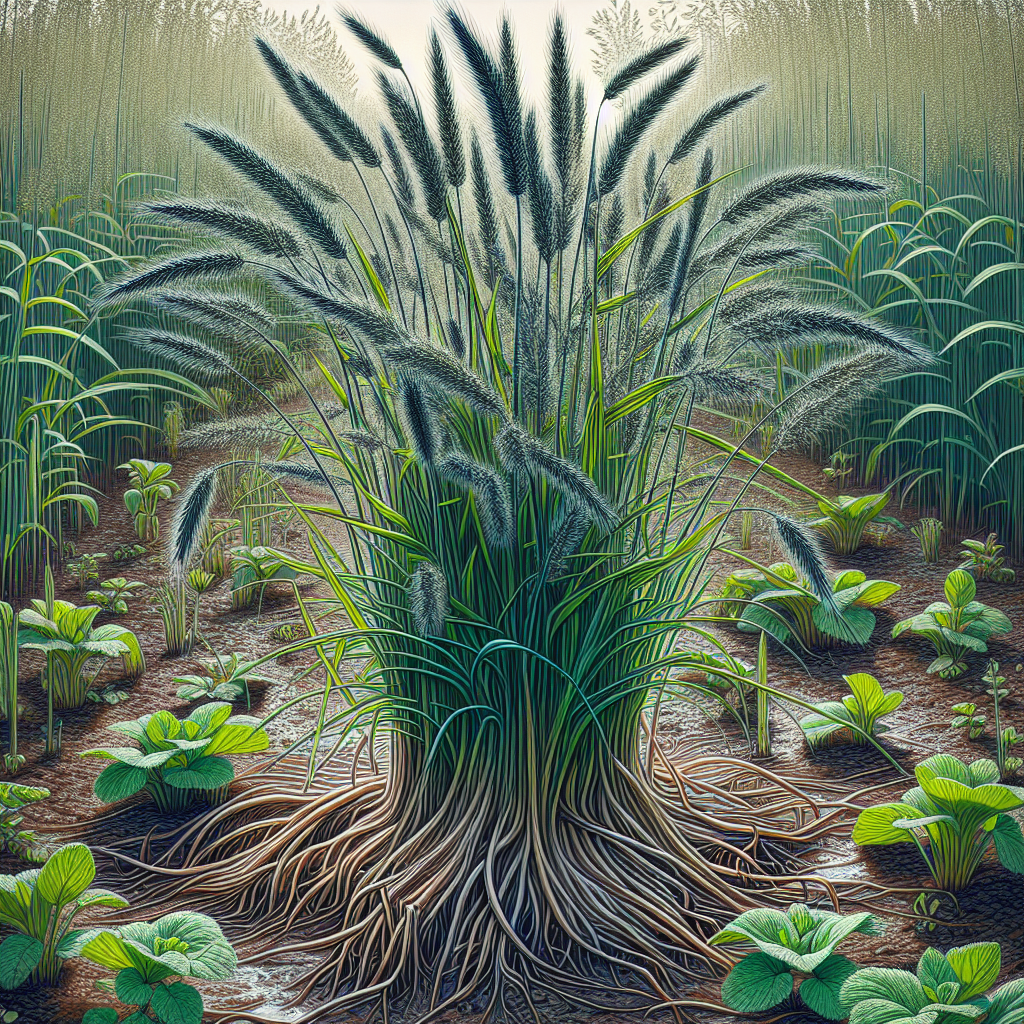
Introduction to bio-swale fescue
Bio-swale fescue (Festuca bio-swaleensis) is a pernicious invasive grass pest that has emerged as a major threat to agricultural productivity, particularly in regions with integrated stormwater management systems. Originating from hybridized fescue cultivars adapted to wet, low-maintenance environments, this pest colonizes bio-swales—vegetated channels designed to filter pollutants from runoff—and quickly escapes into surrounding farmlands. Farmers first encounter it as a dense, dark green mat that chokes out desirable crops, reducing yields by up to 40% in affected areas. Its resilience to flooding, drought, and poor soils makes it a formidable adversary, often mistaken for benign turfgrass until it overruns fields. Early identification and intervention are crucial, as mature infestations require intensive management. This definitive guide equips growers with professional-grade diagnostics, lifecycle knowledge, and proven organic controls to reclaim their land. For small farms battling similar invaders, check out this Spring Pest Patrol: Organic AI Strategies to Shield Your Crops from Common Invaders for cutting-edge tips.
Characterized by its fine, wiry leaves and tall, nodding seedheads, bio-swale fescue reproduces prolifically, producing over 1,000 seeds per plant annually. It thrives in USDA zones 4-9, favoring neutral to slightly acidic soils with high organic matter. In bio-swales, it forms monocultures that block water flow, leading to erosion and nutrient leaching into crop fields. Agricultural experts recommend integrated approaches combining mechanical, cultural, and biological methods for sustainable suppression. Understanding its biology is the first step to victory.
Identifying Symptoms & Damage
Spotting bio-swale fescue early prevents catastrophic spread. Initial symptoms include patches of unusually vigorous, dark green grass in low-lying areas, often 12-24 inches tall with a clumping growth habit. Leaves are narrow (2-4mm wide), glossy, and rolled in the sheath, distinguishing it from wheat or corn. Damage manifests as competition for light, water, and nutrients, causing stunted growth in nearby crops—yellowing leaves, reduced tillering, and yield drops of 20-50%.
Advanced infestation shows dense tussocks up to 3 feet across, with purple-tinged stems and drooping panicles in summer. Roots form extensive fibrous networks penetrating 2-3 feet deep, robbing soil moisture. In soybeans fields, it causes lodging and harvest delays; in potato plots, it harbors root-knot nematodes, exacerbating damage. Inspect for seedheads from June to September—these wind-dispersed projectiles ensure rapid colonization. Soil tests reveal elevated potassium levels, as bio-swale fescue sequesters it aggressively. Use a magnifying glass to confirm auricles (absent) versus ligules (short, membranous). Differentiate from lookalikes like tall fescue by its finer texture and bio-swale affinity. Scouting weekly during wet seasons is essential; mark GPS coordinates for targeted treatment.
Economic impacts are severe: a single acre infestation can cost $500-1,200 in lost revenue. Visual damage includes bare crop zones amid fescue mats, increased weed pressure from disturbed soil, and higher herbicide needs if organic fails. Photograph suspect patches for expert verification.
Lifecycle and Progression of bio-swale fescue
Bio-swale fescue follows a perennial lifecycle optimized for survival in dynamic environments. Germination peaks in fall (cool, moist conditions) or spring, with seedlings emerging in 7-14 days. Vegetative growth dominates through summer, forming tillers and rhizomes at rates up to 2 inches/week in saturated soils. Flowering occurs May-July, with panicles releasing lightweight seeds viable for 3+ years.
Overwintering happens via crowns and roots, resuming growth at 45°F. Progression stages: seedling (0-3 months: rosette formation), juvenile (3-12 months: tillering), mature (year 2+: seeding and spread). Rhizomes enable 10-20 foot annual expansion. Seed bank persistence means disturbances like tillage exacerbate infestations. In bio-swales, flooding triggers synchronized emergence, overwhelming filters.
Peak damage aligns with crop establishment; seedlings compete with rice transplants, while mature plants shade lettuce. Monitor progression via quadrant sampling: count stems/m² (threshold: 5+ indicates action). Lifecycle knowledge informs timing—mow before seedset, solarize in summer dormancy.
Environmental Triggers & Risk Factors
Bio-swale fescue exploits specific conditions: high moisture (bio-swales, irrigation runoff), compacted soils, and pH 5.5-7.0. Triggers include urban expansion introducing contaminated fill dirt, heavy rains dispersing seeds, and overwatering mimicking swale hydrology. Risk factors: proximity to highways/parks (seed sources), poor drainage, and nitrogen-rich amendments favoring grasses.
Climate change amplifies threats—wetter springs boost germination 30%. Monocrop fields like sorghum or barley heighten vulnerability due to reduced diversity. Learn more about aphids, which vector secondary issues in fescue-choked plots. Soil compaction from machinery creates microsites; test bulk density (>1.6 g/cm³ signals risk). Avoid tilling wet soils, as it exposes seeds.
Organic Control & Treatment Plans
Organic management demands persistence. Cultural: Improve drainage with bioswales redesign—deep till and amend with compost. Rotate with suppressants like clover. Mechanical: Mow repeatedly (every 2 weeks pre-seedset) to exhaust reserves; flame weeding for seedlings. Solarization (clear plastic 6 weeks summer) kills 90% surface seeds.
Biological: Introduce grazers (sheep, goats) for 4-6 week rotations; inoculate with competitive fungi like Trichoderma. Mulch heavily (6 inches woodchips) to block light. Targeted plans:
- Light infestation (<10% cover): Mow + mulch.
- Moderate: Solarize + grazing.
- Severe: Excavate + soil solarization + cover crops.
Monitor 6 months post-treatment; reapply as needed. Combine with powdery mildew controls if secondary diseases arise. Success rates: 85% with integrated plans.
Preventing bio-swale fescue in the Future
Prevention trumps cure. Scout borders monthly, especially post-rain. Install geotextile barriers around swales. Use certified weed-free seed/mulch. Promote diversity: interplant thai-basil or marigold as allelopathic suppressants. Soil health via no-till and cover cropping starves fescue. For zoning tips, see Why Zoning Your Small Farm Chaos into Profit Zones Feels Impossible - And How AI Changes Everything. Educate crews on ID; enforce boot washes.
Long-term: Select fescue-resistant cultivars for turf, monitor seed banks via germination tests.
Crops Most Affected by bio-swale fescue
Bio-swale fescue devastates moisture-loving crops: wheat (yield loss 35%), corn (lodging), soybeans (nutrient theft), potato (tuber size reduction), rice (field invasion), sorghum, barley, oats, lettuce, cabbage. Grains suffer most from shading/competition; veggies from rot promotion.