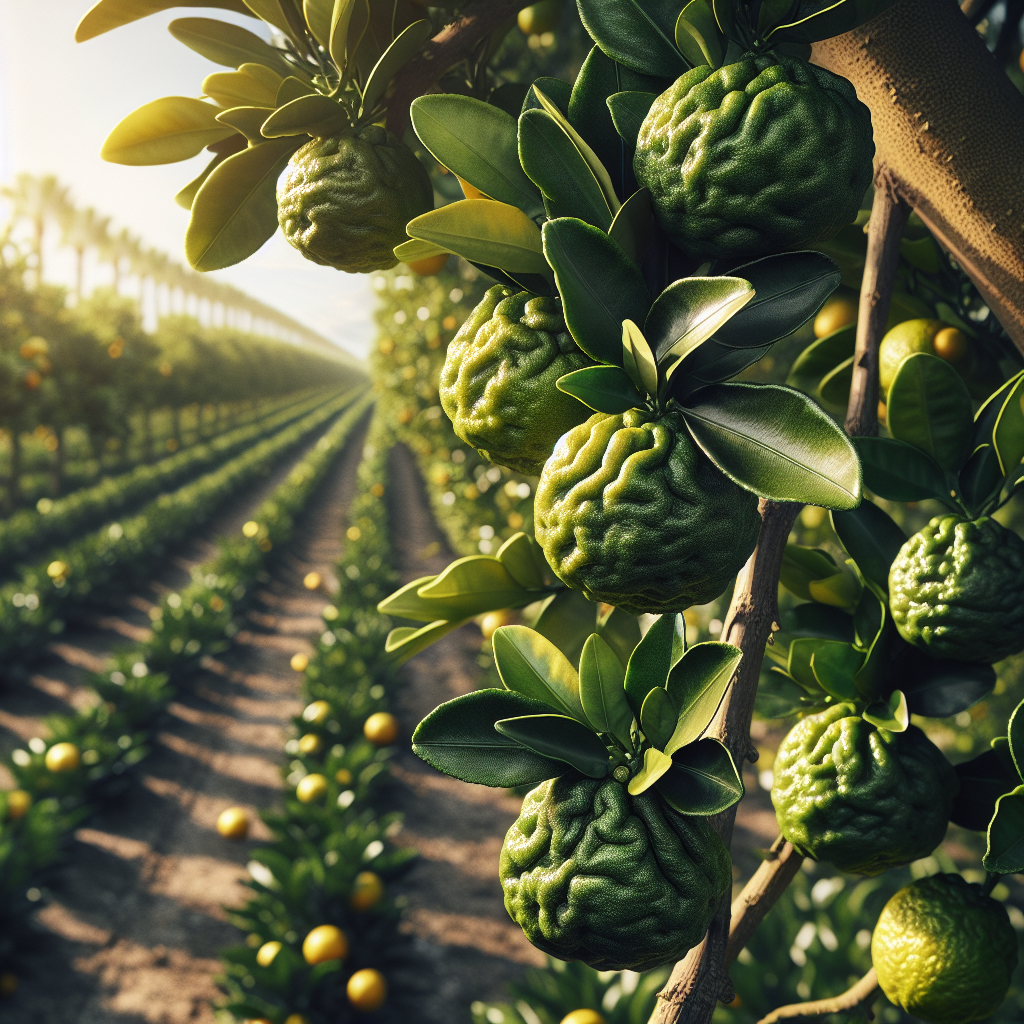
Introduction to Bergamot Orange
A small, strongly scented citrus with a long Mediterranean association, this crop occupies a unique niche among commercial citrus because its value lies chiefly in the peel. The fruit is typically too sour and bitter for routine fresh consumption, but the rind contains the famous bergamot essential oil used in tea, confectionery, cosmetics, and fragrance. Historically, bergamot became especially important in Calabria, southern Italy, where climate, coastal humidity, and mild winters created ideal conditions for oil quality and fruit set.
In the orchard, it behaves like a somewhat sensitive citrus: productive when matched to the right site, but unforgiving of cold pockets, waterlogging, salinity, and poor nutrition. Growers aiming for premium quality should think beyond simple fruit production and manage for rind development, canopy health, and uniform maturation. Compared with sweet Orange, bergamot is less widely planted and often more specialized in market use, so pre-plant planning matters more than with general citrus.
Its growth habit is usually compact to medium-sized, with evergreen foliage, thorniness in some selections, and white, sweetly scented blossoms. Depending on rootstock and pruning, trees may remain manageable for high-density orchard systems or home-scale container culture in mild regions.
Botanical Profile of Bergamot Orange
This citrus is generally classified as Citrus × bergamia, widely considered a hybrid rather than a true wild species. Its exact parentage has been debated, with bitter orange ancestry frequently suggested and some genetic overlap with lemon-like citrus types. That uncertain ancestry helps explain its mixed traits: aromatic peel, acidic flesh, and a growth habit typical of evergreen citrus.
Trees commonly reach 2.5 to 4.5 meters tall under managed conditions, though vigorous rootstocks and low-pruning systems can alter final size. Leaves are glossy, medium green, and somewhat reminiscent of bitter orange. Flowers are white to cream-white, highly fragrant, and usually borne in spring, though flush timing may shift with local climate. Fruit is round to slightly pear-shaped, green when immature and turning yellow at maturity. The peel is relatively thick, smooth to faintly textured, and very rich in oil glands.
Bergamot's main quality parameter is not just fruit size but peel chemistry. High-value fruit has a healthy rind with strong aroma, minimal blemishing, and well-developed oil sacs. For essential oil production, harvest timing influences linalyl acetate, linalool, and related aromatic compounds. Trees are often grafted because seedling variation can be significant and seedlings may take much longer to bear. Like many citrus, the crop may show alternate bearing if stressed, overcropped one year, or poorly pruned and fertilized.
Rootstock choice strongly affects vigor, yield, tolerance to soil issues, and disease performance. Sour orange has historically been used in some citrus-growing regions for fruit quality, but it is highly vulnerable to tristeza in many areas. Modern growers often choose rootstocks for compatibility with local disease pressure, soil pH, salinity, and nematodes. That decision can matter as much as scion quality.
Soil, pH, and Climate Requirements for Bergamot Orange
This crop performs best in deep, well-drained loam or sandy loam with consistent aeration in the root zone. Ideal soil depth is at least 1 to 1.2 meters because citrus roots exploit a broad but oxygen-sensitive profile. Heavy clay is not automatically disqualifying, but it must be improved with raised beds, berms, drainage channels, or subsoil ripping where compaction exists. Standing water for even 48 to 72 hours in warm weather can trigger root decline, feeder root death, and later canopy yellowing.
Optimal soil pH is typically 5.8 to 6.8. Trees can survive slightly outside that range, but nutrient efficiency declines as pH rises above 7.5, especially for iron, manganese, and zinc. In alkaline soils, chlorosis often appears first on young leaves as interveinal yellowing while veins remain greener. In acidic soils below about 5.5, calcium and magnesium shortages may become more common and root performance can weaken if aluminum toxicity is present.
Climate is the defining factor for successful bergamot production. It prefers subtropical to warm Mediterranean conditions with mild winters, warm summers, low frost risk, and moderate humidity. Best performance occurs where winter lows rarely fall below 2 to 4°C and summer temperatures commonly range from 24 to 32°C. Short episodes above 35°C are tolerated if soil moisture is stable, but prolonged heat with hot wind can scorch foliage, reduce fruit set, and coarsen rind texture.
Frost is a major limitation. Young trees may suffer serious injury at around -2°C, and flowers or newly set fruit can be damaged even slightly above that if exposure is long and winds are dry. Cold injury often appears first as water-soaked tissue, leaf drop, twig dieback, rind pitting, and delayed spring flushing. Avoid valley bottoms and frost pockets; choose gentle slopes or sites with good air drainage.
Wind protection is also important. Persistent wind causes thorn abrasion, scarred rind, leaf desiccation, and misshapen fruit. Since peel quality directly affects crop value, windbreaks can materially improve returns. Shelterbelts should reduce wind without creating dense shade or increasing disease humidity directly around the canopy.
Salinity tolerance is only moderate to poor. Irrigation water with elevated sodium or chloride can produce leaf burn, reduced growth, and smaller fruit. If electrical conductivity of irrigation water is marginal, apply occasional leaching irrigations in well-drained soils and use gypsum where sodium hazard is high.
For broader fertility-building principles before planting, see soil health tips.
Step-by-Step Planting & Propagation
Most professional plantings use grafted nursery trees rather than seed propagation. Seedlings are genetically variable, slower to fruit, and unreliable for rind-oil quality. Buy certified disease-free plants from a reputable nursery, ideally with documented rootstock information and clean budwood origin.
Choose the site carefully. Select full sun, at least 8 hours daily, with frost protection, wind moderation, and no history of chronic waterlogging. If soil is heavy, build raised mounds 30 to 50 cm high and 1 to 1.5 meters wide.
Test soil before planting. Check pH, organic matter, phosphorus, potassium, calcium, magnesium, and salinity. Correct pH several months in advance where possible. Incorporate well-finished compost lightly into the topsoil, but do not create a rich planting pocket surrounded by poor subsoil, as roots may circle or stall.
Prepare spacing. Standard orchard spacing is often 4 to 6 meters between trees and 5 to 7 meters between rows, depending on rootstock vigor and mechanization needs. Home growers can keep trees smaller with pruning, but overcrowding reduces airflow and increases scale, mite, and fungal issues.
Plant at the correct depth. Dig a hole only as deep as the root ball and 2 to 3 times as wide. Set the tree so the graft union remains well above finished soil level, ideally 10 to 15 cm above grade. Planting too deeply encourages scion rooting and collar problems.
Backfill simply. Use native soil rather than heavily amended potting material. Firm gently to eliminate large air pockets. Water thoroughly after planting to settle soil around roots.
Mulch properly. Apply 5 to 8 cm of coarse organic mulch over the root zone, but keep it 15 to 20 cm away from the trunk to prevent Collar rot and rodent sheltering.
Stake only if necessary. In windy sites, use a flexible tie and remove support once the trunk stabilizes.
For propagation beyond grafted nursery stock, budding onto compatible citrus rootstocks is standard. T-budding is usually done when bark is slipping and rootstock growth is active. Budded trees generally produce uniform orchards and earlier bearing. Cuttings are rarely preferred commercially because they often lack the rootstock advantages needed for soil adaptation and disease management.
Container growing is possible where winter protection is required. Use a sharply drained medium with bark, coarse sand, and a stable mineral fraction. Containers must drain rapidly; never allow saucers to hold water for extended periods.
Care & Maintenance regimes for Bergamot Orange
Water management is the single most common reason bergamot trees underperform. The goal is evenly moist but never saturated soil. In practical terms, the upper 5 cm of soil may dry slightly between irrigations, but the active root zone below that should remain lightly moist. In loamy soils, mature trees often do best when irrigated deeply enough to wet 45 to 60 cm of soil, then allowed partial drying before the next cycle. In sandy soils, smaller, more frequent irrigations are better because water drains quickly and nutrients leach.
Young trees usually need 10 to 20 liters per watering several times weekly in warm weather, depending on soil type and canopy size. Mature orchard trees may require 40 to 100 liters or more per irrigation event under drip systems, scaled to evapotranspiration, canopy volume, and temperature. Signs of underwatering include dull leaf color, slight mid-day leaf curl that persists into evening, reduced shoot extension, flower drop, and small, thick-rinded fruit. Signs of overwatering include persistent wet soil, sour-smelling root zones, yellow leaves without dry edges, sudden leaf drop, and weak, overly soft flushes vulnerable to pests.
Fertilization should be split into multiple small applications during the active season rather than one large dose. Nitrogen drives canopy renewal and fruiting, but excess nitrogen produces coarse growth, softer tissue, more Aphids, and reduced oil quality. A typical annual approach is 3 to 5 split feedings from spring through midsummer, emphasizing nitrogen early, balanced nutrition during fruit set, and reduced nitrogen late in the season to avoid soft late flush before cool weather.
Citrus micronutrients are critical. Zinc, manganese, iron, magnesium, and boron often limit performance before nitrogen does. Foliar sprays of zinc and manganese are commonly useful where leaf analysis shows deficiency. Magnesium shortages may appear as yellowing on older leaves while the base stays greener, and iron chlorosis usually affects the newest leaves in high-pH soils.
Pruning is mostly corrective and structural rather than severe. Remove dead wood, crossing shoots, rootstock suckers, and low branches that touch mulch or soil. Open the canopy enough for light penetration and spray coverage, but avoid excessive thinning that exposes scaffold limbs to sunburn. Best pruning time is after harvest or before strong spring flush, depending on local climate and frost timing.
Fruit thinning is rarely done heavily in citrus, but if a young tree sets an excessive crop, remove some fruit to prevent stunting and biennial bearing. During the first 1 to 2 years after planting, flower and fruit removal often improves long-term framework establishment.
Weed competition should be minimized, especially in the first 2 to 3 years. Keep a weed-free circle under the canopy because grasses can outcompete young citrus roots for moisture and nitrogen. Shallow cultivation is safer than deep tillage because feeder roots often occupy the upper soil layers.
In regions with intense summer sun, whitewash exposed trunks and main limbs with diluted interior white latex paint to reduce sunburn. In colder margins, trunk wraps or frost cloth may be necessary for the first winters.
Pests, Diseases & Organic Management
Like other citrus, bergamot can attract a wide pest complex. Aphids attack soft flushes, causing curled leaves and honeydew that supports sooty mold. Citrus leafminer tunnels young leaves, reducing photosynthetic efficiency and distorting foliage. Scales and Mealybugs weaken trees gradually and also encourage sooty mold. Spider mites become severe in dusty, hot conditions and cause stippling, bronzing, and premature leaf drop. Thrips may scar young fruit, reducing rind quality.
Organic management starts with prevention. Avoid excessive nitrogen, which creates tender flushes attractive to sucking insects. Maintain airflow, reduce dust, and encourage beneficial insects by diversifying the orchard margin. Thyme, Clover, and Yarrow can support pollinators and natural enemies when managed so they do not compete excessively with young trees.
For Aphids and light mealybug infestations, a strong water spray or insecticidal soap can suppress populations if applied thoroughly to leaf undersides. Horticultural oils are especially useful against scale, mites, and soft-bodied pests, but apply during cooler parts of the day and never to drought-stressed trees or during extreme heat. Neem-based products may help in rotation, though coverage is crucial.
Major diseases include Phytophthora root rot and Collar rot, Greasy spot in humid climates, Melanose, Scab, and Bacterial issues depending on region. The most damaging chronic problem in poorly drained soils is root disease. Trees show reduced vigor, sparse foliage, yellowing, dieback, and poor fruit size. Management is built around drainage, raised planting, trunk dryness, clean irrigation practices, and not piling mulch against bark.
Citrus canker and Huanglongbing (citrus greening) are severe regulatory and production threats in some regions. If present locally, strict quarantine compliance, certified nursery stock, vector monitoring, and sanitation are non-negotiable. Home propagation from unknown material is a major risk. Prune out obviously diseased wood only when that practice is recommended locally; in some regulated diseases, plant removal is required.
Sanitation matters more than many growers assume. Remove mummified fruit, prune out dead twigs, clean tools between trees when disease is suspected, and harvest carefully to avoid rind wounds that invite postharvest decay.
Harvesting, Curing & Optimal Storage
Harvest timing depends on end use. For fresh peel use and oil extraction, fruit is typically picked when fully developed, aromatic, and turning from green to yellow, but before significant rind breakdown or shriveling. External color alone is not the only indicator; aroma intensity, peel firmness, juice acidity, and local processing standards all matter. In many producing regions, harvest falls from late autumn into winter.
Use clippers rather than pulling fruit by hand. Leave a very short stem or clip flush to avoid puncturing nearby fruit during handling. Harvest only dry fruit where possible; wet harvest increases spread of some postharvest rots. Workers should avoid fingernail damage because even minor rind injuries reduce peel value.
Unlike some bulb or root crops, citrus is not "cured" in the classic sense, but postharvest conditioning is still important. Fruit should be kept shaded immediately after picking and moved quickly to a cool, ventilated packing area. Field heat removal preserves aroma and reduces moisture loss. Wash only if necessary and dry fruit fully before packing. For small-scale growers, single-layer crates or shallow bins are better than deep sacks that bruise rind.
Optimal storage is usually around 8 to 12°C with 85 to 90% relative humidity for short-term holding, though exact temperatures vary by intended use and local guidance. Temperatures that are too low may cause chilling injury in sensitive citrus, shown by rind pitting, discoloration, and off-aroma. Temperatures that are too warm accelerate yellowing, water loss, and decay. Good airflow is essential, but avoid direct forced air that desiccates the peel.
For essential oil use, fruit is often processed as soon as possible after harvest because volatile compounds are most desirable when fresh. If storing briefly before extraction, keep fruit cool, dry on the surface, and protected from compression. Do not store damaged fruit with sound fruit; a small amount of decay can spread quickly in packed conditions.
Companion Planting for Bergamot Orange
The best companions are low-growing, non-competitive plants that attract beneficial insects, protect soil, and do not create dense humidity against the trunk. Clover works well as a managed living groundcover in row middles or at the orchard edge, helping moderate soil temperature, reduce erosion, and support pollinators. It should be mowed or kept back from young tree root zones so it does not steal water during establishment.
Thyme is especially useful near citrus because it remains relatively low, tolerates sun, flowers heavily for beneficial insects, and does not form a tall, shade-casting canopy. It is best placed outside the immediate trunk zone, where drip irrigation or occasional hand watering can sustain it without keeping bark wet.
Yarrow is valuable for predatory insects and parasitoids, making it a strong biodiversity companion in mixed orchards. Its umbels attract hoverflies and other allies that help suppress Aphids and small soft-bodied pests. Plant it where it can receive sun and occasional trimming to prevent crowding.
Nasturtium is another useful option in diversified systems, especially as an insectary and sacrificial host for Aphids, but it should be monitored so it does not become overly lush and competitive in irrigated basins. In all cases, keep a clear collar around the trunk, usually 30 to 60 cm wide on young trees, to reduce rot risk and rodent hiding places.
Companion planting in citrus works best when viewed as orchard floor management rather than random interplanting. The goal is to support predator insects, reduce bare-soil stress, and maintain access for harvest and irrigation maintenance, not to crowd the root zone of a tree that already dislikes competition.