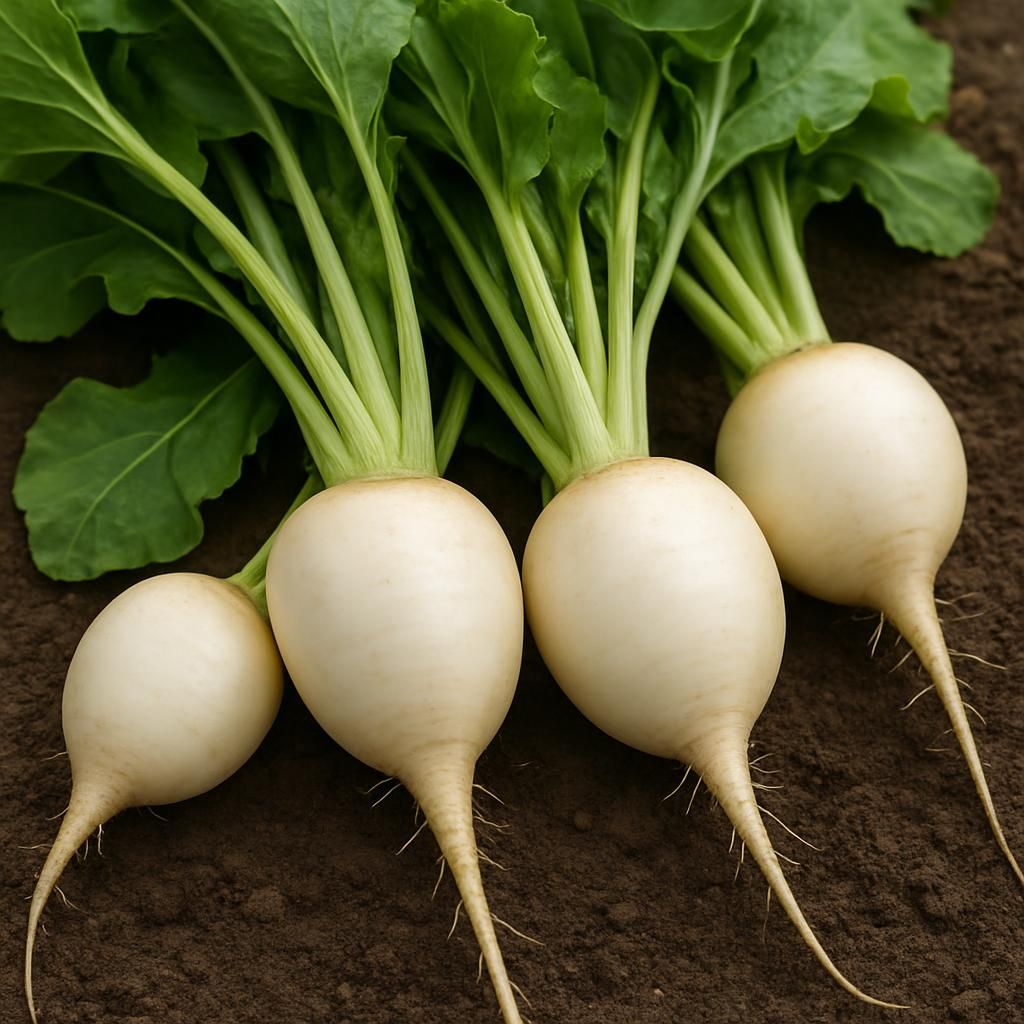
Introduction to Beet (White Albino)
White Albino beet (Beta vulgaris subsp. vulgaris 'Albino') is an heirloom variety distinguished by its pure white roots and exceptionally sweet, mild flavor. Unlike common red beets, it produces no red pigment, making it ideal for salads, pickling, and culinary presentations where color bleed is undesirable. Gardeners and commercial growers value this cultivar for its tender texture and high sugar content.
This deep-dive guide delivers professional-grade agricultural advice for successful cultivation of White Albino beets. From soil science to harvest timing, every section focuses on practical techniques that maximize root quality and market value.
Botanical Profile of Beet (White Albino)
White Albino beet belongs to the Amaranthaceae family and is a biennial plant typically grown as an annual for its edible roots and greens. The plant develops a swollen taproot that remains pure white at maturity, with smooth skin and crisp, juicy flesh. Leaves are medium-green with prominent veins and can be harvested young as microgreens or mature as nutritious leafy greens.
The variety matures in 50-65 days and produces roots averaging 2-4 inches in diameter. White Albino beets maintain excellent storage qualities due to their low moisture loss and resistance to internal browning. The absence of betalain pigments also reduces staining during processing.
Soil, pH, and Climate Requirements for Beet (White Albino)
Successful beet production begins with precise soil management. White Albino beets require loose, well-drained soil free of stones and compaction to allow unobstructed root expansion. Heavy clay soils should be amended with organic matter to improve structure and drainage.
| Parameter | Ideal Range | Notes |
|---|---|---|
| Soil Type | Sandy loam to loam | Avoid compacted or rocky soils |
| Soil pH | 6.0-7.0 | Slightly acidic to neutral; test annually |
| Temperature Range | 50-75°F (10-24°C) | Cool-season crop; bolts above 80°F |
| Spacing | 2-3 inches between plants | Rows 12-18 inches apart |
| Depth | ½-1 inch | Sow seeds directly; thin to final spacing |
| Organic Matter | 3-5% | Incorporate well-rotted compost |
Climate considerations are critical. White Albino beets thrive in cool weather and tolerate light frost. In regions with hot summers, succession planting every 2-3 weeks extends the harvest window. Consistent moisture prevents woody texture and internal voids.
Step-by-Step Planting & Propagation
Direct seeding is the preferred method for White Albino beets. Begin by preparing a fine, level seedbed. Sow seeds ½ inch deep in moist soil when temperatures reach 50°F. Germination occurs in 5-10 days.
Thin seedlings to 2-3 inches apart once they develop true leaves. Overcrowding leads to small, deformed roots. For continuous supply, plant new rows every 14-21 days until 8 weeks before the first expected frost.
Transplanting is rarely used but can succeed with 3-4 week-old seedlings started in biodegradable pots. Avoid root disturbance during transplanting to prevent forking.
Care & Maintenance regimes for Beet (White Albino)
Consistent care ensures uniform root development and high sugar content. Mulching with straw or shredded leaves conserves moisture, suppresses weeds, and moderates soil temperature.
| Task | Schedule | Details |
|---|---|---|
| Watering | 1 inch per week | Deep, infrequent watering; avoid waterlogging |
| Fertilizer | At planting and 4 weeks later | Balanced NPK 10-10-10 or fish emulsion |
| Side-dressing | Every 3-4 weeks | Compost tea or low-nitrogen organic fertilizer |
| Weeding | Weekly until canopy closes | Hand-pull or shallow hoe; avoid root damage |
| Thinning | Once at 2-3 inches height | Remove weaker seedlings |
| Pruning | Not required | Remove flower stalks if bolting occurs |
Monitor for nutrient deficiencies. Yellowing older leaves may indicate nitrogen shortage, while purple leaf margins suggest phosphorus deficiency. Adjust amendments based on soil tests.
Pests, Diseases & Organic Management
White Albino beets face several common challenges. Aphids can colonize leaf undersides, causing curling and reduced photosynthesis. Regular inspection and strong water sprays provide initial control.
Flea beetles create small holes in foliage. Floating row covers during early growth stages offer effective protection. Leaf miners may appear; removing affected leaves and encouraging beneficial insects helps limit damage.
Diseases include Cercospora leaf spot, which produces circular lesions with gray centers. Crop rotation, resistant varieties, and copper-based sprays manage outbreaks. Root rot from overly wet soils is prevented through raised beds and proper drainage.
Organic management emphasizes prevention: healthy soil biology, diverse plantings, and timely removal of crop residues reduce pest and disease pressure.
Harvesting, Curing & Optimal Storage
Harvest White Albino beets when roots reach 2-3 inches in diameter for optimal tenderness. Gently loosen soil with a fork and pull by the tops. Avoid bruising, which shortens storage life.
Curing is minimal; simply brush off excess soil without washing. Store unwashed roots in perforated plastic bags at 32-40°F with 90-95% humidity. They remain viable for 4-6 months under ideal conditions.
Greens should be separated and used within 3-5 days or refrigerated separately. For long-term preservation, roots can be pickled, frozen, or dehydrated.
Companion Planting for Beet (White Albino)
Strategic companions enhance growth and deter pests. Onion and Garlic planted nearby repel aphids and other insects. Lettuce and Spinach share similar cool-season requirements and do not compete heavily for nutrients.
Avoid planting near Pole Beans or Bush Beans, as they may inhibit beet growth. Nasturtium serves as a trap crop for aphids, while Marigold deters nematodes.
Carrot and Radish make excellent neighbors, maturing at different rates and improving space efficiency. Rotate beets with non-root crops to maintain soil health.
For additional insights on soil health strategies, see The Hidden Power of Mulching: 8 Organic Strategies to Transform Small Farm Soil.