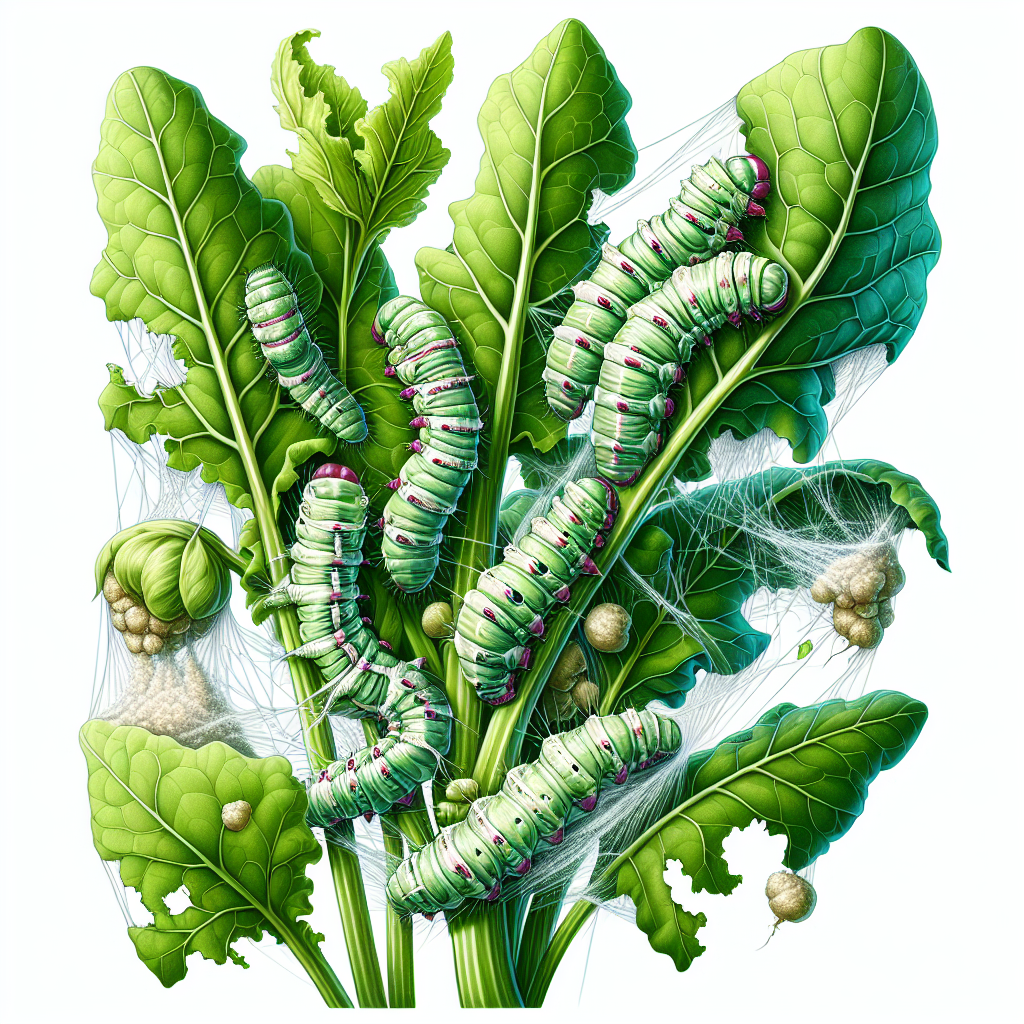
Introduction to beet webworms
Beet webworms, primarily the larvae of the beet armyworm (Spodoptera exigua) and related species like Matilella brevicornis, represent a significant threat to vegetable production worldwide. These pests are notorious for their rapid defoliation of crops in the Beet (crop), spinach, and related families, leading to substantial yield reductions if left unchecked. Native to tropical regions but now cosmopolitan due to global trade, beet webworms thrive in warm climates and can complete multiple generations per season, making them a persistent challenge for organic and conventional growers alike.
Understanding beet webworms is crucial for timely intervention. Adult moths are grayish-brown with a wingspan of about 1-1.5 inches, featuring irregular dark markings and a light-colored spot near the hindwing. Larvae, the damaging stage, are pale green to brownish caterpillars up to 1 inch long, with dark spots and stripes, often covered in fine hairs. They produce characteristic silken webs that protect feeding groups, accelerating damage. In commercial settings, infestations can wipe out 50-100% of foliage in days, stunting plants and reducing marketable yields. Early detection through scouting is key, as these pests migrate via wind-dispersed moths and exploit stressed crops.
This guide equips farmers with diagnostic tools, lifecycle knowledge, and proven management strategies to safeguard harvests. By integrating organic methods, growers can achieve sustainable control without synthetic chemicals, preserving beneficial insects and soil health. Whether managing small plots or larger fields, proactive measures against beet webworms ensure resilient production.
Identifying Symptoms & Damage
Recognizing beet webworm damage early prevents escalation. Initial signs include small, irregular holes in leaves, often starting on older, lower foliage. As larvae grow, they skeletonize leaves, leaving only tough veins intact, and produce loose, white silken webs that bind leaves together, sheltering the caterpillars. Severe infestations result in complete defoliation, with plants appearing bare and webbed, stunted growth, and reduced root development in crops like beets.
Examine plants closely: look for green-black fecal pellets (frass) beneath webs and clustered larvae hiding during the day. Damage mimics other caterpillars (pest) or leaf-feeding caterpillars (pest), but beet webworms uniquely webbing distinguishes them. On beets, feeding targets outer leaves, causing bronzing and wilting; spinach shows ragged edges and webbed hearts. Secondary issues like sooty mold on honeydew or increased aphids (pest) predation follow due to plant stress.
Scout weekly during warm months, shaking plants over white paper to dislodge larvae. Thresholds: 10-20% defoliation warrants action in vegetables. Differentiate from cutworms (pest) (no webs, nocturnal) or armyworms (pest) (march in groups). Use a hand lens for tiny larvae (1-2mm) in early instars. Document patterns for IPM tracking.
Lifecycle and Progression of beet webworms
Beet webworms undergo complete metamorphosis: egg, larva, pupa, adult. Females lay 100-600 eggs in clusters on leaf undersides, hatching in 2-4 days at 75-85°F. Larvae progress through 5-6 instars over 2-3 weeks, feeding voraciously in later stages. They pupate in soil or crop debris for 5-10 days, emerging as moths that live 7-10 days, mating and ovipositing immediately.
In temperate zones, 2-4 generations occur annually; tropics see continuous cycles. Overwinter as pupae or partially grown larvae in mild areas. Peak activity aligns with crop vulnerability: eggs in spring, larvae during vegetative growth. Moths are nocturnal, attracted to lights, dispersing up to 100 miles.
Monitor with pheromone traps for adults; larval presence lags 10-14 days. Lifecycle accelerates in heat (>90°F shortens to 20 days total), explaining outbreaks post-heatwaves. Understanding progression enables targeted timing, e.g., Bt applications at early larval stage for 90% efficacy.
Environmental Triggers & Risk Factors
Warm temperatures (70-90°F) and low humidity trigger beet webworm booms, favoring rapid development. Drought-stressed crops exude volatiles attracting moths; over-fertilized nitrogen-rich plants boost larval survival. Nearby webworms (pest) reservoirs in weeds like pigweed or lamb's quarters serve as alternate hosts.
Wind currents carry moths from southern regions; monsoon rains boost populations via lush weeds. Poor field sanitation leaves pupae, perpetuating cycles. Monocultures of beets or spinach heighten risk; intercropping mitigates. Soil types matter: sandy soils aid pupal survival. Climate change extends seasons, increasing generations. Check Spring Pest Patrol: Organic AI Strategies to Shield Your Crops from Common Invaders for predictive insights.
Organic Control & Treatment Plans
Integrated organic management emphasizes layered defenses. Cultural: Hand-pick larvae/webs weekly; destroy residue post-harvest. Till soil to expose pupae to predators. Biological: Introduce Trichogramma wasps (egg parasitoids, release 50,000/acre weekly). Apply Bacillus thuringiensis (Bt) var. kurstaki at first instars (0.5-1 lb/acre, evenings). Neem oil (0.5-2%) disrupts feeding/molting; spinosad (OMRI-approved, 0.2 oz/gal) for outbreaks.
Physical: Row covers exclude moths; yellow sticky traps capture adults (10/acre). Encourage predators: ladybugs, lacewings, birds via hedgerows. Treatment Plan: Scout twice weekly. <5 larvae/10 plants: monitor. 5-15: Bt + neem. >15: spinosad + parasitoids. Rotate modes to prevent resistance. Efficacy: 80-95% with IPM. Avoid broad-spectrum; preserve Cotesia parasitoids.
Preventing beet webworms in the Future
Prevention builds resilient systems. Plant resistant varieties like 'Detroit Dark Red' beets or hybrid spinach. Time plantings to avoid peak flights (pheromone traps guide). Crop rotation (2-3 years off beets) disrupts cycles. Mulch suppresses weeds/soil pupae. Companion plant with nasturtium (crop) or marigolds as traps. Maintain vigor: balanced fertility, irrigation. Perimeter traps/plows reduce influx. Monitor via apps; early warning saves 70% losses. Long-term: diverse rotations, cover crops like clover enhance predators.
Crops Most Affected by beet webworms
Beets top the list, with Detroit Dark Red Beet (crop) and Golden Beet (crop) highly susceptible. Spinach, chard, lettuce suffer rapid defoliation. Other impacts: kale, cabbage, turnip (crop), sweet potato (crop). Grains like sorghum (crop) and corn (crop) host occasionally. Weeds amplify spread.