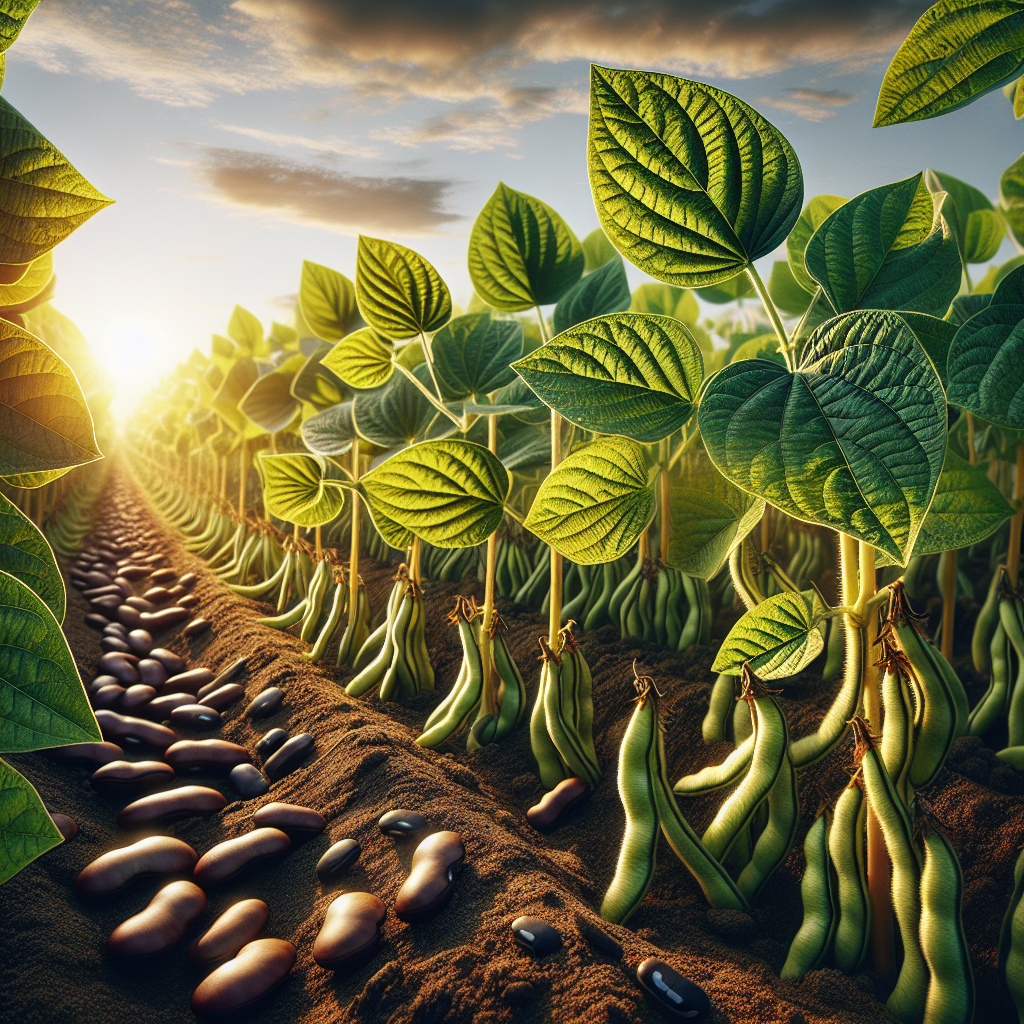
Introduction to Black Bean (Turtle)
A classic dry bean of the species Phaseolus vulgaris, turtle black bean is one of the most important grain legumes in Latin American, Caribbean, and North American food systems. The name “turtle” refers to the hard, shiny, shell-like appearance of the mature dry seeds. Plants are usually grown for dry harvest rather than as a snap bean, and most commercial black bean cultivars are compact bush types, though growth habit can vary from determinate upright plants to semi-vining forms depending on genetics.
Black beans originated within the broader domestication history of common beans in the Americas, with major centers of diversity in Mesoamerica and the Andean region. They became especially prominent in tropical highland and subtropical farming systems because they fit well after cereals, contribute biologically fixed nitrogen, and store well without sophisticated infrastructure. For growers, their biggest strengths are strong culinary demand, relatively short season compared with many grain crops, and the ability to produce a protein-rich staple on modest acreage.
Turtle beans are typically grown to full maturity until pods dry on the plant. Unlike fresh green beans, quality is judged by seed size uniformity, deep black color retention, clean seed coats, low cracking, and even dry-down. They are especially sensitive to waterlogging, compaction, and poorly timed irrigation near maturity, so successful production depends on matching the crop to warm weather, friable soil, and a harvesting window that avoids prolonged wet conditions.
Botanical Profile of Black Bean (Turtle)
This crop belongs to the Fabaceae, the legume family, and is a self-pollinating annual broadleaf plant. Most black bean cultivars are bush beans with a determinate or short-indeterminate habit, usually reaching about 30-60 cm tall, although some lines may stretch more under fertile or shaded conditions. The root system is relatively shallow to moderate, with most active roots concentrated in the upper 15-30 cm of soil, which explains why moisture stress during flowering and pod fill can quickly reduce yield.
Leaves are trifoliate, medium green, and somewhat variable in size depending on cultivar and nitrogen availability. Flowers are generally white to pale lavender and are often inconspicuous compared with larger-flowered legumes. Because common beans are largely self-fertile, pollinator dependence is minimal, though flowering still benefits from stable weather and moderate temperatures.
The fruit is a dehiscent pod, usually 8-15 cm long, containing multiple seeds. In turtle types, the mature seed is small to medium, oval to slightly oblong, and uniformly black when properly matured and cured. Seed coat integrity matters: cracked or wrinkled beans often reflect delayed harvest, mechanical damage, or uneven drying.
As a legume, black bean forms a symbiosis with nitrogen-fixing rhizobia, but this is not automatic in all soils. Where beans have not been grown recently, inoculation with the appropriate Rhizobium phaseoli group can significantly improve nodulation and nitrogen economy. Unlike soybean, common bean is not the strongest nitrogen fixer among legumes; it still needs balanced fertility, especially phosphorus, potassium, sulfur, and molybdenum where deficient. For broader legume comparison, see our Soybeans guide.
Physiologically, black bean is sensitive to extremes. Cool soils delay emergence, heat above about 32-35°C during flowering can reduce pod set, and drought during bloom or seed fill can cause blossom drop, short pods, or undersized seed. The crop is also photoperiod responsive in some heirloom or regionally adapted lines, though many modern cultivars are bred for wider adaptation.
Soil, pH, and Climate Requirements for Black Bean (Turtle)
Black beans perform best in well-drained loam, sandy loam, or silt loam with a stable crumb structure and good aeration. Heavy clay can produce acceptable yields if drainage is excellent, but prolonged saturation is one of the fastest ways to lose a stand. The ideal rooting zone is loose enough for rapid emergence and nodulation, yet firm enough to maintain consistent seed-to-soil contact.
Optimal soil pH is generally 6.0-7.0, with best nutrient availability and nodulation often occurring near 6.2-6.8. Below pH 5.8, aluminum or manganese toxicity may suppress roots, while phosphorus availability and rhizobial performance often decline. Above pH 7.5, iron and zinc deficiencies can appear, especially on calcareous soils, showing as interveinal chlorosis on younger leaves.
The crop prefers warm, frost-free growing conditions. Ideal air temperatures are roughly 18-28°C, with germination strongest when soil temperature is at least 16°C and preferably 18-24°C. Below about 12-14°C, emergence becomes slow and uneven, and seedlings are more vulnerable to rot. Frost at any stage can damage or kill plants, while prolonged heat above 32°C during flowering may reduce pollination success and pod retention.
Rainfall or irrigation needs are moderate, but timing matters more than total volume alone. Black beans usually require about 300-450 mm of water over the season depending on soil type, temperature, and duration. The most critical windows are:
- Emergence and early stand establishment
- Flower initiation and full bloom
- Pod set and seed fill
Soil moisture should be kept consistently in the zone of moderate availability, not saturated and not droughty. In practical terms, the top 5 cm should not remain sticky and anaerobic for days, but the root zone should also not dry to the point that leaves fold, plants flag by mid-morning, or flowers abort. In coarse sandy soil, irrigation may be needed more frequently with smaller volumes. In loam, deep watering at longer intervals is usually better.
Field placement matters. Choose a site with full sun, at least 8 hours daily. Avoid frost pockets, low spots that collect water, and fields with recent severe root rot history. Good air movement helps reduce foliar disease pressure, especially where humid nights are common.
Because black beans are often rotated after cereals such as Corn, they benefit from fields with low residual weed pressure and minimal volunteer grasses. Reduced tillage systems can work well if residue does not keep spring soil excessively cold and wet. For broader fertility planning and structure improvement, the principles in soil health strategies are especially relevant to dry bean production.
Step-by-Step Planting & Propagation
Black beans are propagated directly from seed. They are almost never transplanted because common beans resent root disturbance and establish more uniformly when sown in place.
Select seed carefully. Use clean, disease-free seed with high germination. For production planting, seed should be uniform in size and free from splits, mold, and insect holes. If saving seed, choose from healthy, true-to-type plants with good pod fill and no obvious virus symptoms.
Prepare the seedbed. Aim for a fine, firm seedbed with small aggregates rather than powdery soil. Overworked soil cRusts easily after rain, which can trap emerging hypocotyls. Remove perennial weeds before sowing.
Inoculate if needed. In fields where common beans have not been grown recently, coat seed with the correct rhizobial inoculant just before planting. Keep treated seed out of direct sun and plant promptly.
Plant after frost risk has passed. Sow when soil is reliably warm. Waiting for a stable forecast is better than rushing into cold ground.
Set proper depth. Plant 2.5-4 cm deep in most soils. Use shallower depth in heavy, cool soil and slightly deeper in light sandy soil if moisture is deeper. Seeds planted too deep emerge weakly; too shallow and they may dry out or be uprooted by birds.
Use appropriate spacing. For bush turtle beans, rows are commonly spaced 45-75 cm apart, with seeds 5-10 cm apart within the row. High-density production can increase competition and humidity, so adjust to cultivar vigor and local disease pressure. In small gardens, blocks often improve space efficiency, but leave enough airflow to keep foliage dry.
Water immediately if dry. After sowing, irrigate enough to wet the seed zone uniformly. Do not flood. Saturated seedbeds encourage Damping-off and seed decay.
Thin only if necessary. If emergence is very dense, thin seedlings early before root systems tangle. Handle gently; bean roots are brittle.
Emergence typically occurs in 5-10 days in warm soil, longer in cooler conditions. Uniform emergence is a major determinant of uniform maturity, which matters greatly in dry bean harvest. For succession planting in warm regions, later sowings can work, but avoid pushing the crop into cold autumn rains at maturity.
Care & Maintenance regimes for Black Bean (Turtle)
Early weed control is critical because black beans are not highly competitive during the first several weeks. Keep the field clean from emergence through canopy closure. Shallow cultivation is effective, but work carefully because roots and nodules are close to the surface. Once plants are 10-15 cm tall, a light soil hilling can stabilize stems and suppress small weeds, but do not bury the crown.
Water management should change with crop stage. During establishment, maintain evenly moist soil in the upper root zone. During vegetative growth, let the surface dry slightly between irrigations while keeping deeper soil moisture available. During flowering and pod fill, avoid swings between drought and saturation. A practical target is moist but aerated soil at 10-15 cm depth: if squeezed, it should hold together loosely, not drip water or fall apart as dust.
Signs of underwatering include dull leaf color, temporary wilting before noon, reduced flower production, flower drop, and short, poorly filled pods. Signs of overwatering include persistent yellowing, slowed growth despite warm weather, edema-like blistering, root browning, and a sour smell in the soil. Waterlogged plants may wilt too, but unlike drought stress, the soil will already be wet and heavy.
As a guideline, many plantings do well with about 25-35 mm of water per week in moderate weather, rising during bloom and pod fill on sandy soils or under hot, drying winds. Drip irrigation is excellent because it keeps foliage dry and limits disease spread. Overhead irrigation is usable, but avoid evening irrigation in humid climates, as leaves staying wet overnight can accelerate bacterial and fungal problems.
Fertilization should be moderate, not excessive. Too much nitrogen creates lush foliage, delays maturity, suppresses nodulation, and may increase disease. If soil organic matter is decent and inoculation succeeds, supplemental nitrogen can often be minimal. A modest starter application may help in low-fertility soils, but high rates are usually counterproductive.
Focus instead on:
- Phosphorus for rooting, nodulation, and early vigor
- Potassium for water regulation and seed filling
- Sulfur for protein synthesis
- Zinc or molybdenum where soil tests show deficiency
Leaf tissue or soil testing is worthwhile in commercial systems. Common visible deficiencies include purpling from phosphorus stress in cold soils, marginal scorch from potassium shortage, and interveinal chlorosis where micronutrients are unavailable.
Beans usually do not need staking if grown as bush types, but high fertility, storms, or dense stands may cause lodging. In small plots, twine along rows can help keep plants upright until pods mature. Avoid unnecessary handling when foliage is wet, since bacterial diseases spread readily through contact.
Crop rotation is essential. Avoid planting black beans after other beans or legumes for at least 2-3 years where disease pressure is known. Good preceding crops include small grains or sweet corn, while rotation away from host crops reduces carryover of Root rots and bacterial blights.
Pests, Diseases & Organic Management
The major pest and disease risks in black beans vary by region, but the most common challenges include Aphids, Bean leaf beetles, Cutworms, Spider mites in hot dry weather, and storage pests such as Bean weevils after harvest.
Aphids cluster on tender shoots and undersides of leaves, sucking sap and spreading viruses. Look for curling leaves, sticky honeydew, and ant activity. Strong early infestations can be reduced with insecticidal soap, reflective mulch in gardens, and conservation of beneficial insects such as lady beetles and lacewings.
Bean leaf beetles chew round holes in foliage and can scar pods. Row covers during early establishment help exclude them in small plantings, but covers must be removed before heat buildup becomes excessive. Clean field edges and timely planting also reduce pressure.
Cutworms sever seedlings at the base, especially in weedy or recently sod-converted fields. Use weed-free preplant conditions, collars in garden settings, and evening scouting.
Spider mites thrive in dusty, drought-stressed conditions. Fine stippling, bronzing, and webbing are warning signs. Reduce dust, avoid chronic water stress, and use biological or soap-based controls early before populations explode.
Among diseases, Damping-off and Seedling blights are common in cold, wet soils. Prevention is far more effective than cure: warm soils, quality seed, crop rotation, and good drainage are the key tools.
Root rots caused by Pythium, Rhizoctonia, Fusarium, and other soilborne organisms become serious when soils are compacted or saturated. Affected plants are stunted, yellow, and poorly nodulated; roots appear discolored or rotted. Organic management depends on drainage improvement, longer rotations, biologically active soils, and avoiding overirrigation.
Common bacterial blight and Halo blight can produce water-soaked lesions that turn brown, often with yellow halos. These diseases spread in splashing rain, overhead irrigation, and through contaminated seed. Use clean seed, avoid working wet plants, rotate away from beans, and remove badly infected residue where practical.
Anthracnose causes dark, sunken lesions on stems, pods, and seeds, especially in cool, wet conditions. Seedborne introduction is common. Certified disease-free seed and rotation are essential.
Rust may appear as reddish pustules on leaves in humid weather. Good airflow, resistant varieties where available, and avoiding excess nitrogen help reduce severity.
Bean common mosaic virus and related viruses cause mottling, distortion, and stunting. Since there is no cure, rogue infected plants early, control aphid vectors as much as possible, and start with resistant seed when available.
For organic management, combine these practices:
- Rotate 2-3 years minimum out of beans and related legumes where disease has occurred
- Use certified, disease-free seed
- Inoculate appropriately but do not coat with incompatible materials that reduce rhizobial survival
- Maintain even fertility without excessive nitrogen
- Irrigate at soil level when possible
- Remove volunteer beans and weed hosts
- Harvest promptly to avoid late-season field infection and seed staining
Harvesting, Curing & Optimal Storage
Dry black beans are ready when most pods have turned straw-colored to tan, seeds are hard, and plants are nearing full senescence. Depending on cultivar and conditions, this is often 85-110 days from sowing. Some pods may mature earlier than others, so harvest timing is a balance between waiting for maximum dry-down and avoiding losses from shattering, rain, or lodging.
For home-scale harvest, pull entire plants or cut them at the base once roughly 80-90% of pods are dry. If weather is stable, plants can be bundled and finished under cover with strong airflow. If rain is expected, bring them in promptly because repeated wetting and drying can stain seed coats, promote mold, and trigger pod splitting.
Thresh when pods are brittle and seeds are fully hard. Small lots can be shelled by hand or by placing dried plants on a clean tarp and treading gently. Winnow away chaff with fans or natural breeze. Handle carefully: cracked seed coats reduce storage life and market value.
Target seed moisture for safe storage is about 12-14% for short- to medium-term household storage, and closer to 10-12% for longer storage in sealed containers, provided the beans are not over-dried to the point of splitting during handling. A simple field cue is that beans should resist denting with a fingernail and shatter rather than squash under pressure, though a moisture meter is far better for precision.
Before storage, sort out:
- insect-damaged beans
- moldy or discolored beans
- shriveled seeds
- stones and field debris
Store in cool, dark, dry conditions. Ideal storage is below 15°C with low relative humidity. Food-grade buckets, glass jars, or metal containers with tight lids work well for home growers. In warm climates, freezing beans for several days before long-term storage helps kill hidden bruchid or weevil eggs.
Properly dried black beans can store for a year or more, but culinary quality slowly declines with age. Very old beans develop the “hard-to-cook” defect, where seed coats toughen and cotyledons resist softening even after long cooking. Cool storage and prompt drying reduce this problem.
If saving seed for replanting, select from the healthiest, earliest-maturing, true-to-type plants. Keep seed especially dry and cool, and do not save seed from plants with visible virus, blight, or Anthracnose symptoms.
Companion Planting for Black Bean (Turtle)
Black beans work especially well in mixed plantings where companion species either improve spatial use, deter pests, or create a more stable field ecology without overwhelming the beans. The best companions are usually upright, non-aggressive plants that do not cast dense shade during early bean growth.
Corn is one of the most classic partners, particularly in traditional intercropping systems. The cereal uses vertical space while beans occupy the lower canopy, and the combination can improve land productivity when spacing is managed carefully. If intercropping densely, keep rows wide enough that bean foliage still receives strong sun and airflow.
Cucumber can work nearby rather than directly smothering bean rows, especially in diversified gardens where soil cover is useful and pollinator activity is encouraged. Maintain enough separation so cucumber vines do not crawl over bean plants and trap humidity.
Radish is useful as a fast early companion because it emerges quickly, marks the row, and can help break surface cRust in fine-textured beds. Since it matures before beans need maximum root-zone space, competition is usually limited.
Sunflower can serve as a wind buffer or beneficial insect attractant at field edges. Keep it on borders or in widely spaced strips, because excessive shading will reduce bean flowering and seed fill.
Avoid close association with alliums in intensive companion systems if space is tight, not because they are universally incompatible, but because their differing fertility and irrigation patterns often complicate management. Also avoid highly vigorous cucurbits directly in bean rows.
In professional systems, companion planting should never override core agronomy. Prioritize uniform stand establishment, weed control, airflow, and harvest access. Where intercropping is used, reduce plant populations of each component crop enough that neither becomes suppressed. The best companion system is one that preserves bean light interception, minimizes disease humidity, and still allows easy scouting and timely dry harvest.