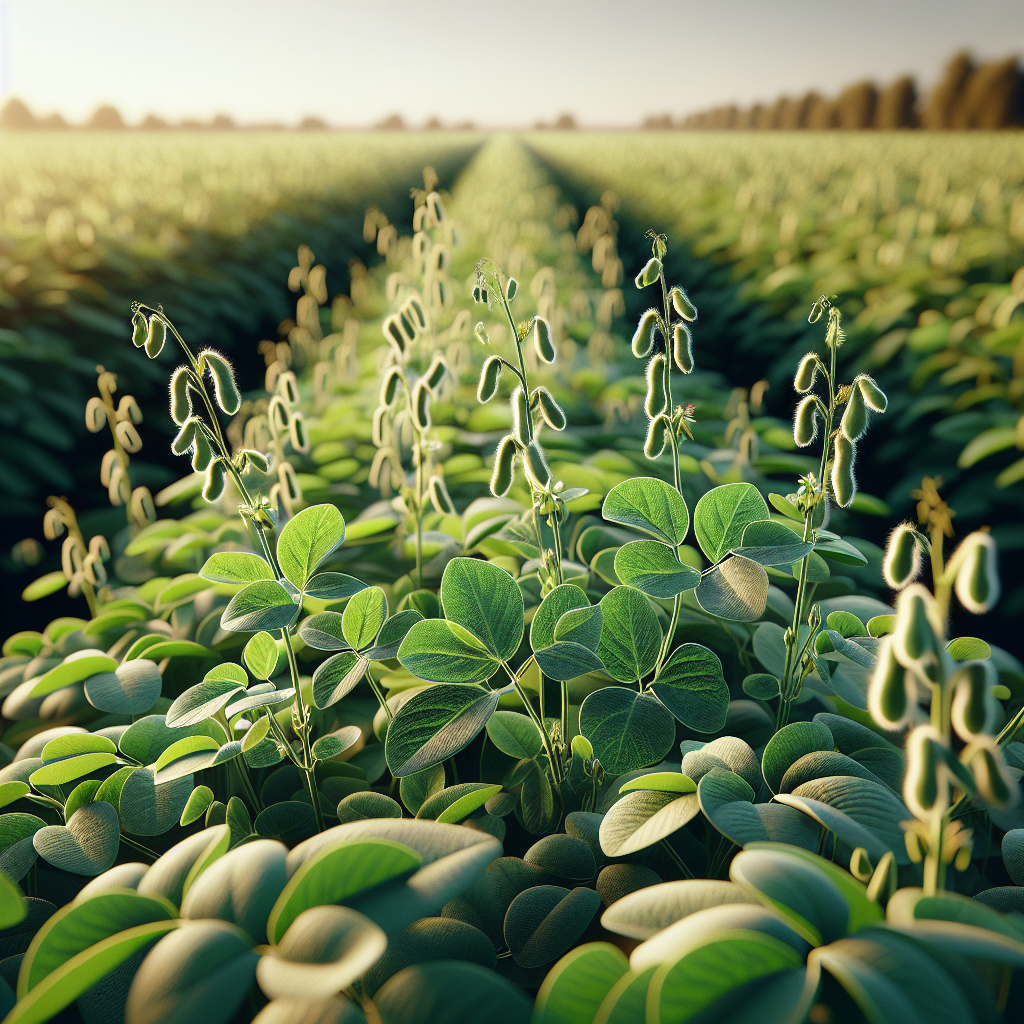
Introduction to Garbanzo Bean (Chickpea)
One of the oldest domesticated pulse crops in the world, garbanzo bean has been cultivated for thousands of years across the Fertile Crescent, South Asia, North Africa, and the Mediterranean basin. Its enduring value comes from a rare combination of agronomic resilience and nutritional density: the seeds are rich in protein, fiber, complex carbohydrates, iron, and folate, while the plant itself contributes to soil fertility by fixing nitrogen. In practical farm and garden terms, it is a crop that rewards restraint more than pampering. Excess fertility, overly rich irrigation schedules, or waterlogged soil often create more problems than benefits.
Two major market classes dominate production. Kabuli types typically produce larger, cream-colored seeds with thinner seed coats and are favored for hummus, salads, and canning; desi types are smaller, darker, and often more angular, with thicker seed coats and generally stronger adaptation to heat and lower-input conditions. If you want a closer look at seed-type distinctions, see Kabuli chickpeas. Regardless of type, the crop is generally grown as a direct-seeded annual and is especially useful in rotations with cereals such as Wheat, where it can help break disease cycles and diversify field biology.
For small-scale growers, garbanzo bean is especially attractive because it stores well, needs relatively modest irrigation compared with many vegetables, and can be harvested for dry seed or, less commonly, as a fresh green pulse. For larger acreage, it is a valuable break crop with strong rotational benefits. For a broader fertility context, the principles in soil health strategies align well with successful chickpea production.
Botanical Profile of Garbanzo Bean (Chickpea)
This species belongs to the Fabaceae family and is a self-pollinating, diploid annual legume. Plants are typically bushy and erect to semi-spreading, usually 30 to 60 cm tall, though height varies with cultivar, fertility, and moisture. The stems are slender but sturdy, branching from a central crown. Leaves are alternate and pinnately compound, usually with 11 to 17 small serrated leaflets. A distinctive feature is the glandular pubescence on stems, leaves, and pods, which can exude organic acids and give the foliage a slightly sticky or acidic feel.
Flowers are usually white, pink, or pale violet depending on genotype, and are borne singly or occasionally in pairs in the leaf axils. Because the crop is predominantly self-fertile, isolation distances are less critical than with outcrossing species, though seed savers still benefit from removing off-types. Pods are inflated but relatively small, often containing one seed and sometimes two. Compared with common beans, pod set is lower per node, so plant stand and early vigor matter greatly for final yield.
Root architecture is one of the crop's agronomic strengths. Garbanzo bean develops a deep taproot with lateral branches capable of scavenging moisture from lower soil horizons. Under good biological conditions, roots form nodules with Mesorhizobium ciceri or related chickpea-compatible rhizobia. Effective nodulation appears as pink to reddish interiors when nodules are cut open; greenish, brown, or white inactive nodules indicate poor nitrogen fixation. Unlike lush garden legumes that respond dramatically to high fertility, chickpea is naturally adapted to more moderate nutrient status and performs best when vegetative growth remains compact and balanced.
Physiologically, it is sensitive at flowering and early pod fill. Heat above roughly 32 to 35°C during bloom can cause pollen sterility, blossom drop, and poor pod set. Prolonged humidity also increases disease pressure, especially foliar blights and rots. This is why the crop excels in regions with cool-to-mild establishment weather followed by warm, drying conditions at maturity.
Soil, pH, and Climate Requirements for Garbanzo Bean (Chickpea)
The single most important requirement is drainage. Garbanzo bean tolerates moderate drought far better than saturated soil, and even short periods of waterlogging can trigger root dysfunction, nodulation failure, yellowing, and severe losses from fungal disease. Ideal soil textures are sandy loam, loam, or well-structured silt loam with enough pore space for oxygen movement. Heavy clay can work only if it is deeply structured, not compacted, and not prone to standing water after rain.
A target soil pH of 6.0 to 8.0 is acceptable, with 6.5 to 7.5 often giving the most reliable nutrient availability and rhizobial activity. Strongly acidic soil below pH 5.8 can suppress nodulation and reduce root growth. In alkaline soils above about pH 8.0, iron, zinc, and manganese availability may decline, showing up as interveinal chlorosis on new growth. Before planting, it is worth correcting major pH imbalances rather than trying to rescue the crop midseason.
Fertility should be moderate, not excessive. Chickpea generally requires less nitrogen input than non-legumes because high available nitrogen can reduce nodulation and push rank vegetative growth that delays maturity and increases disease susceptibility. Phosphorus is particularly important for early root development and nodulation, while sulfur and zinc may be limiting in low-organic-matter or high-pH soils. A professional approach is to base amendments on soil testing. If no test is available, prioritize compost that is mature and modestly applied rather than heavy manure, especially fresh manure, which can fuel lush foliage and pathogen problems.
Climatically, garbanzo bean prefers a cool growing start and a dry finish. Optimal germination occurs around 10 to 15°C soil temperature, though seeds can sprout in slightly cooler soils if conditions are not saturated. Vegetative growth is strongest in air temperatures of about 18 to 26°C. Flowering and pod set perform best when daytime temperatures are warm but not extreme and nighttime temperatures remain moderate. Frost tolerance is limited: seedlings may endure light frost if hardened, but repeated freezing or severe frost can kill young plants or damage reproductive tissues.
Rainfall distribution matters more than raw total rainfall. Moderate moisture early in the season helps canopy establishment, but frequent rain, heavy dew, and poor airflow later on can invite Ascochyta blight, Botrytis gray mold, and root diseases. In humid climates, wider spacing, morning irrigation only, and careful cultivar selection become essential.
Step-by-Step Planting & Propagation
Propagation is by seed, and direct sowing is strongly preferred. Transplanting is rarely worthwhile because the crop develops a taproot early and does not like root disturbance. Begin with high-quality, disease-free seed that is adapted to your day length and spring temperature pattern. In regions with cool springs, sow as soon as the soil can be worked and the risk of severe frost has passed. In Mediterranean or subtropical winter-rainfall zones, sowing may be done in late fall to winter where cold injury is minimal.
Prepare the bed or field by loosening soil to at least 15 to 20 cm deep, removing compaction layers, and creating a fine but not powdery seedbed. Avoid overworking wet soil, which causes crusting and poor emergence.
In soils without a recent history of chickpea cultivation, inoculate seed with the correct chickpea-specific rhizobium. This step is often overlooked and can make the difference between a self-sufficient legume and a nitrogen-starved stand. Apply inoculant in the shade, keep treated seed out of direct sun, and plant promptly.
Sow seeds 3 to 5 cm deep in most soils. In lighter sandy soils or where surface drying is rapid, 5 to 6 cm depth may improve moisture contact. Shallow sowing into drying soil often produces uneven emergence.
Space seeds about 7 to 15 cm apart within rows, with rows 30 to 45 cm apart for garden-scale production. On broader acreages, spacing may be adjusted based on machinery, rainfall, and disease pressure. Tighter spacing helps canopy closure and weed suppression in dry climates; wider spacing improves airflow in humid areas.
Water lightly after sowing if the soil is dry, aiming to moisten the seed zone thoroughly without saturating the bed. Germination usually occurs within 7 to 14 days depending on temperature.
Thin only if stands are excessively dense. Unlike some vegetables, chickpea does not require aggressive thinning when emergence is reasonably uniform.
For succession, note that the crop generally prefers one well-timed planting rather than repeated warm-season sowings. Late sowings often run into heat during flowering, which sharply cuts yield. If seed is intended for storage or market sale, rogue out diseased or atypical plants early to maintain seed lot quality.
Care & Maintenance regimes for Garbanzo Bean (Chickpea)
The best maintenance program keeps plants steadily growing but never lush. During establishment, maintain soil moisture in the upper root zone at a level that feels slightly moist but never sticky or saturated. A practical field check is to squeeze a handful of soil from 5 to 10 cm depth: it should hold together weakly, then crumble with a tap. If it forms a shiny, dense ball or leaves water on your palm, it is too wet. If it will not hold shape at all and feels dusty, it is too dry for uniform early growth.
After establishment, irrigate deeply and infrequently rather than shallowly and often. In many soils, allowing the top few centimeters to dry between irrigations is beneficial because it improves root oxygenation and discourages fungal pathogens. The most critical period for moisture is from branching through flowering and early pod fill. Drought stress at this stage causes fewer flowers, smaller pods, and low seed number. However, too much water during the same window can be just as damaging by promoting excessive canopy humidity and root stress.
Visible signs of underwatering include dull gray-green foliage, midday leaflet folding that persists into evening, slowed growth, and premature flower drop. Signs of overwatering include generalized yellowing, especially lower leaves, soft or stunted stems, poor nodulation, persistent surface algae or moss, and a sour smell in the root zone. In severe cases, plants wilt despite wet soil because roots are oxygen-starved and beginning to rot.
Mulching can be useful in gardens, but apply it judiciously. A thin layer of clean straw after seedlings are well established can suppress weeds and moderate moisture swings. Avoid thick, moisture-trapping mulch in humid climates, as it can hold dampness around the stem base.
Weed control is crucial in the first 4 to 6 weeks because chickpea seedlings are not especially competitive at emergence. Use stale seedbed techniques, shallow hoeing, or hand weeding before roots spread widely. Once the canopy closes, weed pressure typically declines. Avoid deep cultivation near plants because the root system and nodules are easily damaged.
Fertilization should remain conservative. If plants are pale and poorly nodulated, a very small starter nitrogen application may help in deficient soils, but overuse is counterproductive. More commonly, the crop benefits from phosphorus, sulfur, or micronutrient correction rather than nitrogen feeding. Foliar zinc or iron may be justified where soil chemistry limits uptake, but always confirm deficiency symptoms rather than guessing.
Staking is unnecessary; most cultivars are self-supporting, though lodging can occur in overfertilized or densely irrigated stands. Crop rotation is highly recommended. Do not plant chickpea after chickpea or other susceptible legumes in the same ground for at least 3 to 4 years where disease has been present.
Pests, Diseases & Organic Management
The biggest production risks usually come from disease rather than insects. Ascochyta blight is among the most destructive chickpea diseases, causing dark lesions on leaves, stems, pods, and seed, often with tiny black fruiting bodies visible in lesions. It spreads rapidly in cool, wet, windy conditions. Prevention is far more effective than cure: start with certified clean seed, rotate for several years, avoid overhead irrigation when possible, and improve airflow with proper spacing.
Botrytis gray mold can appear under dense, humid canopies, especially where nitrogen is excessive or weather remains damp during flowering. Fusarium wilt and various root rots become more severe in poorly drained soils, compacted zones, or fields with repeated legume cropping. Rhizoctonia and Pythium may attack seedlings in cold, wet ground, leading to patchy emergence.
Organic disease management relies on layering practices: resistant or tolerant cultivars, long rotations, residue management, seed sanitation, excellent drainage, and careful irrigation timing. Morning irrigation is preferable to evening irrigation because foliage and the soil surface dry faster. Where allowed and appropriate, organic seed treatments based on biologicals may improve early root protection.
Common insect pests include aphids, cutworms, leafminers, pod borers, armyworms, and occasionally lygus bugs depending on region. aphids can distort new growth and encourage sooty mold via honeydew, but moderate populations are often controlled by beneficial insects. Encourage natural enemies by maintaining flowering insectary borders with plants such as Yarrow and Clover, while avoiding broad-spectrum sprays that disrupt predator populations.
For cutworms, use collars on transplants only if you are experimenting with plug-grown starts, but for direct-seeded systems the better strategy is weed control before planting and checking for larvae in fields following sod or heavy cover crops. For pod-feeding caterpillars, scout at flowering and early pod set. Hand removal works in gardens; on farms, Bacillus thuringiensis products can be effective against small larvae if timed well.
Bird damage is usually minor compared with cereals, but rodents can dig seed before emergence or feed on drying pods near harvest. Sanitation around field edges and prompt harvest reduce losses. The organic grower's real edge with chickpea is prevention: dry foliage, clean seed, wide rotations, and soil structure that never stays waterlogged.
Harvesting, Curing & Optimal Storage
For dry seed, harvest when most plants have turned yellow to tan, leaves have largely dropped, and pods are dry and papery. Seeds should be hard and no longer dent under fingernail pressure. Waiting too long can increase shattering, weather staining, and disease losses, while harvesting too early leads to shriveled seed and difficult curing.
In small plantings, whole plants can be pulled or cut at the base and laid on tarps or hung under cover to finish drying for 7 to 14 days, depending on humidity. Good airflow is essential. Do not heap greenish plants in thick piles, as this traps moisture and encourages molding. When fully dry, thresh by beating plants in a clean sack, walking on them over a tarp, or using small-scale mechanical threshing.
For fresh green chickpeas, harvest when pods are plump and still green, before seeds harden. This is a niche harvest stage with a sweet, grassy flavor, but shelf life is short and pods should be cooled quickly.
After threshing, winnow carefully to remove chaff and broken seed. Seed for storage should ideally be dried to about 10 to 12% moisture or lower. A simple farmer test is to bite a seed: properly dry chickpeas are very hard and not leathery. For best storage, use airtight containers once seed is fully dry, and keep them in a cool, dark, low-humidity environment. Temperatures below 15°C and relative humidity below 60% are excellent targets for long-term quality. Warm, humid storage encourages seed coat darkening, mold, insect infestation, and loss of germination.
If saving seed for planting, keep only the healthiest, truest plants, and store seed under especially stable conditions. Label by cultivar and season. Before replanting next year, perform a quick germination test on a sample lot to avoid surprises in the field.
Companion Planting for Garbanzo Bean (Chickpea)
The best companions are plants that either attract beneficial insects, occupy a different root and canopy niche, or help suppress weeds without competing aggressively for moisture. Aromatic and flowering companions are often more useful than heavy-feeding vegetables.
Yarrow is one of the strongest companions because its umbels attract hoverflies, parasitic wasps, and other beneficial insects that help suppress aphids and caterpillar pests. Clover can function nearby as a low-growing living cover in pathways or margins, helping reduce erosion and support pollinators, though it should not be allowed to compete directly within the chickpea row in dry conditions.
Carrot is a practical companion in diversified garden beds because it occupies a narrower vertical profile and does not cast heavy shade. It can share space in adjacent rows where soil is loose and irrigation is moderate. Radish is useful as an early, quick crop that helps mark rows and is harvested before chickpea plants need more root room.
Avoid pairing chickpea closely with tall, fast-growing, or heavily irrigated crops that alter the dry-canopy conditions it prefers. Very thirsty neighbors can force an irrigation regime that is too wet for healthy chickpea roots, while dense shade reduces flowering and increases foliar disease risk. In practice, companion planting should support airflow, beneficial insect activity, and moderate soil moisture rather than create a lush mixed jungle.