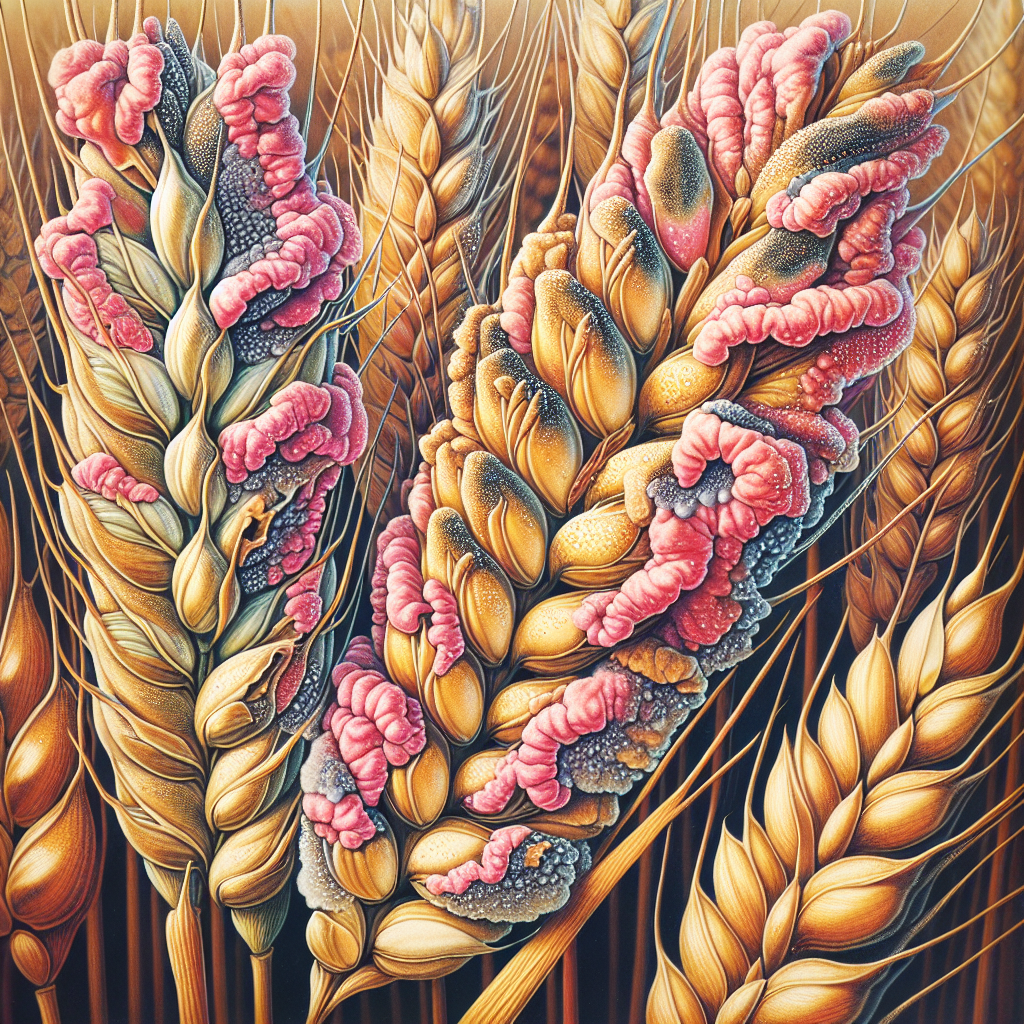
Introduction to Grain discoloration complexes
Grain discoloration complexes represent a significant challenge in cereal production worldwide, particularly affecting staple crops in humid and tropical regions. These are not single pathogens but intricate syndromes involving multiple fungi such as Fusarium, Alternaria, Bipolaris, and Curvularia species that colonize developing grains under favorable conditions. The result is off-color grains—ranging from pink, brown, black, to silver—leading to downgrading or rejection at markets. In major producers like the US Midwest, India, and Southeast Asia, losses can exceed 20% of yield value annually.
Unlike uniform rusts or smuts, these complexes are insidious because symptoms mimic maturity or stress, delaying diagnosis. They compromise grain quality for milling, brewing, and feed, with mycotoxins from Fusarium adding health risks. Understanding this disease is crucial for wheat, rice, corn, and other grains. This guide provides diagnostic tools, lifecycle insights, organic management, and prevention strategies for sustainable farming. For small farms optimizing yields, check this Soil Health Mastery blog on building resilient fields.
Economic impacts are stark: a 10% discoloration can slash wheat prices by 30-50%. Early intervention through scouting and cultural shifts is key to minimizing damage.
Identifying Symptoms & Damage
Diagnosis starts with visual scouting during grain fill to maturity. Key symptoms include:
- Kernel Discoloration: Grains show irregular patches of pink (Fusarium), black (Bipolaris), brown (Alternaria), or silver (Cladosporium). Affected kernels appear prematurely aged, contrasting healthy golden grains.
- Shriveling and Lightweight: Discolored grains are smaller, lighter (low test weight), and chalky inside, reducing bushel weight below 58 lb/bu for wheat.
- Panicle/Head Effects: In rice and sorghum, panicles may have blotchy, darkened glumes; wheat heads show streaked awns or rachis.
- Secondary Signs: Black fungal sporulation under humid conditions; mycotoxin presence indicated by animal feed refusal.
Damage quantification: Inspect 100-head samples; >5% discolored kernels signals action. Yield losses average 5-15%, but quality hits harder—malt barley downgraded from premium. Differentiate from grain mold (uniform pink) or Fusarium head blight (bleached spikelets with vomitoxin). Use magnification for spore identification or lab tests for confirmation.
Field patterns: Edges and low areas first, spreading via rain splash. Economic threshold: 2-5% incidence warrants management.
Lifecycle and Progression of Grain discoloration complexes
These complexes lack a single lifecycle but follow environmental infection windows. Fungi overwinter as mycelium in crop residue, seed, or soil. Primary inoculum (conidia/spores) activates in spring rains.
- Infection Phase (Flowering to Early Grain Fill): Spores splash onto florets during anthesis. High RH (>90%) and temps 75-85°F favor germination (4-12 hours).
- Colonization (Mid-Grain Fill): Hyphae penetrate glumes/ pericarp, causing discoloration. Latent period 7-14 days.
- Symptom Expression (Late Fill to Maturity): Pigments degrade, kernels shrink. Sporulation occurs if wet post-physiological maturity.
- Survival: Residue harbors pathogens 1-2 years; seed transmission up to 10%.
Progression accelerates with repeated rain events. In barley, it starts at boot stage; in rice, during heading. Multiple infection cycles amplify damage. Check grain-feeding insects as vectors worsening spread.
Environmental Triggers & Risk Factors
Optimal conditions: 80-90% RH, 77-86°F during reproduction, poor air drainage. Key triggers:
- Weather: Prolonged leaf wetness (>48 hours), frequent rains at anthesis.
- Agronomic: High N rates causing lush canopies; dense planting (>15M plants/acre); continuous grain cropping.
- Varietal: Susceptible hybrids like old soft wheats.
- Stress: Drought pre-flowering weakens defenses; downy mildew co-infections.
Risk mapping: Humid tropics (India rice), US Corn Belt. No-till without rotation raises residue inoculum 3x.
Organic Control & Treatment Plans
Organic strategies emphasize prevention over cures, as no eradicants exist.
Cultural Controls (Primary):
- Rotate with soybeans or legumes (3-4 years) to break residue cycles.
- Plant resistant varieties (e.g., Pioneer hybrids for corn).
- Optimize planting: Medium density, balanced N (avoid excess).
- Scout weekly from boot stage; rogue heavily infected heads.
Biologicals:
- Trichoderma applications at flowering (1-2 kg/ha) compete with pathogens.
- Bacillus subtilis seed treatments reduce seedborne fungi.
Harvest Management:
- Harvest at 18-20% moisture, dry to <13% immediately.
- Clean equipment to prevent spread.
Integrated Plan: Year 1—rotate + resistant seed; Year 2—add biofungicides. Expect 50-70% reduction. Avoid head-feeding insects flare-ups.
Preventing Grain discoloration complexes in the Future
Long-term prevention builds resilient systems:
- Varietal Selection: Choose tolerant lines (e.g., WB-DMR for wheat).
- Crop Rotation & Tillage: Alternate grains with non-hosts; strip-till buries residue.
- Timing: Plant to avoid peak rain at flowering (e.g., early wheat).
- Nutrition: K and Si amendments boost resistance.
- Monitoring: Use weather apps for RH alerts; threshold scouting.
Farm systems with cover crops cut incidence 40%. Seed cleaning removes 90% inoculum.
Crops Most Affected by Grain discoloration complexes
- Wheat (wheat, durum): Pink/brown kernels, major in humid wheat belts.
- Rice (rice): Glume discoloration, yield loss 10-30%.
- Corn (corn): Ear rots leading to mycotoxins.
- Sorghum & Barley: Head molds in tropics.
- Oats & Millet: Lesser but significant in small farms.
Global hotspots: Asia (60% cases), Americas (30%).