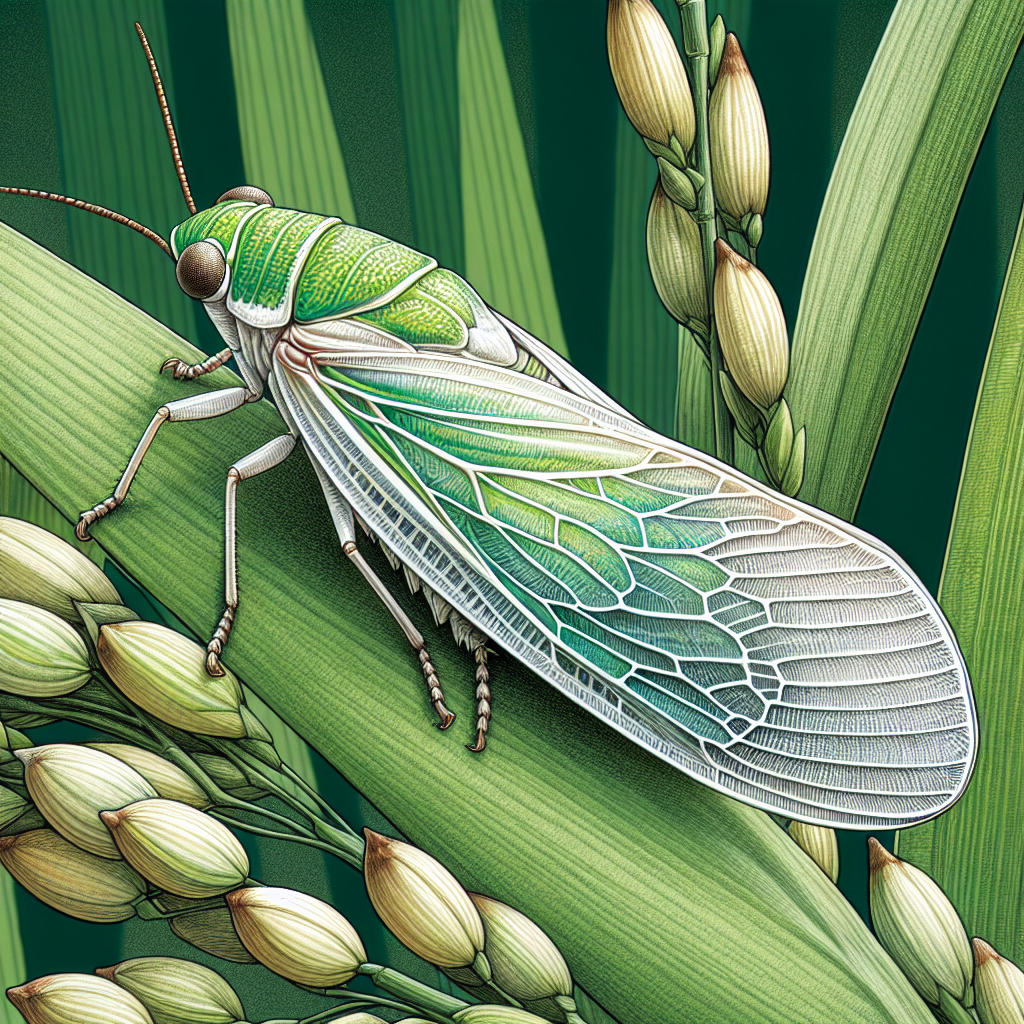
Introduction to white-backed planthopper
The white-backed planthopper, scientifically known as Sogatella furcifera, ranks among the most notorious pests in rice-growing regions across Asia, particularly in countries like China, Japan, Vietnam, India, and the Philippines. This hemipteran insect belongs to the Delphacidae family and is notorious for its high reproductive capacity and long-distance migration abilities, often carried by wind currents over thousands of kilometers. Farmers face significant challenges as populations can explode rapidly, leading to 'hopperburn'—a devastating condition where plants turn yellow, dry up, and die prematurely.
Direct feeding by nymphs and adults extracts plant sap, weakening stems and reducing photosynthesis, while the pest transmits deadly viruses such as rice ragged stunt virus, rice black-streaked dwarf virus, and southern rice black-streaked dwarf virus. Outbreaks have historically caused yield losses exceeding 50% in susceptible varieties, with economic impacts in the billions annually. Understanding this pest's biology and implementing timely interventions is crucial for sustainable rice production. Early scouting and integrated management can mitigate damage, preserving crop health and profitability.
Identifying Symptoms & Damage
Accurate identification of white-backed planthopper infestations relies on recognizing both visual signs and plant damage patterns. Adults are slender, 3-4 mm long, with a distinctive white stripe along the thorax and abdomen, pale green to yellowish bodies, and clear wings held roof-like over the back. Nymphs are smaller, wingless, and crawl actively on leaf undersides and stems, often covered in a white waxy substance.
Initial symptoms appear as yellowing of lower leaves, progressing to hopperburn: plants exhibit upright, chlorotic leaves that curl, turn orange-brown, and wither from the base upward, mimicking drought stress. Severe infestations cause plant lodging, where stems collapse, and tillers fail to produce panicles. Sticky honeydew excretions coat leaves, promoting sooty mold growth and attracting ants. Check for white frothy spittle masses or cast nymphal skins on stems.
Differentiate from similar pests like the small brown planthopper (Laodelphax striatellus) by the prominent white band and longer wings. Use a hand lens to inspect leaf sheaths at the base of plants during tillering to booting stages, when damage peaks. Yield impacts include reduced grain number, empty grains, and up to 100% loss in hotspots. Associated diseases manifest as stunted growth, mottled leaves, or grassy stunt symptoms—consult leafhoppers for comparative diagnostics.
Lifecycle and Progression of white-backed planthopper
The white-backed planthopper completes 5-6 generations per year in tropical climates, with lifecycle duration varying from 20-40 days depending on temperature (optimal at 25-30°C). Eggs are laid in clusters of 20-100 within leaf sheaths, hatching in 4-7 days into nymphs that undergo five instars over 12-20 days. Nymphs feed voraciously, molting and producing waxy filaments for camouflage.
Adults emerge capable of flight and migration, with macropterous forms dominating outbreaks. Females lay up to 300 eggs, favoring young tillers. Overwintering occurs as eggs in temperate zones or adults in mild areas. Population peaks align with rice tillering (20-40 days after transplanting) and panicle initiation.
Progression follows density-dependent phases: low populations cause subtle sap loss; moderate lead to yellowing; high (>50 insects/hill) trigger hopperburn within 7-10 days. Migratory swarms arrive post-monsoon, amplifying local generations. Monitor with sticky traps (yellow pan or water pan) to track alates—thresholds of 10-20/hill warrant action.
Environmental Triggers & Risk Factors
White-backed planthopper thrives in warm, humid conditions (25-32°C, >80% RH), with outbreaks triggered by consecutive nitrogen-heavy fertilizations promoting succulent growth. High planting densities (>30 hills/m²) and continuous rice monocropping foster rapid buildup. Windborne migration from source areas like eastern India or southern China seeds infestations in receptive fields.
Susceptible varieties lacking resistance genes (e.g., Bph genes) and late planting expose crops to peak flights. Flooded fields with poor drainage retain humidity, aiding nymph survival. Climate change extends migration ranges, with El Niño patterns correlating to major outbreaks (e.g., 2005-2006 Asian epidemics). Overuse of broad-spectrum insecticides disrupts natural enemies like spiders (Lycosa pseudoannulata), wolves (Pardosa astrifera), and parasitic wasps (Anagrus nilaparvatae), creating resurgence risks.
Soil nitrogen >150 kg/ha doubles infestation rates; assess via leaf N-content tests. Alternate wetting-drying cycles suppress populations by 70%. Regional forecasts from IRRI or national services predict influxes—integrate with field scouting.
Organic Control & Treatment Plans
Organic management emphasizes cultural, biological, and mechanical tactics within IPM frameworks, avoiding synthetic chemicals. Cultural Controls: Use resistant varieties like IR36 or TKM6 carrying Bph3/Bph17 genes. Practice intermittent irrigation (3-5 days dry) to desiccate eggs/nymphs. Synchronous planting (±14 days) across farms disrupts migration cycles. Remove weeds like Leersia hosting early populations.
Biological Controls: Conserve predators—spiders reduce nymphs by 40%; release Anagrus wasps (1,000/ha) at egg detection. Neem oil (5 ml/L) or azadirachtin sprays deter feeding (apply evenings, 500-1000 L/ha). Beauveria bassiana or Metarhizium anisopliae fungal sprays target nymphs (>80% mortality at 10^8 spores/ml).
Mechanical/Physical: Light traps (2-3/ha) capture alates at dusk; sweep nets for manual removal in small fields. Border crops like sesame or sunflower act as traps. Treatment Plans:
- Scout weekly; act at 10 nymphs/hill.
- First: Irrigate intermittently + neem (day 1).
- Second: Fungal biopesticide + predator release (day 7).
- Monitor; repeat if >20/hill.
Spring Pest Patrol: Organic AI Strategies to Shield Your Crops from Common Invaders offers tech-enhanced scouting tips. Combine for >90% control without residues.
Preventing white-backed planthopper in the Future
Long-term prevention integrates farm-level and landscape strategies. Rotate rice with non-hosts like legumes or onions (onion) to break cycles—2-season breaks halve populations. Balanced fertilization (N:P:K 120:40:40 kg/ha) avoids excess N; split applications minimize lush growth.
Field sanitation: Destroy stubble post-harvest via deep plowing (>15 cm) to bury eggs. Trap crops (susceptible borders) divert migrants. Community-level synchronous planting and trap belts (maize/sorghum) buffer areas. Early maturing varieties (<110 days) escape peak flights.
Enhance biodiversity with hedgerows of marigold (marigold) or basil (thai-basil) boosting predators. Pheromone traps for monitoring. Climate-resilient practices: Raised beds improve drainage. Annual risk mapping using weather data prevents surprises—sustainable yields increase 20-30%.
Crops Most Affected by white-backed planthopper
Primarily a rice specialist, Sogatella furcifera devastates paddy fields, with global losses >$1B yearly. Prefers direct-seeded or transplanted rice, especially hybrids and indicas. Minor hosts include wheat, corn, sorghum, and wild grasses (Echinochloa, Leersia), serving as reservoirs. Rarely impacts sugarcane or millets (millet).
In Asia, 80% of infestations occur in rainfed lowlands; upland rice resists better. Secondary damage via virus transmission affects barley in mixed systems. Focus IPM on staple grains for food security.