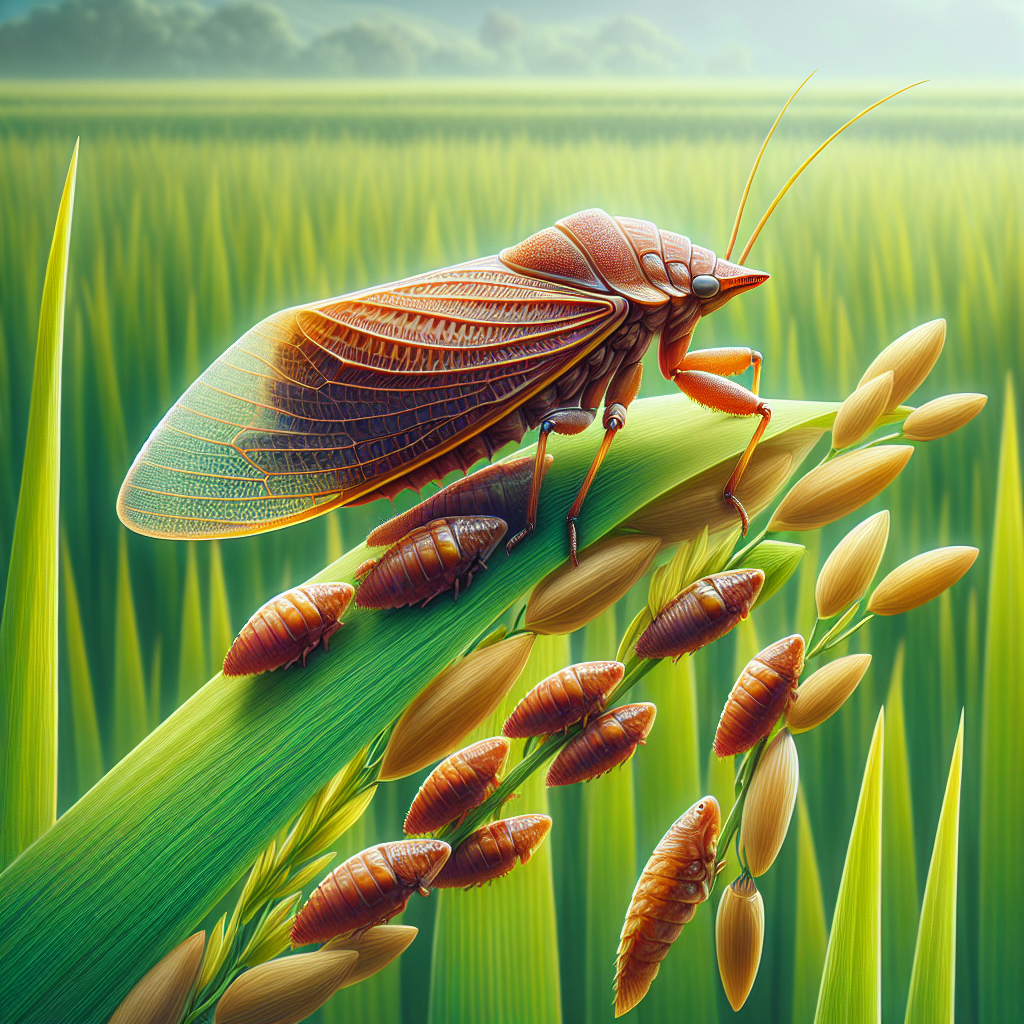
Introduction to brown planthopper
The brown planthopper, scientifically known as Nilaparvata lugens, stands as one of the most destructive pests threatening global rice production. Native to Southeast Asia, this small, winged insect has earned notoriety for its ability to devastate paddy fields through direct feeding and as a vector for devastating viruses like rice ragged stunt virus and grassy stunt virus. Farmers in rice-growing regions from India to Japan face annual losses exceeding millions of tons due to outbreaks, making early detection and integrated management crucial.
Unlike many pests, the brown planthopper (BPH) thrives in tropical and subtropical climates, multiplying rapidly under favorable conditions. Adults are characterized by their brown, elongated bodies measuring 2-4 mm in length, with females being slightly larger and macropterous (long-winged) forms enabling long-distance migration. Understanding its biology is key to combating this pest, as it can cause 'hopperburn'—a scorched appearance on rice plants leading to complete crop failure. This guide equips rice farmers, agronomists, and agricultural extension workers with definitive diagnostic tools, lifecycle knowledge, and proven organic control methods to safeguard yields.
In major rice-producing countries like Vietnam, China, and the Philippines, BPH outbreaks have triggered famines and economic crises, underscoring its status as a key quarantine pest. Resistant rice varieties such as those with the Bph genes offer partial protection, but integrated pest management (IPM) remains the cornerstone of sustainable control. By focusing on cultural practices, biological agents, and vigilant monitoring, growers can minimize chemical inputs while maximizing productivity. For more on rice cultivation challenges, explore our Rice (crop) wiki page.
Identifying Symptoms & Damage
Diagnosing brown planthopper infestations requires keen observation of both insect presence and plant damage. Early symptoms include yellowing and drying of lower leaves, often mistaken for nutrient deficiencies or powdery mildew. As populations build, nymphs and adults cluster densely at the base of rice tillers, sucking sap from vascular tissues, which disrupts nutrient and water transport.
The hallmark of severe infestation is 'hopperburn,' where affected plants turn orange-brown, dry up, and lodge in irregular patches across the field. Severely damaged tillers exhibit stunted growth, reduced panicle formation, and empty or shriveled grains, slashing yields by 20-100%. Look for sooty mold on leaf sheaths—a secondary fungal growth on honeydew excreted by feeding hoppers—and the presence of white, frothy spittle masses from nymphs.
Viral transmission amplifies damage: infected plants show stunting, mosaic patterns, and sterility. Differentiate BPH from similar pests like the smaller whitebacked planthopper or leafhoppers by its uniform brown coloration, wedge-shaped body, and preference for rice stems. Scout fields weekly from tillering stage, using a sweep net or visual counts per hill (threshold: 10-20 hoppers/hill). Use sticky traps colored yellow to monitor adult migration. Accurate diagnosis prevents misapplication of controls and protects beneficial insects.
Lifecycle and Progression of brown planthopper
The brown planthopper completes 20-30 generations per year in tropical regions, with a lifecycle of 18-25 days under optimal conditions (25-30°C, 80% humidity). Eggs, laid in clusters of 50-100 within leaf sheaths, hatch in 4-6 days into nymphs that undergo five instars over 12-15 days. Nymphs are pale yellow to brown, wingless, and highly destructive as they feed gregariously.
Adults emerge with long wings for migration, females producing 300+ eggs in their 10-15 day lifespan. Overwintering occurs as eggs in temperate areas or adults in tropics. Population booms post-monsoon, with macropterous forms flying up to 60 km nightly, guided by winds. Understanding this progression informs timely interventions: target eggs/nymphs during vegetative stages and adults at reproductive peaks.
Biotype evolution poses challenges—new strains overcome resistant varieties like TN1 rice. Track progression via light traps during migration peaks (evenings) and field mapping. Lifecycle knowledge enables precise IPM timing, reducing reliance on broad-spectrum insecticides that exacerbate outbreaks.
Environmental Triggers & Risk Factors
Brown planthopper thrives in warm, humid conditions (25-35°C, >70% RH), with outbreaks triggered by consecutive rainy seasons flooding paddies. High nitrogen fertilization promotes succulent tillers, attracting gravid females. Monocropping rice without varietal rotation builds biotype pressure, while nearby volunteer rice or weeds serve as reservoirs.
Migration from source to sink fields occurs August-October in Asia, fueled by typhoons. Poor water management—standing water >10 cm—favors nymph survival. Climate change extends breeding seasons, intensifying risks. Risk assessment: fields with prior outbreaks, dense planting (>25 hills/m²), and excessive N (>120 kg/ha) score high. Mitigate by synchronizing planting and avoiding flood-prone lowlands.
For holistic farm strategies, check our blog on Spring Pest Patrol: Organic AI Strategies to Shield Your Crops from Common Invaders.
Organic Control & Treatment Plans
Organic management emphasizes IPM: cultural, biological, and mechanical tactics over chemicals. Cultural Controls: Plant resistant varieties (e.g., Rathu Heenati, Bph14/15 genes). Use 25-30 day crop intervals to disrupt breeding. Alternate wetting-drying irrigation starves nymphs. Incorporate green manures like sesbania to suppress volunteers.
Biological Controls: Conserve predators—spiders (Lycosa pseudoannulata), mirid bugs (Cyrtorhinus lividipennis), and parasitic wasps (Anagrus nilaparvatae). Release egg parasitoids at 1:10 hopper ratio. Apply neem oil (azadirachtin 0.03%) or Beauveria bassiana sprays (10^9 spores/ml) targeting nymphs; repeat every 7 days.
Mechanical: Light traps (2-4/ha) capture adults; sweep nets remove early infestations. Rogue infected plants to curb virus spread. Threshold-based action: Treat at 10 nymphs/hill or 5 adults/hill. Rotate with non-hosts like soybeans. Success stories from Vietnam show 70% yield recovery via IPM, minimizing resistance.
Preventing brown planthopper in the Future
Prevention hinges on landscape-level strategies. Implement synchronous planting within 30 days across regions to deny migration sources. Use certified seeds free of eggs; solarize fields pre-season. Trap crops like sesame border rows lure hoppers away. Monitor via pheromone traps and apps for early warnings.
Enhance biodiversity: interplant with mustard or marigold to boost predators. Balanced fertilization (N:P:K 100:40:40) hardens plants. Post-harvest, deep plow residues (>15 cm) to bury eggs. Farmer field schools build community surveillance. Long-term, breed stacked-resistance varieties and deploy RNA interference biopesticides. Consistent prevention sustains yields above 6 t/ha.
Crops Most Affected by brown planthopper
Rice dominates as the primary host, with Oryza sativa varieties like indica and japonica equally vulnerable. Leersia species (wild rice) serve as alternate hosts perpetuating populations. BPH rarely affects other grains like wheat or corn, confining damage to Poaceae family. In Asia, 90% of outbreaks hit irrigated paddies; upland rice resists better due to drier soils. Global impact: 100 million tons lost yearly, threatening food security.