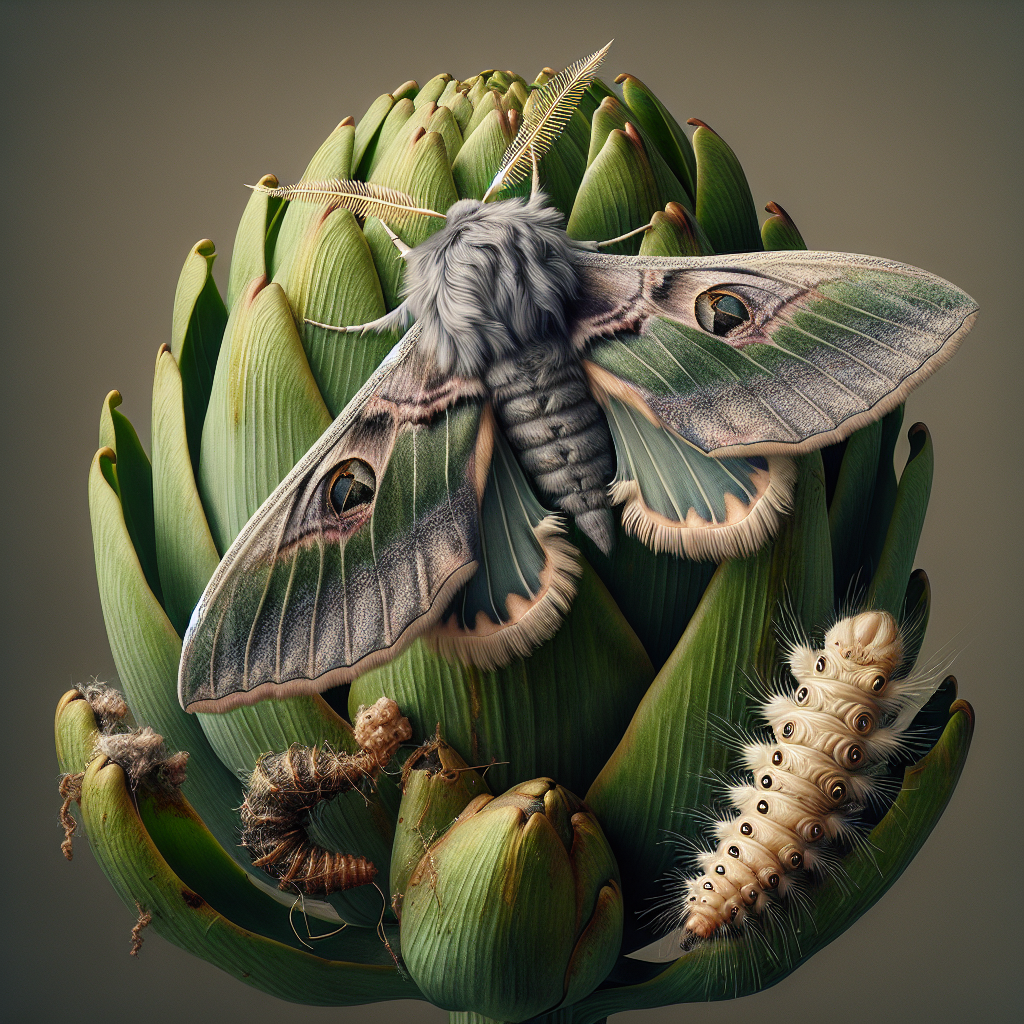
Introduction to Artichoke plume moth
The artichoke plume moth, scientifically known as Platyptilia carduidactylus, is a notorious pest in artichoke production regions, particularly in coastal California, the Mediterranean, and parts of Europe. This small moth from the Pterophoridae family earns its name from the distinctive feathery, plume-like wings of the adult, which split into slender fringes. While adults are relatively innocuous, feeding on nectar, it's the larvae that wreak havoc by mining into artichoke leaves, stems, and most critically, the developing buds and heads.
Infestations can reduce marketable yields by up to 50% or more in severe cases, making timely identification and management essential for commercial growers and home gardeners alike. Native to the Mediterranean, this pest has spread globally via infested plant material, thriving in mild, maritime climates ideal for Green Globe Artichoke cultivation. Understanding its behavior is key to implementing integrated pest management (IPM) strategies that minimize chemical use and preserve beneficial insects. This definitive guide covers diagnostics, lifecycle, triggers, organic controls, prevention, and affected crops to empower farmers with professional-grade advice.
Identifying Symptoms & Damage
Early detection of artichoke plume moth damage hinges on recognizing subtle signs before larvae bore deep into buds. Initial symptoms appear on lower leaves as small, translucent windows or mines—irregular, winding trails where larvae have skeletonized the tissue between veins. Affected leaves may curl, turn brown, and drop prematurely, often mistaken for leaf miners or drought stress.
As larvae progress upward, inspect stems for entry holes plugged with silken webbing and frass (insect droppings), resembling tiny sawdust piles. The hallmark damage occurs in buds and heads: small, cream-colored larvae (up to 1/2 inch long) bore into bracts, causing heads to deform, open prematurely, or fail to develop. Infested heads appear ragged, with brown, necrotic tissue inside, reduced edible portions, and secondary infections from Botrytis or bacteria entering wounds.
Shake plants over white paper to dislodge larvae; active ones wriggle conspicuously. Adults, active at dusk, are 1/2-inch long with grayish bodies and divided wings held plume-like at rest. Differentiate from similar pests like caterpillars by the larvae's unique divided hind end and feathery adult wings. Scout weekly from spring, focusing on field edges near wild hosts. Yield impacts escalate with hot, dry conditions favoring rapid generations.
Lifecycle and Progression of Artichoke plume moth
The artichoke plume moth completes multiple generations per year (3-6), aligned with artichoke's perennial growth in mild climates. Adults emerge year-round but peak in spring (March-May) and fall (September-November), coinciding with bud formation. Females lay 50-100 tiny, greenish eggs singly or in clusters on leaf undersides, buds, or stems.
Eggs hatch in 7-10 days into slender, pale green larvae with dark heads and a forked rear end for propulsion. Young larvae mine leaves, creating silken tunnels; older instars (4 stages) bore into buds, feeding for 2-4 weeks before pupating. Pupae are small (1/4 inch), brown, spindle-shaped, often in leaf folds or head interiors, lasting 10-14 days.
Total lifecycle spans 4-6 weeks, accelerated by temperatures above 70°F (21°C). Overwintering occurs as partially grown larvae in plant debris or buds. In perennial artichoke fields, overlapping generations complicate control. Monitor with pheromone traps for adult flights; peak captures predict egg-laying. Destroy pupal cases to break the cycle.
Environmental Triggers & Risk Factors
Artichoke plume moth thrives in warm, dry Mediterranean climates (60-80°F optimal), with populations exploding during prolonged heat spells above 75°F and low humidity below 50%. Drought-stressed plants are more susceptible, as reduced vigor limits defensive resins. Proximity to wild hosts like thistles, burdock, or cabbage fields serves as reservoirs, with moths dispersing up to 1 mile on winds.
Over-fertilization with nitrogen promotes lush growth ideal for larval feeding, while poor drainage fosters secondary rots in damaged tissue. New plantings from infested nursery stock introduce pests; volunteer artichokes harbor overwintering larvae. Windbreaks lacking maintenance allow influx from weedy borders. Risk peaks in coastal valleys like Monterey, California, where 2-3 rain-free months trigger outbreaks. Companion crops like Thai Basil may deter via volatiles, but dense canopies trap humidity, indirectly favoring aphids that vector viruses.
Organic Control & Treatment Plans
Organic management of artichoke plume moth emphasizes IPM: monitoring, cultural, biological, and targeted physical controls. Start with weekly scouting using pheromone traps (e.g., for Platyptilia spp.) to time interventions; treat when 5-10 moths/trap/week or 1% bud infestation.
Cultural Controls: Prune lower leaves to expose larvae to predators and UV; destroy debris post-harvest to eliminate pupae. Rotate with non-hosts like potato every 2-3 years. Irrigate early morning to dry foliage by evening, reducing egg survival.
Biological Controls: Release Trichogramma wasps (egg parasitoids) at 100,000/acre weekly during flights; they parasitize 50-70% eggs. Encourage native predators like lacewings, spiders, and big-eyed bugs via flowering borders. Bacillus thuringiensis (Bt) kurstaki sprays target young larvae effectively (OMRI-listed); apply evenings to buds at petal fall, repeating 7-10 days (3x max/season).
Physical/Mechanical: Hand-pick larvae from small plantings, dropping into soapy water. Use row covers (lightweight Agribon) over young plants until bud set. Kaolin clay (Surround WP) barriers deter egg-laying; apply pre-bloom, reapply after rain.
Botanicals: Neem oil or spinosad (Entrust) for larvae; test small areas first. Integrate with Spring Pest Patrol: Organic AI Strategies to Shield Your Crops from Common Invaders for timing. Avoid broad-spectrum sprays to preserve earwigs, which prey on eggs. Threshold: 2% bud damage.
Preventing Artichoke plume moth in the Future
Prevention is the cornerstone of long-term control. Select certified, pest-free artichoke transplants; hot-water treat seeds if applicable. Plant resistant varieties like Imperial Star with tighter buds. Maintain 4-6 ft spacing for airflow, mulching to suppress weeds hosting moths.
Destroy wild Asteraceae nearby; mow borders monthly. Use reflective mulches (aluminum) to disorient adults. Pheromone mating disruption dispensers (e.g., Isomate-P) confuse males, reducing egg-laying by 80% in trials; hang 100/acre pre-flight. Monitor soil for root-knot nematodes, as stressed roots compound damage.
Fall clean-up is critical: disk under residues, till lightly to expose pupae to birds. Cover crops like clover build soil health, indirectly boosting plant resilience. Annual IPM audits track progress. For small farms, tools from Why Misidentifying Plants Costs Small Farms Thousands - And How AI Camera Diagnosis Fixes It Fast aid early detection, preventing outbreaks.
Crops Most Affected by Artichoke plume moth
Primarily targeting Cynara scolymus (artichoke), the plume moth occasionally infests related Asteraceae like cardoon, endive, and safflower. In California, over 90% of damage occurs on perennial artichoke fields, especially Green Globe and Imperial Star varieties. Wild thistles (Cirsium spp.) serve as alternate hosts, sustaining populations.
Rare spillovers affect eggplant and bell pepper in mixed plantings, with larvae mining leaves. No significant impact on tomato or solanaceous crops, focusing polyphagy on composites. Global reports note minor issues on sunflower (sunflower) buds. Prioritize monitoring in artichoke monocultures near weedy margins.