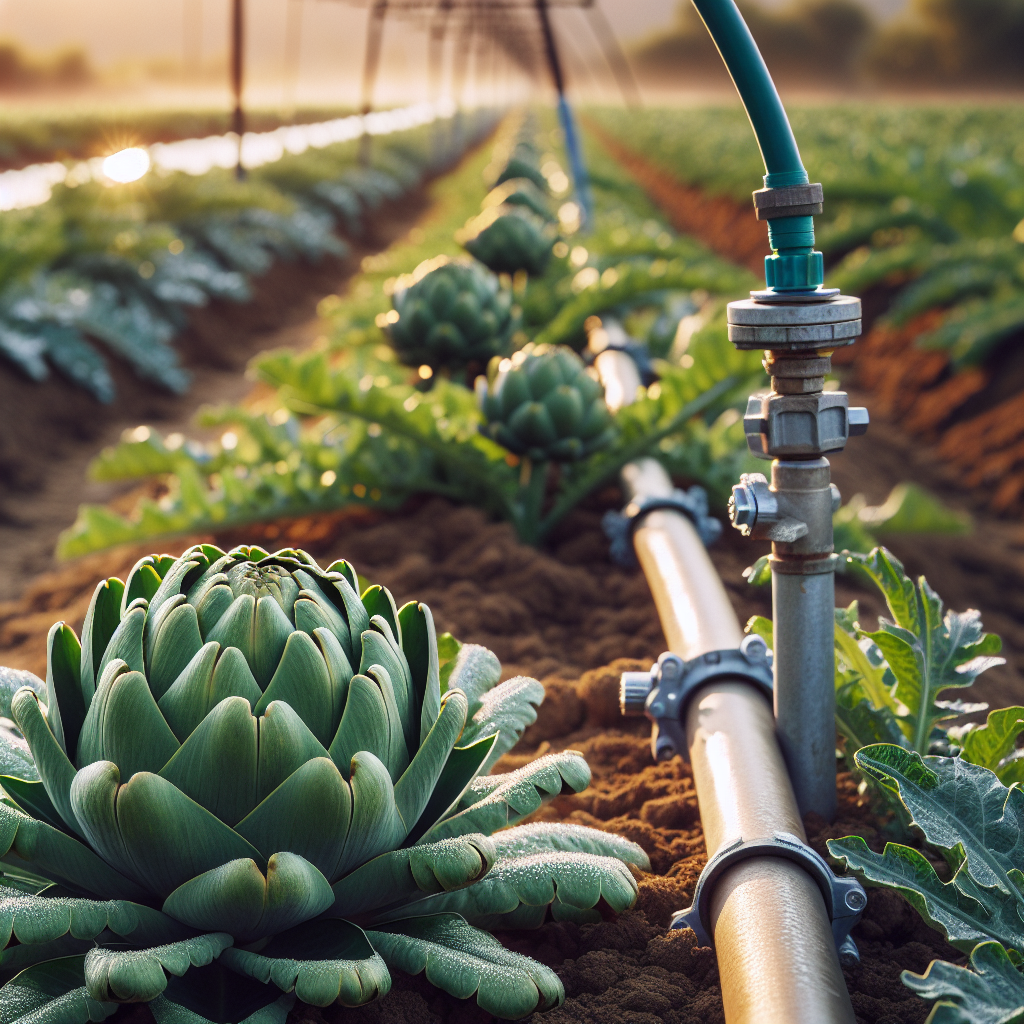
Introduction to Green Globe Artichoke
A traditional heirloom-style globe artichoke, this variety has long been associated with coastal California production and Mediterranean vegetable culture. It is grown for its immature flower buds, which are harvested before the bracts open and the edible heart begins converting into a fibrous, inedible bloom stalk. Green Globe is valued for producing large, dense, rounded buds with thick fleshy bracts and a substantial heart, making it one of the benchmark market and home-garden artichokes.
Unlike annual vegetables that complete their life cycle in one season, this crop behaves as a short-lived perennial in suitable climates. In frost-light regions, individual crowns can remain productive for 3-5 years when maintained properly. In colder climates, many growers treat it as an annual or rely on vernalization techniques to trigger first-year bud set. For broad background on the crop type, see Artichoke.
Green Globe is not the easiest edible perennial, but it is highly rewarding. The plant forms a dramatic rosette of silver-green, deeply lobed leaves and eventually throws up thick flower stalks topped with large terminal buds and smaller secondary buds. Its appearance is ornamental enough for edible landscaping, yet its nutrient demand and space needs are closer to a serious field vegetable than a kitchen-herb border plant.
Historically, artichokes trace back to the domestication of cardoon-like thistles in the Mediterranean basin. Over centuries, selection focused on larger, less spiny, more tender flower buds. Green Globe reflects that domestication pathway: robust growth, broad bracts, and a commercial-quality head that performs best where winters are cool, summers are moderate, and soil fertility is generous.
Botanical Profile of Green Globe Artichoke
This is a member of the Asteraceae family, the same broad family that includes lettuce, sunflower, and many composite-flowered crops. Botanically, the edible structure is an unopened inflorescence. What consumers call the “artichoke” is the immature flower head, composed of overlapping bracts surrounding the receptacle and the undeveloped choke.
Green Globe typically forms a plant 3-5 feet tall and 4-6 feet wide under strong growing conditions. Leaves are long, arching, gray-green to silvery green, and deeply cut, often reaching 2-3 feet in length. The root system is substantial and benefits from deep, friable soil; compacted layers sharply reduce vigor and bud size.
The plant usually produces one dominant central bud first, followed by several lateral buds on side branches. The terminal bud is generally the largest and highest quality, often 3-5 inches across under ideal management. Secondary buds are smaller but still excellent for fresh use, marinating, or processing.
As a perennial, Green Globe grows from a crown with developing side shoots. These offsets can be divided for vegetative propagation, which is important because seed-grown plants can show some variability in vigor, bud timing, and uniformity. Commercially, vegetative propagation often preserves the most desirable head shape and harvest window.
Its physiology is closely tied to cool-season growth and a vernalization response. Exposure to cool temperatures can stimulate floral initiation, but severe freezing can injure crowns and foliage. High heat, especially when paired with drought stress, accelerates plant stress, reduces bud quality, and may induce smaller heads with looser bracts.
Soil, pH, and Climate Requirements for Green Globe Artichoke
This crop performs best in deep, fertile, well-drained loam with high organic matter and excellent moisture-holding capacity. The ideal soil profile is not merely “rich”; it should combine steady water retention with rapid drainage after heavy rain. Green Globe dislikes anaerobic root conditions, and standing water around crowns is one of the fastest ways to invite root decline, crown rot, and weak spring regrowth.
Target a soil pH of 6.5-7.5. It tolerates slightly alkaline soil better than many vegetables, but strongly acidic soils below about 6.0 reduce nutrient availability and root performance. If pH is low, lime should be incorporated several months before planting based on soil test recommendations. If the soil is very calcareous and above pH 7.8, micronutrient lockout, especially iron and zinc, may appear as interveinal chlorosis on younger leaves.
Before planting, work in 2-4 inches of finished compost plus a balanced pre-plant nutrient program guided by soil analysis. The crop is a heavy feeder, especially for nitrogen and potassium, but overdoing nitrogen at the expense of potassium and calcium can produce lush, soft tissue that is more vulnerable to Aphids and rot.
The ideal climate is Mediterranean: cool, moist winters and mild summers with daytime temperatures of 60-75°F (16-24°C). Plants can tolerate warmer days if root moisture remains constant and nights cool down, but prolonged temperatures above 85°F (29°C) reduce bud quality. In hot inland climates, afternoon shade can help preserve bud tenderness and reduce stress.
Cold tolerance is nuanced. Established plants can handle light frosts, and foliage may recover from brief exposure to around 28-30°F (-2 to -1°C). Hard freezes below about 25°F (-4°C), especially if prolonged or repeated, can kill unprotected crowns. In cold-winter regions, thick mulching or lifting and dividing crowns may be necessary, while many growers instead produce Green Globe as an annual from early-started seed.
Wind exposure matters more than many growers expect. Strong winds shred foliage, increase transpiration, and can snap heavy bud stalks. Shelter from prevailing wind improves both yield and marketable head finish.
For growers focused on building a long-lasting fertile bed, the principles in soil health strategies are especially useful because this crop remains in place for multiple seasons.
Step-by-Step Planting & Propagation
Start with site selection. Choose a full-sun bed with at least 8 hours of direct light, deep soil, and enough room for large mature plants. Avoid low spots where winter water accumulates.
For seed production, sow indoors 8-12 weeks before your intended transplant date. Use a sterile seed-starting medium and maintain temperatures around 70-75°F (21-24°C) for germination. Seeds usually emerge in 10-21 days. Once seedlings form true leaves, move them into larger cells or pots to avoid root binding; artichokes resent being stunted early.
If you want first-year bud production in colder climates, seedlings often need a vernalization period after they are established but still young. This can be achieved by exposing sturdy seedlings to cool conditions around 45-50°F (7-10°C) for about 10-14 days. The goal is to mimic the cool trigger that encourages flower bud formation without freezing the plants.
Transplant outdoors after danger of severe frost has passed and plants have been hardened off over 7-10 days. Space plants 4-6 feet apart in rows 5-6 feet apart. Tight spacing may work in high-fertility gardens, but airflow decreases and disease pressure rises. In field settings, generous spacing improves machine or wheelbarrow access and keeps foliage dry.
Plant at the same depth they grew in containers. Burying crowns too deeply can increase rot risk. Water in thoroughly to settle soil around roots, then apply mulch once soil has warmed slightly.
For crown division, select healthy, mature plants during dormancy or very early spring before strong regrowth. Dig carefully to expose the crown and separate offsets that have their own roots and at least one strong bud. Replant divisions immediately into prepared ground. Vegetative divisions generally establish faster than seedlings and maintain clonal uniformity.
In mild-winter climates, fall planting is often excellent because roots establish during cool weather and plants surge in spring. In colder areas, spring planting is safer.
Raised beds are especially useful where drainage is marginal. A bed 8-12 inches high significantly reduces winter crown rot risk.
Care & Maintenance regimes for Green Globe Artichoke
Irrigation should be deep and consistent. The crop performs best when the root zone remains evenly moist to a depth of 8-12 inches, never dust-dry below the surface and never waterlogged. As a working target, keep soil in the range where a squeezed handful from the root zone feels cool and cohesive but does not release free water. If the top 2 inches are dry but the soil below remains lightly moist, that is acceptable; if the top 4-5 inches are dry during active growth, bud size will suffer.
New transplants need frequent lighter irrigations for the first 2-3 weeks while roots spread outward. After establishment, shift to deep watering 1-2 times weekly depending on soil type and weather. Sandy soils may need more frequent irrigation; clay loams need less frequent but carefully monitored watering.
Signs of underwatering include dull gray-green foliage, drooping in the morning rather than just late afternoon, reduced leaf expansion, and small, tight buds on short stalks. Signs of overwatering include persistent wilting despite wet soil, yellowing lower leaves, sour-smelling soil, blackened crown tissue, and increased fungus gnat or rot issues.
Mulch with straw, leaf mold, or composted bark to a depth of 2-4 inches, keeping material a few inches back from the crown. Mulch stabilizes moisture, suppresses weeds, and buffers temperature swings, but mulch piled directly against the crown can trap moisture and encourage rot.
Fertility should be managed in stages. Apply a nitrogen-forward side-dress when vigorous vegetative growth begins, then repeat after the first major harvest flush if plants are being maintained as perennials. A common organic approach is compost plus feather meal, fish-based fertilizer, or well-balanced pelletized organic fertilizer. Do not rely on low-analysis compost alone for high yields; Green Globe is too hungry for that in most soils.
Remove weeds early and consistently. Young artichokes compete poorly with aggressive annual weeds until their canopy expands. Once mature, they cast heavy shade, but perennial weeds can still invade the crown zone.
Pruning is simple but important. Remove yellow, damaged, or disease-marked leaves to improve airflow. After the main harvest, cut spent flower stalks down near the base unless you intentionally want ornamental blooms for pollinators. In perennial systems, many growers cut the plant back hard after harvest or seasonal decline to stimulate fresh crown growth.
Overwintering depends on region. In mild climates, cut plants back to about 8-12 inches after harvest and mulch the root zone heavily. In colder climates, after frost knocks back the top growth, cut down stems, mound coarse compost or straw over the crown, and protect with breathable row cover if repeated freeze-thaw cycles are expected. The main danger is not only absolute cold, but alternating freeze and saturated soil conditions.
A mature plant can become crowded after several years. Divide every 3-5 years if vigor declines, buds become smaller, or the center of the clump weakens.
Pests, Diseases & Organic Management
Aphids are among the most common pests, clustering on inner leaves and developing buds. They distort growth, excrete honeydew, and can attract sooty mold. Strong water sprays directed into leaf folds, conservation of beneficial insects, and insecticidal soap applied thoroughly to contact colonies are effective early measures. Avoid excess soluble nitrogen, which often fuels soft aphid-prone growth.
Artichoke plume moth can be serious in some production regions. Larvae bore into shoots and buds, causing frass, deformed heads, and internal feeding damage. Scout regularly for pinholes, webbing, and black droppings near developing buds. Bacillus thuringiensis products can help when timed to young larvae, but sanitation and removal of infested plant parts are equally important.
Slugs and Snails feed on tender young foliage, especially in mulched, damp beds. Use iron phosphate baits, nighttime hand collection, habitat reduction, and irrigation timing that allows surface drying before nightfall.
Root-knot nematodes may affect plants in sandy, warm soils, leading to stunting and poor root function. Rotate away from susceptible vegetable ground if infestations are known, and prioritize organic matter and biologically active soil.
Powdery mildew can appear late in the season during dry days and humid nights. Improve spacing, remove congested foliage, and avoid unnecessary water stress. Sulfur or potassium bicarbonate products may help if used early.
Botrytis and Crown rots are more destructive than foliar issues. These are favored by dense canopies, damaged tissue, cool wet weather, and poor drainage. Prevention matters more than cure: wide spacing, careful irrigation, clean mulch, crown exposure, and prompt removal of decaying material are the foundation.
Bacterial and Fungal leaf spots occasionally occur, especially under overhead irrigation. Drip irrigation is strongly preferred. Sanitize tools when dividing crowns, and never propagate from weak or diseased stock.
Organic management works best as an integrated system: resistant site selection, clean planting material, balanced feeding, airflow, and relentless scouting. Once a large perennial crown becomes heavily infected with rot, rescue is difficult.
Harvesting, Curing & Optimal Storage
Harvest timing determines eating quality. Buds should be cut when they are full sized, firm, and tightly closed, before the bracts begin spreading outward. The terminal bud is harvested first, often when it reaches 3-5 inches across depending on growing conditions. Secondary buds follow over days or weeks.
Use a sharp knife or pruners and cut the bud with 1-3 inches of stem attached. The attached stem is edible when peeled and also protects the bud from bruising during handling. If left too long, buds begin to loosen, the inner choke develops rapidly, and texture becomes tougher.
For fresh market quality, harvest during the cool part of the morning when heads are fully turgid. Keep buds shaded immediately after cutting. Field heat causes rapid moisture loss and dulls appearance.
Unlike onions or winter squash, artichokes are not “cured” in the classic dry-down sense. Instead, postharvest handling centers on rapid cooling and high-humidity storage. Hydrocooling or prompt refrigeration is ideal. Store at 32-36°F (0-2°C) with 90-95% relative humidity. Under these conditions, buds may hold for about 1-2 weeks, though best quality is within 5-7 days.
Do not store them dry in a warm kitchen. They desiccate quickly, bracts lose tightness, and browning develops. In home storage, loosely bagging buds in the refrigerator crisper helps preserve humidity. Avoid free water lingering on buds in storage, as this can encourage decay.
If producing for processing, sort out heads with open bracts, insect damage, or blackened cut stems. Uniformity matters, and Green Globe’s reputation rests on dense, symmetrical buds.
For seed saving, artichokes are complicated because maintaining varietal integrity requires isolation and allowing selected buds to open into thistle-like purple blooms. Most growers seeking true Green Globe characteristics prefer vegetative propagation from elite crowns rather than seed saving.
Companion Planting for Green Globe Artichoke
Because plants become large, long-lived, and nutrient hungry, companions should be chosen for function rather than crowding the root zone. The best companions are those that attract beneficial insects, suppress weeds lightly, or occupy nearby but not competitive space.
Nasturtium is especially useful around the perimeter as a trap and distraction plant for Aphids in some gardens, while also drawing pollinators and beneficial insects. Thyme works well in drier margins of the bed where it does not compete heavily with the crown and can help occupy open soil. Yarrow is excellent nearby for attracting predatory insects and parasitoids that help regulate Aphids and caterpillars. In wider row systems, Lettuce can be used as a short-term intercrop early in the season before the artichokes reach full size.
Avoid pairing with sprawling, aggressive feeders that will tangle into the crown or make harvest difficult. Also avoid dense companion rings pressed right against the base; artichokes need airflow and clean crown conditions. Think of companion planting here as beneficial border management rather than intimate interplanting.
On commercial or intensive homestead layouts, the most successful pattern is usually a dedicated artichoke row with insectary or low-growing companions on the shoulder of the bed, not directly over the root plate.