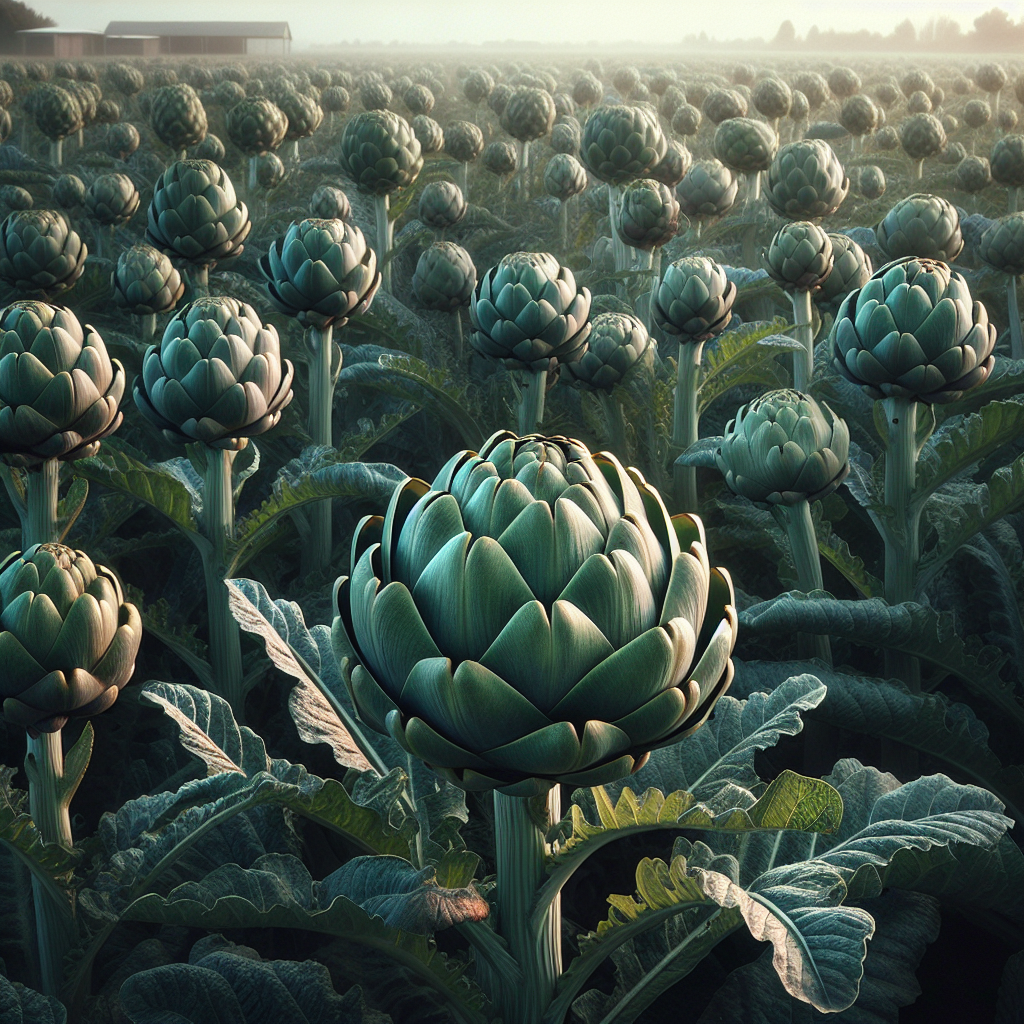
Introduction to Artichoke
A distinctive Mediterranean crop, artichoke is cultivated for its immature flower buds, which are harvested before the bracts open and the heart becomes fibrous. Though often treated as a specialty vegetable, it is botanically a perennial thistle and can remain productive for several years under favorable conditions. Its silvery, deeply lobed foliage and architectural habit make it visually striking in both market gardens and mixed edible landscapes.
Artichoke has a long agricultural history tied to the Mediterranean basin, especially Italy, Spain, and North Africa, where cool, moist winters and mild summers favor perennial production. Modern commercial systems range from perennial coastal plantings to annualized production in colder regions using vernalized transplants. For growers, the crop sits somewhere between a vegetable and a semi-permanent field planting: it requires the nutrition and irrigation precision of a heavy-feeding vegetable, but the site planning of a perennial. If you already grow long-season perennial vegetables such as Asparagus, many bed preparation principles will feel familiar.
What makes artichoke challenging is not basic establishment but consistency. Bud size, tenderness, and marketability depend on balancing vegetative vigor with floral initiation. Excess drought leads to tough buds and reduced head size; excessive heat can trigger loose, spiny, poor-quality heads; waterlogging invites crown decline. With proper cultivar choice, irrigation discipline, and seasonal management, however, artichoke becomes one of the most profitable cool-season specialty crops for direct markets and premium wholesale channels.
Botanical Profile of Artichoke
Artichoke belongs to the Asteraceae family, the same broad family that includes sunflower, lettuce, and many thistle-like species. The cultivated globe artichoke is generally classified as Cynara cardunculus var. scolymus, closely related to cardoon. It forms a large basal rosette of gray-green to silvery leaves, then sends up thick flowering stalks bearing one or more terminal and lateral buds.
The edible portion is the immature inflorescence. Each bud consists of overlapping bracts surrounding the fleshy receptacle, commonly called the heart. The tender lower portions of the bracts and the heart are consumed. If left unharvested, the bud opens into a striking purple composite flower that attracts pollinators but is no longer marketable as a vegetable. Once flowering progresses, the internal choke becomes coarse and inedible.
Mature plants commonly reach 3 to 5 feet tall and 4 to 6 feet wide, depending on cultivar, climate, and fertility. Root systems are extensive and benefit from deep, loose soil. Crowns produce new shoots over time, which can be divided for propagation in perennial systems.
Cultivar choice matters. Traditional green globe types such as 'Green Globe' are widely adapted and favored for large primary buds. 'Imperial Star' and similar seed-grown annual varieties are popular where winters are too cold for reliable perennial survival. Purple artichokes, including Italian types such as 'Violetta,' often produce smaller but highly flavorful buds and may be preferred in gourmet markets. Thorniness varies by cultivar; some older or regional types produce spiny bract tips, which affects harvest handling and market preference.
Artichoke physiology is strongly influenced by vernalization, the exposure to cool temperatures that promotes flowering. In perennial climates, winter chilling naturally triggers spring bud set. In annual systems, growers may expose young plants to cool conditions or rely on cultivars bred for first-year production. This distinction is critical: not every artichoke plant will produce high-quality buds in year one unless its varietal genetics and temperature history support floral initiation.
Soil, pH, and Climate Requirements for Artichoke
Artichoke performs best in deep, fertile, well-drained loam with high organic matter and strong moisture-holding capacity. The ideal soil texture is a silt loam or sandy clay loam that drains freely after rain yet does not dry out rapidly between irrigations. Shallow, compacted, or stony soils restrict crown expansion and reduce bud size. Heavy clay can work only if drainage is excellent and raised beds are used, because prolonged saturation around the crown encourages root rot and bacterial decline.
The preferred soil pH is 6.5 to 7.5. Plants tolerate slightly alkaline conditions better than strongly acidic soils. Below about pH 6.2, nutrient imbalances become more likely, especially around calcium, magnesium, and phosphorus availability. In acidic fields, liming several months before planting helps improve nutrient balance and root performance. Artichoke is a heavy feeder and responds well to soils with ample organic matter, ideally above 3.5 to 5 percent where feasible.
Nutrient demand is substantial. High nitrogen supports vigorous leaf and stalk growth, but overapplication late in the cycle can produce excessive vegetative growth at the expense of bud quality. Phosphorus is important for early root development, while potassium supports water regulation, bud firmness, and stress tolerance. Calcium and boron are especially relevant in maintaining tissue strength and reducing physiological disorders in fast-growing buds. A professional soil test before planting is strongly recommended, followed by in-season tissue testing for commercial blocks.
Climatically, artichoke favors mild, frost-light winters and cool to warm, but not intensely hot, growing seasons. Optimal daytime temperatures generally range from 60 to 75°F (16 to 24°C), with cool nights supporting high bud quality. Sustained temperatures above 85°F (29°C), especially when combined with dry wind, can reduce head tightness, increase bitterness, and accelerate opening. Very hard freezes can damage foliage and crowns, particularly in young plants.
In Mediterranean climates, artichoke is often planted in late summer or fall for spring harvest. In colder temperate regions, it is commonly grown as a spring-planted annual from transplants. Winter wetness is often more damaging than cold itself in poorly drained sites. A mulch layer, wind protection, and raised rows can significantly improve survival and early vigor.
For a broader understanding of how organic matter and fertility management influence demanding crops, see soil health strategies.
Step-by-Step Planting & Propagation
Begin with site selection. Choose a full-sun location receiving at least 6 to 8 hours of direct light daily; in hotter inland climates, light afternoon shade can reduce summer stress, but too much shade lowers bud production. Avoid low spots where cold air settles or water stands after rain.
Prepare the soil deeply, ideally to 12 to 18 inches. Incorporate generous amounts of mature compost or well-finished manure before planting, especially in low-organic-matter fields. Form raised beds or broad ridges in heavier soils. Install drip irrigation before transplanting so root-zone moisture can be precisely managed.
Propagation can be done from seed, rooted divisions, or offshoots. Seed-grown production is the standard for annual systems and for cultivars specifically bred for first-year yield. Sow seed indoors 8 to 12 weeks before field transplanting. Use cell trays large enough to support a strong root plug; artichokes resent becoming rootbound. Maintain germination temperatures around 70 to 75°F (21 to 24°C). Once seedlings emerge, grow them on at 60 to 70°F (16 to 21°C) with bright light and steady airflow to prevent stretching.
For annual production, many growers expose established seedlings with 4 to 5 true leaves to cool temperatures of roughly 45 to 50°F (7 to 10°C) for 10 to 14 days to encourage vernalization, depending on cultivar. Avoid stressing small seedlings too early, as underdeveloped plants may fail or button, producing tiny premature buds.
Vegetative propagation is preferred in perennial systems when maintaining a specific clone. Established crowns produce side shoots or offsets that can be separated during dormancy or early regrowth. Each division should have a healthy piece of crown and a robust root section. Plant divisions promptly and irrigate well to settle the soil.
Transplant outdoors after danger of severe frost has passed, though light frost may be tolerated by hardened plants. Space artichokes generously: 3 to 4 feet between plants and 4 to 6 feet between rows is common. Tight spacing may increase early yields per area but reduces airflow and future perennial vigor. Plant crowns or transplants at the same depth they grew in containers; burying too deeply can invite Crown rot.
Water immediately after planting to eliminate air pockets. During the first 2 to 3 weeks, maintain consistent moisture in the upper root zone without saturating it. A successful establishment target is moist but aerated soil roughly equivalent to about 60 to 80 percent field capacity. In practical terms, soil should feel cool and cohesive when squeezed but should not release free water or remain sticky for days.
Mulch with straw or composted organic matter once the soil warms slightly. This suppresses weeds, moderates root temperature, and helps maintain uniform moisture around the crown.
Care & Maintenance regimes for Artichoke
Artichoke is a high-management crop that responds to disciplined irrigation, fertility, and canopy control. Irrigation should aim for even root-zone moisture, especially during rapid vegetative growth and bud formation. As a rule, plants need about 1 to 2 inches of water per week from rain plus irrigation, but the exact amount depends on soil texture, canopy size, and evaporative demand. Sandy soils may require more frequent, lighter irrigations; loams can be irrigated more deeply and less often.
A useful moisture guideline is to keep the top 8 to 12 inches of soil uniformly moist but never continuously saturated. Signs of underwatering include dull, drooping leaves during morning hours, slowed growth, small buds, fibrous bracts, and bitter flavor. Signs of overwatering include yellowing lower leaves, soft crown tissue, sour-smelling soil, fungus gnat activity in protected culture, and plants that wilt despite wet soil due to oxygen-starved roots. Drip irrigation is strongly preferred over overhead systems because it lowers disease pressure and keeps buds cleaner.
Fertility programs should begin with a robust pre-plant base and continue with split side-dressings. Nitrogen is typically applied in multiple small doses rather than a single heavy application. Early nitrogen supports leaf area expansion; midseason feeding supports stalk and bud development. Overly lush, dark green growth with delayed bud initiation can signal excess nitrogen, especially when paired with wide internodes and soft tissue. In organic systems, feather meal, blood meal, composted poultry manure, and fish-based fertilizers are common inputs, but release rates should be matched to plant demand.
Weed competition is especially damaging during establishment because young artichokes grow slowly at first compared with aggressive annual weeds. Hand hoeing, shallow cultivation, landscape fabric, or thick organic mulch are all effective. Cultivate carefully to avoid damaging shallow feeder roots near the crown.
In perennial plantings, remove old, damaged, or disease-prone leaves to improve airflow. After the main harvest, some growers cut plants back partially and irrigate/fertilize to stimulate a secondary flush, depending on climate. In regions with hot summers, plants may enter semi-dormancy; reducing stress and maintaining crown health becomes more important than pushing constant growth.
Winter protection depends on climate. In areas with moderate frost, cut back stalks after harvest, mound mulch around crowns, and use straw or breathable row cover to buffer temperature swings. In colder zones, survival is uncertain without substantial insulation and excellent drainage. Many growers simply replant annually rather than risk crown loss.
For market quality, remove very small side shoots if the goal is fewer, larger buds. Conversely, if the market favors baby artichokes, allow more lateral bud development. Staking is occasionally needed in windy sites because mature flowering stems can be top-heavy.
Pests, Diseases & Organic Management
Aphids are among the most common pests, clustering in leaf folds and around bud stems where they suck sap and leave sticky honeydew. Heavy infestations distort growth and promote sooty mold. Strong water sprays, insecticidal soap, neem-based products, and conservation of lady beetles, lacewings, and hoverflies are effective first-line tools. Ant control is important because ants often protect Aphids.
Artichoke plume moth and Caterpillar pests can bore into buds or feed on foliage, reducing marketability. Regular scouting is essential, especially as buds begin to form. Bacillus thuringiensis (Bt) works best on young larvae before they enter protected tissues. Remove and destroy damaged buds promptly.
Slugs and Snails may attack young foliage and lower bracts, especially in mulched, damp environments. Iron phosphate baits, habitat reduction, and irrigation timing that allows the surface to dry before nightfall help reduce pressure.
Spider mites become problematic in hot, dry conditions, causing stippled leaves and bronzing. Maintaining adequate moisture, reducing dust, and releasing predatory mites in protected or high-value systems can provide control.
Diseases often begin with poor drainage or overcrowding. Crown rot and Root rots caused by soilborne pathogens are the most serious long-term threats. Prevention is far more effective than cure: use raised beds, avoid planting in poorly drained fields, rotate away from susceptible broadleaf crops when possible, and never let crowns sit in saturated soil. Bacterial and Fungal leaf spots may appear during humid weather, especially under overhead irrigation. Remove heavily infected leaves and improve airflow.
Botrytis can colonize senescing tissues and damaged buds under cool, damp conditions. Keep the canopy open, harvest promptly, and avoid wounding buds during wet weather. Powdery mildew may occur later in dry climates with humid nights; sulfur or potassium bicarbonate can help in organic systems when applied preventively.
Integrated organic management starts with sanitation and environment. Use clean planting stock, rogue out weak or diseased plants, disinfect tools when dividing crowns, and rotate sites if perennial decline becomes evident. Scout weekly at minimum, checking both upper foliage and the crown area. A crop this large can hide problems until they are severe, so disciplined inspection is essential.
Harvesting, Curing & Optimal Storage
Harvest timing determines quality more than any postharvest step. Buds should be cut when they are full-sized for the cultivar but still tight, with bracts closed and compact. The terminal central bud matures first and is usually the largest. Side buds follow over several weeks. If harvested too early, yield and heart size are reduced; too late, the bracts loosen, the choke toughens, and the bud loses tenderness.
Use a sharp knife or pruners to cut buds with 1 to 3 inches of stem attached, depending on market preference. Handle gently to avoid bract bruising, which leads to browning and shorter shelf life. Spiny cultivars should be harvested with gloves. During peak production, fields may need cutting every 2 to 4 days because quality changes quickly in warm weather.
Unlike bulb crops, artichokes are not cured in the classic drying sense. Instead, they require rapid field heat removal and high-humidity cold storage. Pre-cool as soon as possible after harvest. The ideal storage environment is about 32 to 34°F (0 to 1°C) with 90 to 95 percent relative humidity. Under these conditions, quality may hold for 2 to 3 weeks, though fresher is always better for premium eating quality.
Do not store buds in dry refrigerators or warm packing sheds for extended periods. Moisture loss causes bracts to loosen and toughen. A good commercial sign is weight retention and tight head structure. If bracts begin to spread, discolor, or feel rubbery rather than crisp, storage life is declining. Avoid storing artichokes near ethylene-sensitive or ethylene-producing produce without checking compatibility in mixed storage systems.
For local markets, hydrocooling or shaded harvest combined with immediate cold storage can significantly improve appearance. Remove damaged outer leaves and grade by size, compactness, and uniformity. Baby artichokes are marketed differently and may include more stem and a smaller, immature head profile.
Companion Planting for Artichoke
Because artichoke becomes a large, permanent-looking plant with a broad canopy, companion planting must account for its shade, root competition, and airflow needs. The best companions are low-growing, shallow-rooted, or insect-supportive plants that do not crowd the crown.
Alliums such as onions and garlic are useful nearby because their upright habit occupies less lateral space and may help confuse some pests. Lettuce and other quick salad crops can be grown around young artichokes early in the season before the canopy expands, allowing efficient bed use. Aromatic herbs such as thyme, oregano, and some basils may support beneficial insect activity while leaving the artichoke crown unobstructed.
Good flowering companions include alyssum, dill, fennel grown at a distance, and calendula, all of which can attract hoverflies, parasitic wasps, and pollinators. Since Aphids are a recurring issue, designing the planting to support natural enemies can have measurable value. Some growers also underseed with clover in wider row middles to reduce erosion and improve soil biology, though competition must be monitored closely in dry climates.
Avoid placing artichokes next to crops that are equally large and hungry, such as sprawling squash or dense brassica blocks, unless spacing is very generous. Overcrowding raises humidity and disease risk, and it complicates harvest access. Companion species should never obstruct air movement around the artichoke base.
In perennial systems, think in zones: keep the immediate 12 to 18 inches around the crown mostly clear or mulched, place low companions beyond that, and reserve taller insectary strips for row edges or alleyways. This approach preserves root health, simplifies irrigation, and still captures biodiversity benefits.