Introduction to Arracacha (Arracacia xanthorrhiza)
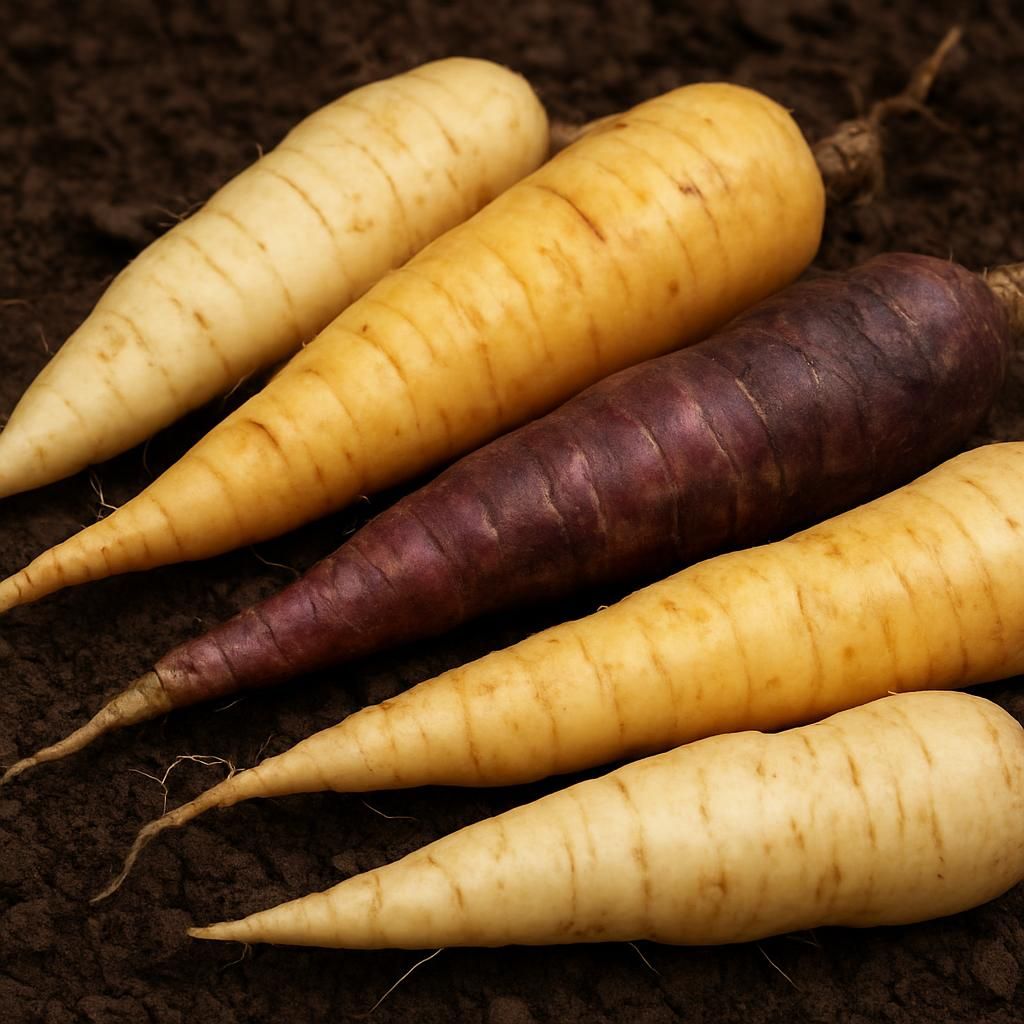
Arracacha (Arracacia xanthorrhiza) is a perennial herbaceous plant native to the Andean highlands of South America. Grown primarily for its edible storage roots, it has been a staple in countries such as Colombia, Peru, Ecuador, and Venezuela for centuries. The crop produces thick, fleshy roots that range in color from white to yellow and purple, offering a flavor profile often compared to a blend of celery root, roasted chestnuts, and sweet potato. Its high starch content and smooth texture make it ideal for purees, soups, chips, and baked goods.
Because it thrives in cool, misty highland climates, arracacha has significant potential for smallholder farmers in subtropical and high-elevation tropical regions worldwide. In addition to food security benefits, the crop provides economic value through both fresh market sales and value-added products such as flour and snacks. Its relatively long growing cycle of 10–14 months is offset by high yields and strong market demand in specialty produce channels.
This definitive guide delivers professional-grade, evidence-based advice for successful arracacha cultivation. Readers will learn optimal environmental parameters, propagation techniques, integrated pest management strategies, and post-harvest handling practices that maximize both yield and tuber quality.
Botanical Profile of Arracacha (Arracacia xanthorrhiza)
Arracacha belongs to the Apiaceae family, making it a relative of carrot, parsley, and celery. The plant forms a basal rosette of deeply divided, dark-green leaves that can reach 60–90 cm in height. Below ground, it develops a cluster of storage roots surrounding a central crown. These roots are typically 10–20 cm long and 3–8 cm in diameter, with smooth skin that may be white, cream, yellow, or occasionally purple depending on cultivar.
Flowering occurs after 12–18 months when the plant produces compound umbels of small white or greenish-white flowers. Seed production is possible but rarely used for commercial propagation because of low viability and genetic variability. Instead, farmers rely on vegetative propagation using “seed roots” or crown divisions. The plant’s life cycle is adapted to cool, moist conditions typical of elevations between 1,800 and 3,200 meters above sea level.
Soil, pH, and Climate Requirements for Arracacha (Arracacia xanthorrhiza)
Successful arracacha production depends on well-drained, fertile soils with good structure. The crop performs best in deep loamy or sandy loam soils rich in organic matter. Heavy clay soils should be amended with compost or well-rotted manure to improve aeration and drainage. Raised beds are recommended in areas with seasonal rainfall to prevent waterlogging.
| Parameter | Ideal Range | Notes |
|---|---|---|
| Soil Type | Sandy loam to loam | Deep, friable, well-drained |
| Soil pH | 5.5–6.8 | Slightly acidic to neutral |
| Organic Matter | 3–6 % | Incorporate 5–10 cm compost pre-planting |
| Temperature (Day) | 15–22 °C | Optimal tuber development |
| Temperature (Night) | 8–12 °C | Promotes root bulking |
| Annual Rainfall | 800–1,500 mm | Even distribution preferred |
| Altitude | 1,800–3,200 m | Cool highland climates |
| Frost Tolerance | Light frost tolerated | Protect young plants from hard freezes |
Adequate soil moisture is critical during the first 3–4 months after planting. Supplemental irrigation may be necessary during dry spells, while good drainage prevents root rot. Mulching with straw or dried leaves helps conserve moisture and suppress weeds.
Step-by-Step Planting & Propagation
Site Selection & Preparation: Choose a location with full sun to partial shade and protection from strong winds. Clear vegetation, incorporate 8–10 tons/ha of well-rotted manure or compost, and form raised beds 20–30 cm high.
Seed Root Selection: Use healthy, disease-free “seed roots” 8–12 cm long with at least two buds. Avoid roots showing signs of rot, nematodes, or insect damage.
Pre-sprouting: Place seed roots in a shaded, humid area (18–22 °C) for 7–14 days until sprouts reach 2–4 cm. This accelerates field establishment.
Planting Depth & Spacing: Plant seed roots 8–10 cm deep with the sprout facing upward. Space plants 40–50 cm apart within rows and 60–80 cm between rows, giving 25,000–35,000 plants per hectare.
Planting Time: In highland tropics, plant at the onset of the rainy season. In temperate zones, plant in early spring after last frost when soil temperature exceeds 12 °C.
Initial Irrigation: Water immediately after planting to settle soil around the seed roots. Maintain consistent moisture for the first 30 days.
Care & Maintenance regimes for Arracacha (Arracacia xanthorrhiza)
Consistent attention to water, nutrition, and weed control ensures vigorous canopy development and high-quality tubers. The following table outlines recommended schedules for commercial and small-scale growers.
| Growth Stage | Watering Schedule | Fertilizer Application | Pruning / Canopy Management |
|---|---|---|---|
| Establishment (0–30 days) | 2–3 times/week, keep top 10 cm moist | 40 kg N, 60 kg P₂O₅, 80 kg K₂O per ha at planting | Remove any damaged leaves |
| Vegetative (1–4 months) | 25–30 mm/week; irrigate if rainfall <15 mm | Side-dress 30 kg N at 60 days | Weed between rows; mulch to 5 cm depth |
| Tuber Bulking (4–10 months) | Maintain even moisture; avoid water stress | 20 kg N + 40 kg K₂O at 120 and 180 days | Remove flower stalks to redirect energy |
| Maturation (10–14 months) | Reduce irrigation 3 weeks before harvest | Optional foliar micronutrients (B, Zn, Mn) | Minimal; allow foliage to senesce naturally |
Weed competition is most damaging during the first 90 days. Hand weeding or shallow cultivation combined with organic mulch is preferred. Avoid deep tillage after canopy closure to protect shallow feeder roots.
Pests, Diseases & Organic Management
Arracacha is susceptible to several pests and diseases common to root crops in the Apiaceae family. Early detection and integrated organic strategies are essential.
Major Pests
- Aphids colonize young leaves and transmit viruses. Control with insecticidal soap or neem oil and encourage lady beetles.
- Root-knot nematodes cause galls and stunting. Use crop rotation with Cereal Rye and solarization.
- Slugs and snails damage young shoots. Apply iron phosphate baits and maintain clean field margins.
Major Diseases
- Pythium and Phytophthora cause root and crown rot in poorly drained soils. Improve drainage and apply beneficial Trichoderma.
- Alternaria leaf spot produces dark lesions on foliage. Remove infected leaves and apply copper-based sprays.
- Fusarium wilt leads to vascular discoloration. Use resistant cultivars and practice long rotations.
Regular scouting, removal of crop residues, and maintenance of soil health through organic matter additions form the backbone of an effective IPM program.
Harvesting, Curing & Optimal Storage
Arracacha reaches physiological maturity when leaves begin to yellow and the canopy opens, typically 10–14 months after planting. Harvest on a dry day by carefully loosening soil with a fork or spade to avoid bruising. Lift plants and shake off excess soil.
Curing: Place harvested roots in a shaded, well-ventilated area at 18–22 °C and 85–90 % relative humidity for 5–7 days. This allows minor wounds to heal and reduces post-harvest decay.
Storage: Ideal conditions are 10–12 °C and 90–95 % humidity. Under these conditions, roots remain marketable for 4–6 months. Avoid temperatures below 5 °C, which cause chilling injury and internal browning. For longer storage, wash, dry, and pack roots in perforated polyethylene bags inside ventilated crates.
Companion Planting for Arracacha (Arracacia xanthorrhiza)
Strategic companion planting improves soil fertility, deters pests, and maximizes land use efficiency. Recommended pairings include:
- Clover or Hairy vetch as living mulch to fix nitrogen and suppress weeds.
- Marigold and Nasturtium to repel Aphids and Thrips.
- Onion and Garlic to mask crop scent and reduce Root-knot nematodes populations.
- Lettuce or Spinach as understory crops during the first 3–4 months before canopy closure.
Avoid planting near other Apiaceae crops such as Carrot or Celery to minimize shared pest and disease pressure. Rotate arracacha with cereals or legumes every 3–4 years to maintain soil health and break pest cycles.
For additional insights on building resilient small-farm systems, see The Hidden Power of Mulching: 8 Organic Strategies to Transform Small Farm Soil.