Introduction to Zucchini (Cocozelle)
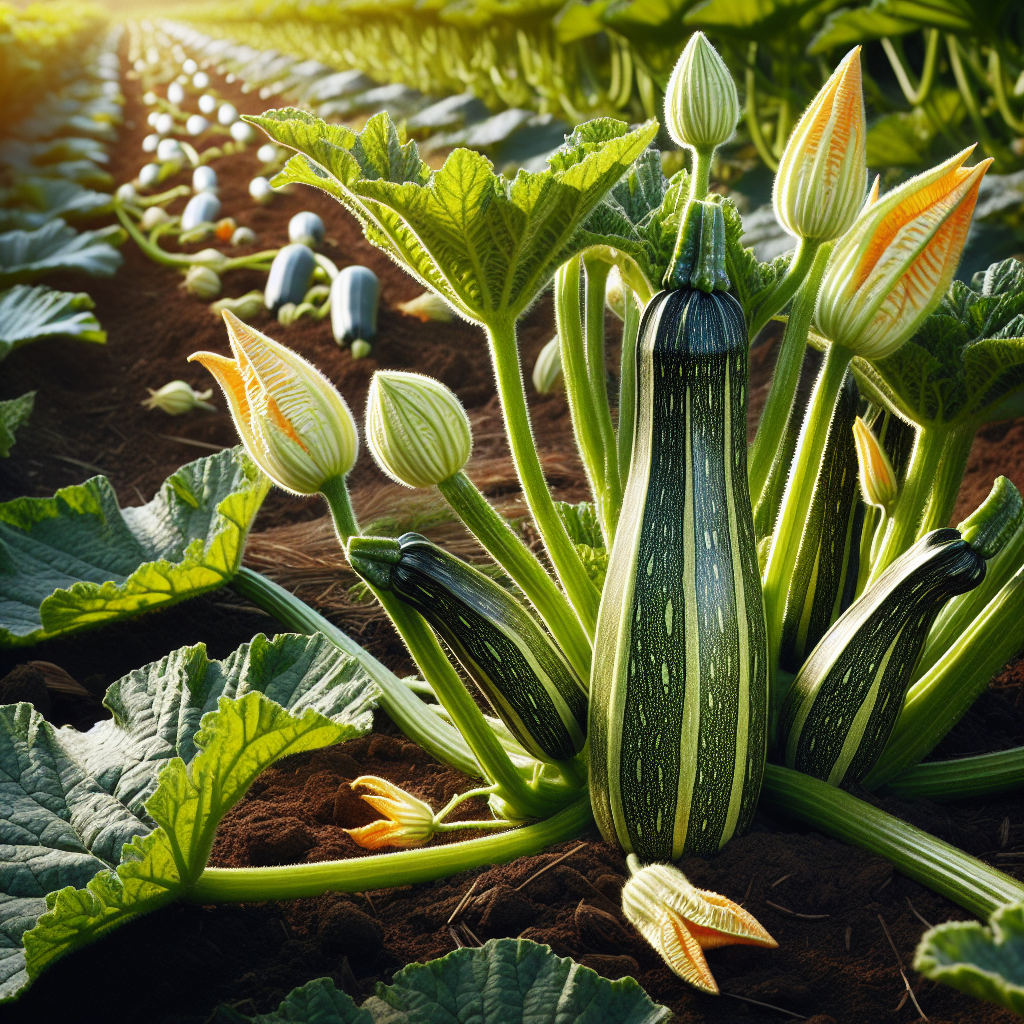
An old Italian type of summer squash, Cocozelle is best recognized by its elongated, often slightly tapered fruit marked with alternating green striping. It belongs to the same species group as many other summer squashes, but growers often favor it for its rich, nutty flavor, tender skin, and reliable productivity when picked young. Historically, Cocozelle selections emerged from Mediterranean gardening traditions where frequent harvest, hand pollination support, and close observation of plant vigor were standard practice rather than optional refinements.
In the field or garden, this is a warm-season annual that moves quickly once soil temperatures rise. It is not frost tolerant, and its growth pattern can shift from compact bush habit to semi-open, vigorous growth depending on seed strain, fertility, and spacing. Many Cocozelle strains produce fruit that are at their best between 15 and 25 cm long, though some can be harvested smaller for premium tenderness or left a little longer for stuffing and slicing.
For growers seeking a professional result, the main keys are warm soil at planting, uninterrupted growth, strong pollinator activity, and rigorous control of Squash Vine Borer and cucumber beetles. When these are managed well, Cocozelle can produce continuously for weeks, often outperforming standard market zucchini in flavor quality.
Botanical Profile of Zucchini (Cocozelle)
This crop is a member of the family Cucurbitaceae, the same plant family as pumpkins, melons, cucumbers, and other summer squash. It is classified botanically as Cucurbita pepo, a species notable for wide genetic diversity, including bush zucchini, pumpkins, acorn squash, and ornamental gourds. Cocozelle is grouped horticulturally as a summer squash because fruits are harvested immature, when seeds are still soft and the rind has not hardened.
Plants typically produce large, rough, lobed leaves with a coarse texture and hollow petioles. Those petioles and stems are covered in stiff trichomes that can irritate bare skin during harvest. The root system is relatively shallow compared with deeper-rooted fruiting crops, with most active feeding roots concentrated in the top 20 to 30 cm of soil, though roots will spread wider when the soil is friable and moisture is consistent.
The species is monoecious, meaning each plant carries separate male and female flowers. Male flowers usually appear first on long, slender stalks, while female flowers form closer to the crown and can be identified by the miniature ovary behind the petals. Poor early fruit set is common if male and female flowering are not synchronized, pollinator activity is low, or daytime temperatures exceed roughly 32 to 35°C, which can reduce pollen viability and stigma receptivity.
Fruits of Cocozelle are technically pepos, a specialized berry type characteristic of cucurbits. The ideal harvest stage is before full seed development, when epidermal tissue remains glossy and tender. If allowed to mature fully, fruits enlarge, seeds lignify, and the plant often reduces subsequent production because its reproductive objective has been met.
For a broader species comparison with related cropping systems, see our Squash guide.
Soil, pH, and Climate Requirements for Zucchini (Cocozelle)
This variety performs best in well-drained, biologically active loam or sandy loam with high organic matter and strong moisture-holding capacity without waterlogging. The ideal soil pH is 6.0 to 7.0, with best nutrient availability and root activity often seen around 6.3 to 6.8. Below pH 5.8, calcium and magnesium availability may decline, and microbial efficiency slows; above about 7.2, iron and manganese uptake can become less efficient, increasing the chance of interveinal chlorosis in young leaves.
Because Cocozelle grows rapidly and sets heavy fruit loads, it responds strongly to pre-plant compost and balanced fertility. A target of 3 to 5% organic matter is excellent for open-ground production. In lighter soils, incorporating 5 to 8 cm of mature compost before planting markedly improves moisture buffering. Avoid fresh manure immediately before planting, as excessive available nitrogen can create lush foliage with delayed flowering and increased susceptibility to Powdery Mildew.
Soil temperature matters more than many growers realize. Germination is strongest at 24 to 32°C soil temperature, and emergence becomes slow, uneven, or vulnerable to rot below 18°C. Planting into cold soil often causes seedling stagnation for 10 to 20 days, during which pests and damping-off organisms gain an advantage. Wait until the top 5 to 8 cm of soil consistently stays above 18°C, with 21°C or higher preferred for direct sowing.
Climatically, Cocozelle is best suited to temperate, Mediterranean, and warm summer conditions with full sun. It needs at least 6 hours of direct light, but 8 to 10 hours is preferable for strong flowering and short internodes. In humid climates, maximize airflow around plants to reduce foliar disease pressure. In arid climates, mulch heavily and irrigate deeply but infrequently enough to maintain oxygen in the root zone.
Ideal daytime temperatures range from 22 to 30°C, with nighttime temperatures of 16 to 21°C. Growth slows significantly below 12°C, and blossom or leaf damage occurs with any frost. Extended heat above 35°C can reduce fruit set, especially if accompanied by hot, dry winds or inadequate soil moisture.
Step-by-Step Planting & Propagation
Propagation is almost always by seed. Unlike perennial crops, Cocozelle is not propagated vegetatively in standard production because seed-grown plants are vigorous, fast, and economical. Use fresh, high-quality seed no more than 4 to 6 years old, stored cool and dry. Seed with poor vigor may germinate, but weak emergence often translates into lower yield and uneven stands.
For direct sowing, prepare a fine but not powdery seedbed. Broadfork or loosen compacted soil first, then incorporate compost and base fertilizer. Shape beds to improve drainage if spring rainfall is heavy. Raised beds 15 to 25 cm high are particularly helpful in heavy soils.
Sow seeds 2.5 to 3.5 cm deep. In warm soil, shallower sowing is acceptable; in drier conditions, place seed slightly deeper where moisture is stable. Space plants 60 to 90 cm apart in rows 120 to 180 cm apart, depending on fertility and whether you plan to prune older leaves. Tighter spacing can increase early yield but also increases humidity around the crown and raises disease risk.
For hill planting, place 2 to 3 seeds per hill in mounds about 90 to 120 cm apart, then thin to the strongest one or two plants once true leaves appear. In market-style row production, single-plant spacing is usually easier for airflow, scouting, and harvest.
Starting transplants is possible, especially in short-season regions, but it must be done carefully because cucurbits dislike root disturbance. Sow in individual cells or biodegradable pots 2 to 3 weeks before transplanting. Maintain temperatures of 24 to 29°C for germination, then grow on at 18 to 24°C with strong light. Transplant only when plants have 1 to 2 true leaves; larger transplants often stall after planting due to root check.
Before transplanting, harden plants for 5 to 7 days by gradually reducing water and exposing them to outdoor conditions. Set transplants at the same depth they grew in containers, firm soil gently, and water thoroughly to eliminate air pockets. Protect young plants from wind and cucumber beetles using lightweight row cover until flowering begins. Remove covers at first bloom to allow pollination, or hand-pollinate if covers stay on longer.
Succession sowing every 2 to 3 weeks in warm climates helps maintain a continuous crop and offsets losses from pests or disease. This strategy is often more productive than relying on a single early planting.
Care & Maintenance regimes for Zucchini (Cocozelle)
Consistent soil moisture is essential for straight, tender fruit and uninterrupted flowering. Aim to keep the root zone evenly moist to a depth of 15 to 20 cm. As a practical benchmark, the top 2 to 3 cm of soil may dry slightly between irrigations, but the soil below should remain cool and lightly moist, never powder-dry and never saturated. In field terms, this often means about 25 to 40 mm of water per week in moderate weather and up to 50 mm during peak heat and fruiting, adjusted for soil type and rainfall.
Underwatering commonly leads to dull leaves by midday that fail to recover by evening, aborted female flowers, misshapen fruit, and tougher texture. Overwatering causes slower growth, yellowing lower leaves, edema-like blistering, persistent dampness around the crown, and increased susceptibility to root rots. In poorly drained soil, oxygen starvation can occur even when plants look superficially lush for a few days.
Drip irrigation is preferred because it keeps foliage dry and directs moisture to the active root zone. Apply water deeply 2 to 4 times weekly rather than shallow daily sprinkles, unless growing in containers or very sandy soil. Mulch with clean straw or shredded leaves once the soil has warmed; a 5 to 8 cm layer moderates moisture loss, reduces fruit soil contact, and limits splash-borne disease.
Nutritionally, Cocozelle is a moderate to heavy feeder. Before planting, incorporate a balanced organic fertilizer or well-finished compost. A practical target for many soils is a modest nitrogen base accompanied by adequate phosphorus and potassium. Too much nitrogen creates oversized leaves and fewer female flowers. Side-dress when plants begin vining or at first harvest with compost, vermicompost, or a balanced fertilizer, then repeat lightly every 2 to 3 weeks if leaves pale or production slows.
Calcium availability is important for cellular integrity, but blossom end rot is less common in zucchini than in Tomato. Even so, irregular watering can still produce tip dieback or poor fruit finish. If tissue tests or soil tests show deficiencies, correct them pre-plant rather than relying on late foliar rescue.
Weed control is most important in the first month after establishment. Cultivate shallowly to avoid root damage. Once leaves expand, the canopy helps suppress later weed flushes. Remove old, damaged, or mildewed leaves selectively to improve airflow, but do not over-prune; vigorous foliage is needed to sustain fruit production.
Pollination deserves special attention. If female flowers open but tiny fruit yellow and drop, pollination is likely incomplete. Encourage native bees, maintain flowering insect habitat nearby, and avoid spraying even organic insecticides during bloom. In small plantings, hand pollination with a male flower or soft brush in the morning can substantially improve set.
For professional scheduling, succession timing and fertility adjustments are often as important as pest control; general planning principles overlap with broader seasonal systems discussed in Soil health strategies.
Pests, Diseases & Organic Management
The most destructive insect in many regions is the Squash Vine Borer. Adults lay eggs near the stem base, and larvae tunnel into the crown, causing sudden wilting despite adequate soil moisture. Frass resembling moist sawdust at the stem is a classic sign. Preventive row covers before flowering, stem base monitoring, and succession planting are the most effective organic tactics. In small plantings, slit affected stems carefully, remove larvae, then mound soil over the injured section to encourage auxiliary rooting.
Striped and Spotted Cucumber Beetles are also serious because they chew seedlings, scar fruit, and vector Bacterial Wilt. Early protection with insect netting or row cover is highly effective. Kaolin clay can deter feeding, and trap crops may help in larger systems. Scout cotyledons and first true leaves closely; severe early feeding can permanently reduce vigor.
Squash Bugs feed by piercing leaves and stems, causing stippling, wilting, and blackened tissue. Their coppery egg masses are usually found on leaf undersides. Hand removal of eggs, destruction of crop debris, and boards or traps used to collect hiding adults can reduce populations. Nymphs are much easier to control than adults, so frequent scouting matters.
Aphids can build rapidly during warm weather, curling foliage and producing sticky honeydew. Strong water sprays, insecticidal soap, and conservation of lady beetles and lacewings generally keep them below damaging levels if nitrogen is not excessive.
Among diseases, Powdery Mildew is the most common late-season issue. It begins as white, talcum-like patches on older leaves and can quickly reduce photosynthesis. Prevent it by spacing properly, watering at soil level, avoiding excessive nitrogen, and removing badly infected leaves. Organic sprays such as potassium bicarbonate, sulfur, or biofungicides can suppress spread when applied early and repeatedly according to label directions.
Downy Mildew is less common on zucchini than on cucumber in some regions, but where present it causes angular yellow lesions and gray-purple sporulation on leaf undersides. Good airflow and preventative biological fungicides help, but resistant genetics and rapid crop turnover are often more practical than rescue sprays.
Bacterial Wilt, vectored by cucumber beetles, causes irreversible collapse. Once plants are infected, removal is usually the only option. A diagnostic clue is sticky bacterial ooze forming threads when a cut stem is pulled apart.
Viruses such as Zucchini Yellow Mosaic Virus, Watermelon Mosaic Virus, and Cucumber Mosaic Virus cause mottling, distorted leaves, and malformed fruit. These are often spread by Aphids or infected weeds. Rogue infected plants promptly and control weed hosts around production areas.
Crop rotation is essential. Avoid planting any cucurbit in the same bed more than once every 3 years where possible. Sanitation after harvest is equally important: remove spent vines, fallen fruit, and diseased residue to reduce overwintering pests and inoculum.
Harvesting, Curing & Optimal Storage
Harvest frequently and at the correct size. Cocozelle is usually finest when 15 to 25 cm long, glossy, and still slender, though baby fruits can be cut at 10 to 15 cm for premium tenderness. Once fruits become oversized, skin thickens, seed cavities expand, and plant productivity often drops. In warm weather, inspect plants daily or every other day because fruit can pass peak stage very quickly.
Use a knife or pruners to cut fruit with a short stem stub attached rather than twisting aggressively, which can damage the crown. Wear gloves or sleeves if leaf hairs irritate skin. Handle fruits gently; even minor abrasions shorten storage life.
Unlike winter squash, summer squash is not cured for long-term storage. Instead, remove field heat quickly by placing harvested fruits in shade immediately. Wash only if necessary, and if washed, dry thoroughly before packing. Ideal storage is 7 to 10°C with relative humidity around 90 to 95%. Under these conditions, fruits generally keep for 7 to 14 days. Below about 5°C, chilling injury can develop, leading to pitting, watersoaked areas, and rapid decay after removal from cold storage.
Do not store with ethylene-sensitive leafy greens if fruits are damaged and beginning to deteriorate, though zucchini itself is less ethylene-sensitive than some crops. For best eating quality, market or consume within a week. Blossom flowers can also be harvested early in the day; male flowers are commonly picked for culinary use without reducing yield as long as enough remain for pollination.
If fruits are accidentally left to mature fully, they are still usable for seed saving if isolation is maintained from other Cucurbita pepo types. However, for culinary production, mature fruits are generally inferior to young harvests.
Companion Planting for Zucchini (Cocozelle)
Effective companions for this variety support pollination, deter pests, or use space efficiently without competing aggressively for light and nutrients. Nasturtium is widely valued as a living mulch and trap plant around squash plantings; its flowers attract pollinators while its sprawling habit shades soil and may distract Aphids and some beetles. Radish can be sown early around the bed edge as a fast crop that helps mark rows and occupy space before the squash canopy closes. Onion contributes vertical separation and may slightly confuse some pests through scent, especially in mixed kitchen-garden systems.
Another classic partner is Corn, especially in larger plots, where it can create a beneficial microclimate and diversify insect activity around the planting. However, maintain enough spacing so zucchini still receives full sun and strong airflow. Avoid pairing Cocozelle too tightly with potatoes or other heavy feeders that compete strongly for water and nutrients in the same shallow root zone.
Companion planting works best when integrated with sanitation, row covers, rotation, and irrigation management. It should be treated as a supporting strategy, not a substitute for scouting. In high-pressure pest seasons, physical exclusion remains more dependable than companion effects alone.