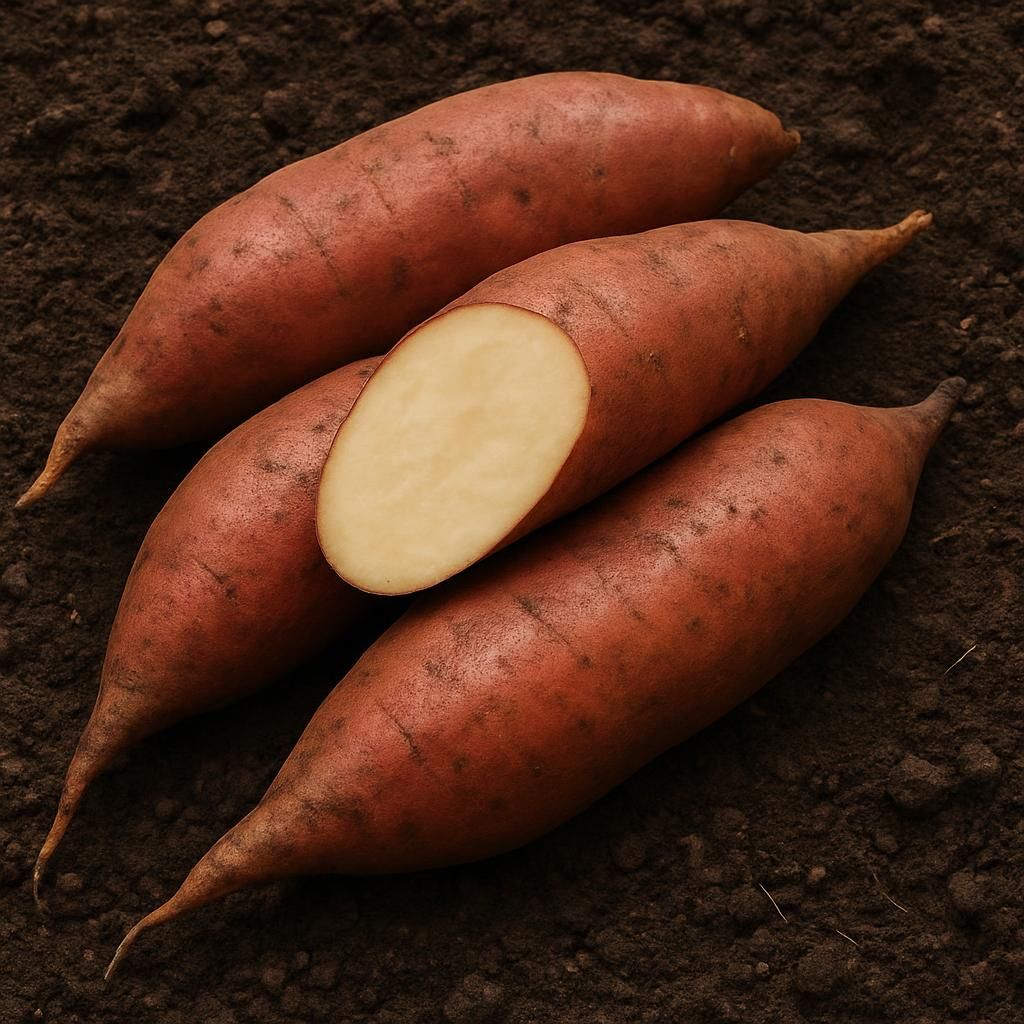
Introduction to Yacon (Smallanthus sonchifolius)
Yacon (Smallanthus sonchifolius) is an emerging specialty tuber crop originating from the Andean highlands of South America. Farmers and home gardeners prize the plant for its sweet, juicy storage roots that remain low in calories yet high in prebiotic fructooligosaccharides (FOS). The crisp, apple-like texture makes yacon ideal for fresh salads, smoothies, and dehydration into chips, while the leaves and stems serve as nutritious fodder.
Commercial interest has grown rapidly because the crop tolerates marginal soils, requires modest fertility inputs, and stores well under cool conditions. Because the edible portion forms underground, yacon avoids many foliar disease pressures common to other root vegetables such as Potato or Sweet Potato.
Botanical Profile of Yacon (Smallanthus sonchifolius)
Yacon belongs to the Asteraceae family and is closely related to sunflowers and Jerusalem artichokes. Plants reach 1.5–2 m in height with large, opposite, serrated leaves and multiple stems arising from a central crown. The storage roots develop from adventitious buds on the crown and vary in skin color from cream to deep purple-red depending on cultivar. The plant produces small, daisy-like yellow flowers late in the season, but seed set is rare; propagation is almost exclusively vegetative via crown divisions or rhizome pieces.
Soil, pH, and Climate Requirements for Yacon (Smallanthus sonchifolius)
Yacon performs best in deep, friable loams with excellent drainage. Heavy clay soils should be amended with coarse sand or raised beds to prevent waterlogging, which quickly causes crown rot.
| Parameter | Ideal Range | Notes |
|---|---|---|
| Soil Type | Sandy loam to loam | Avoid compacted or waterlogged soils |
| Soil pH | 5.5–7.0 | Slightly acidic to neutral |
| Organic Matter | 3–6 % | Incorporate well-rotted compost |
| Temperature (day) | 18–25 °C | Growth slows below 10 °C |
| Temperature (night) | 10–15 °C | Frost kills foliage; tubers survive light frost |
| Annual Rainfall | 800–1 500 mm | Supplemental irrigation in dry spells |
| Altitude | 1 000–3 000 m | Performs well at lower elevations with irrigation |
Step-by-Step Planting & Propagation
- Source disease-free crown divisions or 10–15 cm rhizome pieces with at least two buds from reputable suppliers.
- Prepare beds 30–40 cm deep, incorporating 5–8 cm of compost and a balanced organic fertilizer.
- Plant divisions 10 cm deep and 60–80 cm apart in rows 1 m wide during early spring after last frost.
- Water thoroughly after planting and apply a 5 cm mulch layer to conserve moisture and suppress weeds.
- Install drip irrigation lines before mulch application for season-long moisture management.
Care & Maintenance regimes for Yacon (Smallanthus sonchifolius)
Consistent moisture during the first 8 weeks promotes rapid canopy closure. Once established, yacon tolerates short dry spells but benefits from 25–30 mm of water weekly during tuber bulking.
| Growth Stage | Water Schedule | Fertilizer Schedule | Pruning / Other Tasks |
|---|---|---|---|
| Establishment (0–8 wks) | 2–3× per week, keep evenly moist | 5 kg/ha NPK 10-10-10 at planting | Remove weeds; hill soil around crowns |
| Vegetative (8–20 wks) | 25 mm/week via drip | Side-dress 3 kg/ha N at week 10 | Remove lower leaves for airflow |
| Tuber Bulking (20–30 wks) | 30 mm/week; reduce 2 weeks before harvest | Optional K-rich foliar spray at week 22 | Cut back flowering stems to redirect energy |
| Pre-harvest (last 2 wks) | Withhold irrigation | None | Monitor for rodent damage |
Pests, Diseases & Organic Management
Yacon is relatively pest-resistant, yet Aphids and Slugs can damage young shoots. Monitor weekly and apply insecticidal soap or beer traps as needed. The most serious disease is crown and Root rot caused by Pythium and Phytophthora species; prevent by ensuring excellent drainage and avoiding over-irrigation. Powdery mildew occasionally appears on lower leaves in humid climates—remove affected foliage and improve airflow. Crop rotation with non-hosts such as Corn or Cabbage every three years reduces soil-borne pathogen buildup.
Harvesting, Curing & Optimal Storage
Yacon reaches peak sweetness 6–10 months after planting when foliage begins to yellow. Loosen soil carefully with a fork to avoid bruising the brittle roots. Immediately after harvest, cure roots at 15–20 °C and 85 % RH for 5–7 days to heal minor wounds and convert some starches to sugars. Store cured tubers in single layers inside perforated bins at 10–12 °C and 85–90 % RH; properly cured roots remain crisp for 4–6 months. Exposure to ethylene from ripening fruit accelerates softening, so keep storage areas separate from bananas or apples.
Companion Planting for Yacon (Smallanthus sonchifolius)
Yacon pairs well with nitrogen-fixing legumes such as Peas and Beans that improve soil fertility without competing for light. Aromatic herbs including Thyme and Rosemary repel aphids and slugs. Tall companions such as Sunflower provide partial shade in hot climates, while low-growing Lettuce or Radish fill inter-row spaces early in the season. Avoid planting near Potato or Tomato to reduce shared disease risks.
For further reading on building resilient cropping systems, see The Truth About Weather Patterns and Small Farm Resilience.