Introduction to Winter Rye
Among temperate cereals, few crops are as resilient and versatile as winter rye. It has been cultivated across Europe and western Asia for centuries, especially where soils were too sandy, acidic, cold, or infertile for more demanding grains. Historically, it became a staple bread grain in northern and eastern Europe because it tolerated harsh winters and low-fertility ground better than many other cereals. Today it remains important not only as a grain and forage crop, but also as one of the most reliable cover crops for small farms, market gardens, and broadacre systems.
Its main strength is adaptability. It germinates in cool soil, establishes quickly in autumn, survives freezing conditions, resumes growth early in spring, and produces an extensive fibrous root system that improves aggregation and captures residual nitrogen. In mixed rotations, it is often compared with wheat, but rye generally shows greater tolerance of poor soils, lower fertility, and winter stress. For broader rotation design and soil-building concepts, see soil health strategies.
Growers use winter rye in several ways: as a cash grain for flour, feed, and distilling; as fall and spring forage; as green chop or silage; as a nurse crop; and as a biomass-heavy cover crop ahead of vegetables, corn, soybeans, potatoes, and other summer plantings. In each role, timing matters. Early sowing usually favors fall biomass and tillering, while later sowing still gives dependable soil cover and overwintering.
Botanical Profile of Winter Rye
This species belongs to the grass family, Poaceae, and is a close relative of wheat and barley. It is an annual cereal, though in the field it behaves as a winter annual when sown in late summer or autumn. The plant begins as a seedling with narrow linear leaves, then forms tillers from the crown, overwinters in a vegetative state, and later elongates into upright culms that terminate in a distinctive spike.
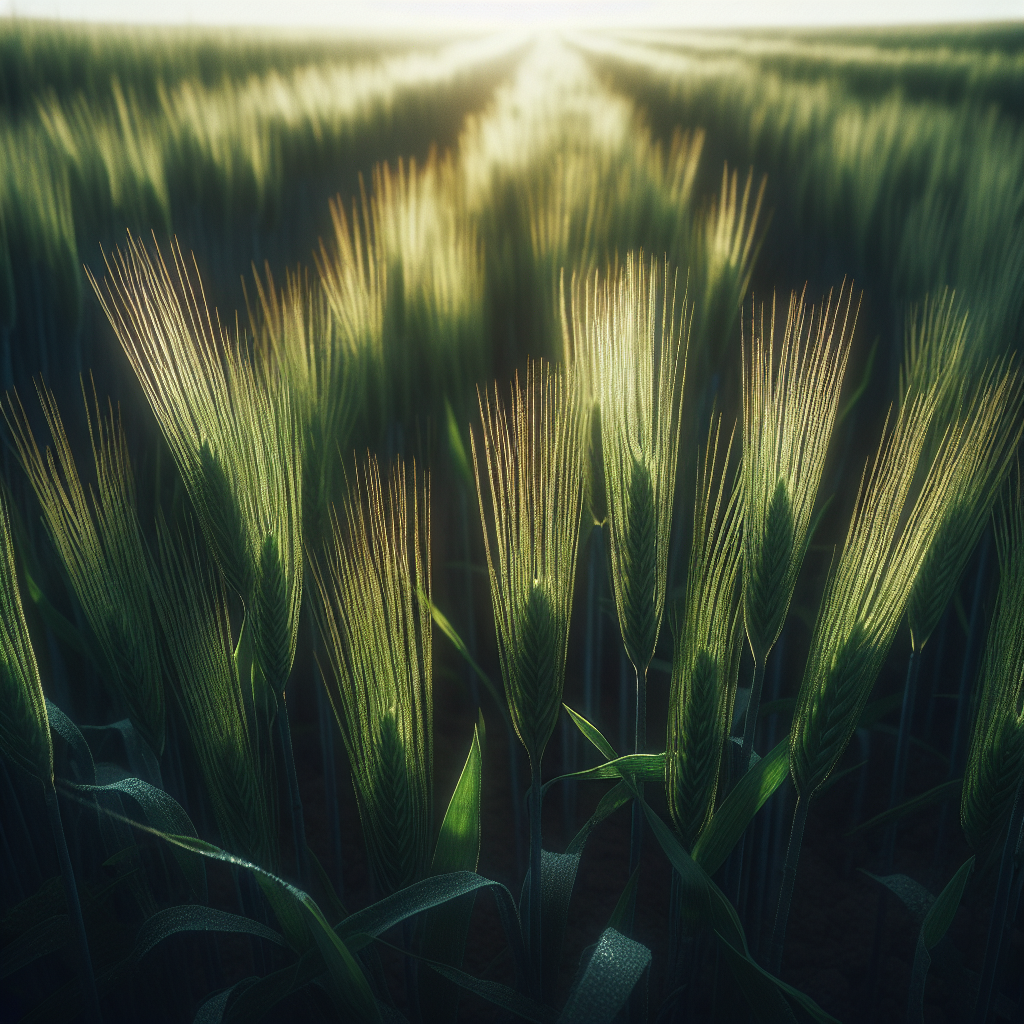
The mature plant typically reaches 3 to 6 feet tall depending on cultivar, fertility, and water availability. Leaves are narrow, bluish green to gray green, and often slightly glaucous. The inflorescence is a slender spike rather than a branched panicle. Spikelets are arranged alternately along the rachis, usually one per node, and many cultivars bear short awns or are weakly awned. Pollination is largely wind-driven, and rye is more outcrossing than wheat, which contributes to genetic variability in open-pollinated lines.
Winter rye requires vernalization, meaning exposure to cold temperatures is needed to trigger reproductive development and heading in spring. This is what separates it from spring-sown rye types. It also has remarkable cold tolerance, especially once established in the two- to four-leaf stage with a well-anchored crown. Snow cover improves winter survival, but many cultivars can withstand severe freezes even with limited protection.
Root architecture is one of its most important agronomic features. Rye produces a dense, fibrous root system capable of penetrating compacted layers more effectively than many small grains. This helps with nutrient capture, especially leftover nitrate, and contributes significantly to soil porosity and aggregate stability. In cover-crop systems, that aggressive rooting is part of why winter rye is prized for reducing erosion and nutrient leaching.
Cultivar traits vary considerably. Some are selected for grain yield and lodging resistance, others for forage quality, winter hardiness, disease tolerance, pollen shedding, or biomass production as a cover crop. Hybrid rye cultivars, used in some commercial systems, often offer stronger yield potential and more uniform growth, while traditional population varieties may be chosen for lower seed cost and broad adaptation.
Soil, pH, and Climate Requirements for Winter Rye
This crop performs best in temperate climates with cool autumns, cold winters, and moderate spring moisture. It is one of the most cold-tolerant cereals, often surviving temperatures well below 0°F once properly established. Ideal growth begins with autumn soil temperatures between about 50 and 68°F for rapid germination, though seeds can sprout in soils just above freezing if moisture is adequate.
It is notably tolerant of soil limitations. While best grain yields come from well-drained loams or silt loams, winter rye can perform on sandy soils, light gravels, and lower-fertility fields where other cereals struggle. It also tolerates moderately acidic soils better than many grain crops. The preferred pH is roughly 5.5 to 7.0, with optimum performance often around 6.0 to 6.5. Below pH 5.0, establishment may still occur, but nutrient availability and microbial activity usually limit yield. In alkaline soils above pH 7.5, micronutrient imbalances can begin to appear, especially where drainage is poor.
Drainage is more important than raw fertility. Rye dislikes prolonged saturation, especially in heavy clay during establishment or winter thaw cycles. If soil remains waterlogged for more than a few days, the crown can weaken, roots may suffocate, and plants may show yellowing, thinning, or patchy winterkill. The ideal seed zone is moist but not sticky, with good seed-to-soil contact and enough oxygen for rapid emergence.
For practical moisture targets, aim for soil at roughly 50 to 75% of field capacity during germination and early establishment. In field terms, that means a squeezed handful of soil should hold together but not ooze water. Excessively wet soils leave shiny smears on boots or tools and often lead to sidewall compaction in drilled seed rows. Overly dry seedbeds delay emergence and reduce tillering because plants establish weakly before cold weather arrives.
Winter rye is relatively drought tolerant after establishment, but moisture still shapes yield and biomass. It can survive dry autumns better than many cover crops, yet the best stands come when at least 0.75 to 1.5 inches of rainfall or irrigation occurs within the first 10 days after planting. Spring moisture is especially important for grain fill and forage quality.
Step-by-Step Planting & Propagation
Propagation is by seed. Use clean, high-germination seed with known test weight and, if possible, a recent germination percentage above 85%. Certified seed is preferable where disease pressure, varietal purity, or grain-market specifications matter.
Choose the planting window carefully. In most temperate regions, sow 4 to 8 weeks before the ground freezes. A common target is 7 to 10 days before the local optimum seeding date for winter wheat, or from late August through October depending on latitude and elevation. Earlier sowing encourages more fall tillering and biomass; later sowing still works for erosion control but reduces top growth before dormancy.
Prepare the seedbed. For grain production, create a firm, level seedbed free of large clods. For cover cropping after cash crops, no-till drilling into residue works very well. The key is consistent seed placement and contact with moist soil. Broadcasting is possible, but success improves greatly if seed is lightly incorporated with a harrow, cultipacker, or shallow vertical tillage pass.
Adjust seeding rate by purpose. For grain production, many growers use about 60 to 120 pounds per acre, depending on seed size, planting date, and row spacing. For cover cropping and weed suppression, rates often rise to 90 to 160 pounds per acre. Late planting, poor seedbeds, or broadcast seeding usually require the higher end of the range. In small plots, this translates roughly to 2 to 3.5 pounds per 1,000 square feet.
Set planting depth properly. Place seed 1 to 1.5 inches deep in medium-textured soils. In sandy or dry conditions, 1.5 to 2 inches may be justified if moisture is deeper. Avoid seeding shallower than 0.75 inch in fields prone to frost heaving or bird pressure. Excessively deep planting can delay emergence and weaken seedlings.
Space rows according to goal. Grain stands are commonly drilled in 6- to 7.5-inch rows. Wider rows may be used for interseeding or specialized forage systems, but dense narrow rows improve weed suppression and even canopy formation.
Irrigate only if necessary. In rainfed systems, planting ahead of forecast rainfall is ideal. If irrigating, apply enough to wet the top 2 to 3 inches of soil uniformly, then allow the surface to drain and aerate. Frequent shallow irrigation is inferior to a single thorough establishment watering.
Monitor emergence. Under good autumn conditions, seedlings appear in 5 to 10 days. Cool soils may delay emergence to 14 days or longer. A strong stand should be even, anchored, and green, with early tiller formation before winter.
Care & Maintenance regimes for Winter Rye
Once established, this is a relatively low-input crop, but management strongly affects whether it performs as a premium grain, forage, or cover crop.
Nutrient management should begin with a soil test. Winter rye can produce on lean ground, but it still responds to balanced fertility. For grain, a moderate nitrogen program is common, often split between modest fall availability and a larger spring application at green-up. Total nitrogen needs vary by yield target and soil organic matter, but many systems fall within 40 to 100 pounds of actual N per acre. Excess fall nitrogen is usually unnecessary and can increase lush growth, winter injury risk, and lodging. For cover-crop use, residual fertility is often enough, especially after manured fields or legume crops.
Phosphorus and potassium should be corrected where soil tests are low, especially in fields aimed at grain harvest. Phosphorus supports root development and winter hardiness; potassium improves stress tolerance and stem strength. Sulfur may be needed on sandy, low-organic-matter soils.
Water management depends on production goal. In most regions, winter rye is grown largely on rainfall. However, if irrigated, keep root-zone moisture moderate rather than saturated. During establishment, the top 3 to 4 inches should remain evenly moist until seedlings are well rooted. In spring, moisture stress during stem elongation and heading can reduce grain set and biomass, but overwatering is equally harmful. Signs of excess water include pale leaves, slow growth despite warm weather, blackened or sour-smelling soil, shallow rooting, and increased disease pressure. Signs of drought stress include bluish cast to leaves, leaf rolling during midday, reduced tillering, and shorter stems.
Weed management is one of rye's natural strengths. A dense fall stand suppresses many winter annual weeds through rapid canopy closure and allelopathic effects from residues. Nonetheless, poor stands can be invaded by chickweed, mustards, henbit, and volunteer cereals. The best organic weed control is timely sowing at adequate density into a clean seedbed. In grain fields, rotary hoeing is uncommon once rye is established, so pre-plant sanitation matters.
Lodging control becomes important under high fertility, especially with tall cultivars, manure-heavy fields, or irrigated grain production. To reduce lodging risk, avoid excessive nitrogen, maintain balanced potassium, and choose shorter, stiffer-straw cultivars where available.
Termination timing is critical when grown as a cover crop. For mulch systems, termination at anthesis or early flowering gives the most reliable kill with roller-crimping. If incorporated as green manure, earlier termination at boot to early heading preserves more nitrogen and speeds decomposition, while later termination gives more biomass and stronger weed suppression but ties up nitrogen longer. After rye residue, heavy-feeding crops may benefit from supplemental nitrogen because high-carbon straw can temporarily immobilize soil N.
Pests, Diseases & Organic Management
Winter rye is usually less disease-prone than some cereals, but it is not immune. Good rotations, clean seed, and balanced fertility remain the foundation of control.
Among diseases, Ergot is the classic rye concern. It is caused by Claviceps species and replaces kernels with dark, hornlike sclerotia that contain toxic alkaloids. Wet weather during flowering, grassy weeds, and prolonged pollen exposure increase risk. Because rye is wind-pollinated and often more open-flowering than wheat, Ergot management depends on crop rotation, destruction of grassy hosts, clean seed, and avoiding repeated rye after rye.
Rusts, Powdery Mildew, Leaf Blotches, and Fusarium Head Blight can also occur. Dense, lush canopies on high nitrogen tend to worsen foliar disease. Organic management relies on resistant cultivars, air movement, crop rotation, and residue management. Avoid planting into fields with heavy volunteer cereal pressure, and do not save seed from diseased stands.
Seedling problems include Damping-off in cold, saturated soils and root issues in compacted or poorly drained zones. These are best prevented with proper seeding depth, good drainage, and avoiding planting into smearing mud.
Insects are often less severe than in spring-planted grains, but Aphids, Armyworms, Wireworms, and Hessian Fly may appear depending on region. Aphids are important not just for feeding damage but also as vectors for Barley Yellow Dwarf Virus. Early-sown stands can be more exposed to fall aphid flights. Organic control includes encouraging beneficial insects, avoiding overly lush growth, rotating away from host grasses, and monitoring field edges carefully. If a stand shows yellow-red leaf tips, stunting, and patchy growth in spring, virus transmission may be involved.
Bird feeding can damage newly broadcast seed, and deer may graze lush fall growth in some locations. Usually this does not ruin the stand unless pressure is extreme.
For organic programs, the best approach is preventive: rotate with broadleaf crops, maintain moderate fertility, seed on time, avoid compaction, and mow or manage nearby grassy weeds before they set seed or harbor pests. Mixed sowings with clover can improve system resilience in some forage or cover-crop settings, though management must be adjusted so the companion is not shaded out by dense rye.
Harvesting, Curing & Optimal Storage
For grain harvest, timing is crucial because rye can lodge, shatter, or sprout if left too long in wet weather. Harvest begins when grain reaches hard dough to full maturity and seed moisture drops to about 13 to 16% for combining, depending on equipment and weather. Kernels should be firm, difficult to dent with a fingernail, and straw should be yellow-brown. Heads should be dry enough that threshing is clean rather than smeary.
If harvested too early, grain dries poorly and may have low test weight. If harvested too late, the risks are lodging, head breakage, and pre-harvest sprouting, especially in humid climates. Combine cylinder speed and concave settings should be adjusted to avoid cracking kernels while fully threshing the slender spike.
For forage, harvest stage depends on intended feed value. Boot stage gives the highest protein and digestibility. Heading to early milk increases tonnage but reduces quality. As silage, it is commonly cut from boot through early heading. For dry hay, curing can be difficult because stems are coarse and spring weather is often unsettled.
As a cover crop, termination is effectively the harvest decision. If cut for mulch, wait until pollen shed or early flowering for best mechanical kill. If grazing, avoid overgrazing wet soils in late winter and early spring because crown damage and compaction can reduce regrowth.
After combining, grain intended for storage should be dried to 12% moisture for medium-term storage and about 10 to 11% for long-term storage in warm conditions. Clean grain stores better than grain with chaff, cracked seed, or weed seed contamination. Use aeration to keep bulk grain cool and dry. Ideal storage conditions are below 60°F and stable, with protection from rodents and insects.
Watch for storage issues such as musty odor, heating, caking, or condensation on bin walls. These indicate excess moisture or poor airflow. Grain with any suspected Ergot contamination should be tested and handled carefully, especially if intended for feed or food use.
Straw also has value. Rye straw is durable, absorbent, and widely used for bedding, erosion control, and mulching. Baling should wait until straw is dry enough to prevent heating; generally moisture should be below about 15 to 18% for safe storage in bales.
Companion Planting for Winter Rye
In diversified systems, this crop works best as a structural partner rather than a delicate intercrop. It is highly competitive, so companions must either establish beneath it, benefit from its support functions, or follow it in rotation.
Clover is one of the best companions because it can be frost-seeded or undersown to add nitrogen, protect soil after rye harvest, and create a more balanced residue profile. In forage systems, the pair can improve feed value compared with rye alone. Management is important: if rye is seeded too densely or fertilized too heavily, it may suppress the legume.
Peas are useful in forage or green-manure mixtures. Rye provides upright structure that helps vining peas stay off the ground, while peas contribute nitrogen and soften the carbon-heavy character of rye biomass. The mixture is especially valuable where a spring-cut forage is needed before warm-season crops.
Hairy vetch is another strong partner in cover-crop systems, even though it is often managed as a separate component rather than a true simultaneous intercrop in all regions. Rye gives the vetch a trellis, while vetch helps offset nitrogen immobilization when the stand is terminated for mulch. This combination is widely used before transplanted summer vegetables.
Daikon Radish complements autumn soil conditioning in some systems. The radish helps break surface compaction and scavenges nutrients early, while rye maintains winter cover after radish winter-kills. This is especially effective on soils needing both rooting depth and erosion protection.
The main caution with companions is competition. Winter rye can dominate small-seeded or slow-growing species if seeded too early, too heavily, or with excess nitrogen. Reduce rye seeding rates in mixtures, match planting dates to each species' growth habit, and define the goal clearly: grain, forage, grazing, nitrogen capture, weed suppression, or mulch production. The best companion strategy is not simply mixing species, but balancing architecture, fertility demand, and termination timing.